Image Generation Prompts Guide
Use Nano Banana and GPT img for image generation and editing. Keep prompts focused on what you want to change.
Core rule
When a reference clearly shows a face, outfit, pose, or layout, avoid describing it again in detail. Ask the model to preserve it, then describe the changes. These instructions guide the result; they do not guarantee an exact match.
Add details only when they are missing from the reference or need to change.
Preserve the face
Use the reference to identify the face instead of listing every feature:
Keep the facial identity, structure, features, and expression from the provided reference.Preserve the hairstyle and outfit
Refer to the visible hairstyle and outfit directly:
Keep the hairstyle, outfit design, and colors from the provided reference.Only add a specific note when something is not visible in the reference, when the generation keeps drifting, or when you explicitly ask for a change.
Avoid left / right
Nano Banana can confuse left and right. Use objective spatial descriptions or object relationships instead, such as:
- the side facing the window
- the side facing the camera
- upper frame
- lower frame
- foreground, background
- the edge near the character
Use short reference labels
- the provided sketch
- the provided character reference
- the provided face reference
- the provided outfit reference
- the provided base image
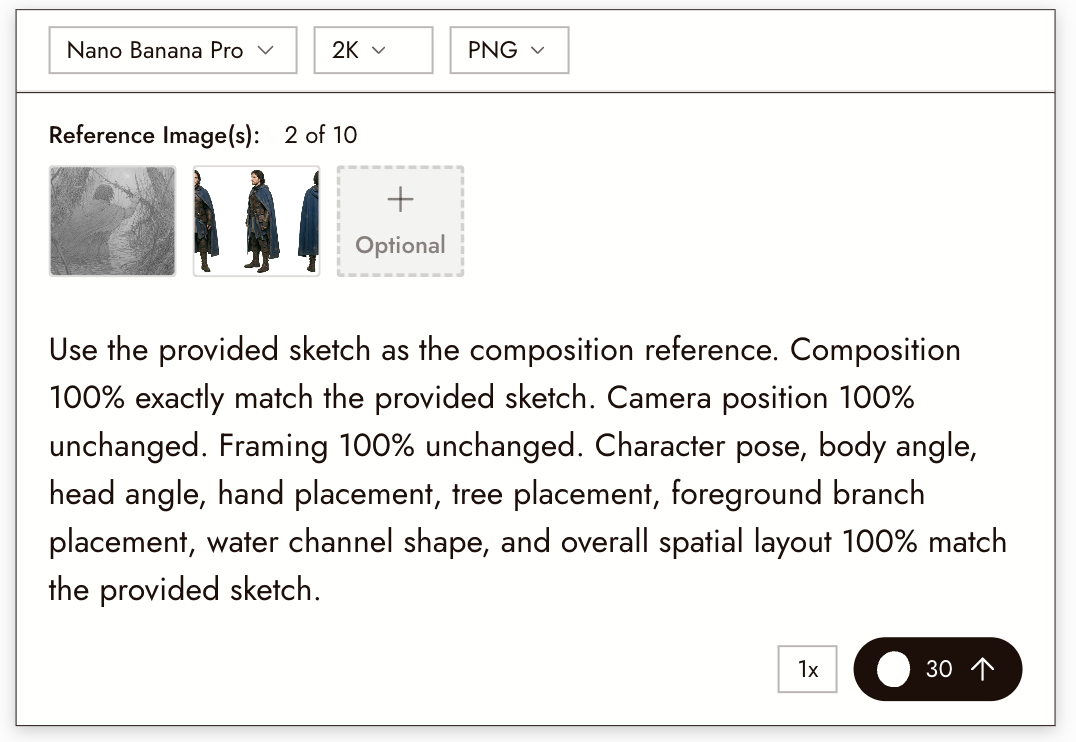
Preserve composition, character, and camera
State which reference controls each part of the image:
Use the sketch for composition, framing, camera position, and pose.
Use the character reference for facial identity.
Use the outfit reference for clothing design and colors.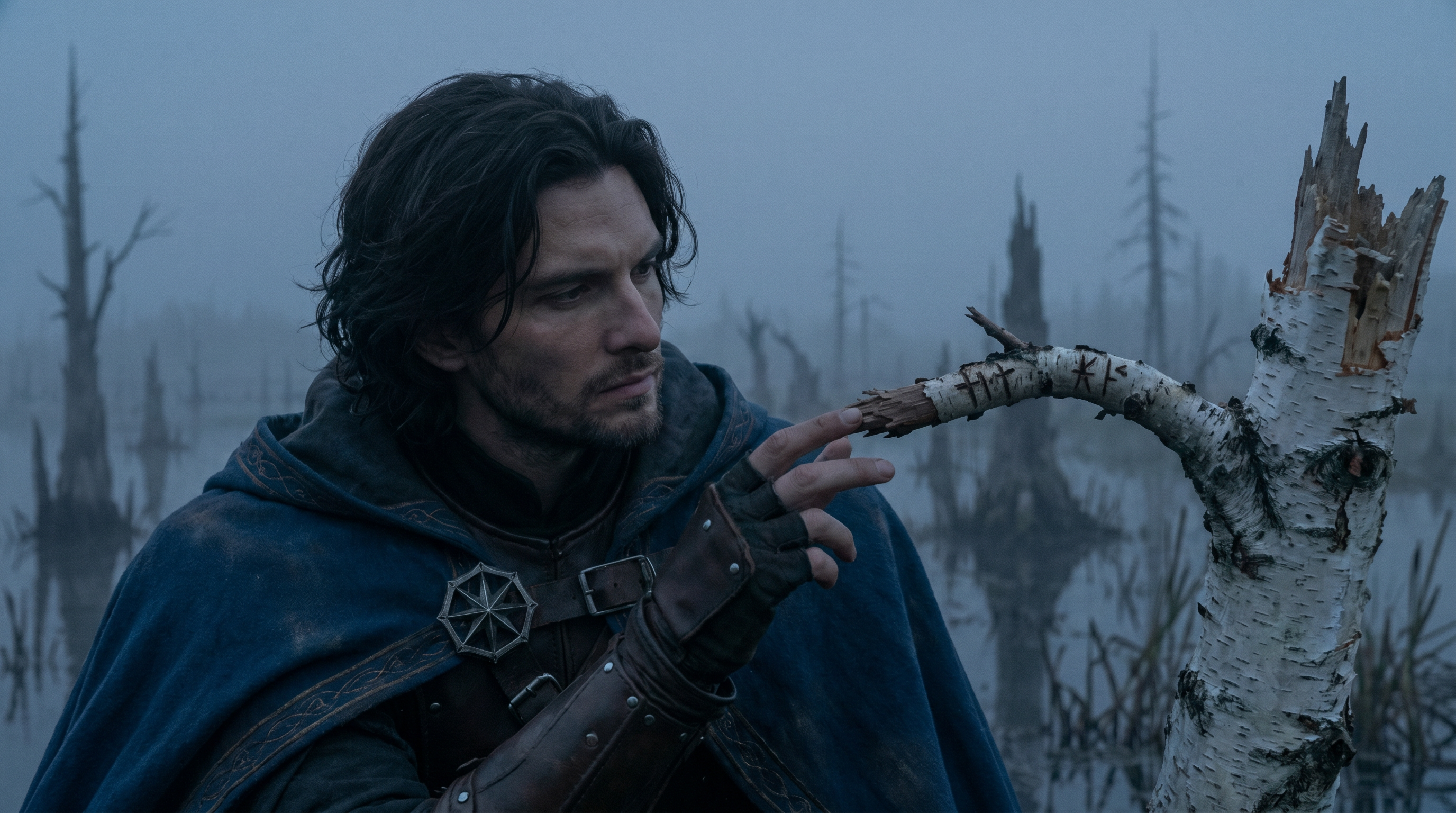
Avoid vague cinematic language
Replace vague mood labels with visible details: light direction, shadows, fog, texture, and depth of field. For example, describe a dim room lit by one window instead of only saying "cinematic".
Avoid open-ended words
Choose one result instead of offering alternatives such as "maybe" or "could be". Describe the image you want now. If you refer to an earlier version, attach it as a reference rather than assuming the model remembers it.
Avoid long negative lists
Use positive final-state descriptions whenever possible. For example, instead of writing "no glass," write:
an open carriage window, with mist drifting through the opening
Edit prompts
For edit prompts, use this structure:
Edit the provided base image.
Keep the composition, camera position, and framing unchanged.
Only change [...].
Foreground, midground, background
Foreground, midground, and background can be described when their visual function matters, but do not over-explain what the reference already shows. Only write what affects the generation:
- foreground wool blanket heavily out of focus
- focus on the character's face
- background snowy forest extremely out of focus
- distant fog and soft bloom outside the window
Be specific about lighting
Define the light source, direction, bright areas, dark areas, and bloom:
- the carriage interior stays very dim
- the only clear light source comes from outside the window
- soft morning light passes through dense fog and falls on her face
- bright areas carry soft bloom
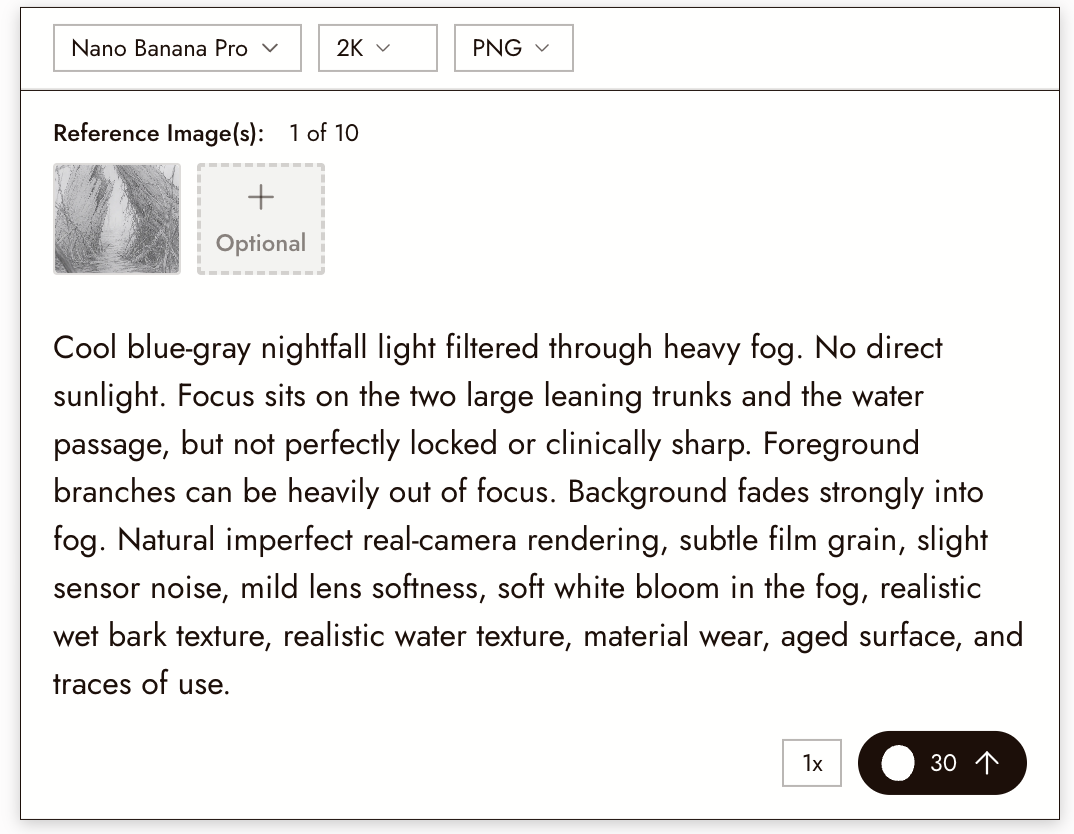
Describe focus for live-action images
Choose the part of the image that should be in focus. For a softer live-action look, try:
- focus on the character's face with slight lens softness
- the face is the clearest part of the frame
- foreground and background are heavily out of focus
Use these suggestions for a live-action look. Other styles, such as anime, may need different focus treatment.
Add texture where it fits
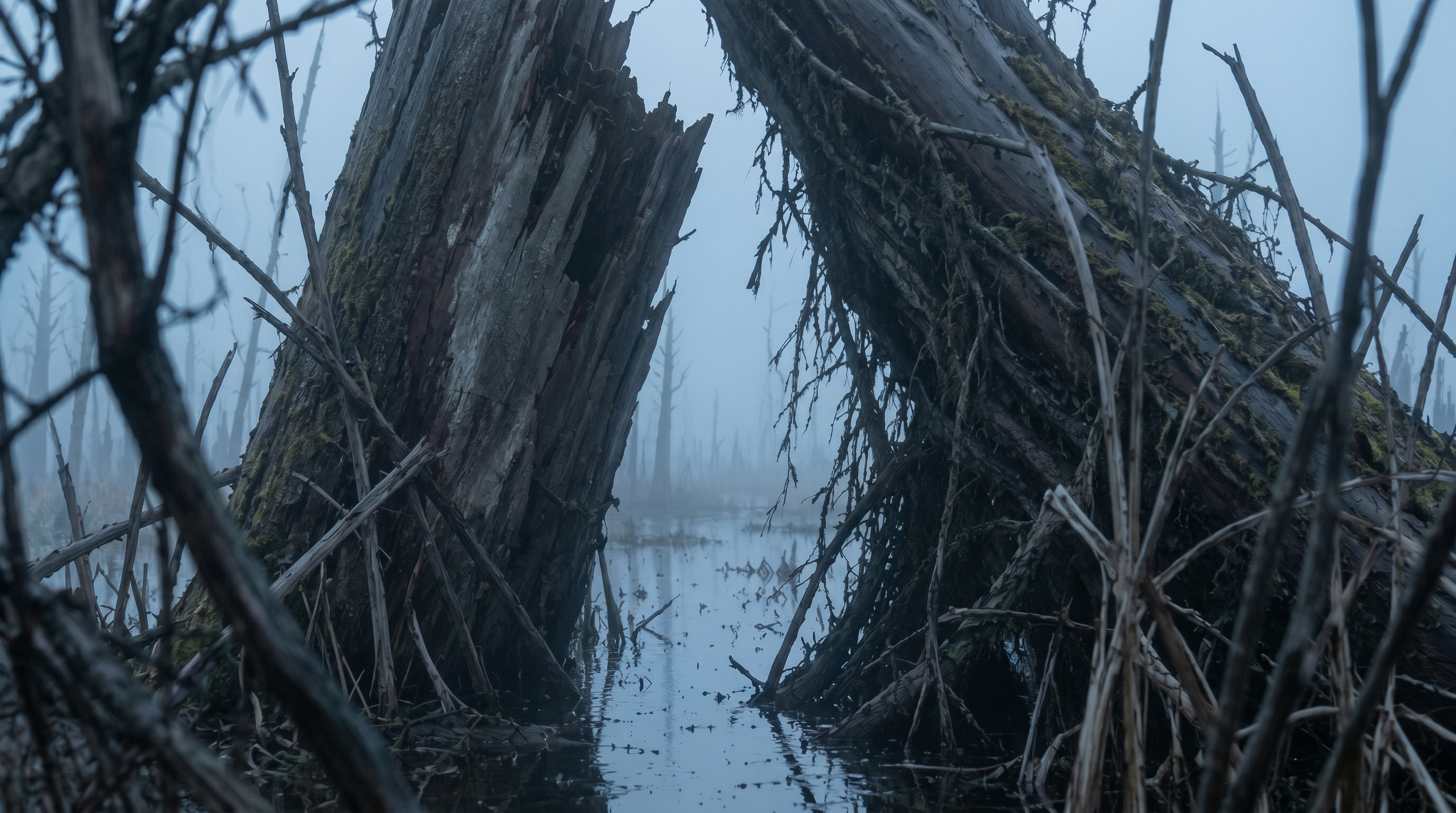
For a less polished look, add a few camera or material details that suit the scene. Avoid adding every effect at once:
- subtle film grain
- slight chromatic aberration
- slight sensor noise
- mild lens softness
- soft white bloom
- very light indoor haze
- natural imperfect real-camera rendering
- realistic fabric texture
- realistic paper texture
- realistic skin texture
- visible pores
- freckles
- realistic wood texture
- realistic metal texture
- material wear
- aged surface
- use marks
Start with clear lighting and believable materials. Add grain, wear, or lens effects only where they support the image.
Keep prompts concise
Use references for the details you want to keep. Describe only changes, missing details, and specific problems to fix. Check the result before adding more instructions.
Related guides
- Generate images for running Nano Banana.
- Edit and Grade for changing part of an image.
- Visual Styles for applying a consistent look.
- Consistent AI Characters: The 2026 Guide for the full character workflow.