AI Movie Script Generator
WHY GENERATE WITH FLICK?
Type a logline. Get a formatted screenplay. Generate every scene on the canvas without switching tools.
AI MOVIE SCRIPT GENERATOR EXAMPLES
HOW IT WORKS
STEP 1
DRAFT YOUR SCREENPLAY
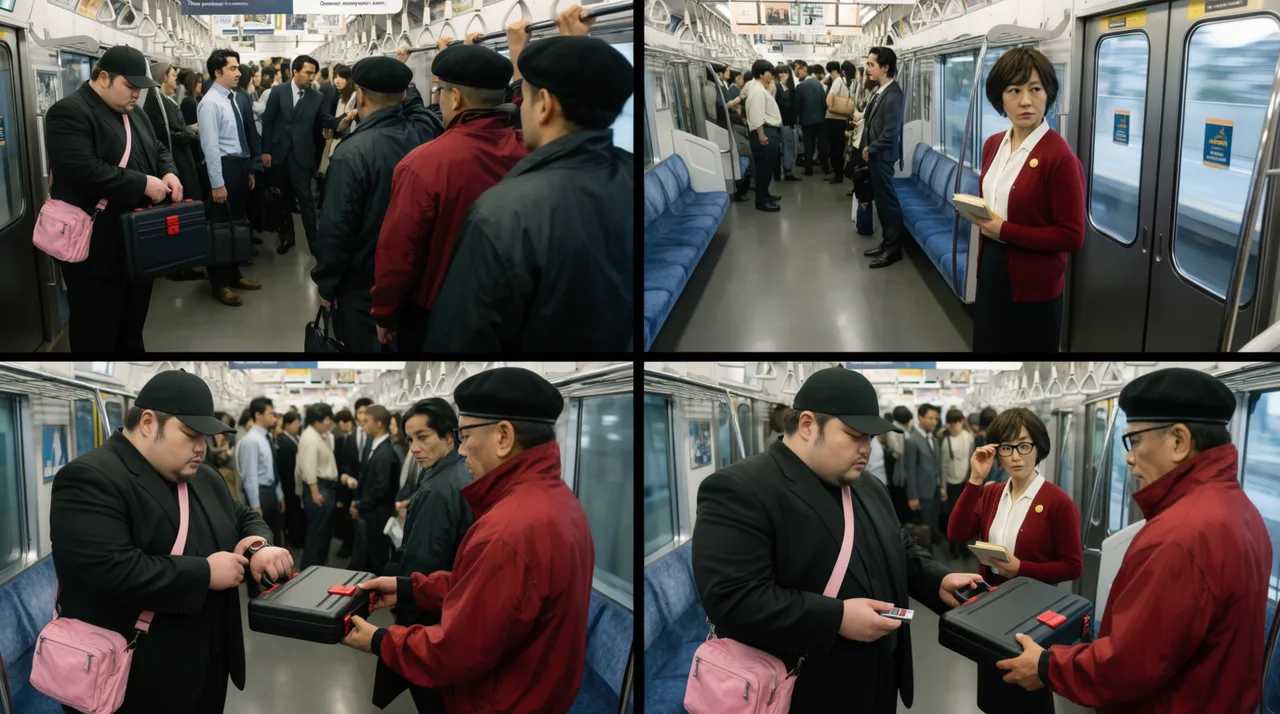
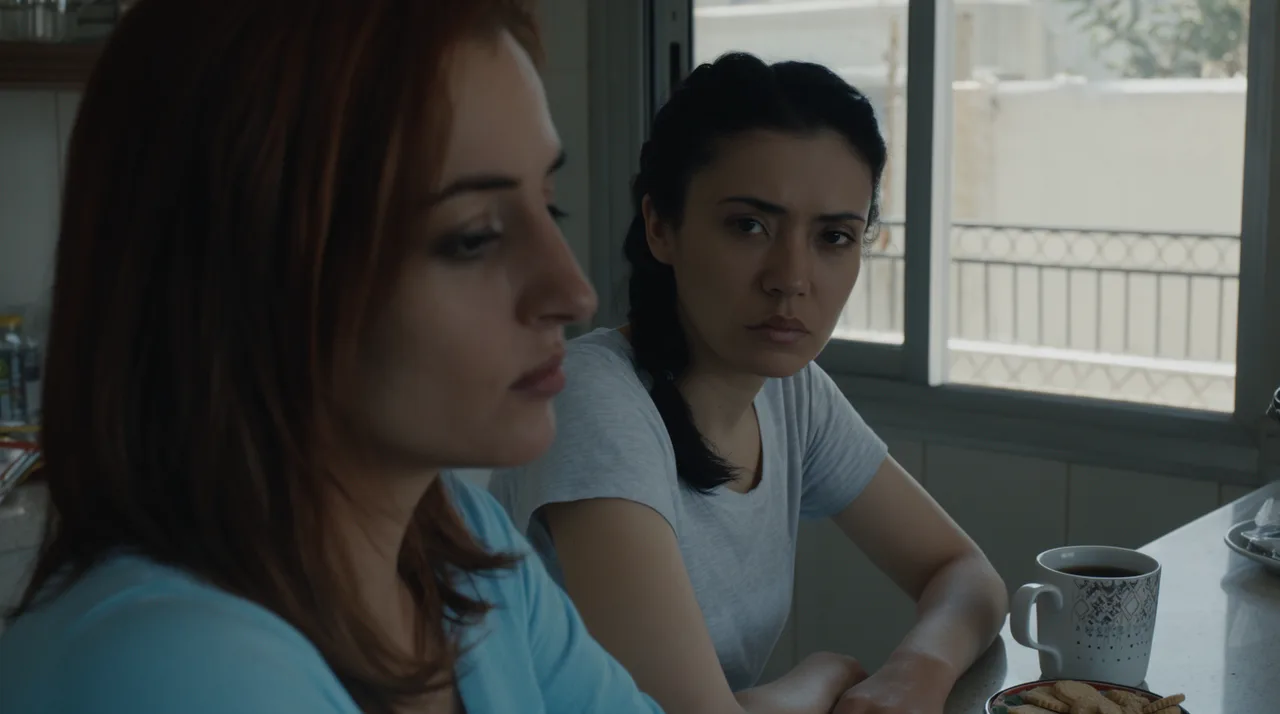
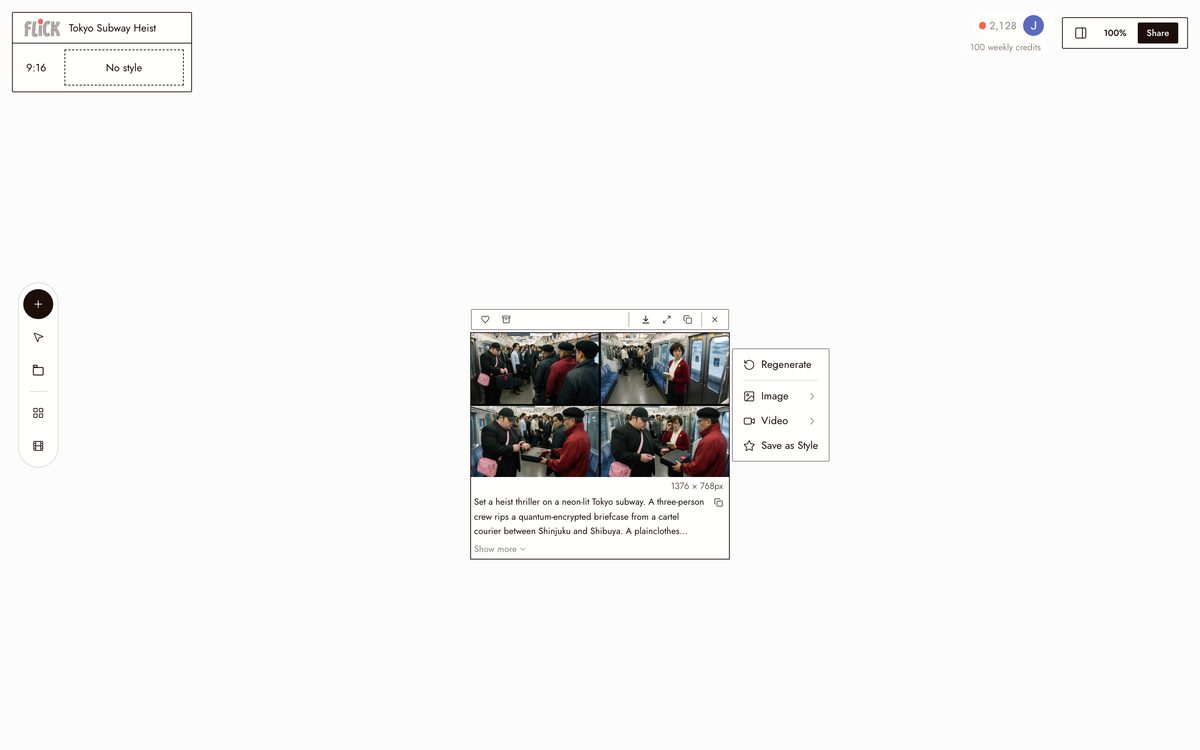
Type a logline: a heist thriller in a neon-lit Tokyo subway, a quiet drama between estranged sisters, anything. Flick breaks it into a formatted scene-by-scene screenplay with action lines and dialogue.
Made in Flick STEP 2
GENERATE YOUR STORYBOARD
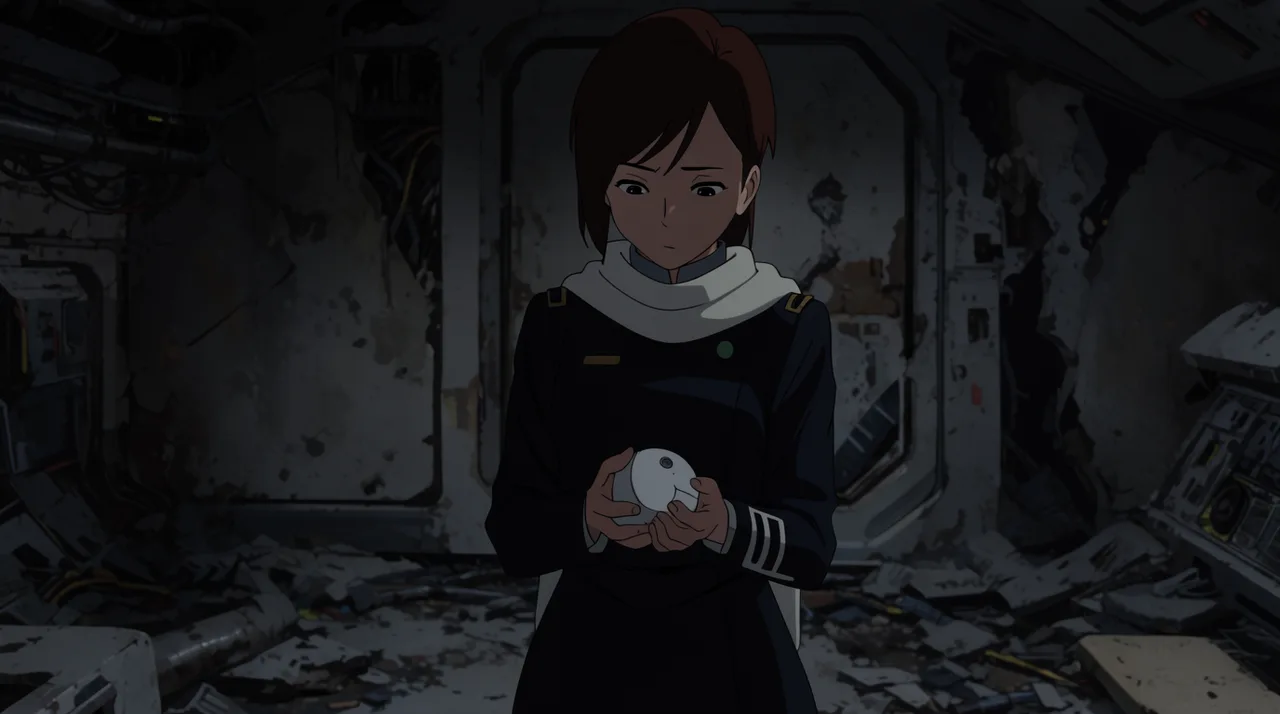
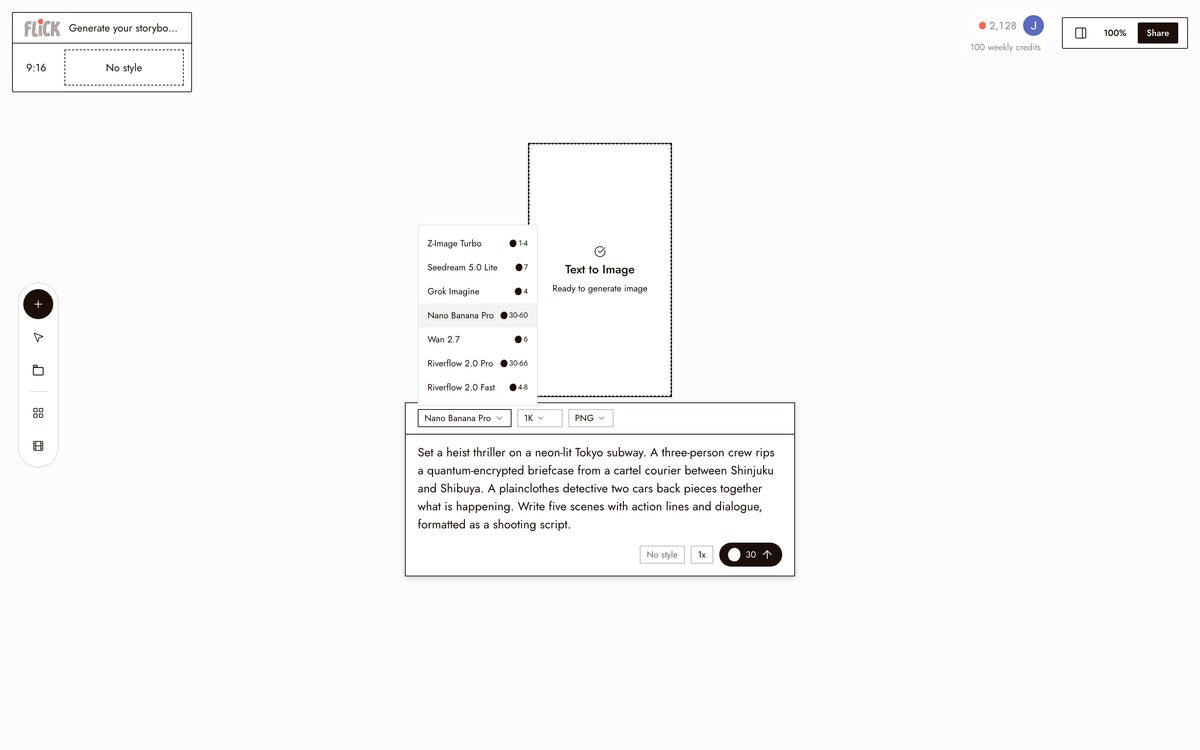
Turn each scene into a canvas node. Generate a reference still for every shot with Nano Banana Pro or GPT Image. Lock your lead character across all of them with Character Reference.
Made in Flick STEP 3
SHOOT EACH SCENE
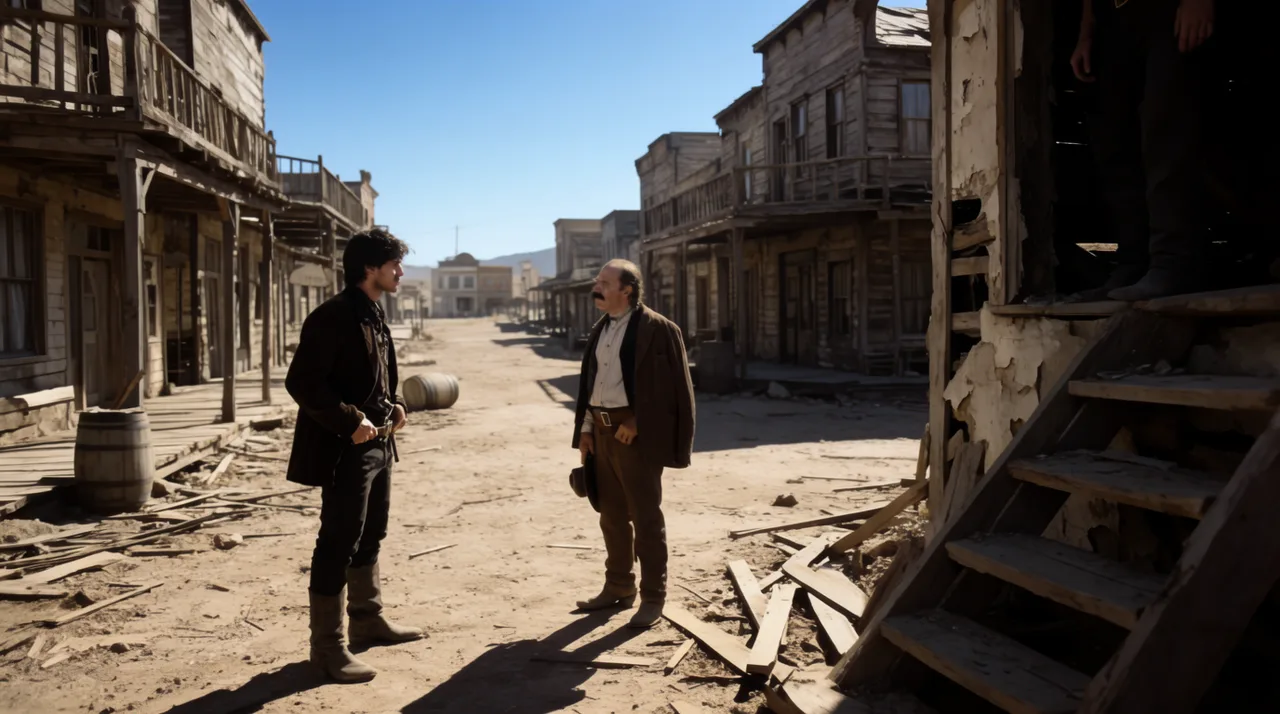
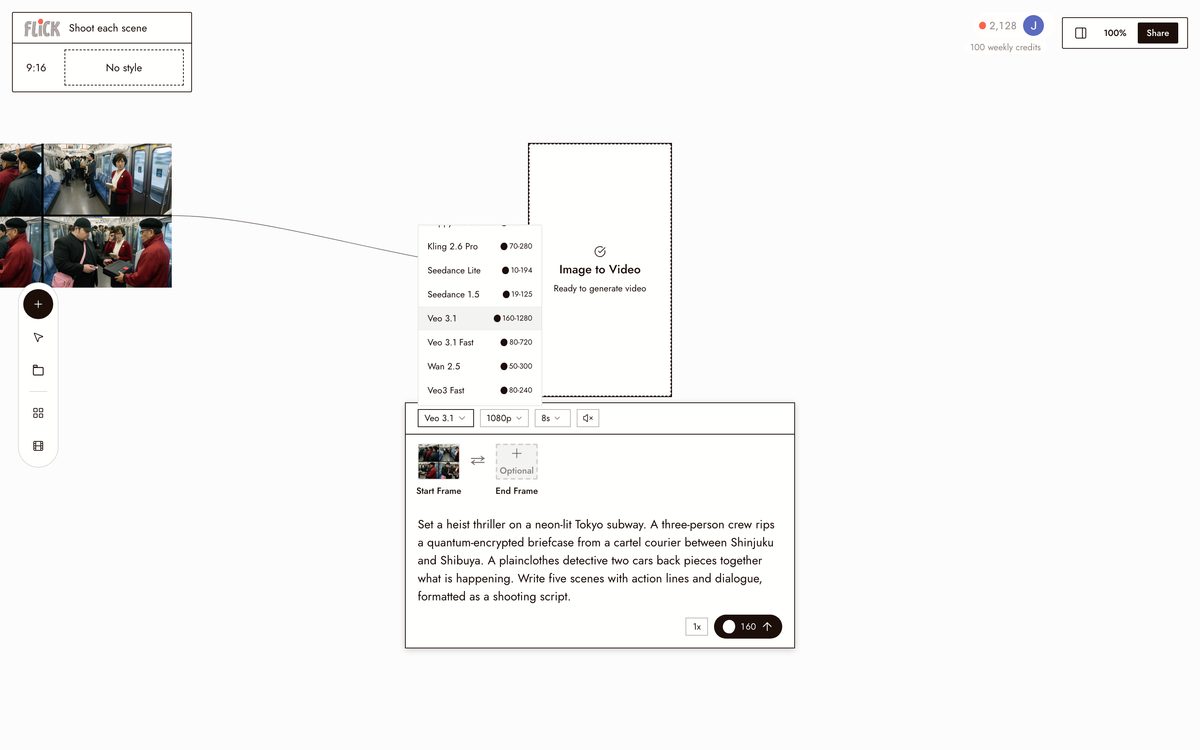
Pick a model per shot: Kling for motion and physics, Veo 3.1 for cinematic quality and native audio, Seedance for fast high-quality generation. Chain the clips into a full sequence on the same canvas.
Made in Flick


AI MOVIE SCRIPT GENERATOR FAQS
WHAT DOES AN AI MOVIE SCRIPT GENERATOR ACTUALLY DO?
It turns a logline into a formatted screenplay: scene headings, action lines, and dialogue, structured beat by beat. Most script generators hand you a document and stop. Flick carries the script forward. Generate shots for each scene on the same canvas using Kling, Veo 3.1, or Seedance, without switching tools.
CAN I GO STRAIGHT FROM SCRIPT TO FOOTAGE?
Draft a scene-by-scene screenplay from your logline, then use each scene as a prompt to generate stills or video on the canvas. Use Kling for motion and physics, Veo 3.1 for cinematic quality and native dialogue, or Seedance for fast high-quality generation. Script and footage live in one workspace.
CAN THE SAME CHARACTER APPEAR CONSISTENTLY ACROSS EVERY SCENE?
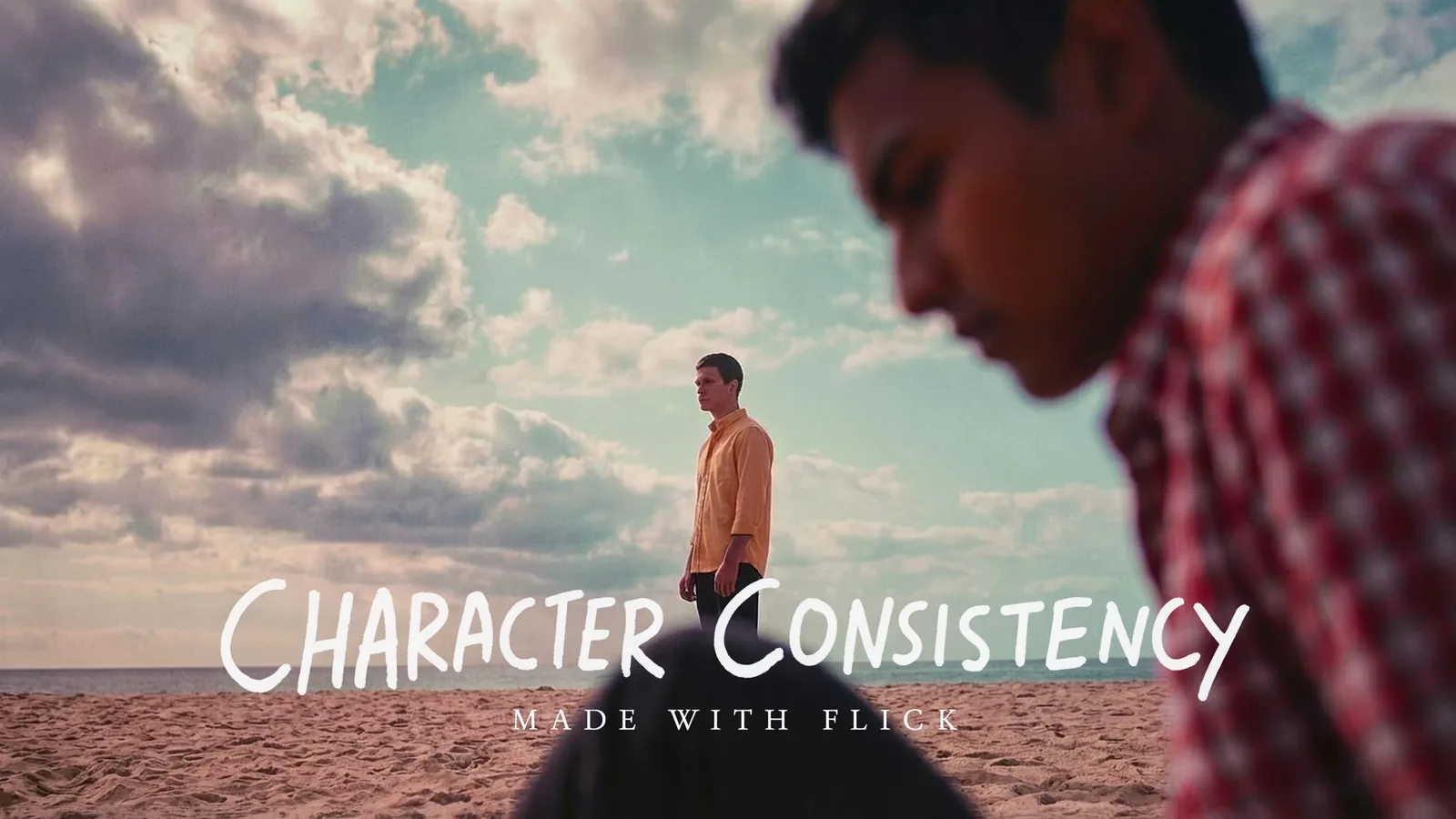
Lock a character once with Character Reference using a single reference image. Face, proportions, and outfit stay consistent across scenes, models, and angles. That lock holds across Kling, Veo, Seedance, and Nano Banana Pro.
IS FLICK FREE TO USE?
Flick has a free tier. Generate scenes, draft scripts, and test models without a credit card. Beyond the free tier, pricing is credit-based with a free tier to start.
IS THE SCRIPT AND FOOTAGE I GENERATE MINE TO USE?
Output ownership sits with you, not the platform. The screenplay you draft and the footage you generate on the canvas are yours to use, distribute, and build on. Review Flick's terms for the full detail.
HOW IS THIS DIFFERENT FROM CHATGPT OR FINAL DRAFT FOR SCREENWRITING?
ChatGPT and Final Draft produce documents. Flick produces a script and lets you shoot it. Storyboard each scene, generate footage with hosted video models, and chain clips into a sequence on the canvas. The script is the starting point, not the end product.
TRY THE AI MOVIE SCRIPT GENERATOR FREE