Estilos de Ilustración de Libros Infantiles, Mostrados en Movimiento
Los principales estilos de ilustración de libros infantiles son acuarela suave, cuento pastel, gouache plano, crayón, tinta y pincel, y 3D redondeado. Elige el que se adapte a la edad de tu lector y al tono de tu historia.
La mayoría de las guías de estilos de ilustración para libros infantiles muestran imágenes estáticas, por lo que es difícil saber cómo se vería un estilo en un tráiler de libro o en una historia animada. Esta guía muestra 6 estilos en movimiento, en 12 clips de 7 películas creadas en Flick, con las palabras que sus creadores usaron siempre que el prompt nombra el estilo. Estos clips provienen de películas animadas en lugar de libros impresos, y cada estilo aquí es uno que los ilustradores usan en la página.
¿Cuáles son los principales estilos de ilustración de libros infantiles?
Seis estilos cubren la mayoría de los libros ilustrados: acuarela para historias delicadas, cuento pastel para las acogedoras, gouache para cuentos folclóricos, crayón para la voz de un niño, tinta para el ambiente, y 3D para aventuras vibrantes.
6 estilos y el tipo de historia que mejor se adapta a cada uno
Estilo
Lo que ves
Se adapta a
Ejemplo
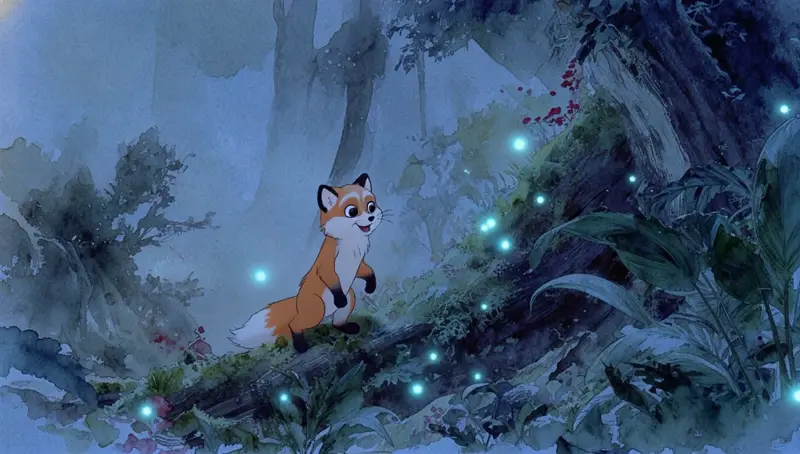
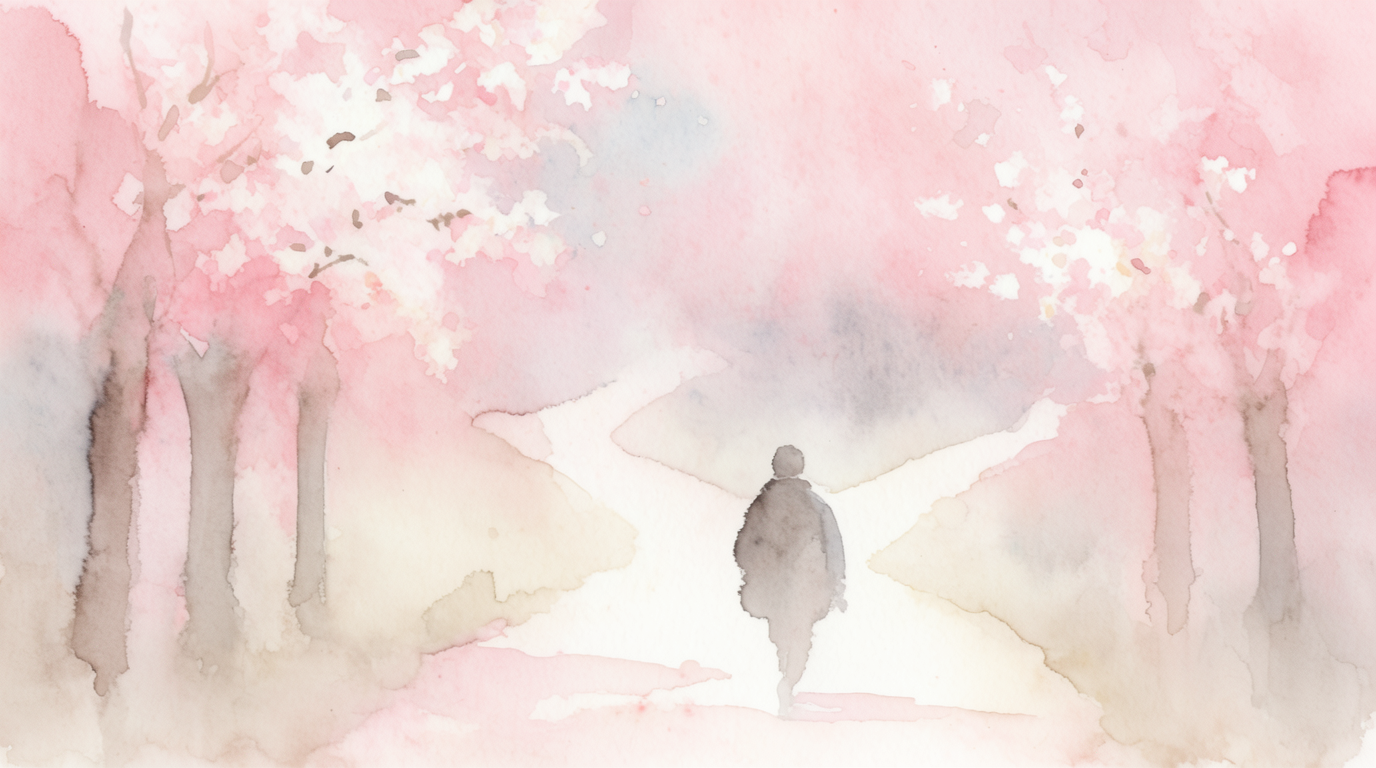
Acuarela suave
Bordes difuminados, lavados pálidos, papel visible
Comienza desde un fotograma con trazos pálidos y bordes sueltos, luego describe una acción pequeña y tranquila, porque un prompt lento y simple permite que la superficie pintada permanezca calmada.
Primer fotograma00:30
Un jardín al amanecer, escrito como un recuerdo
Este prompt se lee como una línea de la historia misma, con el aspecto pintado ya definido por el fotograma del que parte.
My grandma had a vegetable garden. Every morning at dawn, she would tidy it up and take care of it. There were also little chickens and birds around.
Significado:Una abuela cuida su huerto de vegetales al amanecer con pollitos y pájaros alrededor en estilo cálido y nostálgico de iluminación suave matutina.
Primer fotograma00:15
Una abuela desvaneciéndose en humo
La pintura pálida y suelta hace que una idea difícil sea lo suficientemente suave para un lector joven, mientras la figura se aleja flotando hacia el paisaje.
grandma and a little girl are walking together. Grandma gradually turn into a wisp of smoke and quietly drift away. girl tries to find out catch grandma.
Significado:Una abuela y una niña caminan juntas, la abuela se convierte en humo y desaparece mientras la niña intenta atraparla.
¿Cómo conseguir un estilo de cuento pastel?
Nómbralo directamente: libro de cuentos ilustrado, paleta de pasteles cálidos y líneas sepia suaves, luego descarta el renderizado realista para que el modelo no se desvíe hacia 3D.
Primer fotograma00:07
Una línea de estilo que dice libro infantil vintage
El prompt termina con una línea de estilo completa y un prompt negativo, para que el aspecto permanezca dibujado a mano de una toma a la siguiente.
The spaceship travels slowly through space. The thrusters glow and pulse gently. Subtle light glare sliding across the round windows. Very slow, calm, cinematic drift. Do not rotate. Establishing shot mood.
Camera steady.
No music.
Hand-drawn 2D animation, illustrated storybook, cozy retro-futuristic sci-fi, warm pastel palette, soft sepia linework, painterly shading, vintage children's book, gentle golden light, whimsical, nostalgic, cozy spaceship interior, cinematic parallax, subtle atmospheric animation.
Negative Prompt
photorealistic, 3D CGI, realistic rendering, glossy surfaces, hyper-detailed textures, anime, manga, thick black outlines, neon colors, high contrast, dark horror mood, dramatic lighting, fast camera movement, excessive motion, shaky camera, realistic modern kitchen, futuristic cyberpunk aesthetic, visual clutter.
Significado:Una nave espacial viaja lentamente por el espacio con propulsores brillantes en estilo de ilustración nostálgica de libro infantil con paleta pastel cálida.
00:15
Dos amigos comparten un pastel en un planeta desértico
El color plano y los rostros grandes y claros mantienen a los personajes legibles en cualquier tamaño, que es lo que un libro ilustrado necesita en una página pequeña.
Start Mila in Spaceship Interior100%.
Mila's appearance Mila con Zaino Giapponese, Senza Ombre100% and expressions Mila - Espressioni del Viso.
Mila's voice My Radar Apology.
 Sasa's appearance Sasa con Zaino Giallo e Pistola Laser100% and expressions Sasa - Espressioni Facciali100% .
Sasa's voice Mother's Old Spaceship. 2D hand-drawn animation.
Sasa is smaller than Mila. Tart looks like this Mila con Crostata
Preserve reference style and character identity. *CAMERA: 2 shots, 1 hard cut. SHOT 1 — Medium close-up, 3/4.Mila and Sasa sit side by side on the top of the spaceship. Mila in front then Sasa beside her. Mila holds a tart sliced into 6 pieces. In the center the tart  the star spice in the center.
Sasa, happy for Mila with deep warm paternal male voice: “What were the odds we'd find your mother's old spaceship?” Mila turns to him, calm, visibly happy, smiles softly: “I’ve found my star-shaped spice.” Zoom in - Mila takes a a slice with the start spice and gives a bite. She closes her eyes tasting the tart. No effects. Close up - Mila then opens them and looks up the sky. Her expression becomes quietly hopeful: “But I have to find her among the stars.” AUDIO: Natural dialogue, no overlap. Sasa's voice is deep, warm and human, never robotic. No music. No sound. Hand-drawn 2D animation cozy retro-futuristic sci-fi, warm pastel palette, soft sepia linework, vintage children's book, gentle golden light, whimsical, nostalgic, cozy spaceship interior, cinematic parallax, subtle atmospheric animation.
Significado:Mila y Sasa conversan sentados sobre la nave mientras ella prueba una tarta con especias en animación dibujada a mano retro futurista cálida.
¿Cómo conseguir un estilo folclórico de gouache plano?
Pide textura de gouache pintado a mano, pincel seco y perspectiva aplanada, porque esos tres describen el aspecto opaco y guiado por formas de un cuento popular impreso.
Happy Souls Alive abre sus prompts con una línea de estilo como Graphic folk/editorial illustration, hand-painted gouache texture, dry brush, geometric shape language, flattened perspective.
00:04
Un primer plano con pinceladas visibles
La perspectiva aplanada empuja la ventana y el techo a un mismo plano, para que este plano pueda colocarse en una página con texto al lado.
SEEDANCE 2.0 — 4s | Graphic folk/editorial illustration, hand-painted gouache texture, dry brush, geometric shape language, flattened perspective | 1 SHOT, 0 CUTS | mostly static camera, small drift following her hand | close-up: beauty admires a plain stone like a jewel, then withdraws it, still in hand, off frame left | NEW CLOSE-UP COMPOSITION, TWO REFERENCE SOURCES

==========================================================
REFERENCE SOURCES (NOT STARTING FRAMES)
==========================================================
Character sheet reference: locks Beauty-upscaled face, proportions, coloring, hair, wardrobe, jewelry — exact design, pixel-accurate likeness.
Window/environment reference: window02locks only the environment's palette, materials, light quality, and gouache/dry-brush texture — not used for framing or composition.
This shot is a new close-up composition built from these two locked sources.

==========================================================
OPENING FRAME
==========================================================
Tight close-up, eye-level, centered on beauty's face and upper chest/shoulders, per her character sheet design. Soft even light on her face, consistent with the environment reference's light quality, no harsh shadows.

==========================================================
THE IDEA
==========================================================
beauty receives a plain stone entering frame, turns it in the light like a jewel in one quick, graceful motion, brings it briefly near her cheek, then lowers her hand and pulls it away from her face, carrying the stone with her fingers still closed around it, off frame left. She never releases or throws it — the stone stays gripped in her hand the entire shot.

==========================================================
STYLE / CADENCE GRAMMAR
==========================================================
Stepped/graphic cadence, still soft and self-admiring in feel, but paced quicker than before — floaty and elegant, not lingering. Twos through her gestures, no hard snaps, but no stalled holds either. Camera smooth on ones for its single restrained drift.

==========================================================
CAMERA
==========================================================
Locked eye-level, centered, mostly static. One small, gentle drift that follows her hand as it moves. Camera trails the gesture, never leads it.

==========================================================
MOTION LAYER 1 — THE STONE (ORDINARY, UNREMARKABLE OBJECT)
==========================================================
The stone: small, plain, dull grey-brown, rough surface, a visible crack, faint mud residue — never polished, never faceted.
0.0–0.4s: stone enters frame from the top, already in motion, continuing momentum from the previous shot.
0.4–0.7s: her hand catches it, closing around it, fingers fully wrapped around the stone.

==========================================================
MOTION LAYER 2 — ADMIRE AND WITHDRAW
==========================================================
0.7–1.8s: she lifts and turns it in one continuous, graceful motion, tilting her head briefly — reads as elegant, not slow. This is the money moment; keep it flowing, not held.
1.8–2.4s: brings it near her cheek/jaw for a brief beat, small satisfied smile — short, not lingering. Fingers remain closed around the stone throughout.
2.4–3.4s: hand lowers and pulls away from her face, moving left, fingers still fully closed around the stone — a withdrawal, not a release or toss. No throwing motion, no opening of the fingers, no upward or outward arc.
3.4–4.0s: hand exits frame left, stone still gripped inside it, camera drift settles.

==========================================================
HARD RULES — POSITIVE ASSERTIONS
==========================================================
beauty's face, proportions, wardrobe, and hair stay pixel-identical to the character sheet design throughout.
The environment's palette, light quality, and gouache/dry-brush texture match the environment reference throughout.
The stone stays small, dull, rough-surfaced, and cracked at every frame — never polished or gem-like.
Her fingers stay closed around the stone from the catch at 0.7s through the end of the shot — the stone is never released, thrown, tossed, or let go at any point.
The exit motion is a smooth, controlled withdrawal — hand pulling back and left, low speed, no acceleration, no throwing arc, no upward flick.
beauty's gestures stay graceful and floaty in quality but move continuously — no held pauses beyond the single brief cheek beat at 1.8–2.4s.
The camera's only motion is a small trailing drift following her hand; it never leads.
The hand, with the stone still gripped inside it, exits frame left together, fully offscreen by 4.0s.

==========================================================
TIMING GRID — 4s
==========================================================
0.0–0.4s: stone enters frame top, in motion.
0.4–0.7s: hand catches stone, fingers close around it.
0.7–1.8s: stone lifted and turned, one continuous motion.
1.8–2.4s: brief cheek beat, held briefly only.
2.4–3.4s: hand withdraws left, stone still gripped, no release.
3.4–4.0s: hand exits frame left, stone still inside it.

==========================================================
AUDIO — 4s
==========================================================
Constant ambient bed: distant town-square murmur, soft wind.
0.4s: faint stone-landing/catch sound.
0.7–1.8s: subtle finger-on-stone friction, very quiet.
No music, no dialogue.

==========================================================
NOTES
==========================================================
Key fix from last version: the exit is now explicitly a withdrawal with fingers staying closed the whole time — added a hard rule directly forbidding release/throw/toss language interpretation, since "drifts left" alone was apparently read as a throwing motion. If it still shows a release, the next lever is adding "clenched fist" language to make the closed grip even more explicit.
Significado:Una mujer admira una piedra simple como si fuera una joya, luego retira su mano del encuadre con estilo de ilustración editorial de gouache.
00:12
Un pueblo entero en un solo cuadro
El gouache funciona bien en una escena abarrotada porque las formas audaces mantienen cada figura separada, con una paleta apagada que mantiene unida la composición.
SEEDANCE 2.0 — 12s | 2D painterly graphic-folk, gouache texture, muted earthy ochre/dusty-teal | 2 shots, 1 hard cut at 5s | THE CROWD APPLAUDS → char2 INSIDE THE APPLAUSE

==========================================================
WORLD & CHARACTERS (reference = style/character bible, not starting frame)
==========================================================
Same town square throughout: warm late-afternoon light, wooden ceremonial platform, banners, timber houses, dense townspeople crowd. Red Warrior on the platform per his sheet, holding an old beige cloth raised in one hand mid-story. char2 is somewhere in the same crowd, per her sheet.

==========================================================
CROWD — GENERATE, DO NOT REPLICATE
==========================================================
Build the crowd fresh in the established style: every individual gets their own face, age, hairstyle, hat, silhouette, and clothing. Base the crowd's costuming and design language on the world reference, but treat each person as a new, unique design — never copy or reuse Warrior Red's or char2's face, hair, or outfit onto anyone else, and never repeat one crowd member's design onto another.

==========================================================
SHOT 1 (0–5s) — LOCKED WIDE
==========================================================
Camera: fully locked wide angle, full square/platform/crowd in frame, zero movement.
Action: Warrior Red mid-gesture, cloth turning slightly in his raised hand as he tells his story. Crowd applauds and watches him with mesmerized attention — hands clapping, bodies leaning toward the platform, eyes on the cloth. Applause reads on twos (stepped), staggered slightly between individuals so it doesn't look like one repeating cycle.

==========================================================
SHOT 2 (5–12s) — HANDHELD WITH CHAR2
==========================================================
Camera: shoulder-height medium shot, gentle handheld sway, moves with char2 as she walks then settles.
Action, beat by beat:
5–7s: char2 drifts through the crowd, still trying to understand the reaction.
7s: she stops completely, does not clap. Camera settles.
7–8s: turns head right, reads the faces beside her.
8–9.5s: turns left, searches the other side, quiet confusion.
9.5s: lifts her gaze forward, brows knit, lips part slightly.
9.5–12s: confusion deepens in small increments — a swallow, a faint furrow, eyes drifting across faces without landing — settles into stillness on the last frame.
Background crowd keeps applauding toward the offscreenWarrior Red throughout, same cadence as Shot 1.

==========================================================
HARD RULES — POSITIVE ASSERTIONS
==========================================================
Warrior Red and char2 each appear exactly once, only in the shots described. Every crowd member has an individually generated face, hair, hat, and outfit, distinct from every other crowd member and from both named characters. Hands and bodies stay anatomically consistent through every clap cycle. Shot 1's camera stays perfectly locked. Shot 2's camera stays within the described handheld sway, settling cleanly at 7s and holding steady from 9.5–12s.

==========================================================
AUDIO — 12s
==========================================================
Constant crowd applause and murmurs across both shots, distant town ambience underneath. Slightly muffled around char2 after the cut. Soft breath from her at ~9.5s. No music.

==========================================================
NOTES
==========================================================
Condensed pass: crowd is now explicitly generated-not-copied, and both shots have a clean beat-by-beat action/camera script instead of layered description.
Significado:Una multitud aplaude al Guerrero Rojo en una plaza mientras char2 camina confundida entre ellos en estilo folclórico de gouache.
¿Cómo conseguir un estilo de dibujo a crayón?
Llámalo un dibujo infantil a crayón y convierte el dibujo en un objeto dentro de la escena, para que el trazo tembloroso y los espacios blancos se lean como la mano de un niño, no como un defecto.
Primer fotograma00:15
Un plano que comienza dentro del dibujo
La cámara se aleja de la página para revelar a la niña que lo dibujó, de modo que el estilo se explica a sí mismo como parte de la historia.
Handheld pull-back camera style.
The shot starts very close on this childlike crayon drawing.
The camera slowly pulls back and gradually reveals a little girl lying on the floor beside the drawing.
She keeps looking down at the crayons on the floor, picking them up one by one and putting them into a crayon box beside her.
The shot ends wide enough to clearly show the little girl, the full drawing, and the crayon box beside her.
Quiet indoor room tone, with soft crayon clatter and light paper rustle.
No background music.
Significado:Una niña acostada en el piso recoge crayones junto a su dibujo infantil en una toma que retrocede lentamente con estilo de cámara en mano.
Primer fotograma00:05
Un dibujo recogido del suelo
El prompt trata sobre las manos en lugar del estilo, porque el aspecto de crayón ya está fijado en la imagen que se está levantando.
Handheld camera style.
A person reaches in with both hands from the bottom of the frame.
They grab the drawing on the floor and lift it up.
The drawing slowly leaves the floor.
End on a downward view of the person holding the drawing. No background music.
Significado:Una persona levanta del suelo un dibujo con ambas manos en toma descendente con cámara en mano sin música de fondo.
¿Cómo se consigue un estilo de tinta y pincel?
Limita la paleta y haz que la línea sea el elemento principal, como trazos estilo xilografía en dos tonos, porque menos colores hacen que una imagen potente parezca una plancha impresa.
Primer fotograma00:05
Una pintora cargando su pincel
Las líneas finas de pincel y el color pálido se adaptan a un cuento popular, y el prompt puede centrarse en una pequeña acción con el aspecto ya establecido en el cuadro.
she gently swirls the tip of brush around the ink pot and pulls it out to wipe off the excess, her expression has a soft smile and she is calm and precise in her actions
Significado:Ella gira suavemente el pincel en el tintero y lo limpia con una sonrisa tranquila y movimientos calmados y precisos.
Primer fotograma00:05
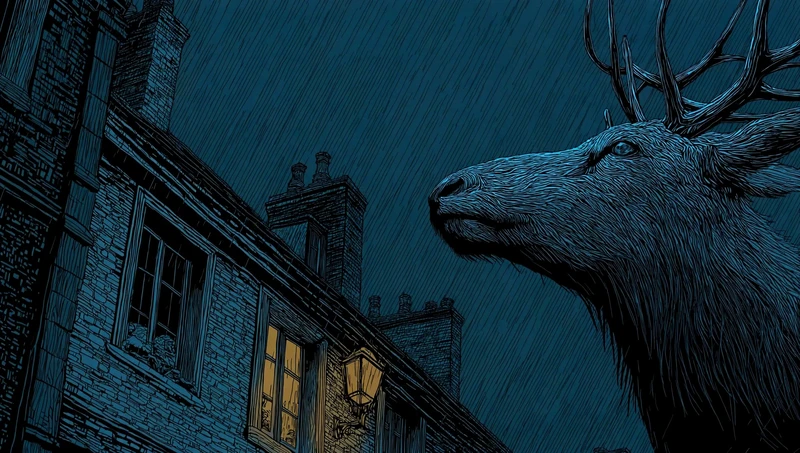
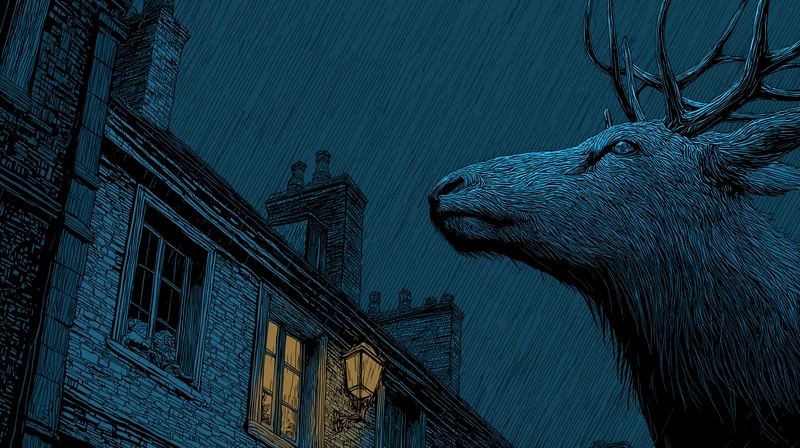
Un ciervo blanco sobre los tejados
El arte lineal azul oscuro convierte esto en una imagen para lectores mayores, con una ventana cálida que destaca contra el azul.
A colossal Celtic white stag in side view moves slowly from right to left above the rain-slick rooftops, keeping a calm, level posture and constant height; the head makes a tiny glance toward the warm window and the eye blinks once, otherwise remaining steady. Antlers and coat are wet and glossy from the rain; neck fur shows only a subtle ripple from motion. Heavy diagonal rain keeps falling from upper-left to lower-right; the amber window glow stays constant. The camera is locked on the stag’s head and the nearest chimney to create gentle parallax as the stag slides past—no new elements, no breath, no steam, no curtain flutters; no tilt, no zoom, no sudden moves—only a smooth lateral pass.
Significado:Un ciervo celta blanco colosal camina sobre tejados mojados bajo lluvia diagonal mientras mira brevemente una ventana iluminada con parallax lateral constante.
¿Cómo se consigue un estilo de cuento ilustrado 3D redondeado?
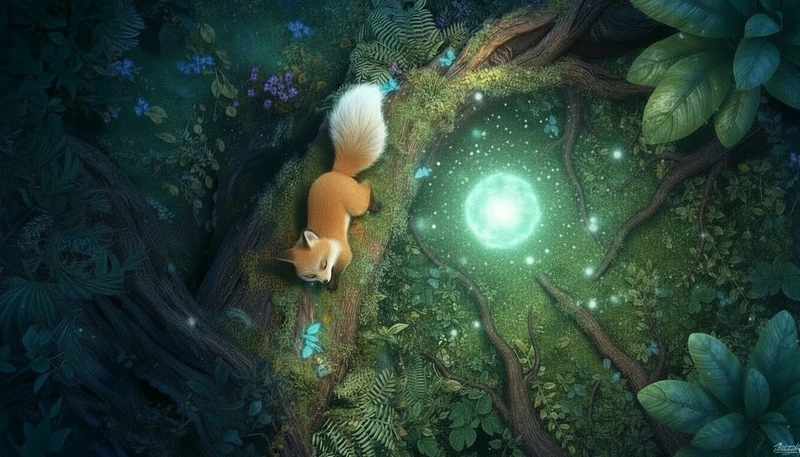
Comienza con un fotograma que muestre pelaje suave, ojos grandes y luz brillante, luego escribe la acción como se la narrarías a un niño.
Primer fotograma00:10
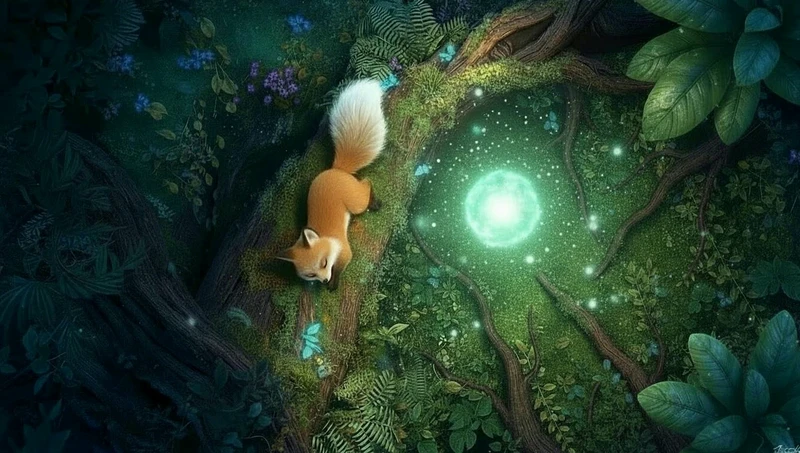
Un zorro quedándose dormido
Tres frases cortas son suficientes aquí, y una imagen encaja perfectamente en la última página de cualquier cuento para dormir: una cola enrollada como una manta.
The little fox slowly falls asleep, curling its tail around itself like a blanket. The glowing particle begins to fly around the little fox. The camera slowly slowly move further.
Significado:El pequeño zorro se queda dormido enrollando su cola mientras una partícula luminosa vuela alrededor y la cámara se aleja lentamente.
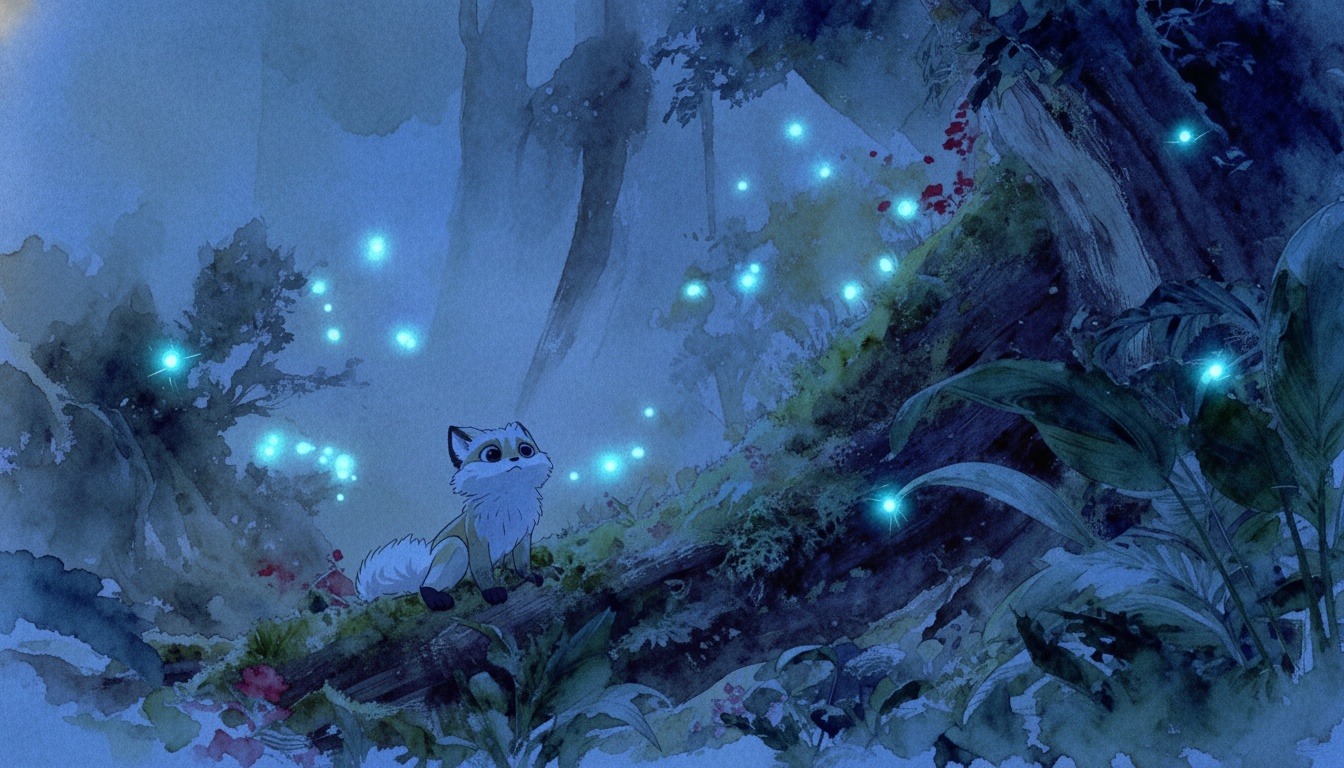
Primer fotograma00:05
Una persecución torpe sobre un tronco musgoso
Escribir el resbalón y la caída suave y graciosa en el prompt le da a la toma el tipo de comedia física que les encanta a los lectores jóvenes.
The little fox sits on the mossy log, ears twitching as glowing particles drift around.
It lifts its paw curiously toward one light, misses, and blinks in surprise.
Another cluster floats by — it hops forward playfully, swatting with both paws.
The lights scatter upward; the fox’s tail wiggles excitedly as it chases them, stepping too far on the slick moss.
Its hind leg slips — it tumbles sideways off the log, rolling once onto its back in a soft, funny fall.
For a moment it stays still, then exhales a small sigh, watching the particles rise slowly above.
It relaxes, paws half-lifted, eyes reflecting the glowing motes, tail flicking once as it lies there gazing at the shimmering sky.
Significado:Un pequeño zorro juega con partículas luminosas sobre un tronco, resbala del musgo, cae de espaldas y suspira mirando las luces flotantes.
¿Cómo elegir y usar un estilo de ilustración?
Elige según la edad de tu lector y el estado de ánimo del cuento, escribe una línea de estilo, genera una página de prueba y luego repite esa línea en cada prompt para que todo el libro coincida.
1Comienza por el lector
Elige formas audaces y colores fuertes para los lectores más pequeños, luego estilos más suaves o detallados a medida que los lectores crecen y pueden seguir una imagen por más tiempo.
2Coincide con el estado de ánimo
Deja que el sentimiento del cuento decida después: acuarela para lo tranquilo, gouache para cuentos populares, crayón para la voz de un niño y tinta para cualquier cosa con un tono más oscuro.
3Escribe una línea de estilo
Pon el medio, la paleta y la calidad de línea en una frase, y añade qué evitar, como fotorrealista o 3D, para que el modelo mantenga un solo aspecto.
4Prueba una página, luego repite
Genera una escena clave y verifica que el personaje se vea claramente, luego adjunta esa imagen y la misma línea de estilo a cada otra página o toma.
¿Cuáles son los estilos de ilustración de libros infantiles más populares?
La acuarela, los dibujos animados, el gouache, el collage, el lápiz y el 3D digital aparecen en la mayoría de las listas, y muchas guías señalan la acuarela como el aspecto clásico de los libros ilustrados. La elección correcta depende de la edad de tu lector y el tono de la historia.
¿Qué estilo de ilustración es mejor para niños pequeños?
Las formas audaces, los colores brillantes y las caras simples suelen funcionar mejor para los lectores más pequeños, porque pueden reconocer al personaje de un vistazo. Los estilos de dibujos animados planos y de crayón lo hacen muy bien.
¿Cuál es el estilo clásico de los libros ilustrados?
La acuarela suave con líneas de tinta ligera es el aspecto que muchas personas imaginan primero, con lavados pálidos y mucho espacio en blanco alrededor de los personajes. Se adapta particularmente bien a historias tranquilas y gentiles.
¿Cómo mantengo un estilo de ilustración consistente en todo el libro?
Escribe una línea de estilo y repítela en cada prompt, y adjunta una página terminada como imagen de referencia. El mismo enfoque mantiene los personajes y colores consistentes en todas las tomas de una historia animada.
¿Puede la IA ilustrar un libro infantil?
Los modelos de imagen de IA pueden producir páginas en estos estilos, siempre que mantengas el personaje y el estilo consistentes y revises cada página manualmente. Lee primero las reglas de publicación de cada plataforma, ya que algunas te piden que declares las imágenes de IA.
¿Puedo animar mis ilustraciones de libros infantiles?
Sí. En Flick puedes iniciar un video desde una ilustración y describir una pequeña acción, como un zorro acurrucándose para dormir, que funciona bien para un tráiler del libro o una historia animada.