Behind the film
- 98 video generations
- 33 image generations
- 9 models
- 560 s of video generated
How it was made
-
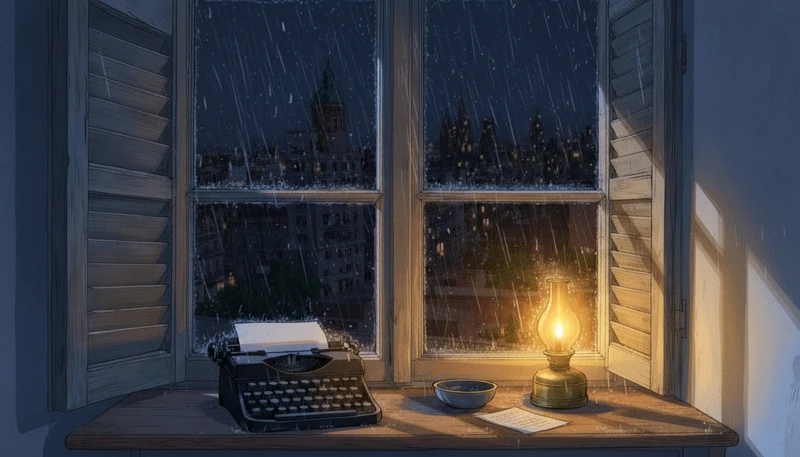
Find the writer's room with small edits
The writer's room was tuned with short, plain requests to Nano Banana, one change at a time: make it night with rain, make the light outside darker and colder, make the oil lamp warmer.
let's make the oil lamp's color warmer and slightly brighter
-
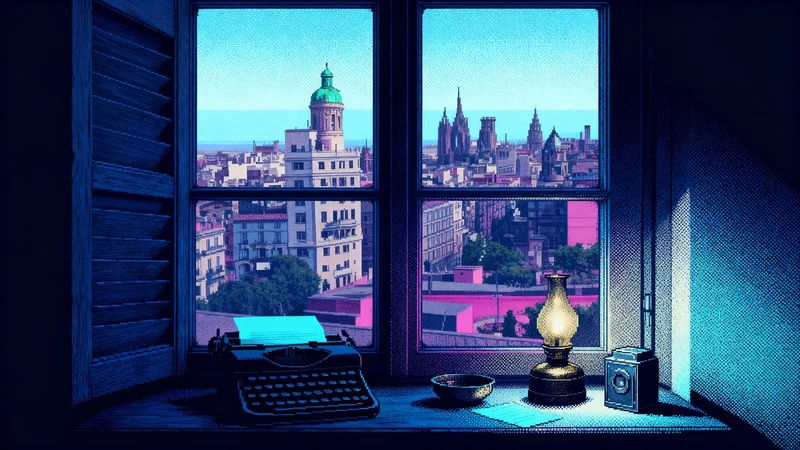
Try the scene as a painting
Nine frames were run through Flick's style transfer, turning the edited desk and window scenes into painted versions of the same composition.
-
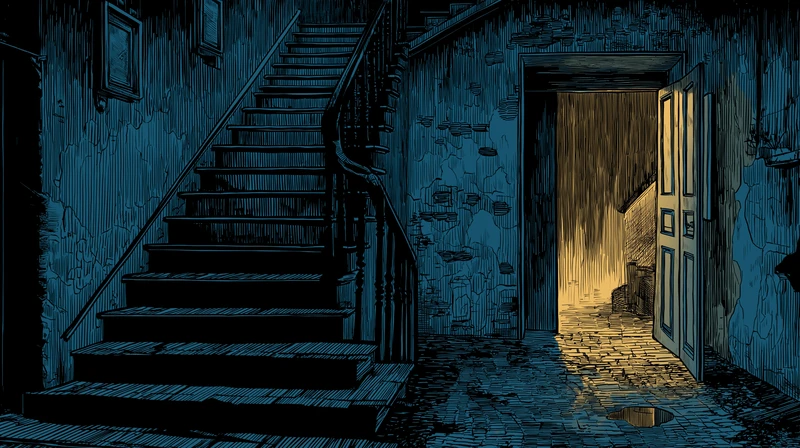
Animate illustrated plates
Most of the film moves illustrations rather than generated photos: 59 of the 66 stills that were animated are uploaded drawings, many in a two-tone blue and off-white woodcut look. The prompts for those plates repeat the look.
woodcut-like linework, strict two-tone palette of deep desaturated blue and off-white
-
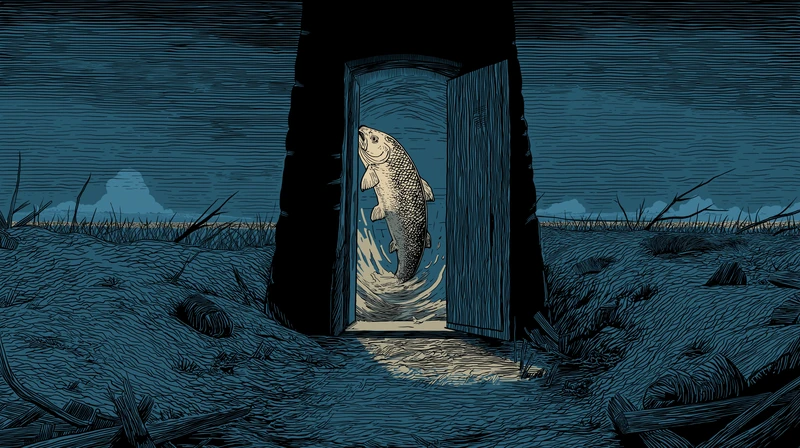
Move only what should move
62 of the 98 video prompts start with a locked or static camera, then name the one thing that may move: the rain, a fish, a waterfall. Everything else in the drawing is told to stay still.
Only animate the salmon and the waterfall inside the doorway
-
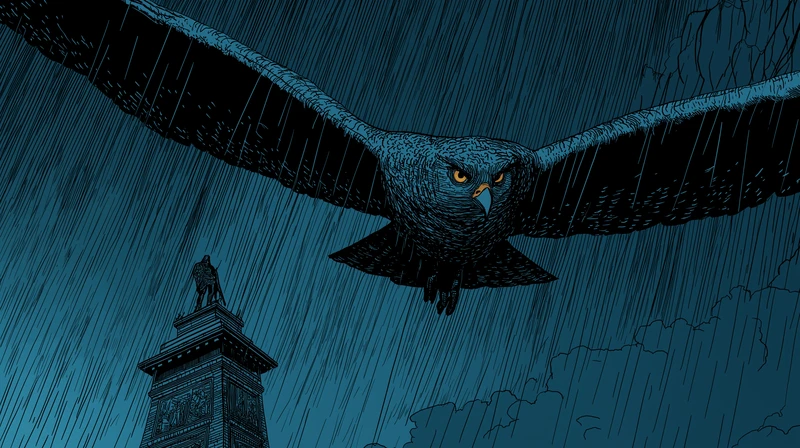
Choreograph the big moves
Larger moments are written out as a path. The great bird does not just fly; the prompt says where it enters, how it fills the frame and where it leaves. Most clips were made with Seedance Pro (72), with Wan 2.5 and Wan 2.6 for others.
Fly-through only: the Roc comes straight in, fills the frame, goes over the camera
Assets
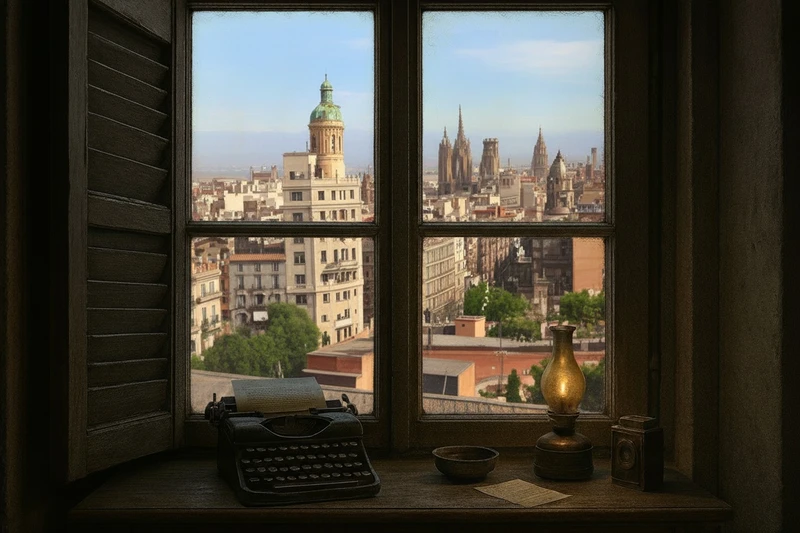 A typewriter and a bowl of fruit on a window sill: 4 shots use it
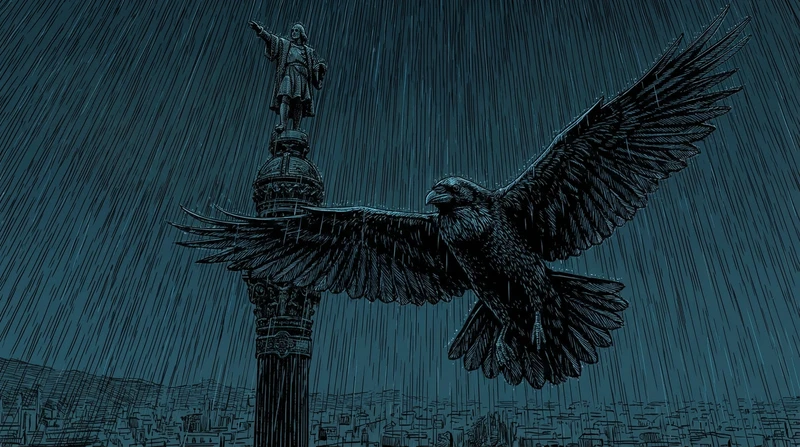 A bird with a statue on its back: 3 shots use it
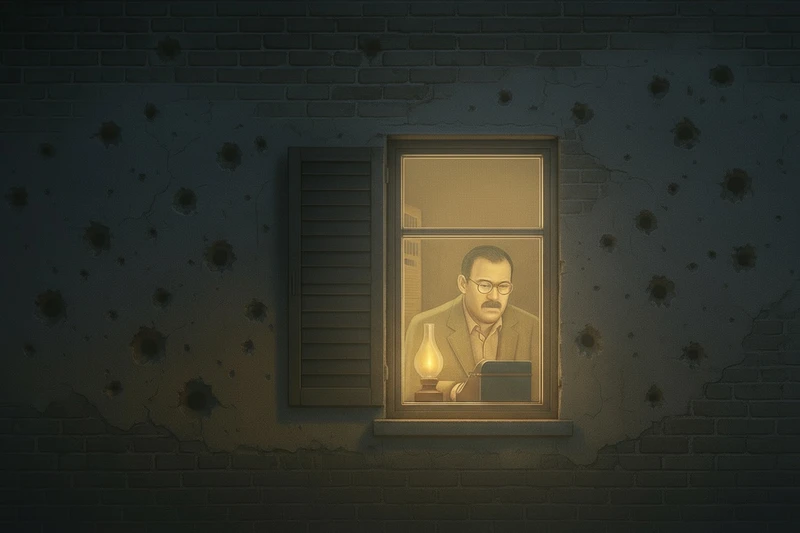 A man looking out a window: 3 shots use it
 Generated Image: 3 shots use it
 A black and white photo of a city skyline: 2 shots use it
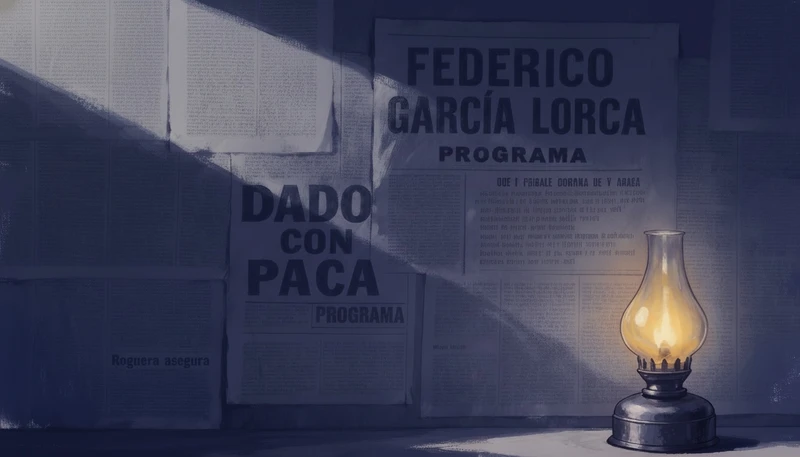 A lamp with a yellow bulb is next to a poster: 2 shots use it
Prompts
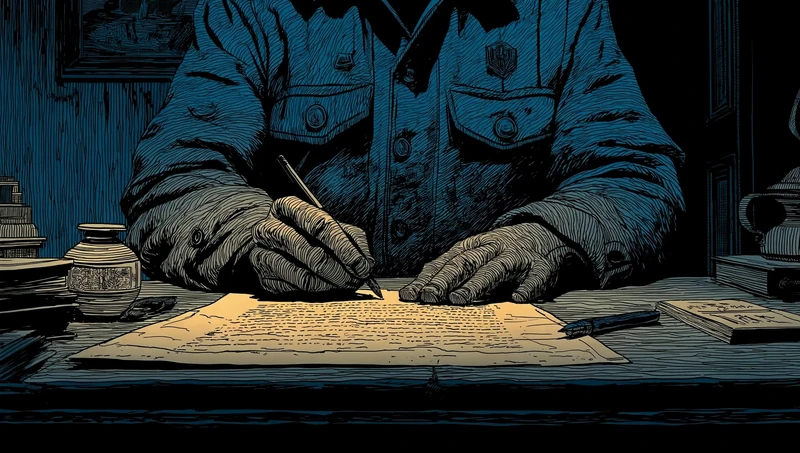
Locked camera. Same framing. Keep exposure and white balance fixed. Warm light on the paper unchanged. Do not move the desk, background, books, ink jar, loose pen on the right, or the booklet. All lettering remains abstract and unreadable. Total 10.0 s, not looping. Animate only the right hand with the pen, the left hand’s micro support, and the top sheet surface within the existing writing block. 0.0–1.2 s: The pen tip writes a short line about 18–22 mm long, left to right, shallow angle, within the current text area. Wrist advances about 3 mm. Very light pressure, a small local paper dent forms and relaxes. 1.2–2.0 s: Pen lifts about 2 mm above the sheet and hovers. Left hand keeps the paper steady; fingertips micro squeeze once, less than 1 mm. 2.0–3.5 s: The pen adds three to four tiny marks, each 4–6 mm long, parallel to nearby strokes, spaced 6–8 mm. 3.5–5.2 s: Sudden pause. Pen freezes above the paper at 1–2 mm height. Only imperceptible fingertip tremor, less than 0.5 mm. Page and light do not change. 5.2–6.0 s: The pen retreats along the same line path about 10–12 mm, wrist rotates counter-clockwise about 5–8 degrees, tip touches down at the start of the last written line. 6.0–7.6 s: First strike-through. Draw one straight stroke 45–60 mm long across the previously written segment, left to right, firm but controlled pressure. A tiny ink dot builds at the start and at the end. Deformation and shadow remain local. 7.6–8.8 s: Second strike-through 3–4 mm below the first, same length and direction, slightly quicker. 8.8–9.6 s: Pen lifts 2 mm, taps once near the end of the crossed segment, leaving a short tick about 3–4 mm. Left hand shifts the paper edge backward about 1–2 mm then settles. 9.6–10.0 s: Pen rests lightly on the paper, motion stops. Negatives: No camera move, zoom, or tilt. No light flicker or glow change. No page slide or rotation. No shadow sweeps. Do not move the loose pen on the right. No new objects. No readable words appear. No ink smear or spill. Keep the etched-line graphic look.
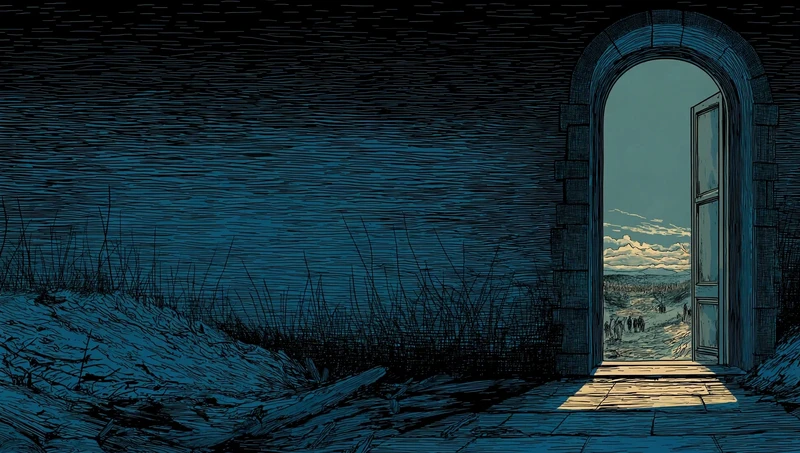
Static shot from inside a dark ruined building, looking toward a tall arched doorway on the right side of frame. Outside the doorway we see a wide valley under a pale sky with layered clouds and distant hills, exactly like the reference image. On the ground outside, far away, there is a small group of human figures gathered and walking slowly across the landscape – they are tiny and far in the distance. Inside, the foreground is a dark blue trench-like slope with dry grass and broken boards; the stone floor near the doorway is lit by a rectangular patch of light, just like the still image. Line-art woodcut / engraving illustration style, strong horizontal hatch lines, cold blue tones inside and muted grey-beige tones outside, same composition and lighting as the still frame. Duration: about 5 seconds. The camera is completely locked off: no pan, no zoom, no movement. Subtle animation only, focused on the outside world: – the clouds in the sky move very slowly from left to right, – the distant group of figures walks slowly, with small, tired movements, barely changing their position over 5 seconds, – a little dust or smoke drifts gently near the figures or behind them, very small and soft, – dry grass at the horizon and near the doorway sways very slightly in a light wind. Inside the building everything stays almost completely still: the stone doorway, door, floor, rubble and boards do not move. Overall brightness and color balance stay the same from the first to the last frame: do NOT add strong light rays or godrays, do NOT turn the doorway into a glowing portal, do NOT dramatically brighten or darken the scene. No close-up characters entering the doorway, no vehicles, no explosions, no camera motion, no noticeable flicker or fade.
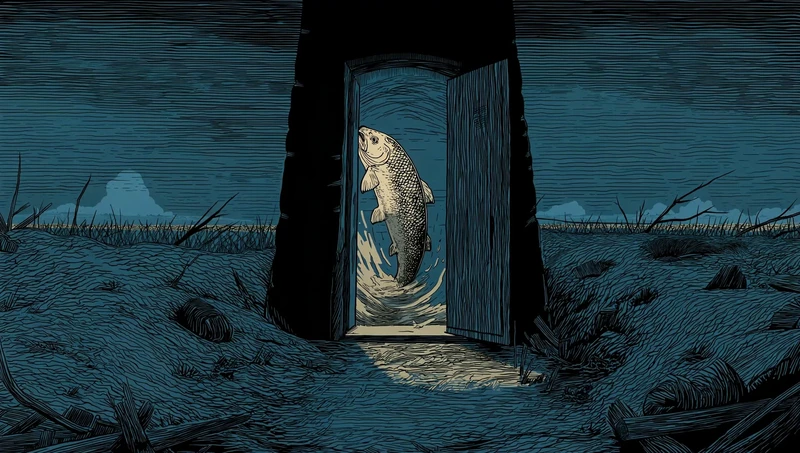
Locked camera, same composition and style as the source image: woodcut-like linework, strict two-tone palette of deep desaturated blue and off-white, no new details, no change in lighting, no extra textures. Only animate the salmon and the waterfall inside the doorway; the doorway, trench, sky and foreground stay completely still. Action: • 0–1.0 s – The salmon waits just below the surface at the base of the waterfall, barely visible. The waterfall flows slowly and steadily, with only small, repeating ripples in the falling water and the pool. • 1.0–2.5 s – The salmon makes a strong jump. It bursts up out of the pool, following a clear arc toward the center of the waterfall, body bending into an S-shape like in the still image. Water breaks off its tail in a few short white streaks close to the body, not spraying far. The fish reaches almost as high as in the original still frame, but not higher than the middle of the doorway. • 2.5–3.5 s – The salmon loses strength and falls back. Its body straightens a little, tail drops, it slips backward into the churning water at the base of the fall. Only a small splash where it reenters the pool, no wild spray. • 3.5–5.0 s – The salmon appears again just under the surface, aligning itself to try another jump. It makes one shorter, weaker hop that rises only halfway up the waterfall, then sinks back down as the 5 seconds end. Throughout the shot, keep the waterfall motion subtle and loop-like, with repeating lines in the falling water and soft swirling currents in the pool. No camera movement, no zoom, no shake, no new fish, no birds, no extra rocks, no change in brightness or color.
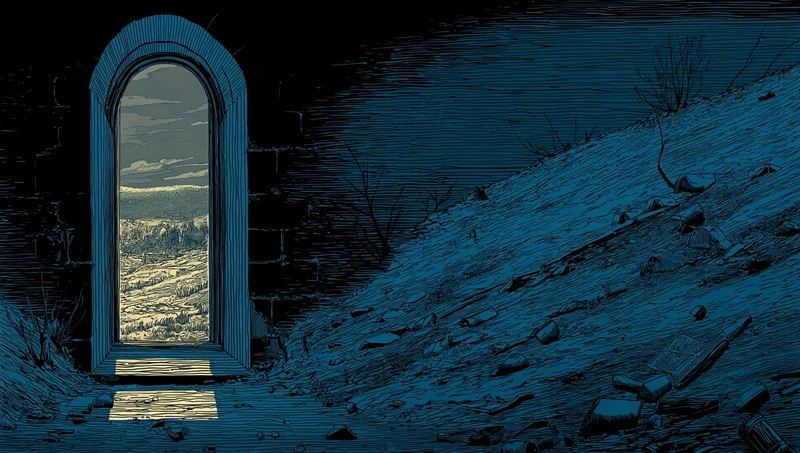
Static shot from inside a ruined stone bunker, looking toward a tall arched doorway on the left. Outside the doorway we see a distant battlefield landscape under a cloudy sky, exactly like the reference image: pale ground, low hills, small scattered trees and bushes. Inside the bunker, the sloping dirt floor on the right is covered with rocks, rubble, and trash, drawn in dark blue tones. Line-art woodcut / engraving illustration style, strong hatch lines, limited color palette with cold blue interior and dull grey-beige outside, same composition and lighting as the still image. Duration: about 5 seconds. The camera is completely locked off: no pan, no zoom, no movement. Subtle animation only, focused on the world outside the doorway: – the clouds in the sky drift slowly from left to right, – distant trees and bushes move very slightly, as if pushed by a light wind, – a faint, soft heat-haze shimmer or atmospheric distortion moves across the far ground, – maybe one or two tiny dust plumes or smoke trails rise slowly on the horizon, very small and restrained. Inside the bunker almost everything stays still: the rubble, cans, and broken objects on the sloping dirt floor do not move; at most, a few tiny dust motes drift in the air near the doorway. Overall brightness and color balance stay the same from the first to the last frame: do NOT add strong light rays or godrays, do NOT turn the doorway into a glowing portal, do NOT dramatically brighten or darken the scene. No characters, no vehicles, no explosions, no large flying objects approaching the camera. No flicker, no fade in or fade out, no camera motion.
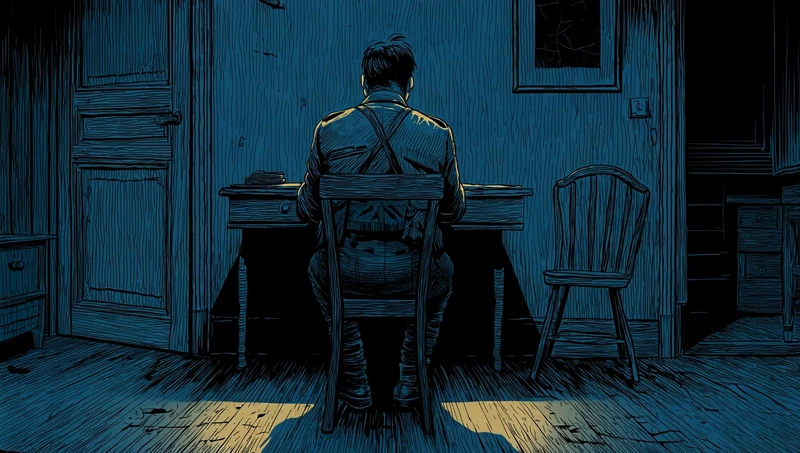
Use the reference image as the first frame, keep the same room the same camera angle the same framing the same light and the same colors, the camera stays fixed for about five seconds, no panning no zooming no shaking. The man remains seated at the wooden chair in front of the desk with his back to the viewer, he does not stand up, he does not turn around, he does not walk. His upper arms stay close to his body, his forearms rest on the desk in front of him, his hands are near the front edge of the desktop and are not clearly visible, they do not move. The only motion on the man is very small and slow, his shoulders and upper back rise and fall a little with breathing, once during the whole shot his body weight shifts slightly from one side to the other and the chair moves only a tiny amount. The stack of papers on the left side of the desk stays in the same place and does not move, the rest of the desk surface stays empty. The wooden desk and both chairs stay still. The closed wooden door on the left side of the room does not move, the dark doorway on the right side stays dark, no one appears there, no shadows pass there. The patch of light on the floor in front of the man stays in the same shape and position, the grain of the floorboards does not move, only a few tiny dust particles drift slowly in the light near the floor. The walls and the picture frame on the wall do not move, the cracked glass inside the frame does not change. There are no new objects, no extra people, no visible writing appearing anywhere, no changes in brightness, no changes in color.
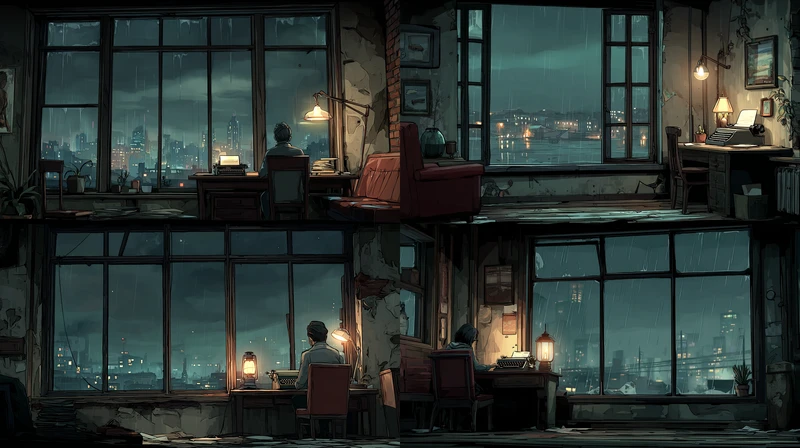
a solitary writer sitting at a desk by the window at night, lit by a small oil lamp, rain falling outside the window, the city faintly glowing in the distance. the room is dim and warm, with soft yellow light spilling onto the old typewriter and papers. the outside wall is weathered with bullet marks and cracks, but the scene feels calm, reflective, melancholic. painterly illustration style, soft line art, cinematic lighting, gentle rain reflections, moody atmosphere, similar to Studio Ghibli or Makoto Shinkai’s urban rain scenes, rich blue and amber color contrast, detailed shading, 16:9 composition.
Details
- Generations
- 98 video, 33 image, 0 audio (includes takes the creator archived)
- Reference sheets
- A typewriter and a bowl of fruit on a window sill (used in 4 shots); A bird with a statue on its back (used in 3 shots); A man looking out a window (used in 3 shots)
- Uploads
- 105 (frames and references)
- Powered by
- Seedance Pro (72), Wan 2.5 (17), Nano Banana (16), Flick (9), Wan 2.6 (7), Nano Banana Pro (5), Midjourney (3), Kling 3.0 Pro (1), Topaz Upscale (1)