Book Trailer: How to Make One With AI, Step by Step

A book trailer is a short video that sells the feeling of a book rather than its plot: with AI, you build it from one hook, a few lines from your pages, shots in your cover's look and an end card that says where to buy.

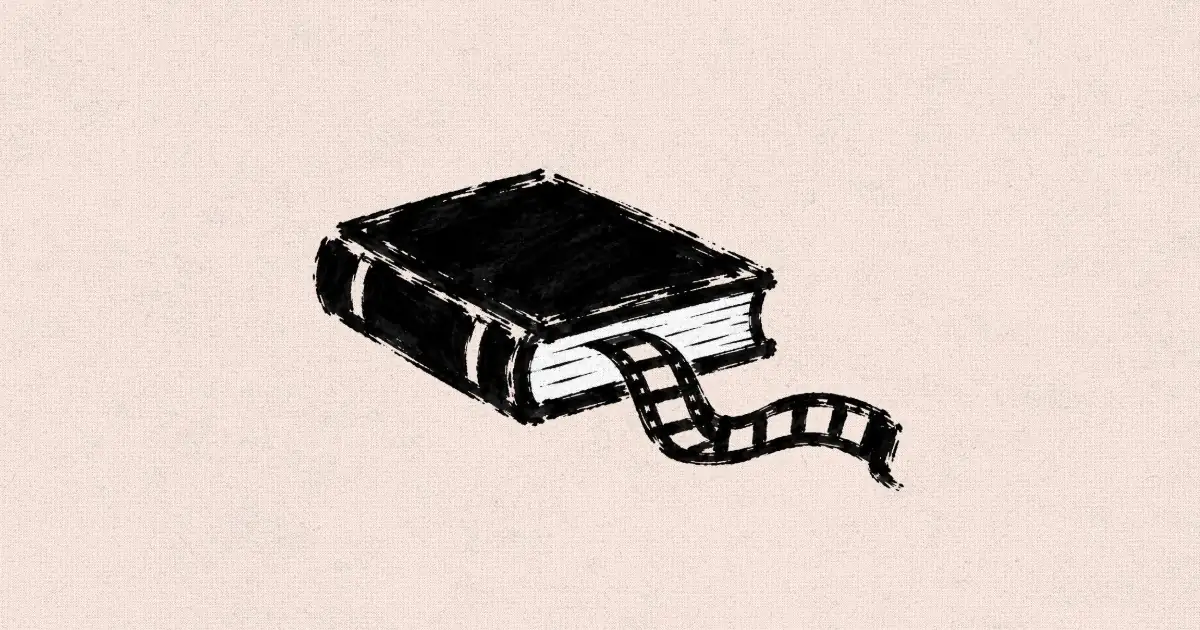
An ink drawing of a closed book with a strip of film trailing from its pages like a bookmark

Authors have no footage, no cast and usually no budget, so most book trailers end up as stock pictures under a scrolling blurb. A book trailer works better when the book's own words do the selling, with images that leave the characters to the reader's imagination. We read In Our Time, a 3:47 illustrated short by Flick's in-house filmmaker Jaime Yao that sets short lines of prose on title cards between 97 animated clips, because it is built from the parts an author has. This guide turns it into seven steps, with the frames and prompts, for a trailer of about a minute.

How is a book trailer different from a movie trailer?

A movie trailer cuts down footage that already exists, while a book trailer has to invent every image, and it sends the viewer to a store rather than a screening.
What changes when the thing you are selling is a book. For the film version, see our guide to [making a movie trailer](/blog/how-to-make-a-movie-trailer).
Movie trailerBook trailer
Starts fromShots from the finished filmYour text and your cover
On screenThe castThe world, objects and moods, with faces left to the reader
WordsDialogue, a voiceover or cardsShort lines from the book, on cards or read aloud
Ends onThe title and a release dateThe cover, the author's name and where to buy

How do you make a book trailer with AI, step by step?

In seven steps: write one hook, pull lines from your book, set the look from your cover, show the world instead of faces, make a clean title card, end on where to buy, then cut it to about a minute.
  1. Step 1

    Write one hook

    Write the single question your book leaves open, in one sentence, because a trailer that summarizes the plot gives the reader no reason to open the book.

    • Test it against the back cover: it should raise a question and stop before the answer.
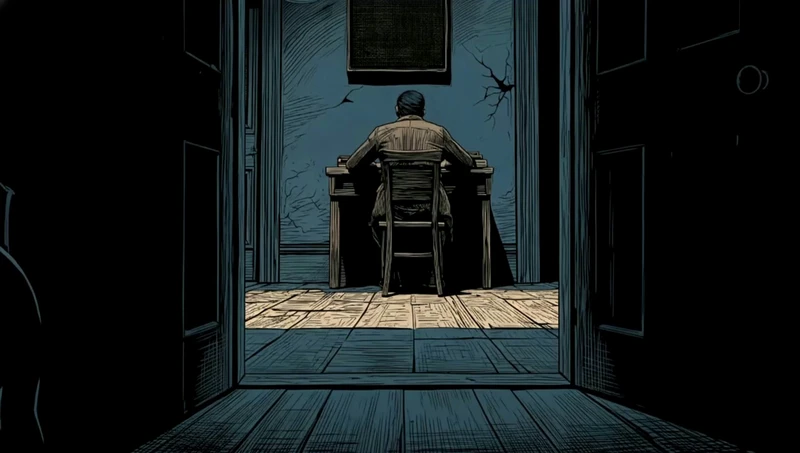
    • In Our Time opens on rooftops in the rain and gives the title at 0:28, then shows a man at a desk with no explanation of who he is.
    • Everything after this step should make that question harder to ignore.
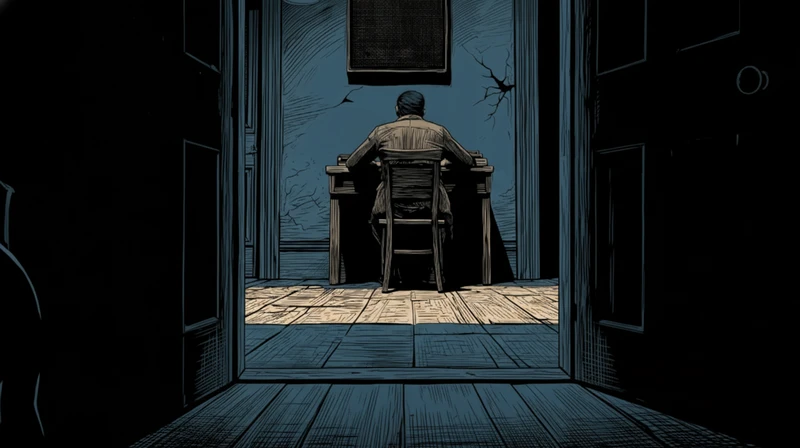
    Seen from a dark doorway, a man sits at a desk with his back to the camera, writing in a pool of light
    Start frame: Seen from a dark doorway, a man sits at a desk with his back to the camera, writing in a pool of light
    Start frame
    00:05
    Jaime Yao, director of In Our Time · Seedance Pro · Image to video
  2. Step 2

    Pull lines from your book

    Choose four to six short lines from your own pages and set each on its own card, because your sentences are what make the trailer belong to your book and nobody else's.

    • In Our Time cuts to cards such as "The romantics have pulled out" at 1:14 and "You can't get away from yourself" at 1:42.
    • It splits one sentence over two cards, "afterward many are strong" at 2:48 and "at the broken places" at 2:56, so the viewer waits for the end of it.
    • The picture is a draft of the card from the canvas, and the closing card credits its quotation to Ernest Hemingway on screen, as you should credit any words that are not yours.
    A draft title card on grey paper with the handwritten words afterward many are strong
    Jaime Yao, director of In Our Time
  3. Step 3

    Set the look from your cover

    Describe your cover's art in one sentence and open your prompts with it, so the trailer looks like the same object a reader will find on the shelf.

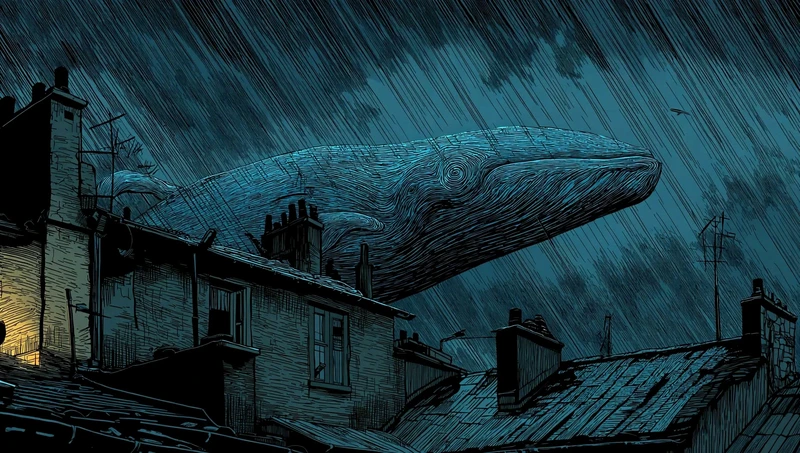
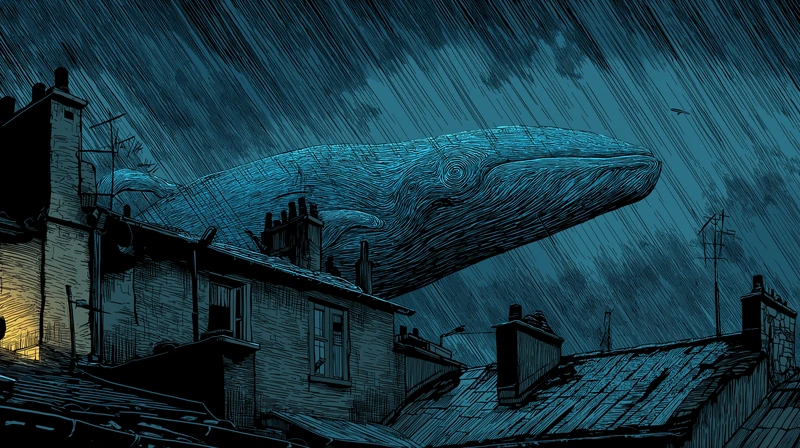
    • This shot's prompt opens on engraved woodcut look with dense cross-hatching on rough paper.
    • Give the model your cover as a reference image, then name its medium and palette in words.
    • One strange image, such as this whale over a city, is what a viewer remembers and shares.
    A huge engraved whale drifts over old rooftops in heavy rain, in blue woodcut linework
    Start frame: A huge engraved whale drifts over old rooftops in heavy rain, in blue woodcut linework
    Start frame
    00:05
    Jaime Yao, director of In Our Time · Seedance Pro · Image to video
  4. Step 4

    Show the world, not faces

    Film hands, rooms, objects and weather rather than your hero's face, because readers cast the characters themselves and a wrong face can put them off the book.

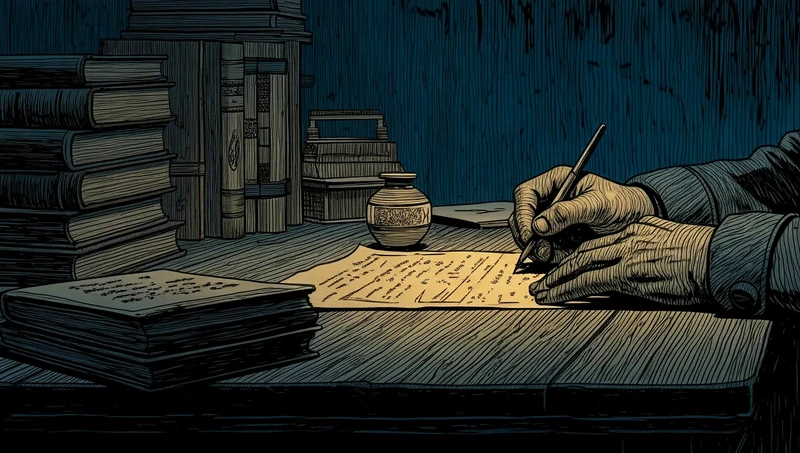
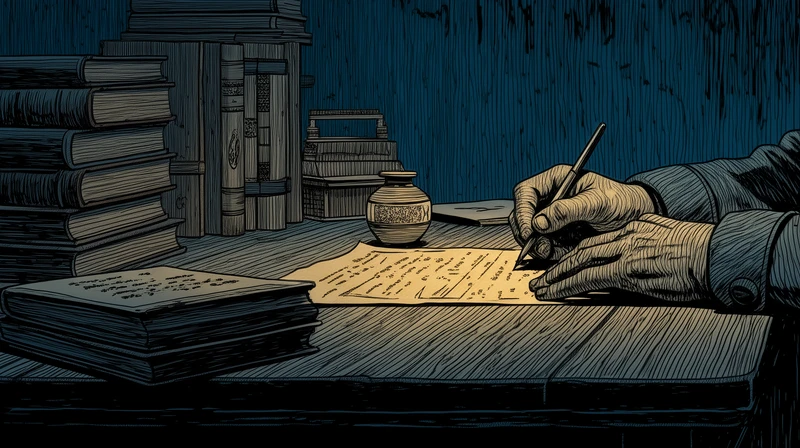
    • The man at the desk in In Our Time is seen from behind and through his hands.
    • Motion stays small: 81 of the film's 97 image to video clips run 5 seconds.
    • This prompt names the three things that may move, then rules out the rest, including any readable text.
    Close view of two hands writing on a sheet of paper at a desk stacked with old books and an ink jar
    Start frame: Close view of two hands writing on a sheet of paper at a desk stacked with old books and an ink jar
    Start frame
    00:05
    Jaime Yao, director of In Our Time · Seedance Pro · Image to video
    Locked camera. Same framing. Keep exposure and white balance fixed. Keep the warm band on the paper unchanged. Do not move any unmasked pixels. Do not add new objects. Do not make any text readable. Keep all lines abstract.
    
    Animate only the right hand, the pen tip, and the top sheet surface. Everything else stays still, including books, jar, desk wood grain, background wall, and left hand except for tiny stabilizing squeeze.
    
    Timing, total 5.0 seconds, not looping.
    
    From 0.0 to 1.2 seconds. The pen tip draws a short line about 12 millimeters long across one existing abstract line. Direction is left to right at a shallow angle. The nib pressure is light. The wrist shifts forward by about 2 millimeters. The top sheet shows a very slight indentation under the nib.
    
    From 1.2 to 2.0 seconds. The pen lifts 2 millimeters. A tiny dot of ink forms at the end of the new line. No shine. The left hand fingers make a small squeeze and relax once. Motion is less than 1 millimeter.
    
    From 2.0 to 3.4 seconds. The pen lowers again and adds two short ticks, each 4 millimeters long, spaced 8 millimeters apart, parallel to nearby lines. The wrist rotates a few degrees. Paper deformation stays very small.
    
    From 3.4 to 4.6 seconds. The pen tip pauses above the paper. A single dust mote drifts across the warm band on the desk from left to right. Size is 2 pixels and very faint.
    
    From 4.6 to 5.0 seconds. The pen settles to a stop on the paper with zero pressure. All motion eases out to stillness.
    
    Negatives. No light flicker. No glow pulses. No camera move. No zoom. No tilt. No shadow drifting. No new papers. No stamps. No logos. No reflections. No wet smear. No text becomes readable.
  5. Step 5

    Make a clean title card

    Isolate your title on a flat color so you can lay it over any shot in the editor, and read every generated letter before you use it.

    • Jaime kept the painted title and replaced everything else with solid green, using the prompt below, which is Chinese for "keep the words in our time in the middle and change the background to pure green."
    • A fuller version of the title on the same canvas has a garbled line under it, "BARCELAN BAELONA," and the film shows the title by itself.
    • Set your name and any small text in the editor, because a misspelled author name is the error a reader notices first.
    The hand-painted words In Our Time in cream brush letters on a solid green background
    Jaime Yao, director of In Our Time · Nano Banana Pro
    只保留中间“in our time"文字,然后把背景换成纯绿色
  6. Step 6

    End on where to buy

    Close on the cover, your name, the publication date and one store or link, held long enough to read, because the end card is the frame that asks for the sale.

    • Say one thing to do, such as "Out now" or "Preorder," and not a list of retailers.
    • Put the link in the post as well as the frame, since most people cannot click a video.
  7. Step 7

    Cut to a minute

    Cut to about a minute by keeping the hook, your strongest lines and the end card, then lay one music track or your own narration across the whole thing.

    • In Our Time runs 3:47 as a short, so a trailer of it would keep its cards, a handful of shots and its ending.
    • Generate a score with Eleven Music, or narrate your lines with Eleven v3.
    • Watch it once with the sound off, since many people see trailers that way on social feeds.

    Open the In Our Time workflow

    A lit oil lantern hangs in an open window above dark rooftops at dusk, in ink-line illustration
    Start frame: A lit oil lantern hangs in an open window above dark rooftops at dusk, in ink-line illustration
    Start frame
    00:05
    Jaime Yao, director of In Our Time · Wan 2.6 · Image to video

What should a book trailer look like for your genre?

Match the camera and the mood to what your genre promises, using these real clips and prompts as starting points and swapping in your own world.
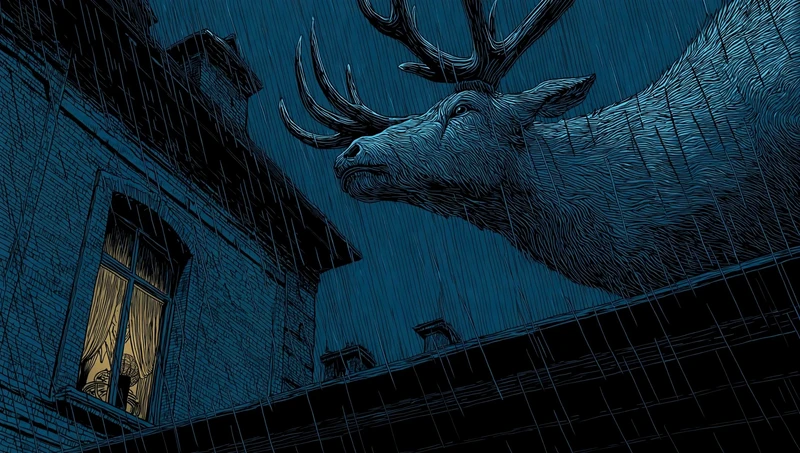
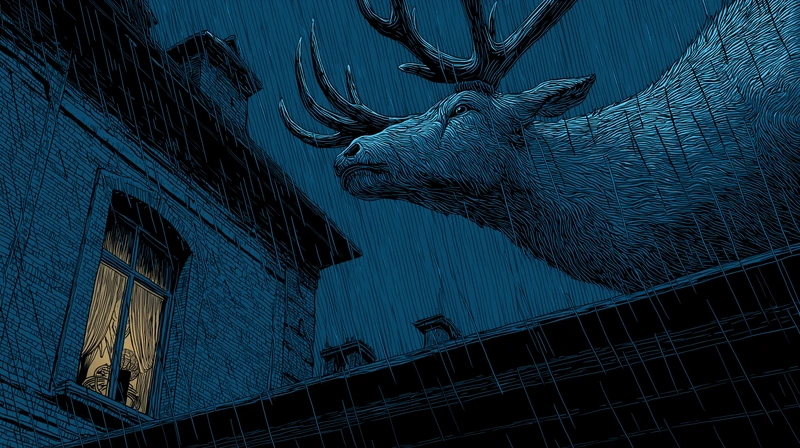
A huge white stag raises its head beside a lit window on a rainy night, in blue engraved linework
Start frame: A huge white stag raises its head beside a lit window on a rainy night, in blue engraved linework
Start frame
00:05

Literary fiction: one strange image

A single impossible animal in a realistic street suggests a book about more than its plot, and the prompt keeps its movement to one slow look up.

Locked camera; keep the exact framing. The colossal white stag makes a small look-up: the muzzle and gaze lift slowly by about five to eight degrees toward the rain-dark sky, hold for a brief beat, then ease back to the original pose. No step, no drift; antlers and torso stay steady. Heavy diagonal rain keeps the same direction and intensity; window lamp and building lighting remain unchanged. No steam, no glow, no new elements.
Jaime Yao, director of In Our Time
A crowd of townsfolk stands with their backs to the camera facing a closed metal shutter on a brick building
Start frame: A crowd of townsfolk stands with their backs to the camera facing a closed metal shutter on a brick building
Start frame
00:03

Thriller: a crowd with its back to us

The slow push toward a closed shutter asks what is behind it, and no face is shown, so the reader supplies the fear.

Very simple, subtle shot. The camera slowly pushes straight in toward the closed silver metallic roll-up shutter on the red brick building, moving forward past the townsfolk who stand still with their backs to camera. Gentle steady dolly-in, no other motion, minimal ambient sway. Warm golden-hour light holds steady.
Marius Jensen, director of Still Time
Two cars and a motorcycle brake hard on a wet night freeway under blue light
Start frame: Two cars and a motorcycle brake hard on a wet night freeway under blue light
Start frame
00:30

Science fiction: one big event

One line sets a period and an event, which suits a genre that sells its world, and this take shows how little a prompt needs to start from.

Make a cinematic scene from this 1984 scfi action blockbuster film, where these 3 vehicles come to a screaching halt as they realize the freeway ahead is collapsed. 
Sam Wasserman, director of The Miracle
A round cream spaceship with glowing portholes floats slowly through a pastel sky
Start frame: A round cream spaceship with glowing portholes floats slowly through a pastel sky
Start frame
00:05

Children's books: a calm establishing shot

A slow drift keeps an illustrated look intact, and our guide to making a children's cartoon show goes further with the same film.

The spaceship travels slowly through space. The thrusters glow and pulse gently. Subtle light glare sliding across the round windows. Very slow, calm, cinematic drift. Do not rotate. Establishing shot mood.
Katrin Ann Orbeta, director of Mila & Sasa

Questions about making a book trailer

What is a book trailer?

A book trailer is a short promotional video for a book, usually 30 seconds to 2 minutes long. It uses images, music and a few lines of text or narration to make a viewer curious, then ends on the cover and where to buy it.

What should a book trailer include?

A hook, a few short lines from the book, images that match the cover, music or narration, and an end card with the cover, the author's name, the date and one place to buy. Leave out the ending and most of the plot.

Do book trailers actually sell books?

Evidence is thin, so treat a trailer as one more piece of marketing and not a sales plan. Reedsy's guide says it does not recommend them for most authors, and Kindlepreneur calls them historically costly and ineffective. Making one yourself with AI lowers the cost, not the uncertainty.

Can I make a book trailer with AI?

Yes. Image models make the frames from a description of your cover and world, video models animate them, and voice and music models add sound. You still choose the lines, the order and the pace, which is where a trailer succeeds or fails.

Should I show my characters' faces in a book trailer?

Usually not, because readers picture characters for themselves and a specific face can clash with that. Hands, silhouettes, rooms and objects keep the mystery. A series with an established cover character is the common exception, since readers already know the face.

Where should I post a book trailer?

Post it where your readers already are: your author website, your newsletter, YouTube, and vertical cuts for TikTok, Instagram Reels and YouTube Shorts. Check your retailer's or publisher's rules before adding it to a book's sales page.

Can I quote my book in the trailer?

If you hold the rights to your text, yes. If you have a traditional publisher, ask first, because the contract may cover promotional use. For anyone else's words, check the rights and credit the source on screen. This is general guidance, not legal advice.

Can I make a book trailer for free?

You can start for free. Flick gives you 100 credits when you sign up, and 200 more for joining the Flick Discord, and image models such as Nano Banana 2 run on them. Video models such as Seedance 2.0 need the Standard plan or higher.

More on making trailers in Flick

Films in this guide

Every picture and prompt on this page comes from a public Flick film canvas, read on 2026-11-02, and is credited to its filmmaker. Card times are read from the finished film and are approximate. Outside views on length and value come from Kindlepreneur and Reedsy, checked 2026-11-02. Watch more films made in Flick on Flick TV.

Make a trailer for your book

Turn your cover's look and your best lines into shots, cards and a score on one canvas.

Make your book trailer in Flick

Try for free, no credit card required.

Ask AI about this page:ChatGPTPerplexityClaude