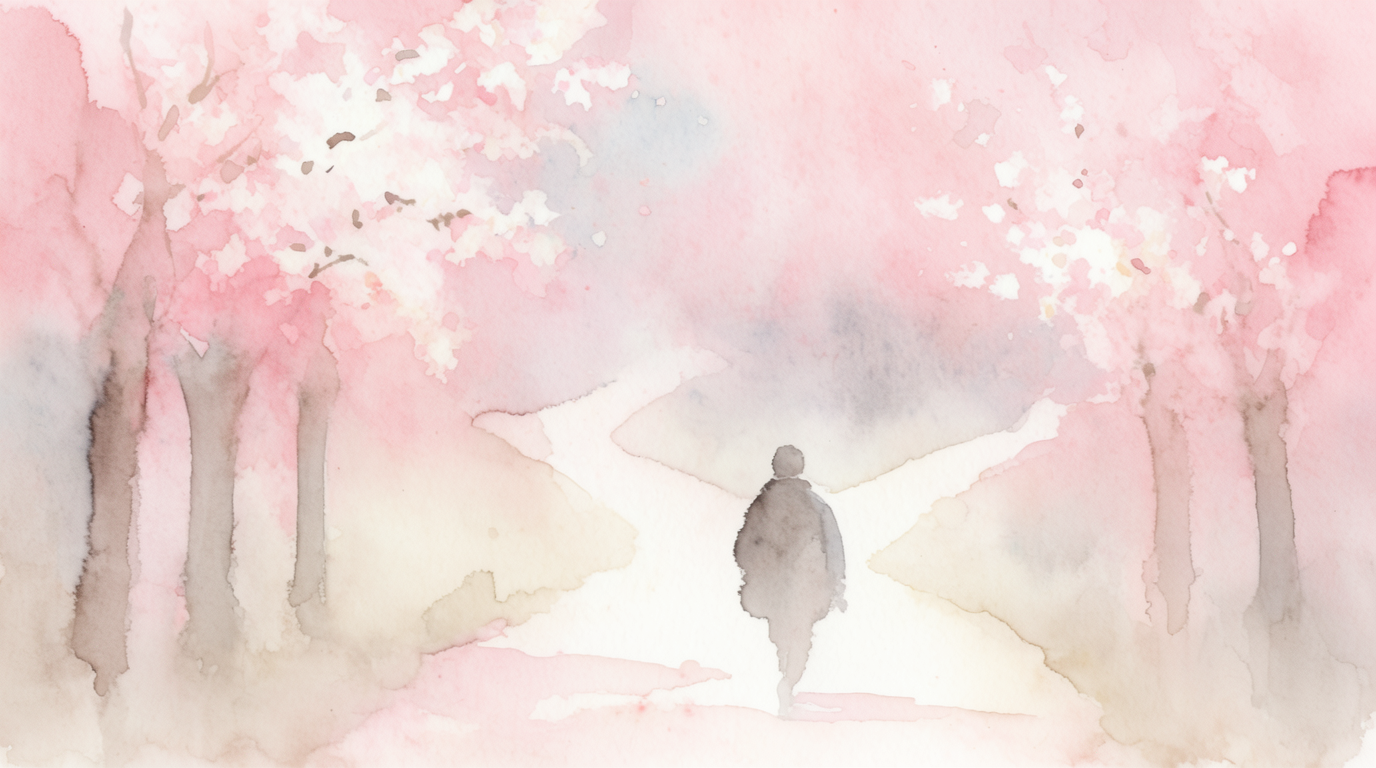
The main children's book illustration styles are soft watercolor, pastel storybook, flat gouache, crayon, ink and brush, and rounded 3D. Choose the one that suits your reader's age and your story's mood.
Most guides to children's book illustration styles show still pictures, so it is hard to tell how a look would hold up in a book trailer or an animated story. This guide shows 6 styles moving, in 12 clips from 7 films made in Flick, with the words their makers used wherever the prompt names the look. These clips come from animated films rather than printed books, and each style here is one illustrators use on the page.
What are the main children's book illustration styles?
Six looks cover most picture books: watercolor for gentle stories, pastel storybook for cozy ones, gouache for folk tales, crayon for a child's voice, ink for mood, and 3D for bright adventure.
6 styles and the kind of story each one tends to suit
Start from a frame with pale washes and loose edges, then describe a small, quiet action, because a slow, simple prompt lets the painted surface stay calm.
Start frame00:30
A dawn garden, written like a memory
This prompt reads like a line from the story itself, with the painted look already set by the frame it starts from.
My grandma had a vegetable garden. Every morning at dawn, she would tidy it up and take care of it. There were also little chickens and birds around.
Pale, loose painting makes a hard idea gentle enough for a young reader, as the figure drifts away into the landscape.
grandma and a little girl are walking together. Grandma gradually turn into a wisp of smoke and quietly drift away. girl tries to find out catch grandma.
Name it directly: illustrated storybook, warm pastel palette and soft sepia linework, then rule out realistic rendering so the model does not drift toward 3D.
Start frame00:07
A style line that says vintage children's book
The prompt ends with a full style line and a negative prompt, so the look stays hand drawn from one shot to the next.
The spaceship travels slowly through space. The thrusters glow and pulse gently. Subtle light glare sliding across the round windows. Very slow, calm, cinematic drift. Do not rotate. Establishing shot mood.
Camera steady.
No music.
Hand-drawn 2D animation, illustrated storybook, cozy retro-futuristic sci-fi, warm pastel palette, soft sepia linework, painterly shading, vintage children's book, gentle golden light, whimsical, nostalgic, cozy spaceship interior, cinematic parallax, subtle atmospheric animation.
Negative Prompt
photorealistic, 3D CGI, realistic rendering, glossy surfaces, hyper-detailed textures, anime, manga, thick black outlines, neon colors, high contrast, dark horror mood, dramatic lighting, fast camera movement, excessive motion, shaky camera, realistic modern kitchen, futuristic cyberpunk aesthetic, visual clutter.
Flat color and big, clear faces keep the characters readable at any size, which is what a picture book needs on a small page.
Start Mila in Spaceship Interior100%.
Mila's appearance Mila con Zaino Giapponese, Senza Ombre100% and expressions Mila - Espressioni del Viso.
Mila's voice My Radar Apology.
 Sasa's appearance Sasa con Zaino Giallo e Pistola Laser100% and expressions Sasa - Espressioni Facciali100% .
Sasa's voice Mother's Old Spaceship. 2D hand-drawn animation.
Sasa is smaller than Mila. Tart looks like this Mila con Crostata
Preserve reference style and character identity. *CAMERA: 2 shots, 1 hard cut. SHOT 1 — Medium close-up, 3/4.Mila and Sasa sit side by side on the top of the spaceship. Mila in front then Sasa beside her. Mila holds a tart sliced into 6 pieces. In the center the tart  the star spice in the center.
Sasa, happy for Mila with deep warm paternal male voice: “What were the odds we'd find your mother's old spaceship?” Mila turns to him, calm, visibly happy, smiles softly: “I’ve found my star-shaped spice.” Zoom in - Mila takes a a slice with the start spice and gives a bite. She closes her eyes tasting the tart. No effects. Close up - Mila then opens them and looks up the sky. Her expression becomes quietly hopeful: “But I have to find her among the stars.” AUDIO: Natural dialogue, no overlap. Sasa's voice is deep, warm and human, never robotic. No music. No sound. Hand-drawn 2D animation cozy retro-futuristic sci-fi, warm pastel palette, soft sepia linework, vintage children's book, gentle golden light, whimsical, nostalgic, cozy spaceship interior, cinematic parallax, subtle atmospheric animation.
Ask for hand-painted gouache texture, dry brush and flattened perspective, because those three describe the opaque, shape-led look of a printed folk tale.
Happy Souls Alive opens its prompts with a style line such as Graphic folk/editorial illustration, hand-painted gouache texture, dry brush, geometric shape language, flattened perspective.
00:04
A close-up with visible brushwork
Flattened perspective pushes the window and roof into one plane, so this shot could sit on a page with text beside it.
SEEDANCE 2.0 — 4s | Graphic folk/editorial illustration, hand-painted gouache texture, dry brush, geometric shape language, flattened perspective | 1 SHOT, 0 CUTS | mostly static camera, small drift following her hand | close-up: beauty admires a plain stone like a jewel, then withdraws it, still in hand, off frame left | NEW CLOSE-UP COMPOSITION, TWO REFERENCE SOURCES

==========================================================
REFERENCE SOURCES (NOT STARTING FRAMES)
==========================================================
Character sheet reference: locks Beauty-upscaled face, proportions, coloring, hair, wardrobe, jewelry — exact design, pixel-accurate likeness.
Window/environment reference: window02locks only the environment's palette, materials, light quality, and gouache/dry-brush texture — not used for framing or composition.
This shot is a new close-up composition built from these two locked sources.

==========================================================
OPENING FRAME
==========================================================
Tight close-up, eye-level, centered on beauty's face and upper chest/shoulders, per her character sheet design. Soft even light on her face, consistent with the environment reference's light quality, no harsh shadows.

==========================================================
THE IDEA
==========================================================
beauty receives a plain stone entering frame, turns it in the light like a jewel in one quick, graceful motion, brings it briefly near her cheek, then lowers her hand and pulls it away from her face, carrying the stone with her fingers still closed around it, off frame left. She never releases or throws it — the stone stays gripped in her hand the entire shot.

==========================================================
STYLE / CADENCE GRAMMAR
==========================================================
Stepped/graphic cadence, still soft and self-admiring in feel, but paced quicker than before — floaty and elegant, not lingering. Twos through her gestures, no hard snaps, but no stalled holds either. Camera smooth on ones for its single restrained drift.

==========================================================
CAMERA
==========================================================
Locked eye-level, centered, mostly static. One small, gentle drift that follows her hand as it moves. Camera trails the gesture, never leads it.

==========================================================
MOTION LAYER 1 — THE STONE (ORDINARY, UNREMARKABLE OBJECT)
==========================================================
The stone: small, plain, dull grey-brown, rough surface, a visible crack, faint mud residue — never polished, never faceted.
0.0–0.4s: stone enters frame from the top, already in motion, continuing momentum from the previous shot.
0.4–0.7s: her hand catches it, closing around it, fingers fully wrapped around the stone.

==========================================================
MOTION LAYER 2 — ADMIRE AND WITHDRAW
==========================================================
0.7–1.8s: she lifts and turns it in one continuous, graceful motion, tilting her head briefly — reads as elegant, not slow. This is the money moment; keep it flowing, not held.
1.8–2.4s: brings it near her cheek/jaw for a brief beat, small satisfied smile — short, not lingering. Fingers remain closed around the stone throughout.
2.4–3.4s: hand lowers and pulls away from her face, moving left, fingers still fully closed around the stone — a withdrawal, not a release or toss. No throwing motion, no opening of the fingers, no upward or outward arc.
3.4–4.0s: hand exits frame left, stone still gripped inside it, camera drift settles.

==========================================================
HARD RULES — POSITIVE ASSERTIONS
==========================================================
beauty's face, proportions, wardrobe, and hair stay pixel-identical to the character sheet design throughout.
The environment's palette, light quality, and gouache/dry-brush texture match the environment reference throughout.
The stone stays small, dull, rough-surfaced, and cracked at every frame — never polished or gem-like.
Her fingers stay closed around the stone from the catch at 0.7s through the end of the shot — the stone is never released, thrown, tossed, or let go at any point.
The exit motion is a smooth, controlled withdrawal — hand pulling back and left, low speed, no acceleration, no throwing arc, no upward flick.
beauty's gestures stay graceful and floaty in quality but move continuously — no held pauses beyond the single brief cheek beat at 1.8–2.4s.
The camera's only motion is a small trailing drift following her hand; it never leads.
The hand, with the stone still gripped inside it, exits frame left together, fully offscreen by 4.0s.

==========================================================
TIMING GRID — 4s
==========================================================
0.0–0.4s: stone enters frame top, in motion.
0.4–0.7s: hand catches stone, fingers close around it.
0.7–1.8s: stone lifted and turned, one continuous motion.
1.8–2.4s: brief cheek beat, held briefly only.
2.4–3.4s: hand withdraws left, stone still gripped, no release.
3.4–4.0s: hand exits frame left, stone still inside it.

==========================================================
AUDIO — 4s
==========================================================
Constant ambient bed: distant town-square murmur, soft wind.
0.4s: faint stone-landing/catch sound.
0.7–1.8s: subtle finger-on-stone friction, very quiet.
No music, no dialogue.

==========================================================
NOTES
==========================================================
Key fix from last version: the exit is now explicitly a withdrawal with fingers staying closed the whole time — added a hard rule directly forbidding release/throw/toss language interpretation, since "drifts left" alone was apparently read as a throwing motion. If it still shows a release, the next lever is adding "clenched fist" language to make the closed grip even more explicit.
Gouache suits a crowded scene because bold shapes keep every figure separate, with a muted palette holding the square together.
SEEDANCE 2.0 — 12s | 2D painterly graphic-folk, gouache texture, muted earthy ochre/dusty-teal | 2 shots, 1 hard cut at 5s | THE CROWD APPLAUDS → char2 INSIDE THE APPLAUSE

==========================================================
WORLD & CHARACTERS (reference = style/character bible, not starting frame)
==========================================================
Same town square throughout: warm late-afternoon light, wooden ceremonial platform, banners, timber houses, dense townspeople crowd. Red Warrior on the platform per his sheet, holding an old beige cloth raised in one hand mid-story. char2 is somewhere in the same crowd, per her sheet.

==========================================================
CROWD — GENERATE, DO NOT REPLICATE
==========================================================
Build the crowd fresh in the established style: every individual gets their own face, age, hairstyle, hat, silhouette, and clothing. Base the crowd's costuming and design language on the world reference, but treat each person as a new, unique design — never copy or reuse Warrior Red's or char2's face, hair, or outfit onto anyone else, and never repeat one crowd member's design onto another.

==========================================================
SHOT 1 (0–5s) — LOCKED WIDE
==========================================================
Camera: fully locked wide angle, full square/platform/crowd in frame, zero movement.
Action: Warrior Red mid-gesture, cloth turning slightly in his raised hand as he tells his story. Crowd applauds and watches him with mesmerized attention — hands clapping, bodies leaning toward the platform, eyes on the cloth. Applause reads on twos (stepped), staggered slightly between individuals so it doesn't look like one repeating cycle.

==========================================================
SHOT 2 (5–12s) — HANDHELD WITH CHAR2
==========================================================
Camera: shoulder-height medium shot, gentle handheld sway, moves with char2 as she walks then settles.
Action, beat by beat:
5–7s: char2 drifts through the crowd, still trying to understand the reaction.
7s: she stops completely, does not clap. Camera settles.
7–8s: turns head right, reads the faces beside her.
8–9.5s: turns left, searches the other side, quiet confusion.
9.5s: lifts her gaze forward, brows knit, lips part slightly.
9.5–12s: confusion deepens in small increments — a swallow, a faint furrow, eyes drifting across faces without landing — settles into stillness on the last frame.
Background crowd keeps applauding toward the offscreenWarrior Red throughout, same cadence as Shot 1.

==========================================================
HARD RULES — POSITIVE ASSERTIONS
==========================================================
Warrior Red and char2 each appear exactly once, only in the shots described. Every crowd member has an individually generated face, hair, hat, and outfit, distinct from every other crowd member and from both named characters. Hands and bodies stay anatomically consistent through every clap cycle. Shot 1's camera stays perfectly locked. Shot 2's camera stays within the described handheld sway, settling cleanly at 7s and holding steady from 9.5–12s.

==========================================================
AUDIO — 12s
==========================================================
Constant crowd applause and murmurs across both shots, distant town ambience underneath. Slightly muffled around char2 after the cut. Soft breath from her at ~9.5s. No music.

==========================================================
NOTES
==========================================================
Condensed pass: crowd is now explicitly generated-not-copied, and both shots have a clean beat-by-beat action/camera script instead of layered description.
Call it a childlike crayon drawing and make the drawing an object in the scene, so the wobble and the white gaps read as a child's hand, not a flaw.
Start frame00:15
A shot that starts inside the drawing
The camera pulls back from the page to reveal the girl who drew it, so the style explains itself as part of the story.
Handheld pull-back camera style.
The shot starts very close on this childlike crayon drawing.
The camera slowly pulls back and gradually reveals a little girl lying on the floor beside the drawing.
She keeps looking down at the crayons on the floor, picking them up one by one and putting them into a crayon box beside her.
The shot ends wide enough to clearly show the little girl, the full drawing, and the crayon box beside her.
Quiet indoor room tone, with soft crayon clatter and light paper rustle.
No background music.
The prompt is about the hands rather than the style, because the crayon look is already fixed in the picture being lifted.
Handheld camera style.
A person reaches in with both hands from the bottom of the frame.
They grab the drawing on the floor and lift it up.
The drawing slowly leaves the floor.
End on a downward view of the person holding the drawing. No background music.
Limit the palette and make the line the main event, such as woodcut-like linework in two tones, because fewer colors make a strong image feel like a printed plate.
Start frame00:05
A painter loading her brush
Fine brush lines and pale color suit a folk tale, and the prompt can stay on one small action with the look already set in the frame.
she gently swirls the tip of brush around the ink pot and pulls it out to wipe off the excess, her expression has a soft smile and she is calm and precise in her actions
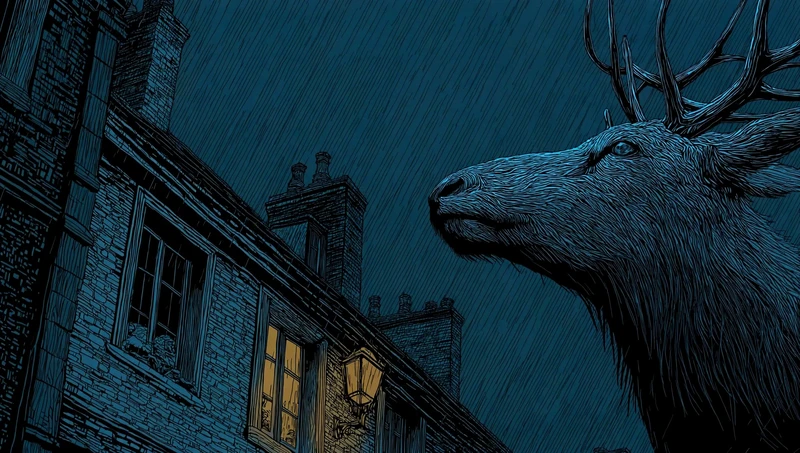
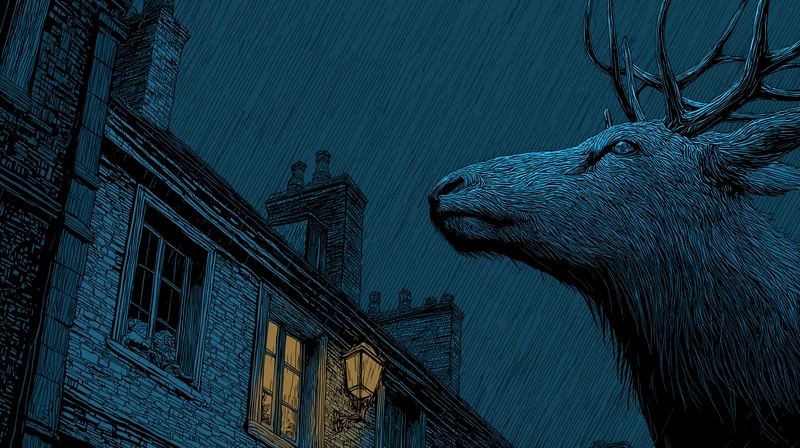
Dark blue line art turns this into a picture for older readers, with one warm window standing out against the blue.
A colossal Celtic white stag in side view moves slowly from right to left above the rain-slick rooftops, keeping a calm, level posture and constant height; the head makes a tiny glance toward the warm window and the eye blinks once, otherwise remaining steady. Antlers and coat are wet and glossy from the rain; neck fur shows only a subtle ripple from motion. Heavy diagonal rain keeps falling from upper-left to lower-right; the amber window glow stays constant. The camera is locked on the stag’s head and the nearest chimney to create gentle parallax as the stag slides past—no new elements, no breath, no steam, no curtain flutters; no tilt, no zoom, no sudden moves—only a smooth lateral pass.
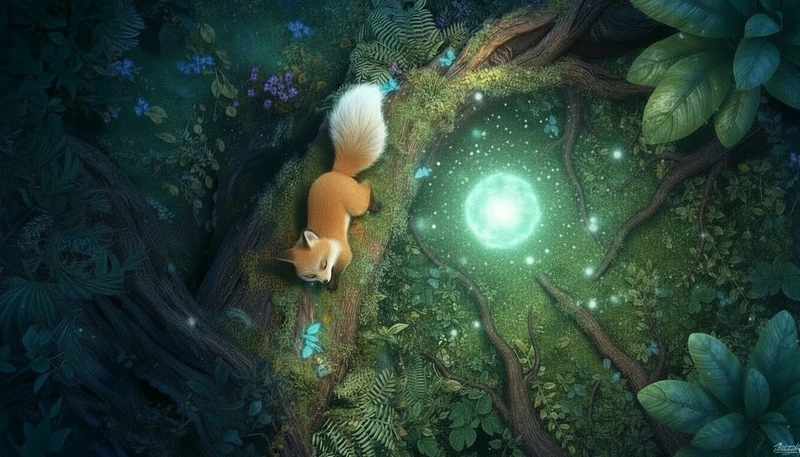
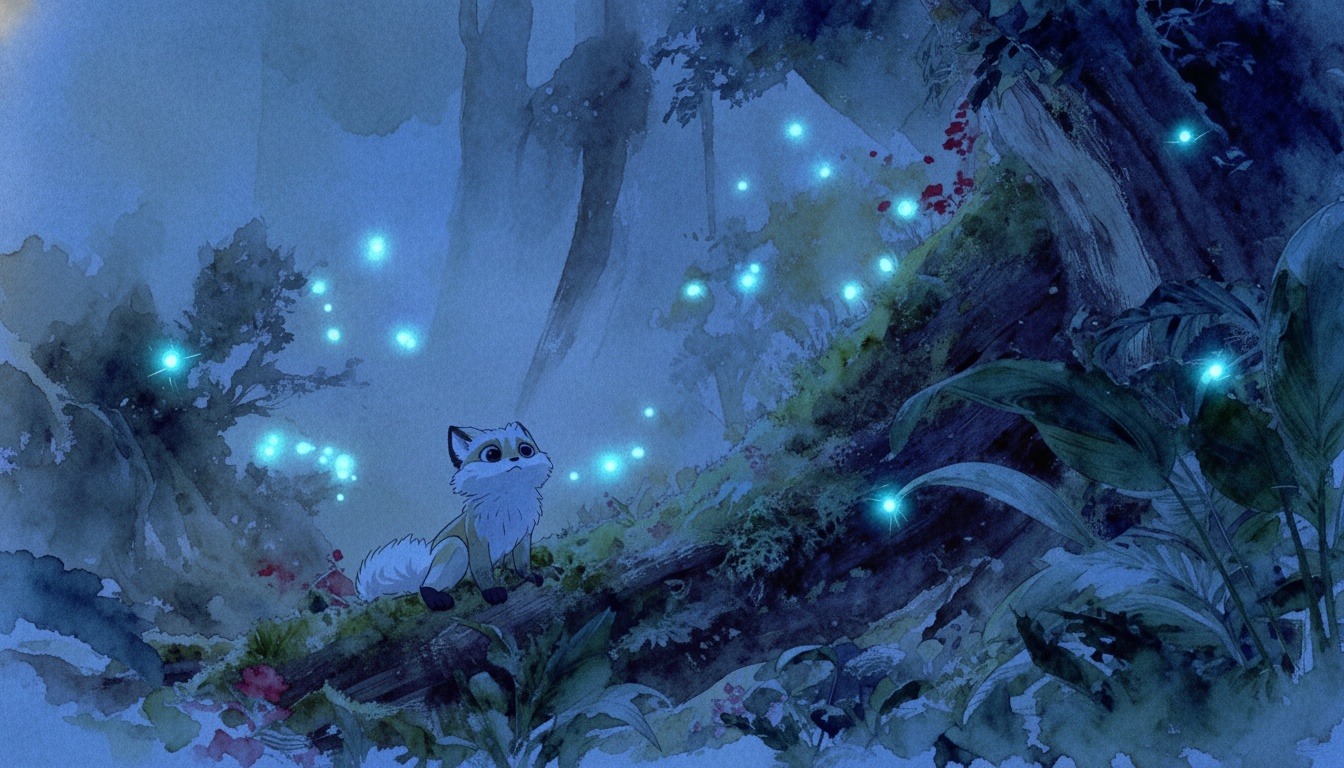
Start from a frame with soft fur, big eyes and glowing light, then write the action as you would narrate it to a child.
Start frame00:10
A fox falling asleep
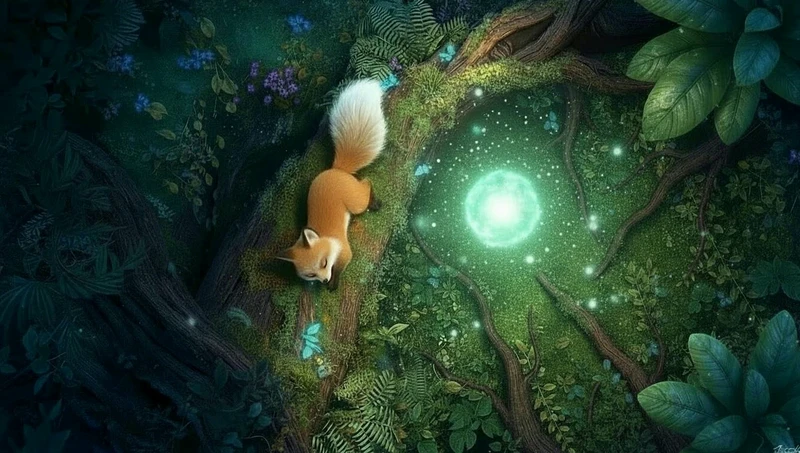
Three short sentences are enough here, and one image fits the last page of any bedtime story: a tail curled up like a blanket.
The little fox slowly falls asleep, curling its tail around itself like a blanket. The glowing particle begins to fly around the little fox. The camera slowly slowly move further.
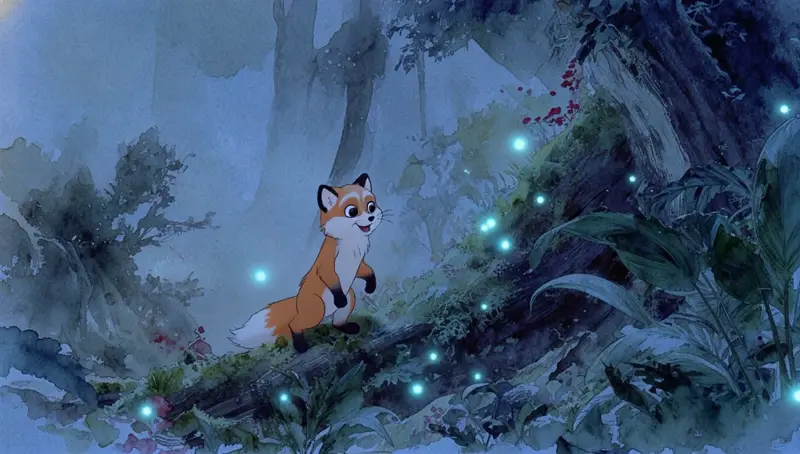
Writing the slip and the soft, funny fall into the prompt gives the shot the kind of physical comedy young readers love.
The little fox sits on the mossy log, ears twitching as glowing particles drift around.
It lifts its paw curiously toward one light, misses, and blinks in surprise.
Another cluster floats by — it hops forward playfully, swatting with both paws.
The lights scatter upward; the fox’s tail wiggles excitedly as it chases them, stepping too far on the slick moss.
Its hind leg slips — it tumbles sideways off the log, rolling once onto its back in a soft, funny fall.
For a moment it stays still, then exhales a small sigh, watching the particles rise slowly above.
It relaxes, paws half-lifted, eyes reflecting the glowing motes, tail flicking once as it lies there gazing at the shimmering sky.
Choose by your reader's age and the story's mood, write one style line, generate a test page, then repeat that line in every prompt so the whole book matches.
1Start from the reader
Choose bold shapes and strong colors for the youngest readers, then softer or more detailed styles as readers get older and can follow a picture for longer.
2Match the mood
Let the feeling of the story decide next: watercolor for quiet, gouache for folk tales, crayon for a child's voice and ink for anything with a darker edge.
3Write one style line
Put the medium, palette and line quality in one sentence, and add what to avoid, such as photorealistic or 3D, so the model stays in one look.
4Test one page, then repeat
Generate one key scene and check that the character reads clearly, then attach that image and the same style line to every other page or shot.
What are the most popular children's book illustration styles?
Watercolor, cartoon, gouache, collage, pencil and digital 3D appear on most lists, and many guides name watercolor as the classic picture book look. The right choice depends on your reader's age and the mood of the story.
What illustration style is best for young children?
Bold shapes, bright colors and simple faces usually work best for the youngest readers, because they can recognise the character at a glance. Flat cartoon and crayon styles both do this well.
What is the classic picture book style?
Soft watercolor with light ink lines is the look many people picture first, with pale washes and plenty of white space around the characters. It suits gentle, quiet stories in particular.
How do I keep one illustration style across a whole book?
Write one style line and repeat it in every prompt, and attach a finished page as a reference image. The same approach keeps characters and colors consistent across all the shots of an animated story.
Can AI illustrate a children's book?
AI image models can produce pages in these styles, as long as you keep the character and style consistent and check every page by hand. Read each platform's publishing rules first, since some ask you to disclose AI images.
Can I animate my children's book illustrations?
Yes. In Flick you can start a video from an illustration and describe a small action, such as a fox curling up to sleep, which suits a book trailer or an animated story.