Anime Styles in AI Video: Prompts and Real Examples

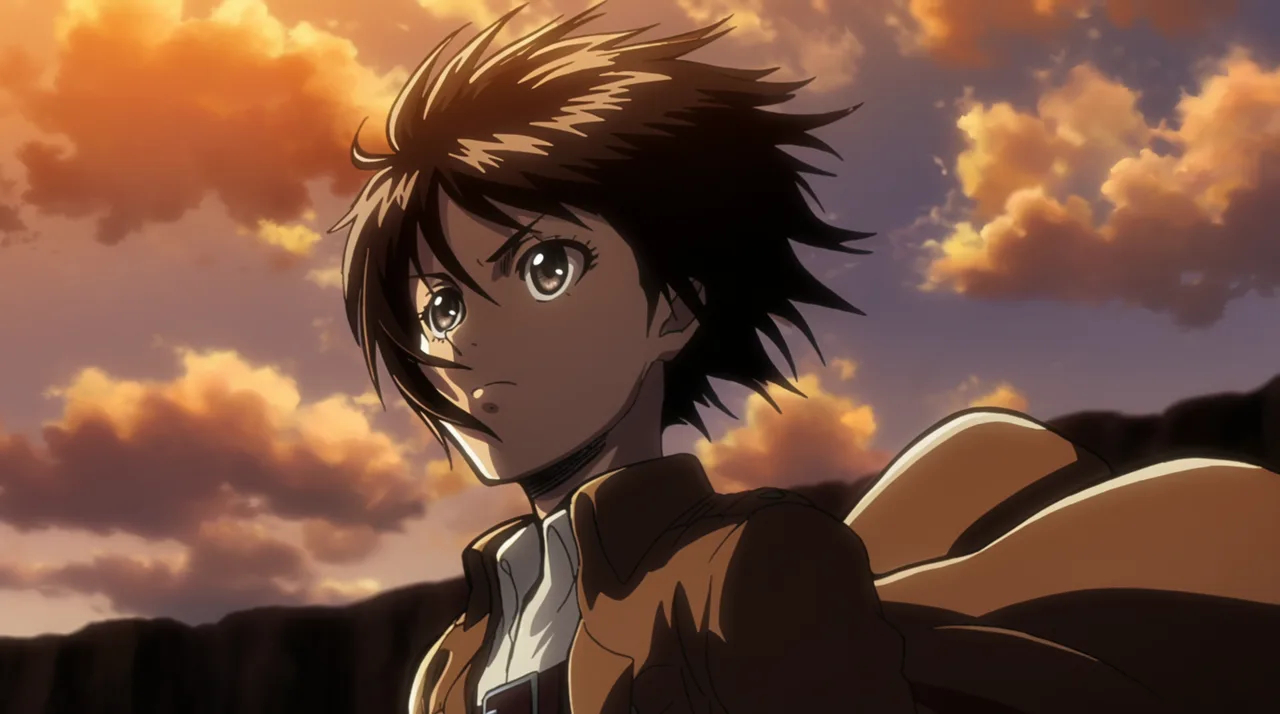
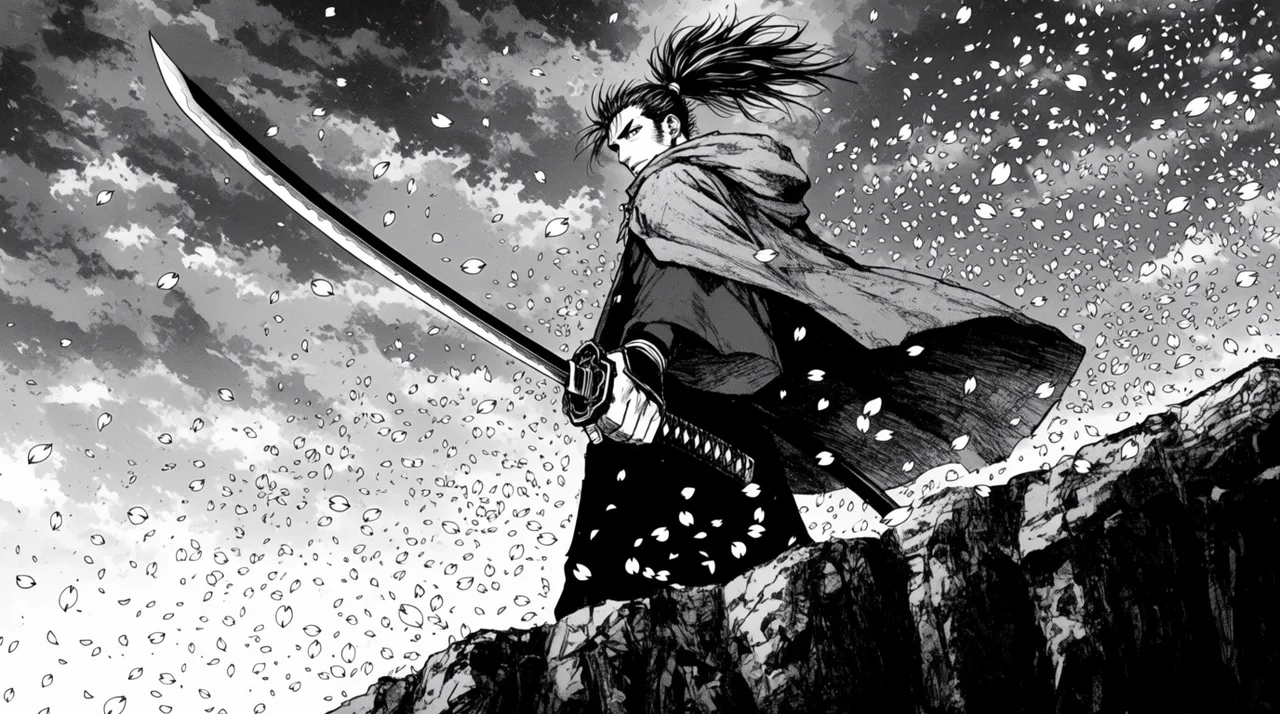
Anime styles are the looks of Japanese animation, from ink-outlined retro cel to soft painted pastoral. To get one in AI video, name its line, colour and texture in the prompt, then keep the motion small.

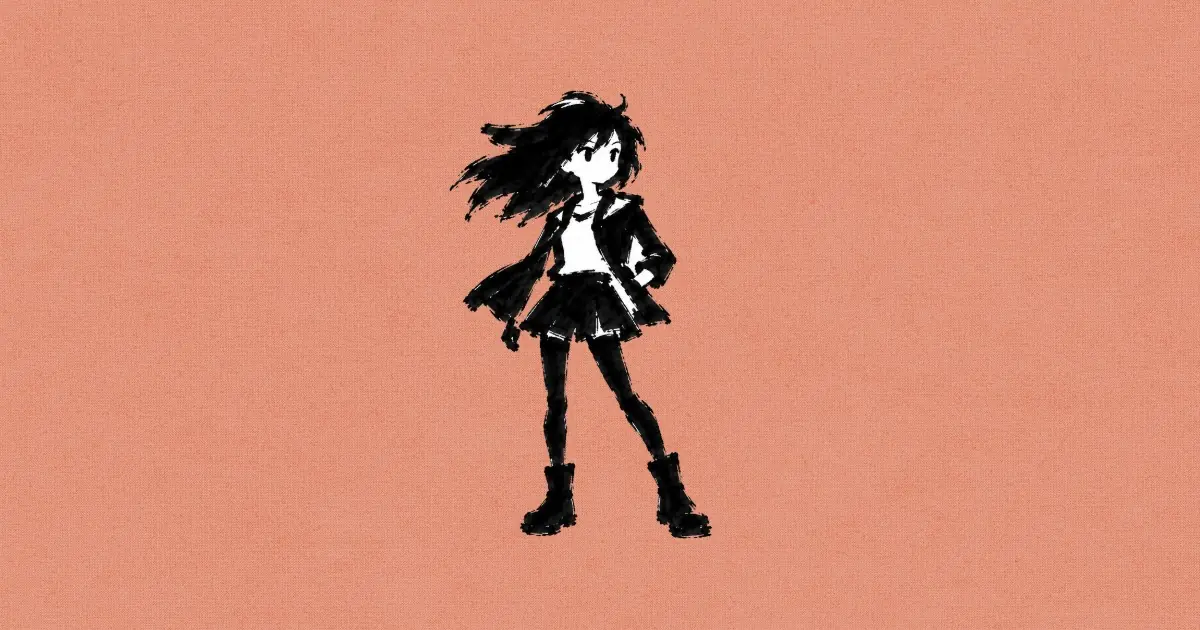
A rough ink drawing of a full body anime girl with windblown black hair, a short coat and boots

Most guides to anime styles show still pictures, which never tell you whether a look survives once it starts to move. We searched the 9,960 prompts behind 66 team and residency films with public canvases on Flick, and picked 4 looks from 5 films that hold up in motion. Each one below plays as a real AI clip beside the exact prompt that made it, with the words that set the style. The closest cousin here, donghua, is Chinese animation rather than anime, and the page says so where it appears.

What are the main anime styles in AI video?

We found 4 looks moving in Flick films, retro cel, soft pastoral, painted donghua and rainy city, and a few words about line, colour and texture set each one.
4 styles from 5 Flick films, with words copied from their prompts
StyleWhat you seeWords from the promptsExample
Retro celInk outlines, flat colour, film grainanime cel shading style, muted red cream and teal paletteSee retro cel
Soft pastoralWatercolour fields, round figures, soft edgeshand-painted 2D animation art styleSee soft pastoral
Painted donghuaFine brushwork, golden light, flowing robessoft cel-shading with visible refined brushworkSee painted donghua
Rainy cityNight windows, amber lamps, blue shadowspainterly illustration style, soft line artSee rainy city

How do you get a retro cel anime style?

Ask for anime cel shading and a limited, faded palette with grain, so the frame reads like painted cels shot on film rather than a clean modern digital image.
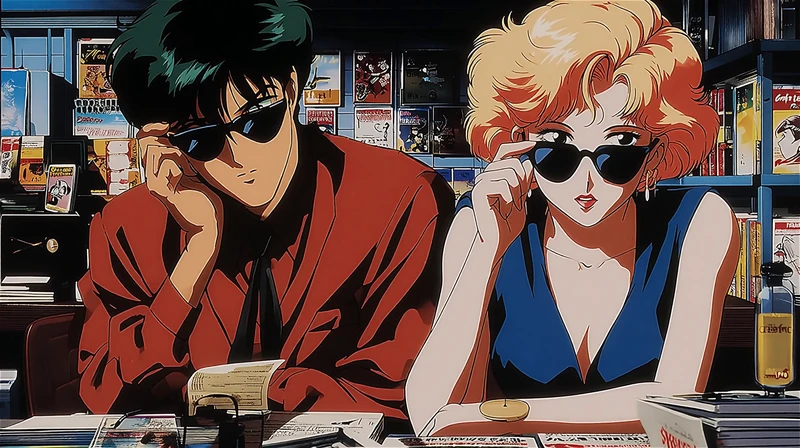
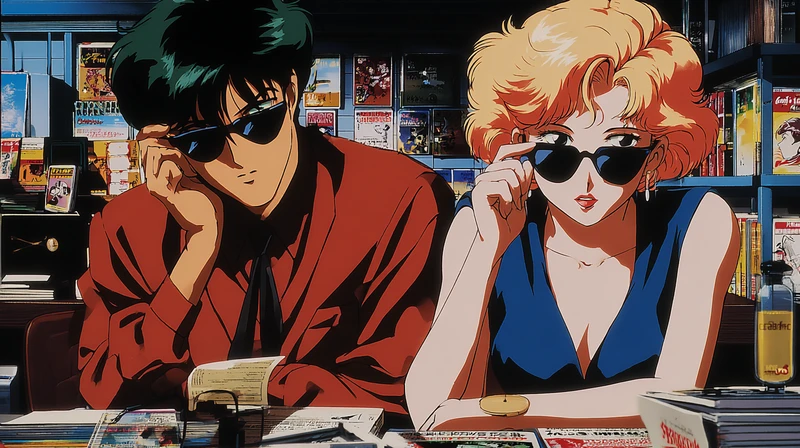
A retro anime couple in sunglasses lean on a shop counter, glancing sideways at each other
Start frame: A retro anime couple in sunglasses lean on a shop counter, glancing sideways at each other
Start frame
00:05

A first date in bright city colours

Zoey Z. ends the prompt with retro anime-style and describes the acting in order, so two glances become the whole scene.

This woman is very shy, then glances at the boy, and then the man also secretly looks at the girl, overall it's retro anime-style
Zoey Zhang, director of The first time Dating
A young man winds a capsule toy machine in a dim shop lined with shelves of dolls
Start frame: A young man winds a capsule toy machine in a dim shop lined with shelves of dolls
Start frame
00:05

A small action in a crowded shop

One hand action in a detailed room suits this look, since the painted background can hold still while the character moves in front of it.

camera locked. winds gacha machine and ball falls out
Hannah L., director of Obsession x Perfect Blue

How do you get a soft pastoral anime style?

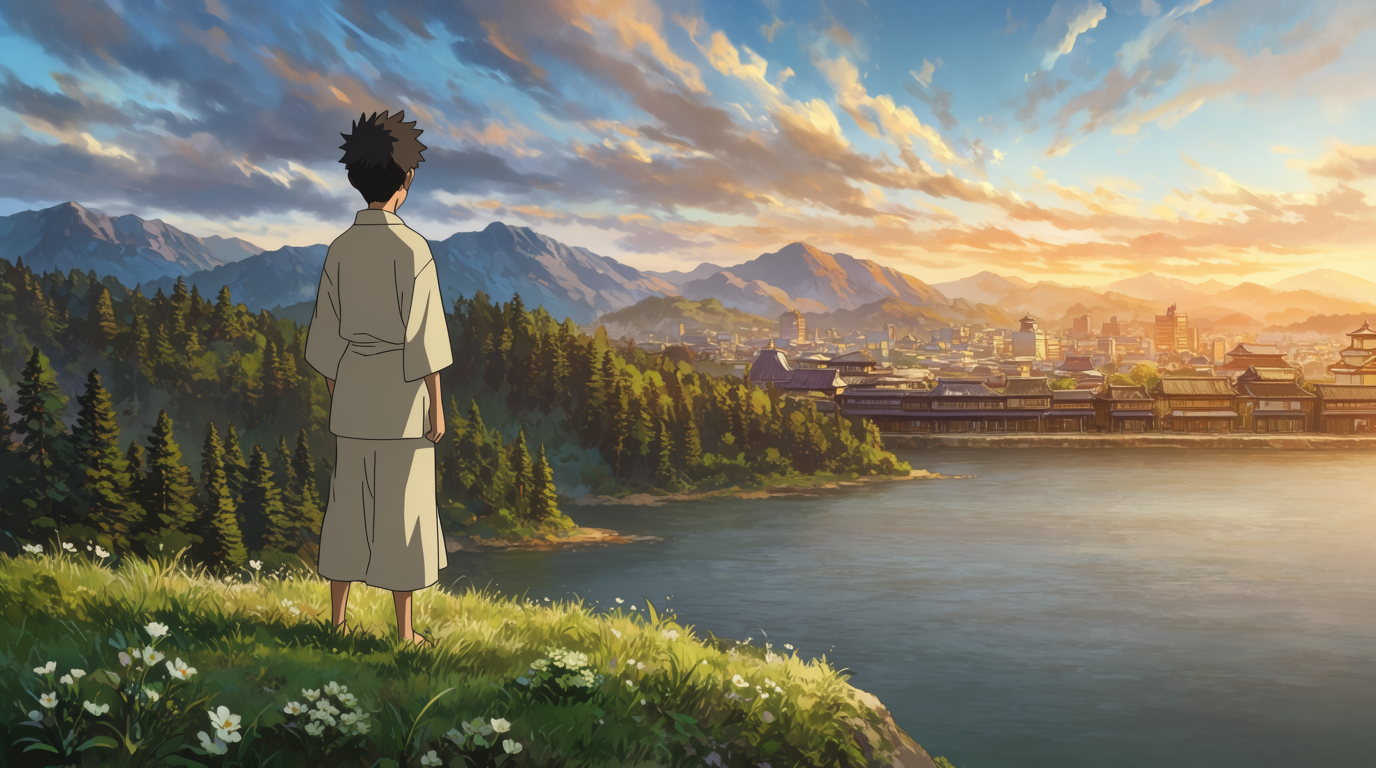
Start from a painted frame of fields and rounded figures, then keep the prompt plain and the camera still, so the watercolour texture stays calm, in the soft look often called Ghibli style.
A little girl in pink and an old woman in a blue coat walk hand in hand through a green meadow
Start frame: A little girl in pink and an old woman in a blue coat walk hand in hand through a green meadow
Start frame
00:30

A walk that passes a whole lifetime

One plain sentence carries this 30 second shot in To My Grandma, which starts from a Midjourney image and animates in Seedance 2.5.

As they walk, the girl slowly grows up and taller, while her grandmother gradually grows older and smaller.
Zoey Z., director of To My Grandma
An old woman wrapped in a teal scarf holds a small cat against an autumn landscape
Start frame: An old woman wrapped in a teal scarf holds a small cat against an autumn landscape
Start frame
00:05

A grandmother holding a kitten in the cold

Zoey Z. wrote this prompt in Chinese, and a line of plain description was enough because the Midjourney start frame already held the style.

外婆抱着小猫在寒风中
Zoey Z., director of To My Grandma

How do you get a painted donghua style?

Name the brushwork, the light direction and the colour harmony in one style line and reuse it on every frame, so a long film keeps one painted look across its shots.

Donghua is Chinese animation, and Sue Ellen Zhang's Finishing Touch opens its style line with Chinese donghua background art while ruling out manga style, so treat this as a neighbour of anime rather than a type of it.

A woman in a pink hanfu gestures toward a mural of an unfinished dragon in a sunlit hall
Start frame: A woman in a pink hanfu gestures toward a mural of an unfinished dragon in a sunlit hall
Start frame
00:05

A spoken line with a held gesture

The prompt describes the gesture, the words and how the line should land, which gives Kling O3 Pro direction for both the acting and the voice.

She slowly extends her hand toward the dragon painting, indicating its unfinished face with a composed, almost sacred gesture. Looking at it with quiet certainty, she says, “If I paint the eyes, they will fly away.” The line should land with mystical confidence and an air of prophecy.
Sue Ellen Zhang, director of Finishing Touch
A hand holds a calligraphy brush to the eye of a white painted dragon in close-up00:05

One precise brush stroke

Spelling out a single touch and lift keeps the brush from dragging across the painted dragon, so the small moment reads clearly.

A close-up of a delicate hand holding a traditional bamboo calligraphy brush. The brush tip moves in a single, deliberate, and precise tapping downward motion. The tip of the brush lightly touches the exact center of the dragon's blank, white eye socket, depositing a single, crisp black dot to form the pupil. Crucial detail: The brush makes only one brief point of contact and immediately lifts up slightly. The brush does absolutely zero dragging, sweeping, or drawing of lines. @element2 The final result is a single, perfect black dot resting right in the middle of the dragon's eye, slightly toward the front of the snout. @element3
Sue Ellen Zhang, director of Finishing Touch
A woman in flowing pink robes carries a basket of brushes and scrolls past a palace roof
Start frame: A woman in flowing pink robes carries a basket of brushes and scrolls past a palace roof
Start frame
00:05

A figure walking through a detailed world

Five words are enough for a walk once the frame already holds the robes, the palace and the painted style.

she walks with the supplies
Sue Ellen Zhang, director of Finishing Touch
A red pavilion on a misty mountain peak surrounded by layered blue ridges and clouds
Start frame: A red pavilion on a misty mountain peak surrounded by layered blue ridges and clouds
Start frame
00:05

A landscape with one small movement

A slow push and distant birds bring a painted background to life without disturbing the brushwork, which makes a calm establishing shot.

camera pushes in as birds fly in the distance
Sue Ellen Zhang, director of Finishing Touch

How do you get a rainy city anime style?

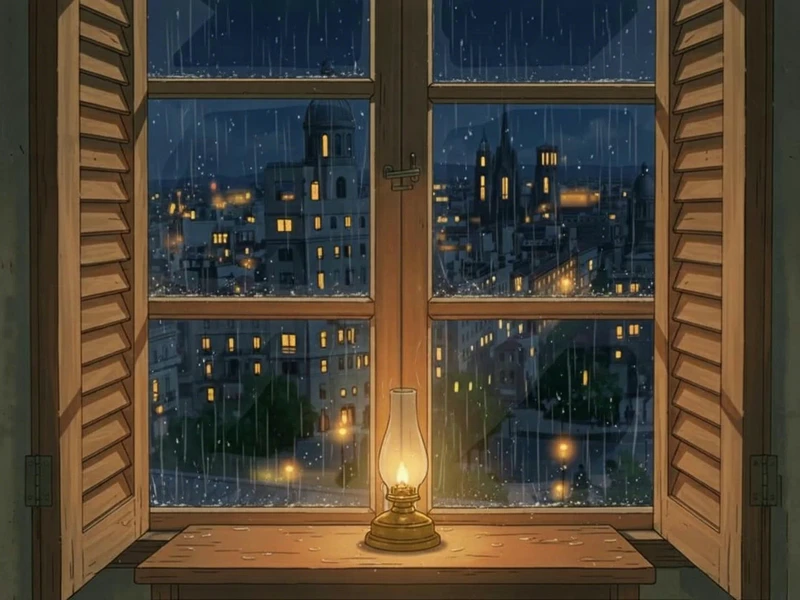
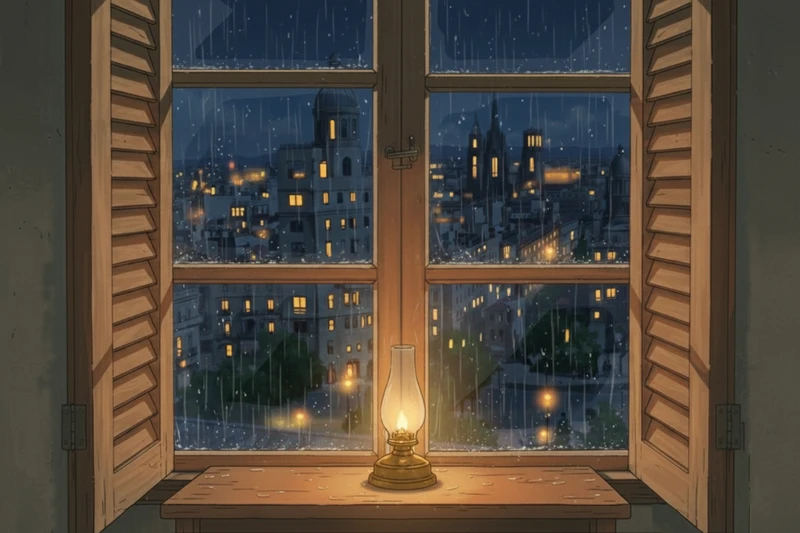
Frame a window at night, pair warm lamp light with cool blue shadows, and animate the flame, curtain or rain while the city outside stays still, which gives the quiet mood of urban rain scenes in anime.

A Midjourney image on the canvas of Jaime Yao's In Our Time asks for painterly illustration style, soft line art, cinematic lighting, gentle rain reflections, and names Studio Ghibli and Makoto Shinkai's urban rain scenes as its comparison.

An oil lamp glows on a sill in front of an open window onto a rainy city at night
Start frame: An oil lamp glows on a sill in front of an open window onto a rainy city at night
Start frame
00:10

Rain and a flickering oil lamp

Two short sentences work here because the frame already holds the window, the city and the colour contrast the style depends on.

t’s raining heavily outside.  The oil lamp’s flame flickers. Shadows on the desk move slightly with the flickering light.
Jaime Yao, director of In Our Time
A lit kerosene lantern hangs at an open window above a blue city of rooftops at dusk
Start frame: A lit kerosene lantern hangs at an open window above a blue city of rooftops at dusk
Start frame
00:05

A breeze through an open shutter

Listing what stays still before what moves keeps the distant city locked in place, so the motion stays in the foreground where the eye rests.

Locked camera. Outside sky and distant city stay perfectly still. A light breeze moves only the foreground: the curtain gently sways once, the wooden shutter/door shifts a tiny amount, small plants near the sill tremble. The kerosene flame softly flickers, causing slight warm brightness changes on the nearby inner wood only. Then everything settles.
Jaime Yao, director of In Our Time

What about shonen, shojo, seinen, chibi and mecha?

Shonen, shojo and seinen name the audience a series is made for, while chibi names a deformed body shape and mecha a giant robot genre, so each one covers many drawing looks.
  • Shonen is anime aimed at boys, and shojo at girls, according to Wikipedia's anime article.
  • Seinen is aimed at young men, and it may move more slowly with more complex plots.
  • Chibi deliberately deforms a character's proportions for comedy.
  • Mecha is the giant robot subgenre of science fiction.

How do you make an anime style video with AI?

Write one style line, build a character sheet in that style, make your start frames, then animate each frame with a still camera and one small action.
  1. Step 1

    Write one style line

    Describe the line, the colour and the texture once, as Finishing Touch does with its style wrapper, then paste the same line into each image prompt so the shots match.

    A woman in a red and green robe stands on a stone terrace above a painted palace and gardens
    Sue Ellen Zhang, director of Finishing Touch · Nano Banana 2
  2. Step 2

    Build a character sheet

    Generate front, side and back views in your style, then attach the sheet to every shot, because a drawn face can change from shot to shot when it is left to the prompt alone.

    A three-view character sheet of an anime woman in a cardigan and floral dress on a pale background
    Hannah L., director of Obsession x Perfect Blue · Nano Banana 2
  3. Step 3

    Make the start frames

    Generate each frame in the style first, or restyle an existing frame with a short edit such as make the image look like soft cel animation, so the look is settled before you spend credits on motion.

    A bare wooden room with a large ink dragon mural in soft cel animation colours
    Sue Ellen Zhang, director of Finishing Touch · Nano Banana 2
  4. Step 4

    Animate with a still camera

    Write camera locked and name one action, as 9 of the 12 written video prompts in Obsession x Perfect Blue do, since limited animation is a defining trait of anime and small moves keep the drawing steady.

    An anime woman with dark hair and wide eyes stands smiling in a cardigan in a dim corridor
    Start frame: An anime woman with dark hair and wide eyes stands smiling in a cardigan in a dim corridor
    Start frame
    00:05
    Hannah L., director of Obsession x Perfect Blue · Seedance 2.0 · Image to video

Anime style questions

What are the different anime art styles?

Common anime art styles include retro cel with ink outlines and flat colour, soft painted pastoral and painterly rainy city scenes. Terms such as shonen, shojo and seinen describe the audience for a series rather than one way of drawing it.

What makes something look like anime?

Anime is known for limited animation, flat expression, large eyes and colourful, exaggerated hair, though Wikipedia's anime article notes a wide variety of art styles and no single dominant one. In an AI prompt, try words such as cel shading, ink outlines and a limited palette to ask for this look.

What is the 1990s anime style?

The 1990s anime style usually means hand-painted cels: visible ink outlines, flat shading, a muted palette and some film grain. The Flick 1990s anime page is built around this look, and the words to try in a prompt are cel shading, muted palette and grain.

Can AI make a Ghibli style video?

AI video can make the soft painted look people call Ghibli style, using a painted start frame, watercolour fields and a still camera. Describe the look rather than copying a film, since Studio Ghibli's films and characters belong to the studio.

What is the difference between anime and donghua?

Anime is animation from Japan and donghua is animation from China, and the two share many drawing conventions such as cel shading and painted backgrounds. A prompt can name either one as a style word, then describe the line, colour and setting you want.

Which AI video models work for anime styles?

Flick filmmakers have made anime style clips with Seedance 2.0, Seedance 2.5, Seedance Pro and Kling O3 Pro, all on the Standard plan ($20 a month). You can try the same approach on a free account with MiniMax H3 Max, using 100 credits you get when you sign up.

More on anime and drawn video in Flick

Films in this guide

Make your first shot in an anime style

Pick one look, write its style line, and animate your first frame on one Flick canvas.

Try an anime style in Flick

Try for free, no credit card required.

Ask AI about this page:ChatGPTPerplexityClaude