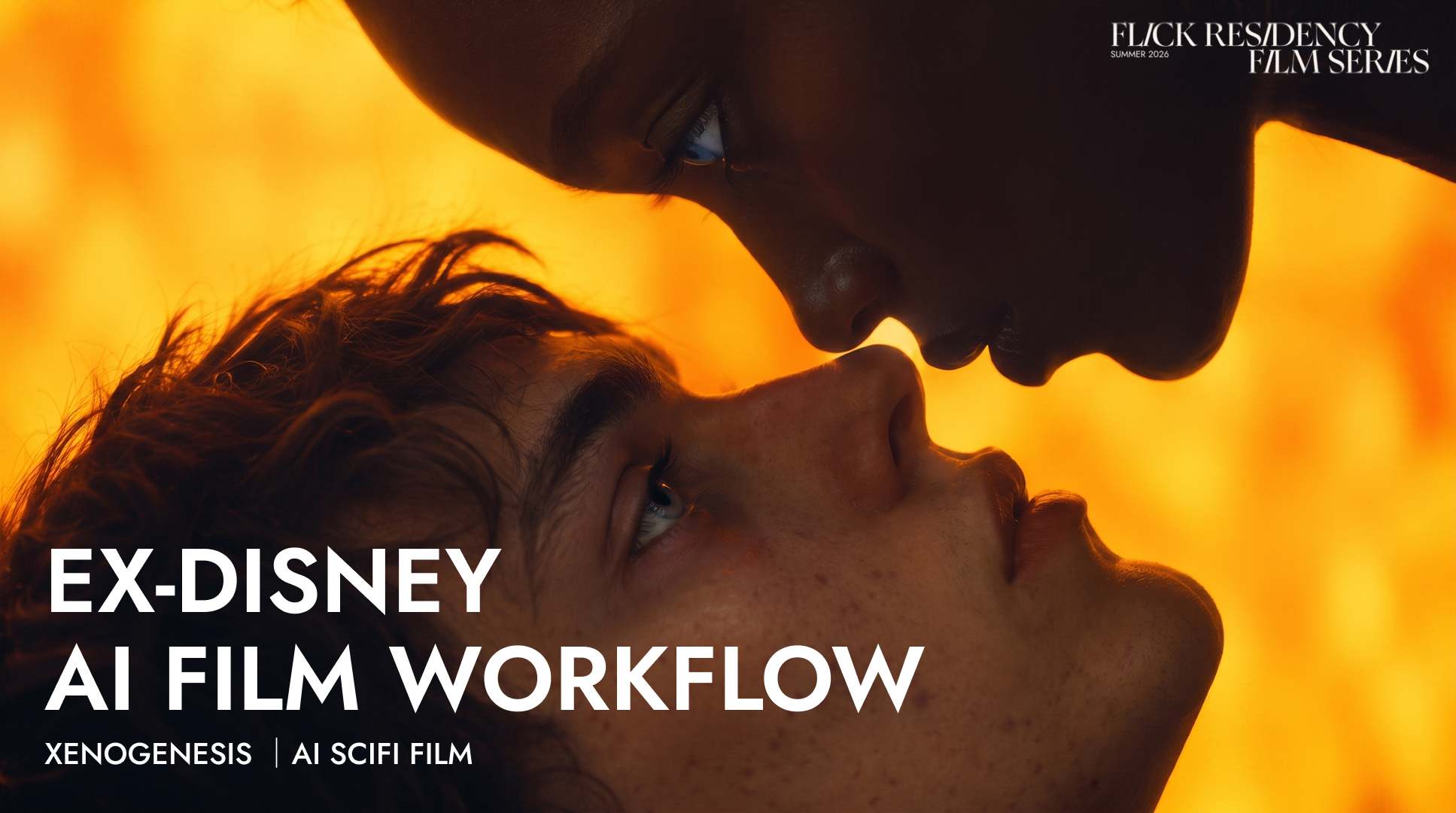
Xenogenesis behind the scene
Sep 2026
1. FROM TRADITIONAL FILMMAKING TO AI
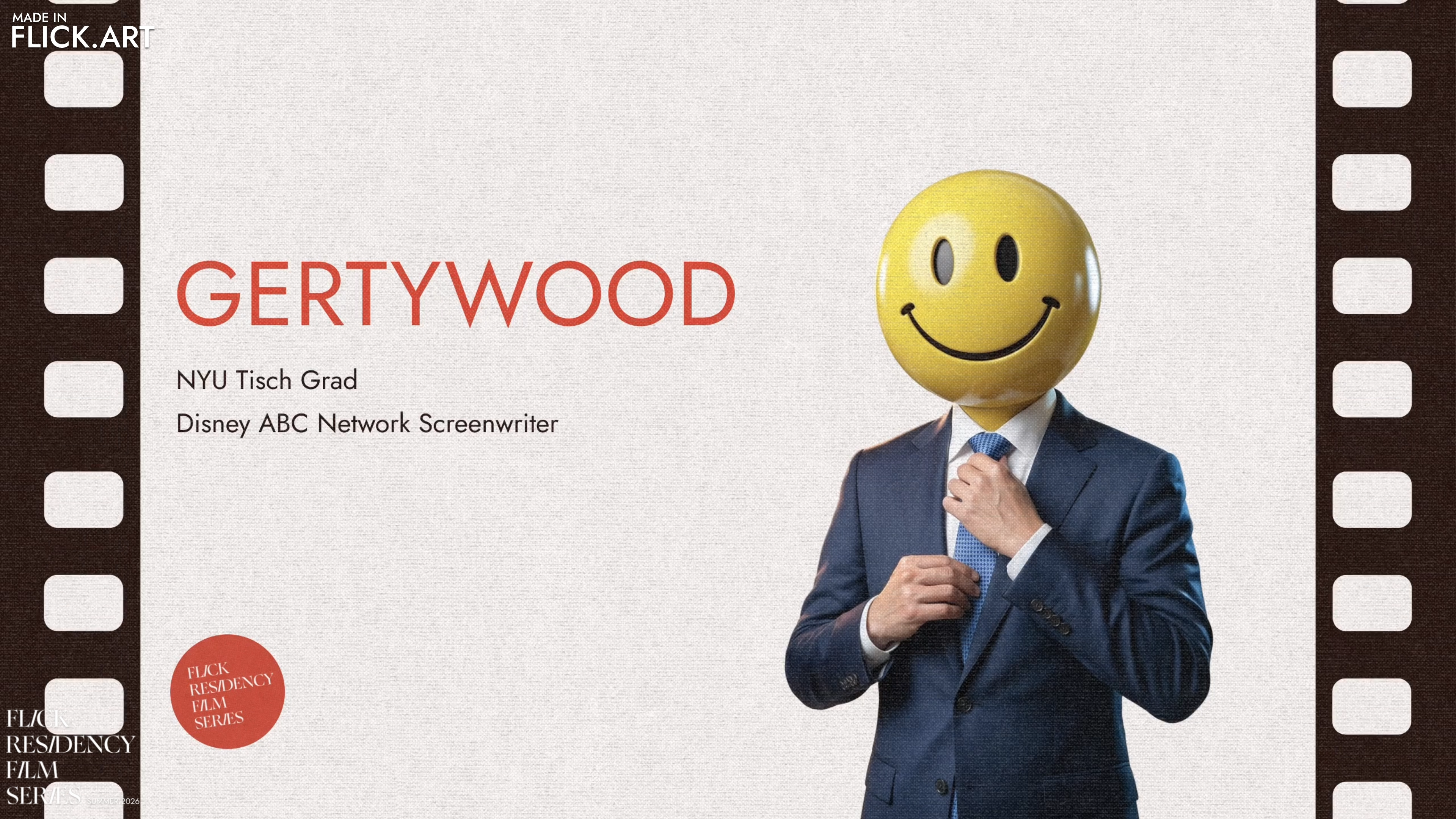
My name is Gertywood. I have a background in filmmaking. I used to be a writer on ABC Network for a show called For Life.
I kind of got into AI filmmaking because I just found it very fascinating that you can control a lot of artistic things.
My film Xenogenesis is about a young guy who's under a lot of pressure for being like a virgin, and he essentially hooks up with an alien even though he's not allowed to.
2. DEVELOPING THE STORY THROUGH MUSIC AND VISUALS
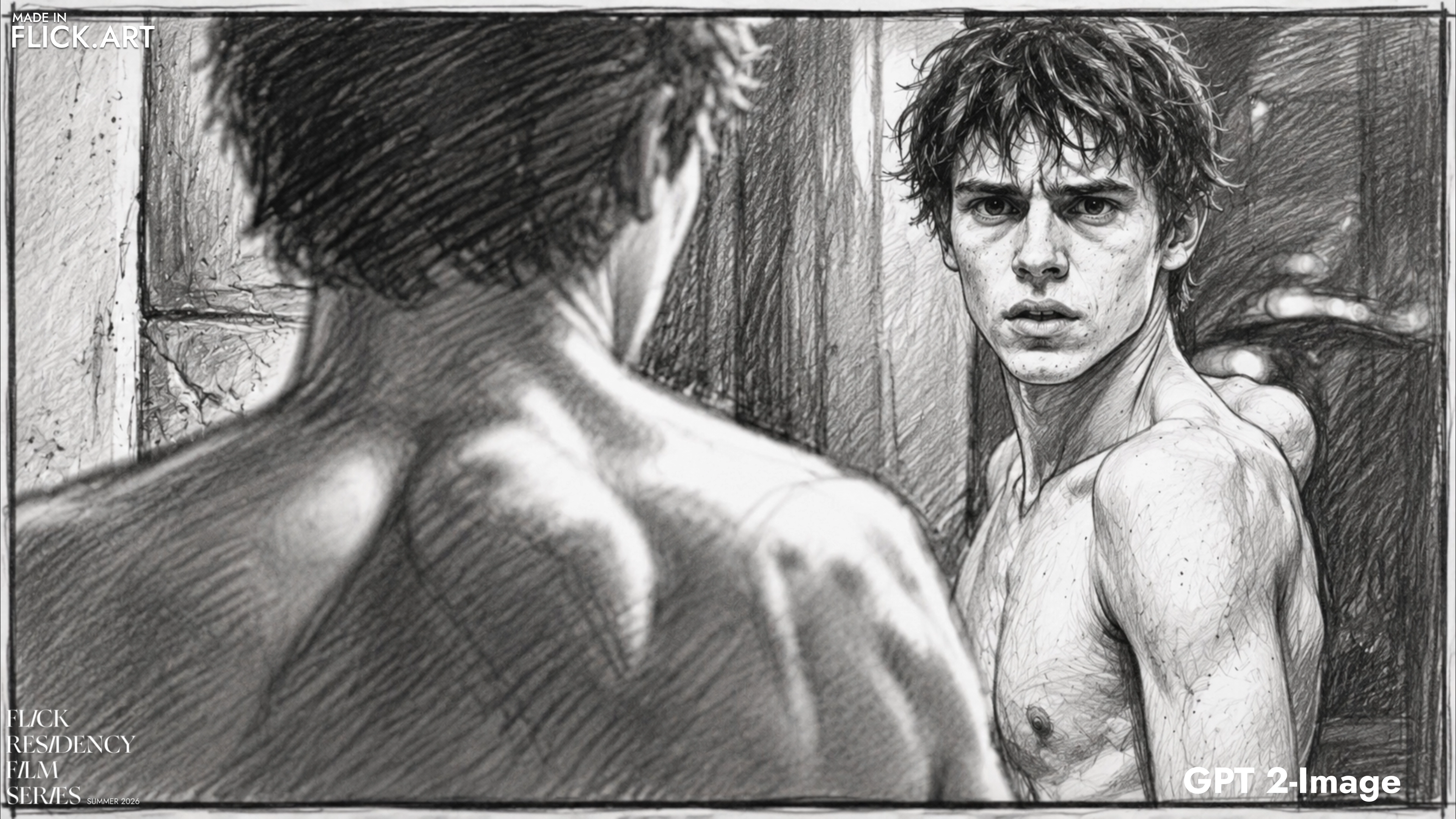
I kind of started developing the screenplay after I opened Flick. Started looking over some styles because the way that I work is I like to work the story in conjunction with both music and visuals.
I actually do like a vague storyboard beforehand. The storyboard really is just for me to know that— know what I'm doing, and the certain shots that I might want.
And then some of those references can actually be used later during video generation.
3. FLICKPEDIA AS A DIRECTOR’S LOOKBOOK
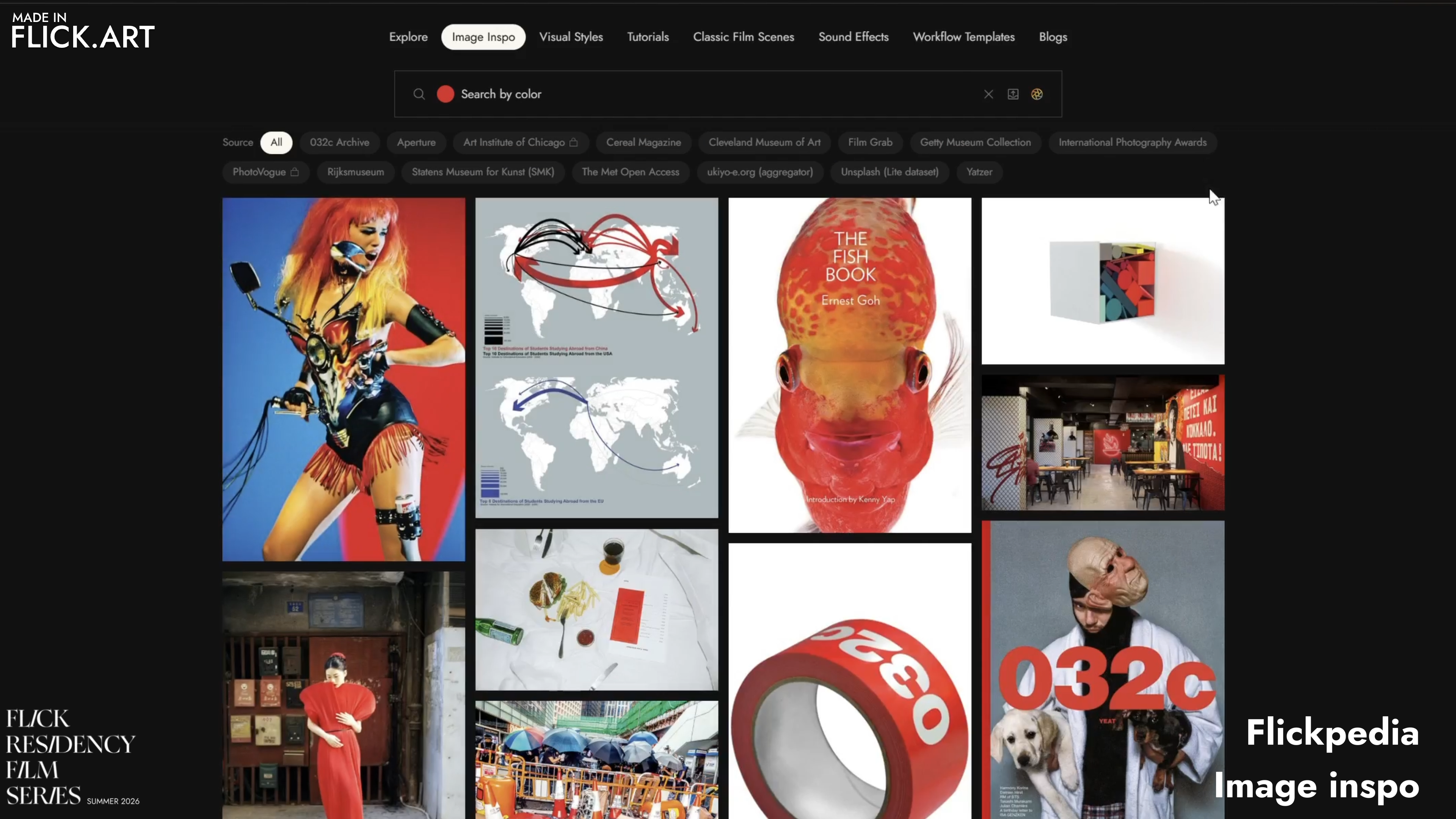
The most unique thing about Flick, I think, it's this Flickpedia. It's full of inspiration.
I think what a lot of people don't realize is that even in traditional filmmaking, you must have a lookbook as a director. And this lookbook is basically everything that has anything to do with the film.
And people spend a lot of time, a lot— like some people spend years developing these lookbooks, and essentially it's like going to the library and doing your research, right?
But it's a film library, and you pick visual styles, color, what this character looks like, and you find reference after reference after reference, and you basically are a collager. You're like a Pinterest person, and you're collaging, and you're saying, "Okay, this character looks like this," and you get the pictures, and that shot here looks like that.
But as someone who's artistic, you must make decisions, and as someone who makes decisions, you must have influence and reference, and you must have a lookbook.
When you come on Flick, at least you have this archive, visual styles, whatever movie that you need to be able to immediately import on your timeline to either be able to reference it or turn it into a 3D stage.
That is probably like the most important part in AI filmmaking to avoid making slop, is that you have to be clear in your decision-making.
And this, you know, essential— like, what's Flickpedia? It's an encyclopedia, literally— will really help you get there, will really help you define your vision.
I don't think this exists anywhere else.
4. AI FILMMAKING IS ABOUT DECISION-MAKING
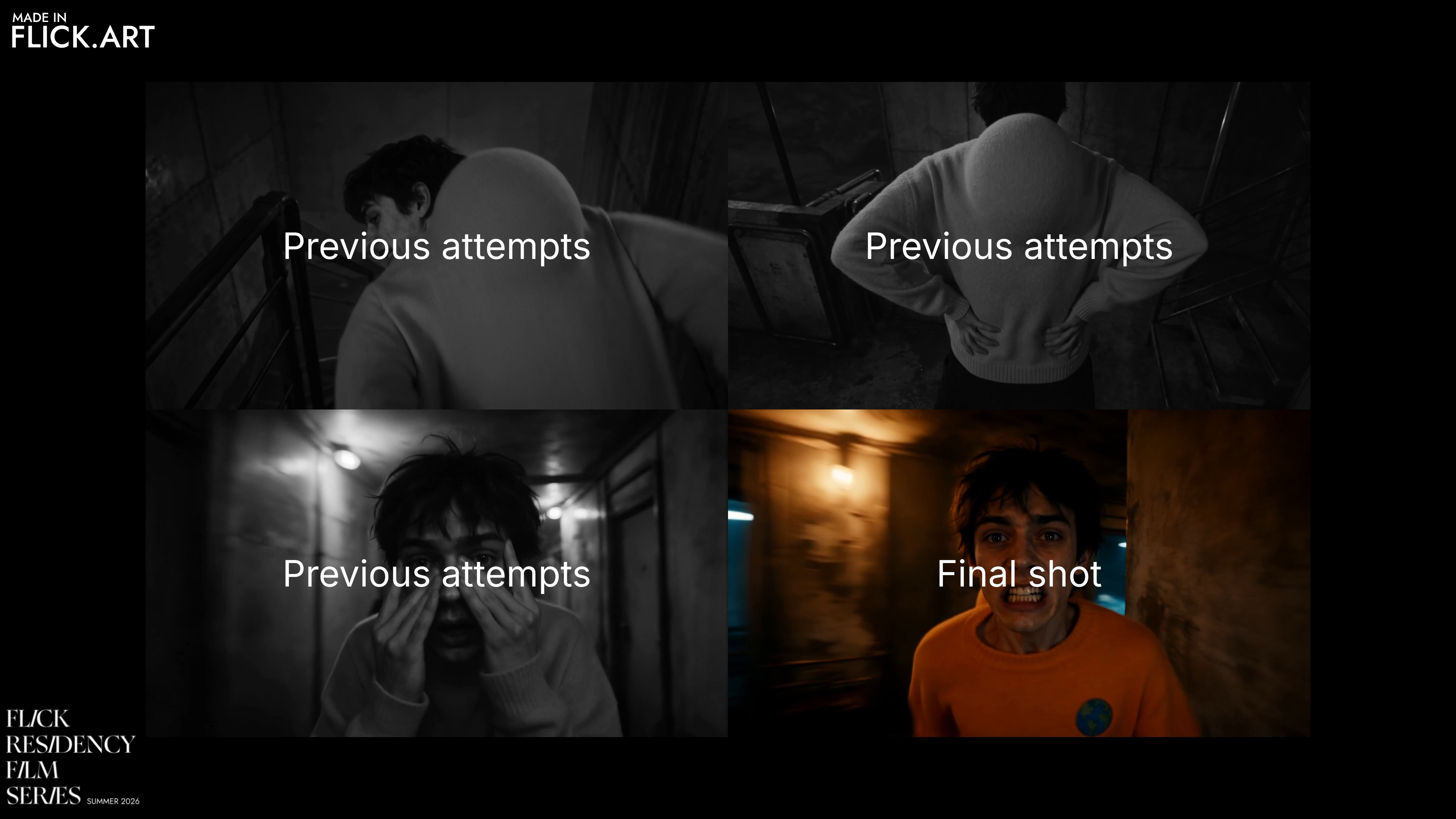
I think the biggest myth in AI that hurts everybody— antis, AIs, whatever it may be— is that AI is a black box.
It's not to say they can't be, but ultimately, if you're making content more than three minutes, AI is no longer a black box; it becomes a slot box unless you are making distinct decisions.
And I think the antis don't have a very clear idea of this. They think that like AI has so much power right now. Oh my gosh! You type in a prompt and you get a whole movie.
That is so far from the truth.
They don't realize the extensive amount of decision-making that we go through to make long-form content.
I specifically say long-form content because, to be honest, some video models, yeah, I can throw in a 10-second prompt and get something.
So can everybody else.
5. USE THE AGENT TO CLARIFY YOUR INTENT
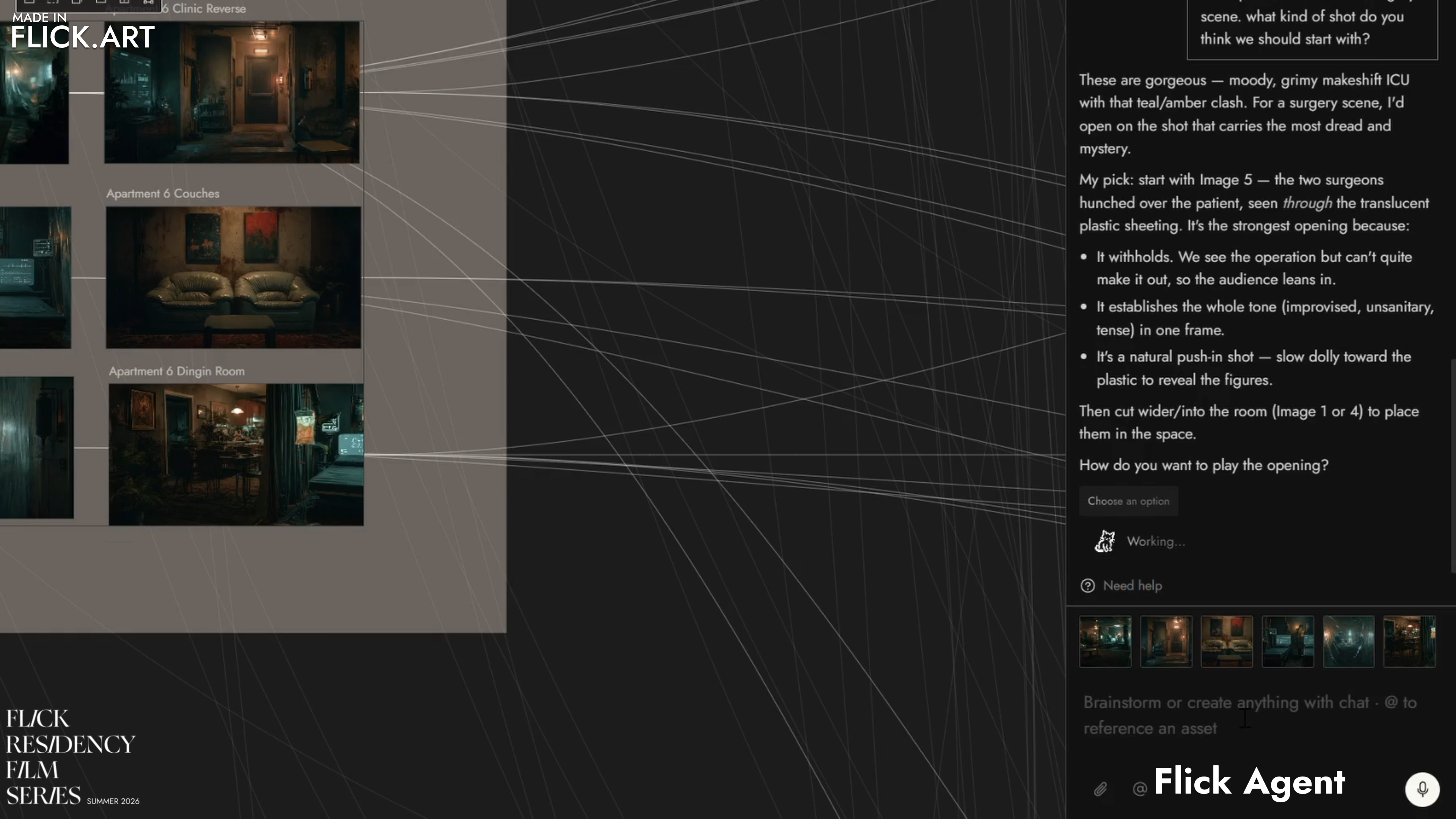
Talk to the agent, not because you want the agent to make decisions for you, but because it is somebody else to just ping ideas off of.
Not every artist knows exactly what they want. Like, for example, I don't really know all the 100% of the time what I want.
But you know what I do know?
I know what I don't want.
And people are extremely good at identifying what they don't want. And we need to use that emotion to our advantage as an artist.
And LLMs are so perfect for that because LLMs will never be insulted.
Chat with it. It'll develop this idea. It will suck. But here's the thing, you'll know it sucks and you will be able to identify all the negative parts about it.
And then through that kind of whittling process, you will be able to hone and clarify your intent and your idea until you have something you actually want.