
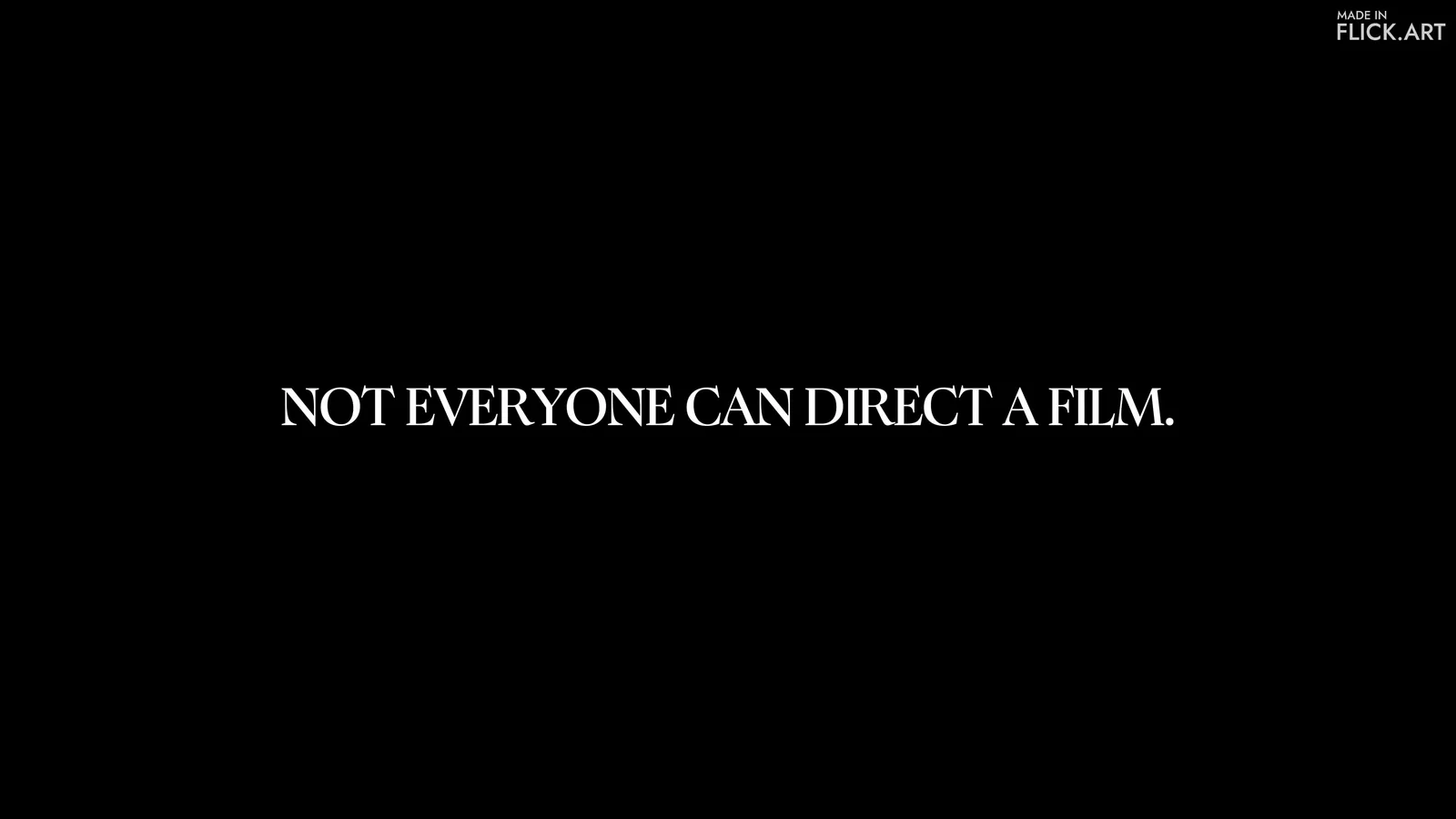
0:05The premise lands
The second half of the two line premise.
Hannah L., director of Flick Filmmaker Residency: Summer Series Trailer
To make a movie trailer, open cold on one striking image, state the premise in two short cards, let more cards pace a montage that speeds up, hit a climax, and end on a scream, the title and the date.
By Zoey Z.Last updated
Most first trailers are a highlight reel: good shots in a row, with nothing pulling the viewer from one to the next. A movie trailer sells one question in a minute or two, so the words and the cutting have to do the selling. We read the 42-second Summer Series Trailer that Hannah L. cut for the 17 films of the Flick Residency, frame by frame, from its cold open to its end card. This guide shows how to make a movie trailer the way it was made, in six steps, each with the frame where it happens.
| Part | Time | What is on screen |
|---|---|---|
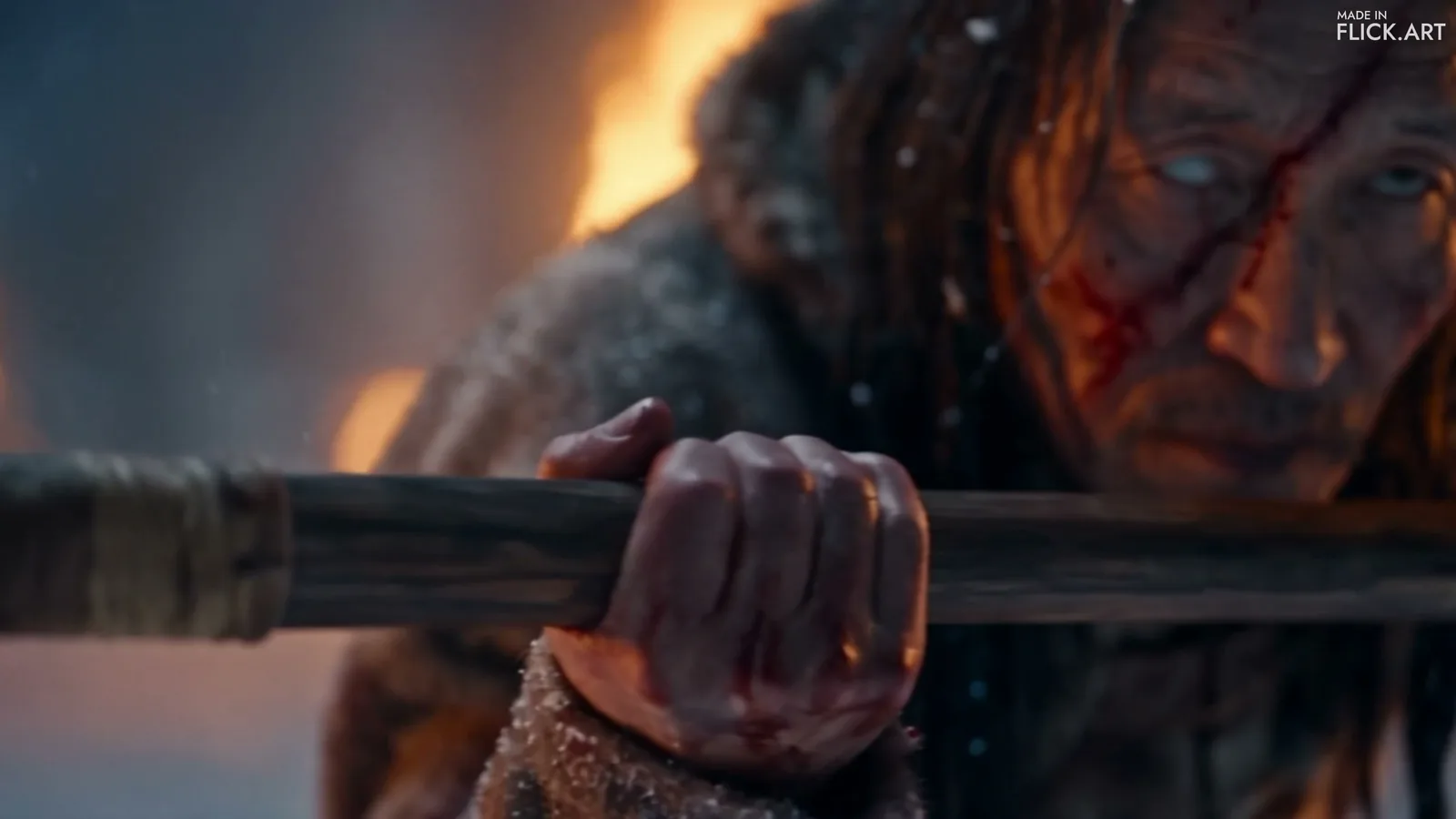
| Cold open | 0:00 | A scarred man gripping a staff by firelight |
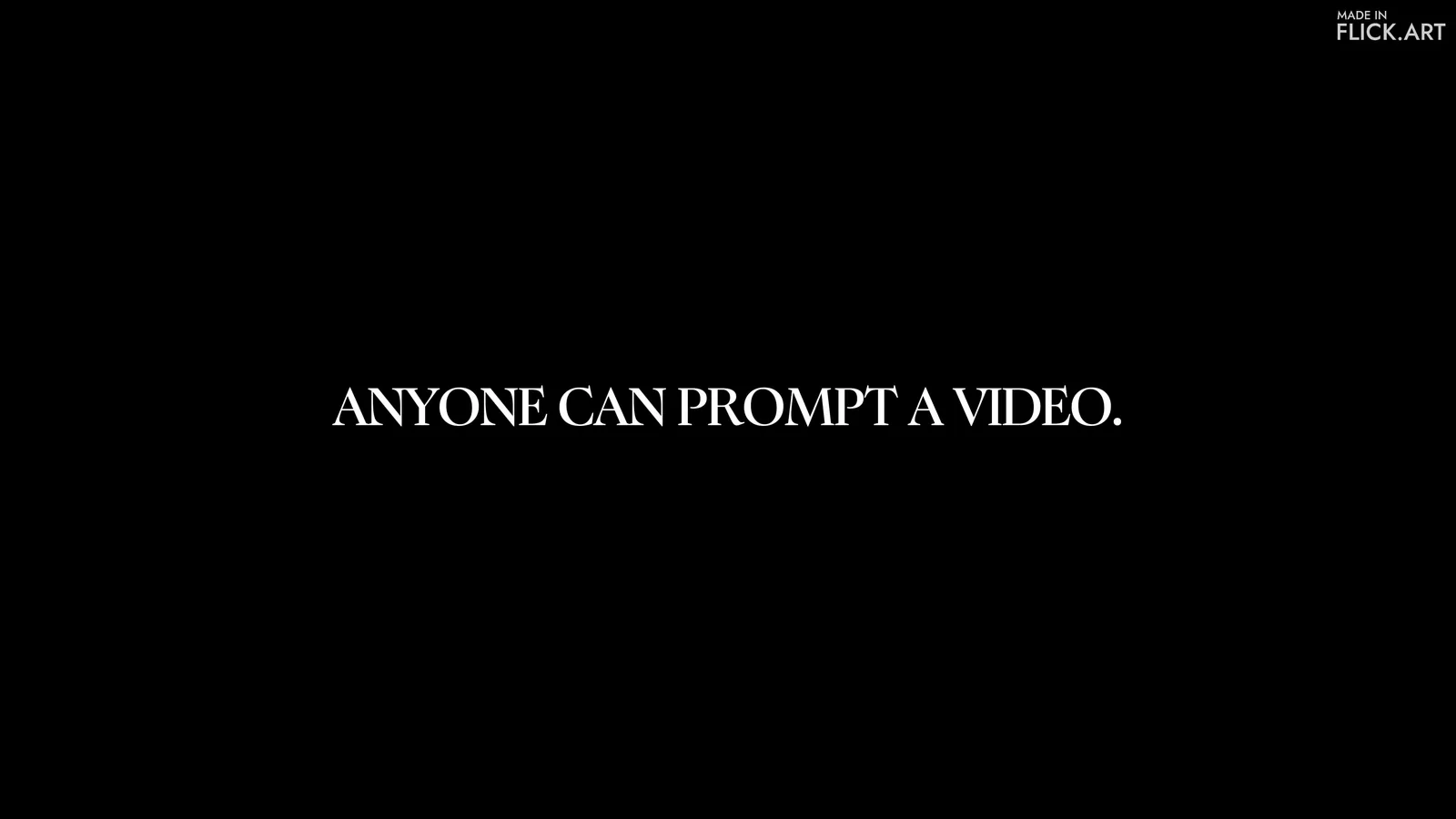
| Premise | 0:04 to 0:05 | Two cards: “Anyone can prompt a video.” “Not everyone can direct a film.” |
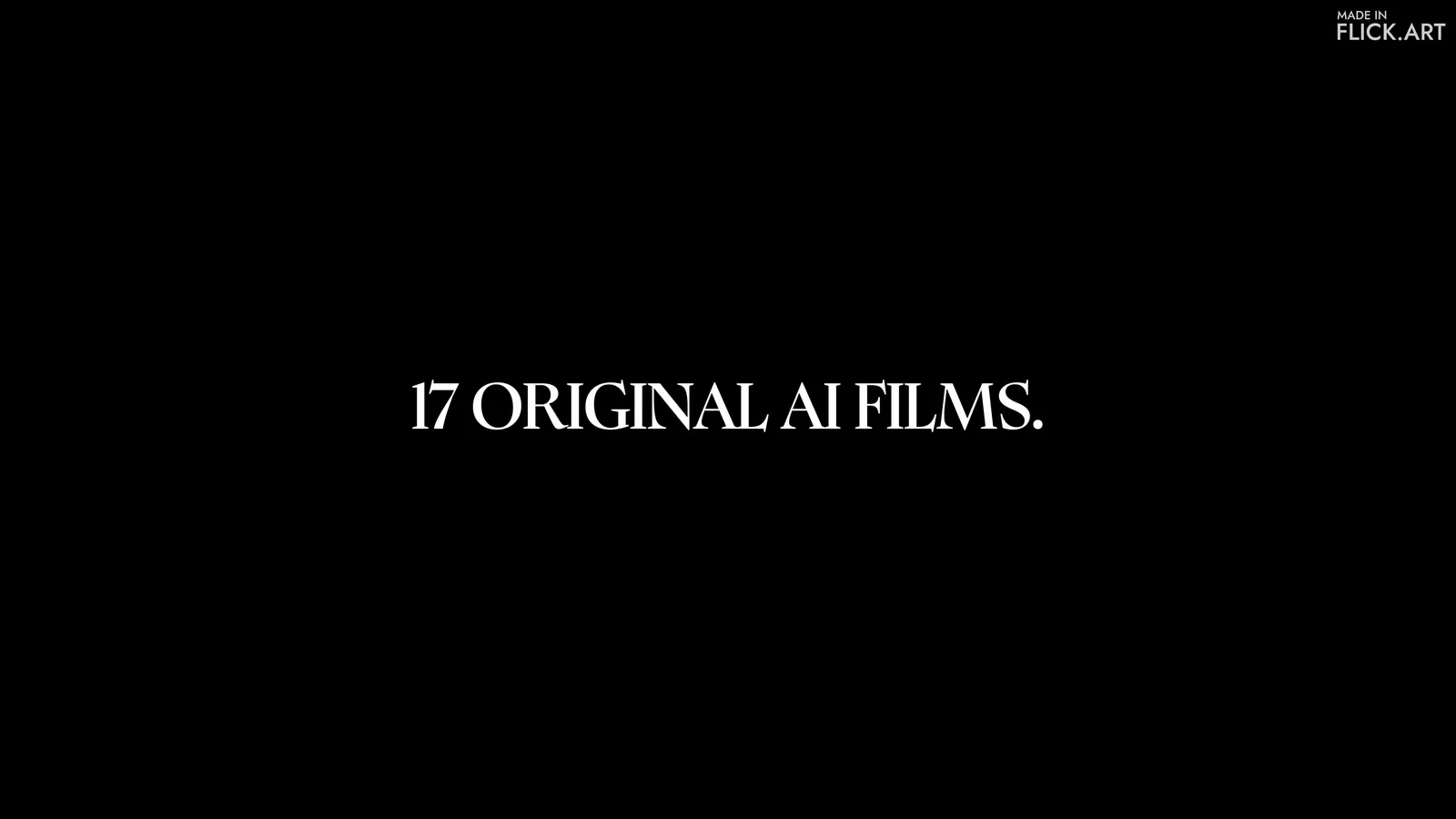
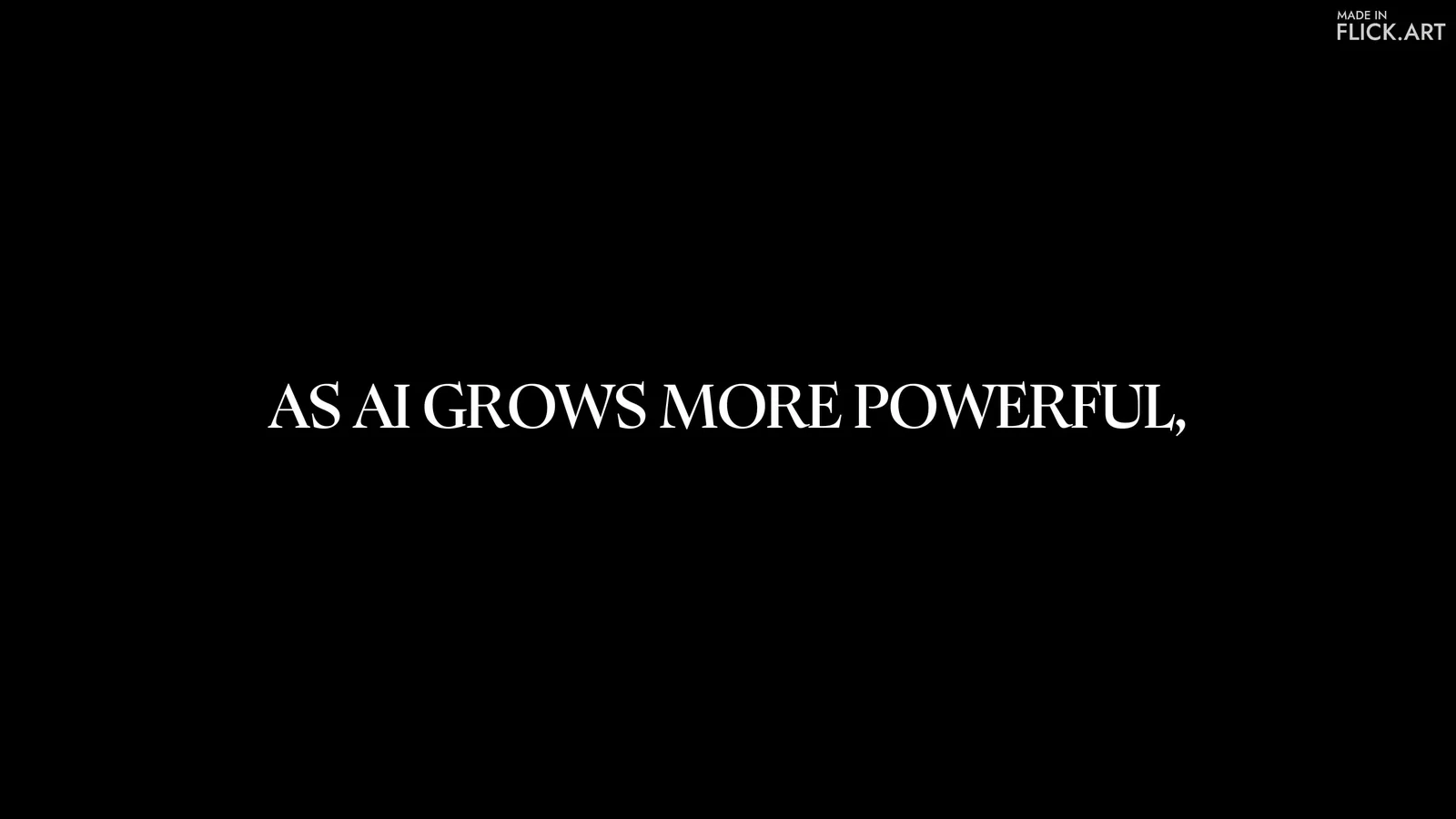
| Build | 0:06 to 0:24 | Shots between the cards “17 original AI films.” at 0:10 and “As AI grows more powerful,” at 0:21 |
| Turn | 0:24 | Card: “What will the filmmaker do with it?”, then about 20 shots in 5 seconds |
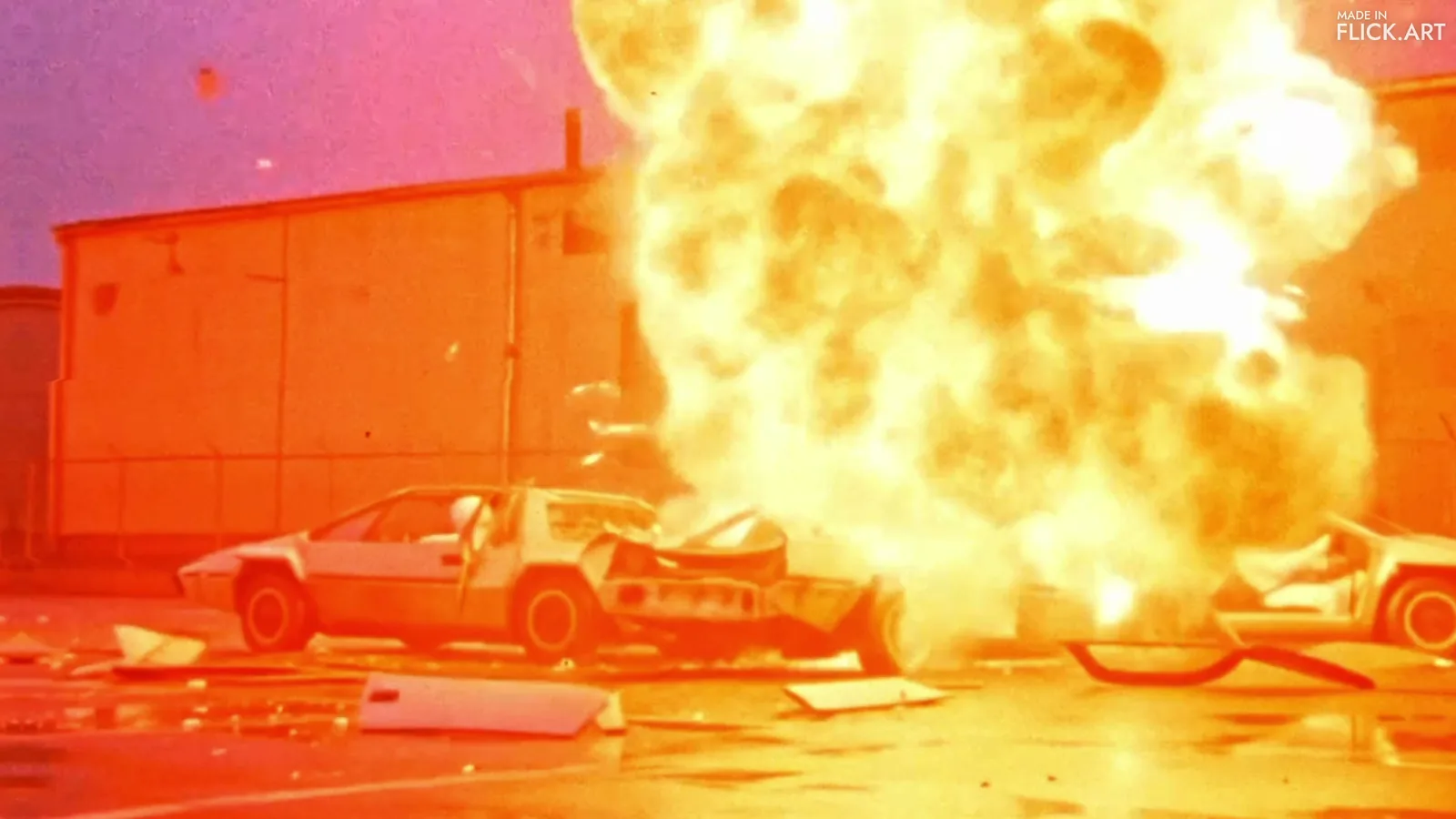
| Climax | 0:29 | An explosion over wrecked cars |
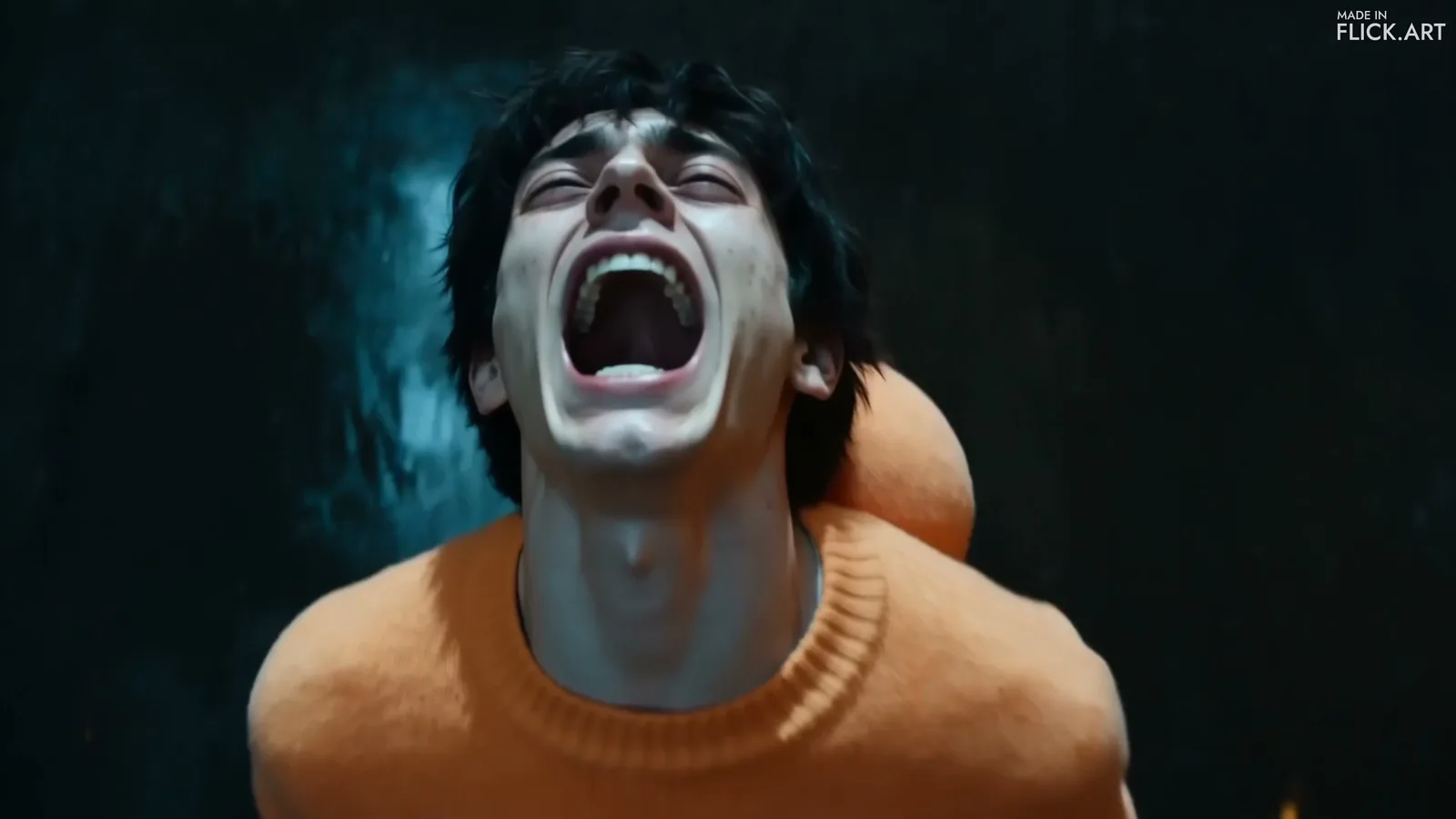
| Button and end | 0:30 to the end | A man in an orange sweater screaming, the series title, then “September 1, 2026” |
Step 1
The trailer starts at 0:00 on a scarred man gripping a staff by firelight, with no title and no words, so the viewer is pulled in before being told anything.
Step 2
At 0:04 and 0:05, two cards set up the whole trailer as a contrast: “Anyone can prompt a video.” then “Not everyone can direct a film.”
Step 3
Right after the premise, at 0:06, the build starts on a figure in a smoky warehouse, the first of the shots that show what these filmmakers made.

Step 4
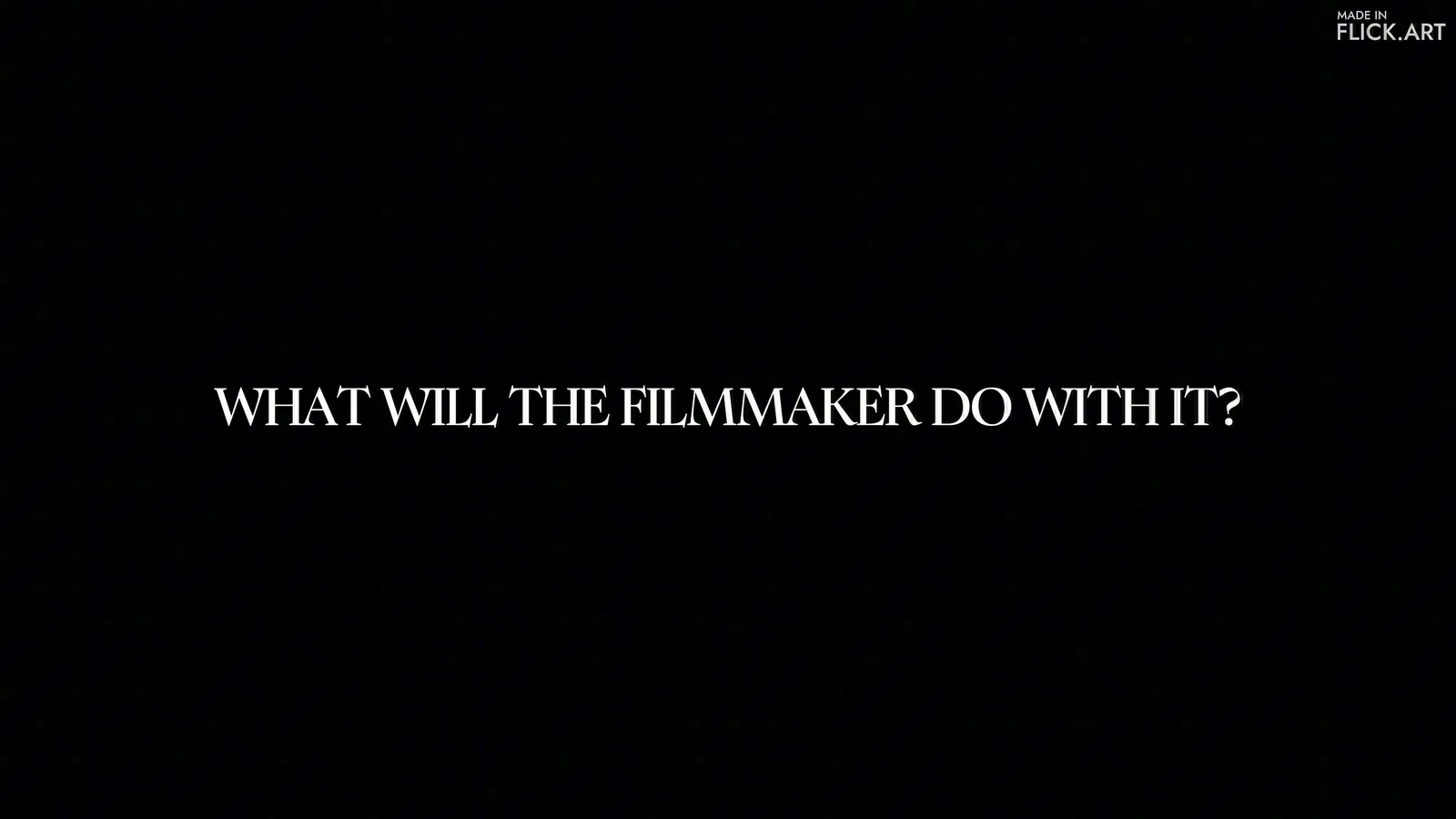
Three more cards break the montage into stretches and push the argument forward: “17 original AI films.” at 0:10, “As AI grows more powerful,” at 0:21 and “What will the filmmaker do with it?” at 0:24.
Step 5
At 0:29, right after its rapid burst of cuts, the trailer peaks on its biggest image: an explosion over wrecked cars.
Step 6
At 0:30 the trailer cuts to its button, a man in an orange sweater screaming, then gives the series title and, at 0:37, the premiere date, “September 1, 2026”.
Hannah L., director of Flick Filmmaker Residency: Summer Series Trailer


Karan Archana, director of Drop of Water
Hannah L., director of Flick Filmmaker Residency: Summer Series Trailer
Hannah L., director of Flick Filmmaker Residency: Summer Series Trailer
Most trailers follow three acts in miniature: an opening that poses a question, a middle that raises the stakes, and a fast turn into the title, a date and where to watch. A voiceover or a few title cards carry the story from one act to the next.
Long enough to pose one question and short enough to leave it open, usually one to two and a half minutes. The Summer Series Trailer made for the Flick Residency runs 42 seconds, with five title cards before its end card.
A button is the last beat after the climax: one surprising shot, line or sound just before the title. In the Summer Series Trailer it is a man in an orange sweater screaming, right after an explosion.
Yes. AI video models make the shots, image models make the characters and key frames, and a voice model can read a narration. The cut itself still needs a filmmaker's choices: which card goes where, and how fast to cut.
Either works. Title cards suit a series or a trailer cut from many films, since one sentence can cover all of them; a voiceover suits a single story told by one narrator. In Flick, a narration can be generated with Eleven v3.
A teaser is shorter and shows less, often a mood, a single image and a title. A trailer lays out the premise, the main characters and the stakes, then ends on the title and the release date.
For the final cut, usually yes. The Summer Series Trailer was uploaded to Flick as a finished video, cut from shots that were made in Flick for the residency films.
You can start for free. Flick gives you 100 credits when you sign up, and 200 more for joining the Flick Discord. Seedance 2.0, a video model many of the residency filmmakers used, needs the Standard plan.
Every frame on this page comes from the Summer Series Trailer or from a public Flick film canvas, and is credited to its filmmaker. Watch the trailer and the films it comes from on Flick TV.
Shots, characters and voices on one canvas, with the models the residency filmmakers used.
Try for free, no credit card required.
Ask AI about this page:ChatGPTPerplexityClaude


