AI Film Noir Generator

Make film noir style images and clips from a prompt: detectives in fedoras, venetian blind shadows, smoky back rooms and rain-slick streets in hard black and white. Free to try.

What is film noir?

Animated black and white detective exhaling cigarette smoke at his desk under a lamp, rain on the window behind him
Start frame: Animated black and white detective exhaling cigarette smoke at his desk under a lamp, rain on the window behind him
Start frame
00:05

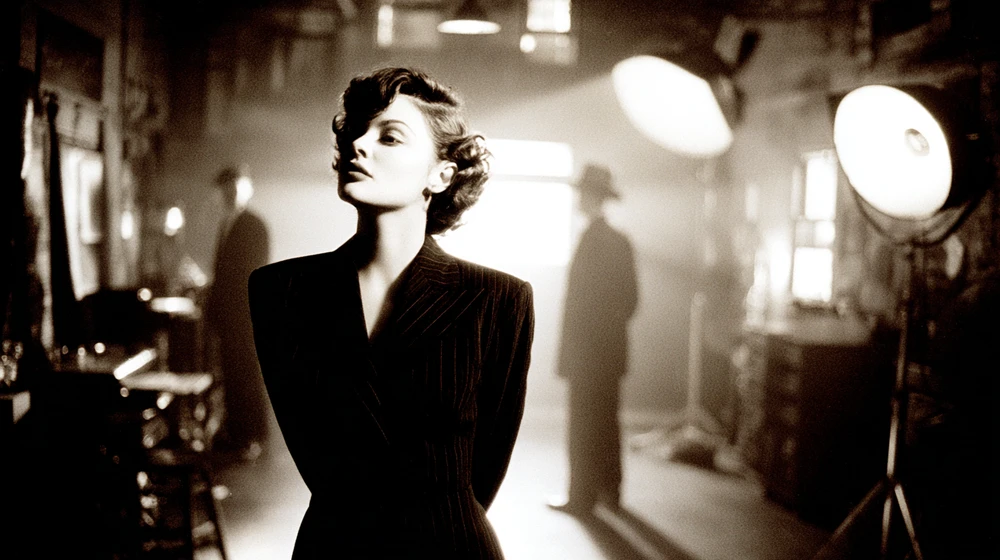
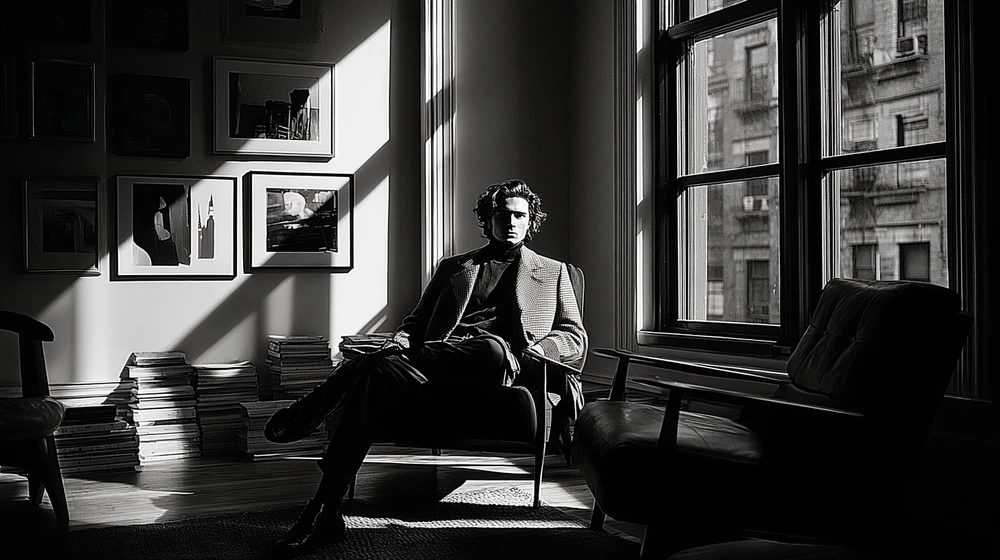
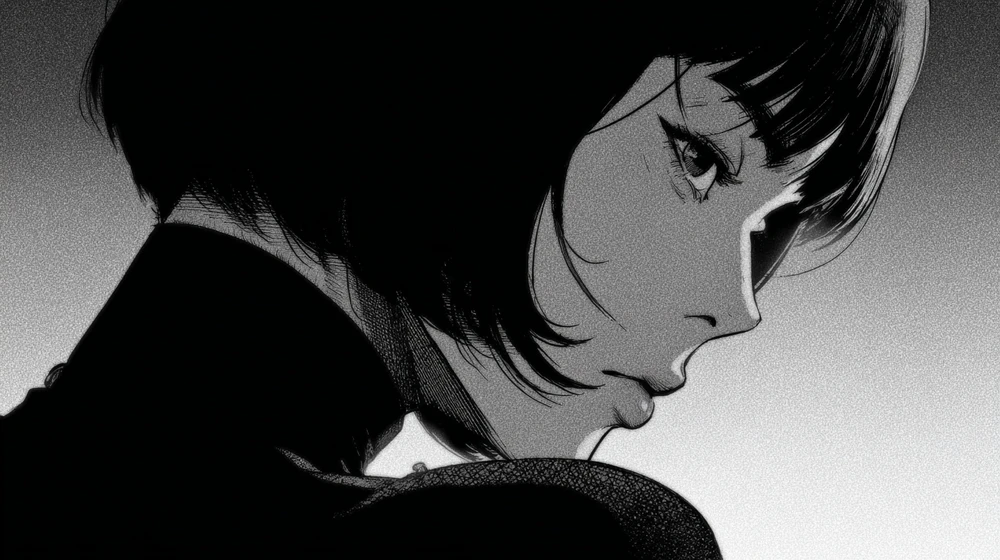
Film noir is the look of 1940s and 1950s Hollywood crime films, and the film noir style is the way they were lit: hard single lights, deep black shadows, slatted light through blinds, smoke and wet streets, usually in black and white. A noir filter on a finished photo turns it grey but keeps its flat light; in Flick you describe the scene with its light and shadows, pick a noir style and generate, so the shadows fall where a 1940s cinematographer would put them, then turn the still into a moving clip on the same canvas. Every example below was made in Flick for this page with GPT Image 2.6, with its exact prompt under it.

How do you make a film noir style image with AI?

In three steps: describe the scene with its single hard light and the shadows it throws, pick a noir style, then build the shots around it on one canvas.
  1. Step 1

    Describe the shot.

    Name the one light and every shadow it makes: here a desk lamp, slatted blinds and a rain-streaked window around a detective in a fedora, in black and white with film grain, so the frame reads as 1940s noir and not just a dark photo.

    Black and white detective in a fedora smoking at his desk at night, venetian blind shadows on the wall, rain on the window
    Film noir still, black and white, 1940s Hollywood look. A private detective in a fedora and belted trench coat sits at his desk in a dark office at night, his face half in shadow, cigarette smoke curling up through the hard light of a single desk lamp. Slatted shadows from venetian blinds fall across the wall and the desk, and a rain-streaked window behind him glows with the blur of a neon sign. Deep blacks, bright highlights, low-key lighting, 35mm film grain, slightly low camera angle. No readable text, no logos.
  2. Step 2

    Pick the style.

    Pick a noir style once and every shot inherits its contrast, grain and shadows, from classic black and white to neo-noir photography; each opens in Flickpedia.

  3. Step 3

    Build the whole short.

    Connect every shot to the character sheets and locations it came from, so the same faces and rooms carry through a crime story; this is part of the canvas behind Still Time, Marius Jensen's residency crime drama built around a robbery.

    Still Time by Marius Jensen

    Drag to look around, scroll to zoom.

    See film and full workflow

Film noir images made with Flick

A femme fatale on the stairs, a rain-soaked street, a card game in a back room, a neo-noir phone booth and a diner turned noir, each made from one written prompt.
Black and white woman in an evening dress on a curving staircase, her huge shadow cast on the wall beside her

A shadow on the staircase

A shadow cast far larger than the person who throws it is the classic noir way of showing danger before it arrives.
Black and white film noir still, 1940s. A woman in a dark satin evening dress and long gloves stands at the top of a curving staircase in a silent mansion, and her shadow is cast huge and stretched across the wall below her. A single high window throws a hard beam through cigarette haze. Her face is half lit, glamorous and dangerous. Low-key light, deep shadows, film grain. No text.
Animated black and white wet cobbled street at night, a man in a trench coat walking away under a lone streetlamp
Start frame: Animated black and white wet cobbled street at night, a man in a trench coat walking away under a lone streetlamp
Start frame
00:05

A rain-soaked street

One streetlamp, wet stones and a long shadow toward the camera build the empty night city every noir story walks through.
The man in the trench coat walks slowly away down the wet cobbled street, out of the streetlamp's pool of light and into darkness, his long shadow sliding across the stones. Rain falls through the lamplight and steam keeps rising from the grate. Locked-off camera, black and white, high contrast, film grain, 1940s film noir, no text.
Black and white two men facing each other over cards and a revolver under a single bare bulb in a smoky room

A card game under one bulb

Hard top light hides the eyes in shadow, so neither man can be read, which is where the tension of the scene comes from.
Black and white film noir still. Two men face each other across a table in a smoky back room, a single bare bulb hanging low above them, playing cards and a revolver on the table between them. Their faces are carved by hard top light, eyes in shadow, and the rest of the room falls to black. Thick haze, high contrast, film grain. No text.
Black and white close-up of a worried woman in a car at night, a band of streetlight across her eyes

Streetlight across her eyes

A narrow band of light across the eyes is the noir close-up: everything else stays dark, so the face carries the story.
Black and white film noir close-up. A woman sits in the passenger seat of a car at night, a narrow band of light from a passing streetlamp sliding across her eyes while the rest of her face stays in deep shadow, raindrops on the side window catching the light. Gloved hand at her collar, worried gaze to the side. Low-key lighting, film grain, 1940s. No text.
Woman in a red raincoat in a glass phone booth at night, rain on the glass, teal neon and red light on wet asphalt

A neo-noir phone booth

Neo-noir keeps the hard shadows and rain but adds saturated colour, here teal neon against a red coat.
Neo-noir colour film still. A woman in a red raincoat waits in a glass phone booth on an empty corner at night, rain running down the glass, lit by a buzzing teal neon glow from a closed bar and a red tail light passing in the blur. Deep shadows, wet asphalt reflections, saturated teal and red against black, anamorphic lens, film grain. Tense and lonely. No readable text, no logos.
Black and white diner at night, a lone customer over coffee, blind shadows across the counter, rain outside

An all-night diner as noir

A modern place described with noir light becomes a 1940s scene, the look a noir filter is usually after.
A modern all-night diner photographed as a 1940s film noir: black and white, hard side light through venetian blinds striping the counter, a lone customer in a coat hunched over a cup of coffee, steam rising, a waitress in silhouette behind the counter, a clock on the wall, rain outside the window. High contrast, deep blacks, film grain, low-key lighting. No readable text, no logos.

What makes a film noir prompt work?

Name the light source, the shadows it casts and the black and white finish, since noir is a lighting style more than a set of props.
  • Light: one hard source, such as a desk lamp, a bare bulb, a streetlamp or light through blinds, with low-key lighting.
  • Shadows: venetian blind shadows, a long cast shadow, faces half in shadow, eyes hidden under a hat brim.
  • Atmosphere: rain, wet streets, cigarette smoke, steam and night.
  • Finish: black and white, deep blacks, film grain and 1940s; for neo-noir, ask for colour with teal and red neon instead.

What is the difference between film noir and an old film effect?

Film noir is a lighting and mood style for crime stories, while an old film effect adds the damage of aged prints, such as scratches, flicker and faded colour, to any scene.
  • For noir, describe the light and the shadows; a clean, sharp black and white frame is still noir.
  • For scratches, dust and flicker on top of a shot, use the old film effect instead.
  • The two can be combined: generate the noir shot first, then ask for gate weave and grain if you want it to look like a worn print.

AI film noir generator FAQs

What is the film noir style?

The film noir style is the look of 1940s and 1950s Hollywood crime films: black and white images with hard, low-key light, deep shadows, venetian blind patterns, smoke, rain-slick streets and characters like detectives and femmes fatales.

How do I make a film noir image with AI?

Describe the scene with one hard light and the shadows it throws, such as a detective at a desk lit by a single lamp with blind shadows on the wall, ask for black and white with film grain, pick a noir style, and generate.

Is there a noir filter for photos and videos?

A noir filter that turns colour into black and white keeps the original flat light. For the real look, describe the scene in Flick with noir lighting so the image is generated with hard shadows from the start.

What is neo-noir?

Neo-noir is the later, colour version of film noir: the same crime stories, hard shadows and night streets, but with saturated colour such as teal and red neon, rain-soaked reflections and a modern setting.

Can I make a film noir video, not just an image?

Yes. Generate the still first, then use it as the start frame of an image to video model in Flick, and describe slow motion that suits noir, such as smoke rising, rain on the window or a figure walking out of the light.

Is the film noir generator free?

Yes, it is free to start: the free plan gives 100 credits every week with no credit card, and GPT Image 2.6 runs on it. Video models such as Seedance 2.5 need the Standard plan ($20 a month).

More film noir styles in Flick

Try the film noir style in Flick

Try for free, no credit card required.

Ask AI about this page:ChatGPTPerplexityClaude