Générateur d'art dark fantasy IA

Créez de l'art et des clips dark fantasy à partir d'un prompt : chevaliers maudits, cathédrales en ruine, forêts noyées et créatures dans le brouillard, peints dans l'ombre et à la lueur des bougies. Essai gratuit.

Qu'est-ce que l'art dark fantasy ?

Animated dark fantasy painting of a knight in a red cloak walking toward a ruined cathedral glowing green as ravens circle
Première image : Animated dark fantasy painting of a knight in a red cloak walking toward a ruined cathedral glowing green as ravens circle
Première image
00:05

L'art dark fantasy est de la fantasy peinte dans une ambiance sombre et gothique : chevaliers vaincus, royaumes en ruine, sorcières, monstres et forêts qui engloutissent les voyageurs, dans des ombres profondes avec une seule lumière froide ou chaude. Le faire à la main demande à un peintre des semaines par scène ; dans Flick vous décrivez le monde, choisissez un style dark fantasy et générez, puis transformez l'image fixe en clip animé sur le même canvas. Les exemples ci-dessous proviennent d'In 'twixt Vows, un film de résidence réalisé dans Flick, et d'images créées pour cette page avec GPT Image 2.6, chacune avec son prompt exact en dessous.

Comment créer de l'art dark fantasy avec l'IA ?

En trois étapes : décrivez la scène avec sa lumière, sa décrépitude et un personnage focal, choisissez un style dark fantasy, puis construisez les clips autour sur un seul canvas.
  1. Étape 1

    Décrivez la scène.

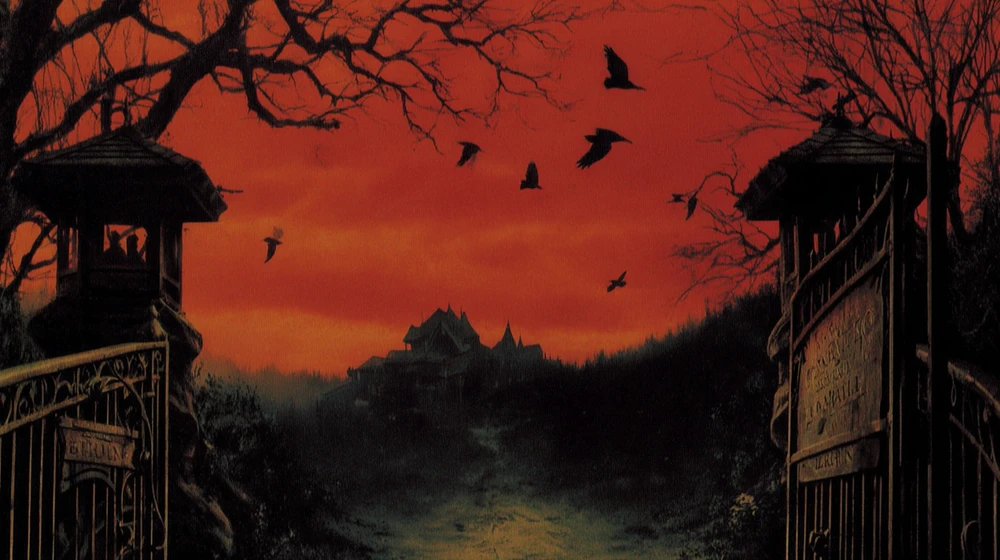
    Donnez à la scène un personnage, une ruine et une source de lumière : ici un chevalier solitaire, une cathédrale luisant d'un vert malsain et des corbeaux dans le brouillard, peints en clair-obscur prononcé, pour que l'ambiance reste sombre plutôt qu'héroïque.

    Knight in a torn red cloak at the edge of a dead forest facing a ruined gothic cathedral glowing green, ravens circling
    Dark fantasy art, painted like a moody oil painting with heavy chiaroscuro. A lone knight in battered blackened armour and a torn crimson cloak stands at the edge of a dead forest, facing a ruined gothic cathedral on a hill whose broken windows glow a sickly green from within. Twisted leafless trees with branches like claws, ravens circling the spire, low fog over the ground, a pale sickle moon behind thick clouds. Muted palette of charcoal, bone and dried-blood red, with one cold green light source. Grim, ominous and beautiful. No text, no signature.
    Signification :Un chevalier solitaire en armure noire face à une cathédrale gothique ruinée aux fenêtres vertes dans une forêt morte sous une lune pâle.
  2. Étape 2

    Choisissez le style.

    Choisissez un style dark fantasy une seule fois et chaque image hérite de sa lumière, sa palette et sa touche de pinceau, du réalisme brumeux à la peinture à l'huile classique ; chacune s'ouvre dans Flickpedia.

  3. Étape 3

    Construisez tout le court métrage.

    Transformez chaque image fixe en clip et connectez chaque plan aux références de créature et de lieu dont il provient, pour qu'un seul monde maudit traverse le film ; ceci fait partie du canvas derrière In 'twixt Vows, le dark fantasy de Jaime Yao fait de forêts noyées, créatures des marais et cavaliers en armure.

    In ’twixt Vows par Jaime Yao

    Faites glisser pour explorer, défilez pour zoomer.

    Voir le film et le workflow complet

Art dark fantasy créé avec Flick

Cavaliers sous des racines géantes, forêts noyées, une bête de forêt affamée, un trône d'os et un village maudit, chacun créé à partir d'un seul prompt écrit.
Cavalier en armure galopant sous les racines voûtées d'un hêtre grand comme une montagne dans une forêt brumeuse

Un cavalier sous des racines colossales

L'échelle fait tout le travail ici : un petit cavalier sous des racines aussi grandes qu'une cathédrale donne au monde un aspect ancien et hostile.
A warrior in Byzantine-style lamellar armor, worn, tattered, and heavily weathered, is riding at full gallop beneath the roots of an ancient common beech tree so enormous that it feels mountain-sized.

The camera is a low tracking shot.
The camera sits very low near the ground, behind and slightly below the rider, looking slightly upward.
The view follows the rider charging forward.
The rider and horse sit near the lower middle area of the frame, not large, but clearly readable.
A massive section of root fills the entire overhead space like a natural vaulted ceiling.
On the left and right sides of the frame, additional colossal roots or root-like supporting forms are visible, creating enclosure and pressure.
The composition should first read as a rider and horse racing forward, and then reveal that the overhead and surrounding space is formed by impossibly huge ancient beech roots.

The scale of the beech tree is extreme.
The overhead root and the flanking root structures are not normal roots, but gigantic organic forms with the scale of monumental pillars and mountain-like arcades.
Their material should read as real European beech bark and wood fiber.
The surface palette is mainly pale gray, silver-gray, cool gray-brown, and touches of muted pale brown-gray.
Show broad areas of relatively smooth but not perfectly flat beech bark, visible wood grain and fiber direction running with the form, shallow vertical folds, occasional burl-like swellings, a few torn and curling bark edges, blunted weathered edges, and darker damp wooden areas.
Near the ground, the roots become rougher, with accumulated dust, mud staining, damp marks, moss, and lichen attachment.
The whole root system should feel ancient, living, naturally grown, extremely heavy, and vastly beyond normal scale.

The ground vegetation is based on Pyrenean mountain valley and forest-edge vegetation.
The surface is covered with broad mountain grassland made mainly of fine tufted fescue-like grasses, thin bent-grass-like strands, low sedges, and irregular grass clumps.
Many low shrubs are scattered throughout, mainly juniper shrubs, heather, bilberry-like low shrubs, broom, boxwood, and small patches of low mat-forming heath.
Some pale gray-brown soil, stones, pale exposed roots, and hoof-pressed grass traces are visible between the vegetation.
Along the background edges, include a few silhouettes of young beech, young fir, and scattered mountain pine.
Keep the colors within restrained dark gray-green, gray olive-green, cool grass green, dry yellow-green, brown-green, and some darker deep cypress green.
The grass and shrubs should break into natural irregular patches, with a slight wind-pressed mountain feel.

The rider wears standard Byzantine-style lamellar armor, but the whole outfit is worn, damaged, and weather-beaten.
The armor is made of many small metal lamellae covering the shoulders, chest, and torso.
The metal plates read as cool gray iron and deep gray steel, with worn edges, slight oxidation darkening, fine scratches, mud traces, and uneven natural reflections.
The underlayers, cloth elements, and soft protective garments read as deep brown, smoke-brown, gray-black, and aged fabric tones, with tearing, fraying, staining, damp marks, and real use wear.
Belts, boots, and tack are made of aged dark brown leather, with creases, abrasion, stretched deformation, and dirt.
The figure should not read like a posed character design sheet, but like a real warrior in motion, fleeing or charging through the landscape.
The rider remains scaled to the wide environmental shot rather than enlarged into close-up detail.

The horse is in a fast gallop.
Its posture drives forward, with a forward-leaning center of motion and readable running rhythm in the legs.
The mane and tail are lifted by speed.
The tack is deep brown aged leather with dark metal fittings, physically real, worn, and marked by damp dust.

The overall lighting is natural daylight filtered through cold damp mist.
The main ambient light comes from a gray-white sky diffused through fog, with an overall cool gray-blue cast.
Ahead in the distance, a brighter white-gray opening between the roots lets light through, gently illuminating the ground in the rider’s path, the outline of the horse, and the lower edge of the overhead root.
The underside of the roots overhead, the inner sides of the flanking roots, and the deeper spaces fall into darker cool-gray shadow.
Transitions between bright and dark are established naturally through fog and humid air rather than hard contrast.
The air contains a clear layer of cold damp mist, slightly clearer nearby and progressively denser in the farther roots and background vegetation.
The depth structure must read clearly: foreground grass, the rider and horse in the midground, the nearest overhead root, the more distant flanking roots, and finally the misty background slopes and trees.

Use real cinematic optical rendering.
The shot is a low-angle upward-looking tracking view.
Use the natural compression of a medium-long to long lens.
Use moderate depth of field.
Focus sits primarily on the rider, the horse, and a short stretch of ground directly ahead of them.
The nearest lower edge of the overhead root remains clearly readable.
The more distant side roots and the background slope are naturally softened by distance and humid mist.
A narrow strip of the closest foreground grass and shrubs along the bottom edge is slightly out of focus.
In this strip, grass blades and shrub edges soften and open gently, with fine detail slightly relaxed and tonal transitions smooth and natural.
This softness comes from real optical defocus.
The distant softness comes from real atmospheric perspective and natural optical rendering rather than flat digital blur.

Subtle film grain.
Slight chromatic aberration.
Slight sensor noise.
Mild lens softness.
Restrained soft bloom in the brighter fog zones.
Slightly uneven natural exposure.
Natural imperfect real-camera rendering.
Realistic beech bark, weathered wood fiber, Pyrenean grassland, juniper shrubs, broom, bilberry, boxwood, Byzantine lamellar armor, aged leather, horse tack, cold mist, and damp ground textures.
In ’twixt Vows, réalisé par Jaime Yao
Signification :Un guerrier byzantin en armure lamellaire cabossée galope sous des racines de hêtre colossales dans une vallée pyrénéenne brumeuse en plan bas cinématographique.
Forêt sombre inondée de troncs gonflés, eau noire et mousse pendante sous une lumière grise

Une forêt noyée

Un lieu vide avec de l'eau noire, de la pourriture et de la mousse pendante installe l'effroi avant même qu'une créature n'apparaisse.
Pure environment, live-action static film frame.
No people.
No animals.

The camera is positioned inside the flooded wetland forest at approximately adult eye level, looking slightly forward and slightly downward into a narrow water channel and layered tree space.
Use an approximately 24–28mm wide-angle lens with realistic perspective, mild natural edge stretching, and believable optical lens behavior.

Ahead lies an ancient wetland forest that has been submerged in black water for centuries.
Massive wetland trunks, swollen root bases, exposed roots, rotten wood, broken stumps, and black water form a narrow, fragmented, oppressive local space.
Large amounts of Spanish-moss-like hanging epiphytic growth descend from high branches, side branches, and forked limbs, creating tangled vertical, diagonal, and horizontal fibrous structures throughout the forest.

The main visual anchor is a group of hanging epiphytic masses in the midground that create a disturbing human-like silhouette illusion.
These forms are not floating in open air.
Each one is clearly attached at the top to a visible overhead branch, bent side branch, or branch fork, and hangs downward under gravity as dense draped fibrous growth.
The upper attachment points remain readable.
The hanging masses are long, uneven, wet, and ragged, with narrower upper portions and broader, more tattered lower portions, creating the impression of head-like and torso-like shapes with trailing lower strands.
One central hanging mass should be the clearest and largest, positioned near the center of the frame.
One or two additional hanging masses appear deeper behind it at slightly different heights and distances, also attached to branches and partly obscured by fog.

These human-like silhouettes must read as natural masses of hanging epiphytic vegetation only.
They are formed by heavy draped moss-like growth hanging from branches, with irregular split lower ends and dense wet fibrous texture.
They remain motionless and integrated into the forest structure.

The black fog is the other major subject.
It is not a small isolated patch or a thin drifting cloud.
It is a dense, heavy, low-luminance mass that occupies a large volume of the midground and background, spreading laterally between the trunks and filling much of the space above the water.
It gathers thickly across the deeper forest and swallows a large amount of distant visual information.
Many distant trunks are partly buried in it.
Large portions of the deeper forest are veiled or completely lost inside it.
The fog creates a strong sense that the space behind the midground is being consumed and erased.

The fog should feel like deep black-gray and charcoal-black wet obscurity rather than bright mist.
It is dense enough that visibility drops quickly after the first few layers of trunks.
Farther roots, low branches, and hanging growth disappear into it.
Only partial silhouettes and broken vertical fragments of deeper trunks survive through the haze.
The fog mass should visually cover and bury much of the far forest instead of leaving the distant background clean and open.

Ground and water structure remain sparse, cold, and broken.
Black water is the dominant ground element, with only small wetland grasses, scattered floating leaves, sparse duckweed, broken algae film, and occasional exposed root fragments.
The water surface reads as near-black with only a few restrained broken cold reflections.

Several near-lens branches, thin roots, and hanging epiphytes enter close to the frame edges.
These foreground elements are strongly but naturally defocused, partially obscuring the view while leaving a readable window toward the central hanging forms and the fog-filled channel behind them.

Focus rests loosely on the clearest central hanging epiphytic mass and the nearby midground trunks.
Very close foreground branches fall into natural optical defocus.
The attached hanging masses behind the first one progressively lose edge definition as they enter the black fog.
The deeper forest rapidly dissolves into obscurity.

There is no visible horizon.
Multiple layers of trunks, roots, hanging vegetation, and black water overlap into the distance before being swallowed by dense black fog.
The deeper background should feel buried, submerged, and visually overwhelmed by the fog volume.

The time is after sunset during deep blue hour, approaching full night.
Only weak residual cold blue-gray skylight diffuses through heavy cloud and the wet atmosphere.
The environment is clearly dark, low-key, enclosed, and oppressive.
The nearest trunks, the clearest hanging human-like moss forms, and a limited area of black water remain readable, while the deeper forest is overtaken by darkness and fog.

Low-saturation palette: near-black water, dark wet brown-black and charcoal bark, cold gray-green hanging vegetation, muted olive-gray aquatic growth, and deep cold blue-gray to charcoal-black fog.

Moderate depth of field with natural optical falloff.
Slight lens softness, subtle film grain, slight sensor noise, restrained chromatic aberration, compressed blacks, natural shadow-detail loss, and imperfect live-action photographic rendering.
In ’twixt Vows, réalisé par Jaime Yao
Signification :Une forêt marécageuse inondée d'eau noire avec des masses de mousses pendantes évoquant des silhouettes humaines et un brouillard noir dense, tournée en prise de vue réelle sombre.
Trois vues d'un monstre de forêt décharné à ramures avec de longs membres antérieurs et des côtes visibles sur fond blanc

Une bête de forêt affamée

Concevoir d'abord la créature en vues de face, de côté et de dos permet de garder le même monstre dans chaque plan d'un film.
Live-action creature three-view presentation on a pure white seamless studio background.
Show the same monster in front view, side view, and back view, arranged side by side at matching scale, with the full body clearly visible in each view. The three views are stable, clean, and easy to read, showing the silhouette, anatomy, and material detail clearly.

Design an extremely gaunt, starved-looking quadrupedal forest predator monster.
Its posture is low and forward-weighted, with a raised spine line, shoulders higher than the hips, and forelimbs clearly longer than the hind limbs, giving the feeling of a dangerous beast ready to lunge at any moment.
The body is elongated, sickly, and heavily skeletal. The ribcage is broad and pronounced, the abdomen is deeply drawn inward, the waist is narrow, and the ribs, shoulder blades, spine line, and major joints are clearly visible.
All four limbs are long and thin but still powerful. The forelimbs are especially long, with prominent joints and large, sharp, dried-looking claws. The hind legs are built like a leaping predator, narrow and spring-loaded, with sharp clawed feet. The tail is very short and visually understated.

The head has the structure of a weathered pale deer skull, as if a real head is wrapped in an ancient outer layer of bone.
The bone surface is rough, aged, cracked, and slightly damaged, with the forehead and nasal bridge forming a hard elongated white bony shell.
The eye sockets are deep and dark, with the eyes hidden in shadow and feeling distinctly predatory.
The mouth reveals a real animal-like lower jaw and dense sharp teeth, with the mouth opening extending far back and creating a strong threatening presence when opened.
From the top and sides of the skull grow massive, twisted, heavily branched antlers. The antlers are thick, ancient, and gnarled, spreading outward like dead branches, creating a powerful silhouette with a naturally grown but slightly distorted feel.

The neck, shoulders, upper chest, and upper back are densely covered with bone spines, bone plates, and irregular white bony overgrowth, as if the skeleton is erupting outward through the flesh.
These bony structures continue along the neck and upper back, forming a jagged dorsal silhouette.
Across the shoulders and upper back, attach patches of degraded, dirty, clumped dark fur.
Most of the rest of the body is exposed skin in cold gray, gray-brown, black-brown, and rotten brown tones. The skin is thin and stretched tightly over the frame so that the rib structure, tendon tension, hollow underside, and planar bony anatomy remain visible.
The upper back, hips, and outer hind legs retain only sparse, damaged, filthy dark fur, with very low fur volume overall.
The complete material language feels like a mixture of white bone, thin skin, tendon, dead fur, and decayed tissue.

Keep the overall palette within dirty bone white, cold gray, gray-brown, black-brown, and dark reddish brown, with low saturation, emphasizing weathered bone, dirty flesh, rotten fur, and a deathly presence.
Use even, clear studio lighting with a subtle natural shadow falloff.
The final result has high-end cinematic live-action creature realism, with physically believable skin roughness, worn bone texture, dirty fur surfaces, damp cold tissue, and natural shadow detail.
In ’twixt Vows, réalisé par Jaime Yao
Signification :Un prédateur quadrupède squelettique à crâne de cerf blanchi et bois tordus est présenté en trois vues réalistes sur fond blanc studio.
Sorcière pâle avec une couronne de bois sur un trône de racines et d'os dans une crypte éclairée aux chandelles, un hibou sur son épaule

Une sorcière sur un trône d'os

La lueur chaude des bougies contrastant avec la lumière froide de la lune depuis une fenêtre crée l'ambiance classique à deux éclairages de la peinture fantasy gothique.
Dark fantasy painting with painterly realism. A tall, pale sorceress with a crown of black antlers and a veil of cobweb-like lace sits on a throne grown from roots and old bones inside a candle-lit crypt, a white owl on her shoulder and a cracked silver chalice in her hand. Dozens of dripping candles give warm light, cold blue moonlight falls from one high window, and deep shadows fill the vaulted ceiling. Elegant, menacing and still. No text, no signature.
Signification :Une sorcière pâle couronnée de bois noirs siège sur un trône d'os dans une crypte éclairée aux chandelles avec un hibou blanc.
Animated hooded skeletal rider with a blue lantern riding across a frozen black lake at dusk, a tower on a cliff behind
Première image : Animated hooded skeletal rider with a blue lantern riding across a frozen black lake at dusk, a tower on a cliff behind
Première image
00:05

Un cavalier sur un lac gelé

Une palette désaturée avec une unique braise de couleur dans une fenêtre lointaine maintient le regard en mouvement à travers une scène quasi monochrome.
The skeletal horse walks slowly across the frozen black lake, its hooves scattering thin frost, the rider's ragged cloak trailing in the wind and the blue lantern swinging and flickering on the staff. Mist drifts low over the ice and the ember window in the far tower glows. Slow lateral tracking shot, the painterly dark fantasy look kept in every frame, no text.
Signification :Un cheval squelettique traverse un lac gelé avec cavalier encapuchonné et lanterne bleue, brume basse, style fantastique sombre et pictural.
Village de bois tordu la nuit avec une vigne épineuse étranglant le clocher de l'église et une silhouette encapuchonnée tenant une lanterne

Un village maudit la nuit

Des hachures évoquant la gravure avec de la couleur peinte font basculer la dark fantasy vers l'illustration de conte sombre.
Dark fairy tale illustration with etching-like line texture and painted colour. An abandoned village of crooked timber houses at night, every window dark except one; a giant thorned vine has grown over the church tower and wrapped its bell, and a hooded figure with a lantern stands on the muddy road looking up at it. Sickly yellow lantern glow against deep green and black, ravens on the rooftops, fine hatching in the shadows. Eerie and storybook-like. No text, no signature.
Signification :Un village abandonné de nuit avec une vigne épineuse géante enroulée autour du clocher et une figure encapuchonnée tenant une lanterne.

Qu'est-ce qui fait fonctionner un prompt de dark fantasy ?

Nommez la lumière, la décrépitude et l'échelle, car ce sont elles, plus que le mot sombre, qui décident si le modèle peint l'effroi ou juste une image terne.
  • Lumière : une source unique dans un cadre obscur, comme une fenêtre verte, des bougies, une lanterne ou une lune pâle, avec heavy chiaroscuro.
  • Décrépitude : ruines, arbres morts, pourriture, rouille, tissus déchirés et ossements, pour que le monde ait clairement perdu quelque chose.
  • Échelle : une petite silhouette face à des racines géantes, des tours ou des créatures donne au monde une dimension plus grande que le héros.
  • Éliminez ce qui brise l'apparence : no text, no signature, et évitez des mots comme lumineux ou épique, qui poussent le modèle vers la fantasy héroïque.

Quelle est la différence entre dark fantasy et horreur ?

La dark fantasy est un monde inventé de magie, de monstres et de royaumes raconté dans une atmosphère sinistre, tandis que l'horreur vise à effrayer dans un monde proche du nôtre.
  • Pour la dark fantasy, décrivez le monde : ses châteaux, armures, créatures et malédictions.
  • Pour une histoire effrayante se déroulant dans une maison, une ville ou une forêt aujourd'hui, utilisez le générateur de vidéo d'horreur IA.
  • Pour une seule grande créature comme sujet, consultez le générateur de dragon IA.

FAQ du générateur d'art dark fantasy IA

Comment créer de l'art dark fantasy avec l'IA ?

Décrivez un personnage dans un décor fantastique décrépit avec une seule source de lumière, comme un chevalier devant une cathédrale luisant en vert dans le brouillard, choisissez un style dark fantasy et générez. Dans Flick, vous pouvez ensuite animer l'image fixe en clip.

Quelles couleurs sont utilisées dans l'art dark fantasy ?

L'art dark fantasy s'appuie sur le charbon, le noir, le blanc os, le bleu froid et le gris, avec des touches de rouge sang séché, d'orange braise ou de vert maladif provenant d'une seule source de lumière.

Puis-je créer une vidéo dark fantasy, pas seulement une image ?

Oui. Générez d'abord l'image fixe, puis utilisez-la comme première image d'un modèle image vers vidéo dans Flick, et décrivez un mouvement lent qui correspond à l'ambiance, comme du brouillard qui dérive, des corbeaux qui tournent ou une cape qui bouge dans le vent.

Comment garder le même monstre ou chevalier d'une scène à l'autre ?

Générez d'abord une planche de personnage avec des vues de face, de profil et de dos, puis fournissez cette planche comme référence à chaque image ou vidéo ultérieure, ce qui maintient le design identique d'un plan à l'autre.

Le générateur d'art dark fantasy est-il gratuit ?

Oui, il est gratuit pour commencer : le plan Free offre 100 crédits chaque semaine sans carte bancaire, et GPT Image 2.6 fonctionne avec. Les modèles vidéo comme Seedance 2.5 nécessitent le plan Standard (20 $ par mois).

Plus de styles dark fantasy dans Flick

Essayez le style dark fantasy dans Flick

Essayez gratuitement, sans carte bancaire.

Demander à une IA à propos de cette page :ChatGPTPerplexityClaude