AI Cel Shading Generator

Make cel-shaded images and animation from a prompt: flat colour, hard-edged shadows and clean outlines, like hand-painted animation cels. Free to try.

Why AI cel shading?

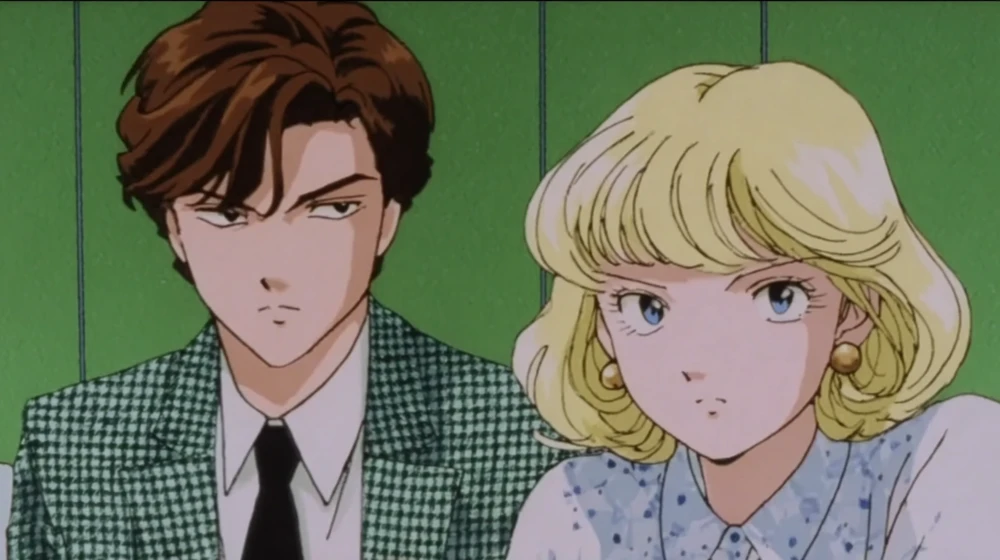
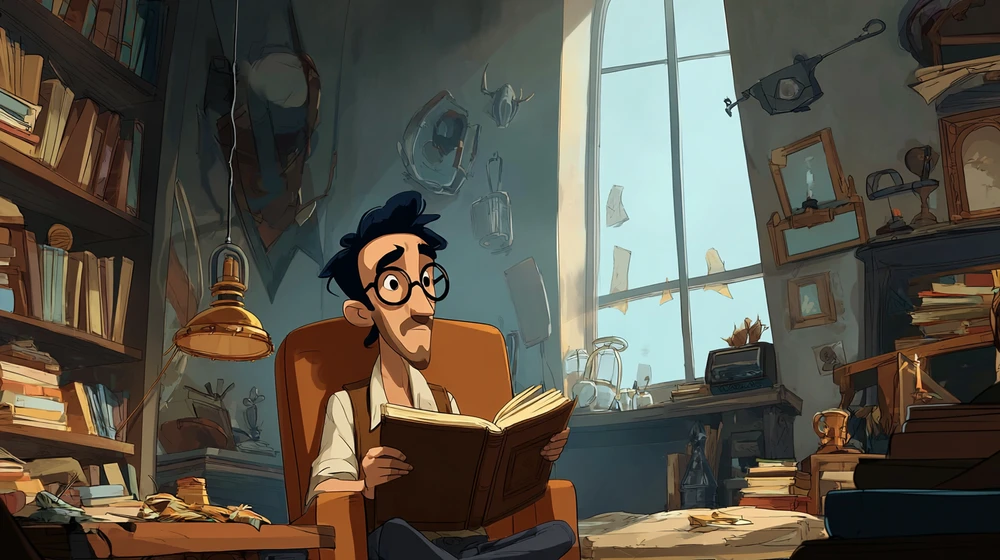
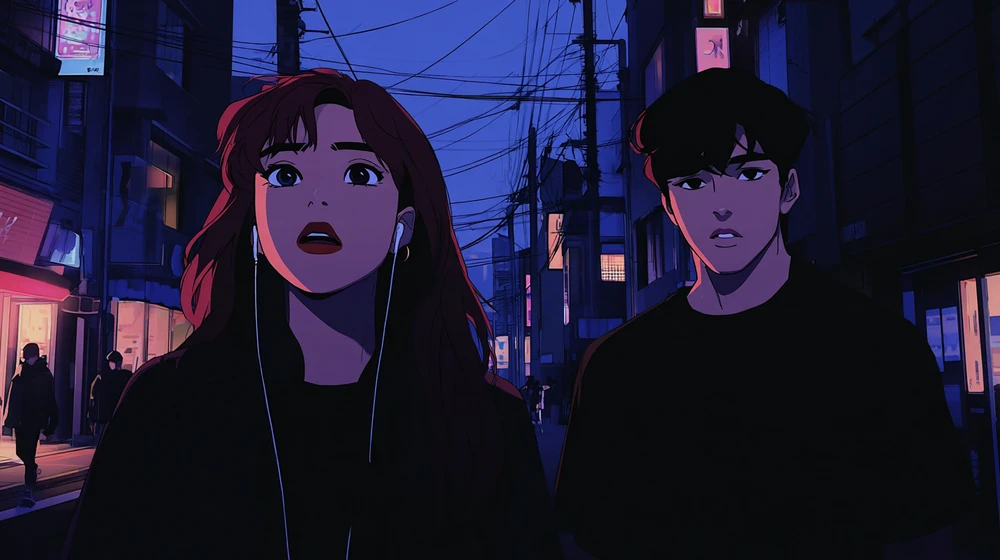
Cel shading, also called toon shading, lights a picture in a few flat tones with hard edges instead of smooth gradients, so it looks like the painted celluloid sheets of hand-drawn animation. In 3D it takes a toon shader and outline setup; with AI you write the look into the prompt and get it from the first shot. The clips below come from Duro, Walter Mauro's residency film, and Mila & Sasa, Katrin Ann Orbeta's, plus two game-style frames made for this page, each with its exact prompt.

How do you make cel-shaded art with AI?

In three steps: describe the shot with its shading rules, pick a cel shading style, then build the whole short on one canvas.
  1. Step 1

    Describe the shot.

    Put the shading rules before the action: here a cel-shaded character over a soft painted background, animated on twos, with no 3D render and no CGI smoothness ruled out, so the model keeps flat tones instead of soft 3D light.

    Hand-drawn girl in a white dress spinning with a long branch in a sunlit painted forest00:07
    Walter Mauro, director of Duro · Seedance 2.5 · Reference to video
    Style: hand-drawn 2D animation, cel-shaded character over a soft painted gouache background, animated on twos at 12 frames per second, choppy stepped motion cadence, brushstrokes shifting and redrawn from frame to frame, line jitter, limited warm dusty palette, no 3D render, no puppet morphing, no CGI smoothness, no lens or depth-of-field, no photoreal rendering.
    
    @Image1 as character reference — DÚRÓ, exact 1-to-1 face, cornrows with golden beads, white cotton dress, golden fish pendant. @Image3 as background environment — FLORESTA, Àiyé forest, dense ancient trees, golden-hour light filtered through canopy, hard-edged dappled shapes.
    
    Camera acts as a rostrum over the artwork — slow lateral pan following her spin, one motivated move only, never handheld, never a lens move.
    
    Shot 1: Dúró grips a long wooden branch with both hands and spins in a full joyful circle. A burst of fully animated motion carries the turn — every frame hand-redrawn, dress hem flaring outward, cornrow beads swinging wide, dust kicked up from bare feet. Speed lines streak faintly behind the branch's arc. The spin lands on a single high-contrast impact frame: her body fully turned, branch raised, wide open laughing expression, held for a beat. Then follow-through settles — the dress hem keeps swaying and drops after her body has already stopped, loose braid strands keep drifting for a moment before finally going still.
    
    Sound: a light whoosh on the branch's swing, a soft giggle at the impact frame, bare feet padding dust, forest ambience underneath.
    
    CONSTRAINTS: DÚRÓ's face, cornrows and dress match @Image1 exactly 1-to-1; FLORESTA matches @Image3 throughout; no modern elements, no plastic, no wristwatch, no printed logos; avoid jitter, avoid bent limbs, avoid identity drift, avoid temporal flicker, avoid chaotic composition; no lens, bokeh or depth-of-field vocabulary; no text, no watermark; No music. Only SFX.
  2. Step 2

    Pick the style.

    Pick a cel shading style once and every shot inherits its outlines, flat colour and shadow shapes, from 1990s anime cels to bold graphic cartoons; each opens in Flickpedia.

  3. Step 3

    Build the whole short.

    Connect each shot to the character reference and the painted background it came from, so the same cel-shaded girl carries through the film; this is part of the canvas behind Duro, Walter Mauro's hand-drawn residency film.

    Duro by Walter Mauro

    Drag to look around, scroll to zoom.

    See film and full workflow

Cel shading videos made with Flick

Painted 2D characters, flat pastel cartoons and game-style frames, each lit in a few flat tones with hard shadow edges and made from one written prompt.
Hand-drawn girl in a white dress running through tall grass toward a wooden hut with a small brown dog00:15

A girl and her dog racing home

The character is cel-shaded in two flat tones while the grass and hut stay richly painted, the split of classic hand-drawn features.
Style: hand-drawn 2D animation, richly painted cel-shaded character over a highly detailed painted background, confident linework with painterly edge variation — not vector-clean, not stiff — dramatic directional lighting with strong contrast, dense layered background depth, textured but controlled brushwork, animated on twos at 12 frames per second, every single frame independently hand-redrawn with visible line jitter and boil, choppy stepped motion cadence, no 3D render, no puppet morphing, no CGI smoothness, no motion blur, no lens or depth-of-field, no photoreal rendering.

@Image1 as character reference — DÚRÓ, exact 1-to-1 face, cornrows with golden beads fixed to scalp, white cotton dress, golden fish pendant. @Image7 as character reference — COELHO, small brown rabbit with a yellow ribbon bow at its neck, exact 1-to-1 fur color and bow. @Image6 as background environment — CASA, wooden house exterior.

Off-center framing throughout. Nothing holds fully still — soft blinks on twos, chest breathing, fur and hair drifting.

Shot 1 — WIDE, off-center. Dúró lunges forward and tumbles playfully onto the grass, catching the rabbit mid-air and rolling with it, wrapping both arms around it in a joyful hug as she comes to rest on her side, dust and loose grass kicked up around the fall, her laughter visible in her open smile.

HARD CUT to Shot 2 — POV SHOT from the rabbit's perspective, off-center, strong backlight. Dúró lies on her side in the grass looking directly toward camera, holding the rabbit close to her chest just out of frame at the bottom edge, warm morning sun behind her turning her cornrows and the loose strands around her face into a glowing golden rim light, her expression soft and content, dust motes drifting through the backlit air.

HARD CUT to Shot 3 — MEDIUM, off-center. The rabbit wriggles and slips free of her arms, hopping a short distance away and turning to look back at her. Dúró sits up fast, half-surprised, half-delighted, a startled laugh breaking across her face, one hand still reaching out where the rabbit had been.

CONSTRAINTS: three shots, two hard cuts, not one continuous take; DÚRÓ matches @Image1 exactly; the rabbit matches @Image7 exactly including the yellow ribbon; CASA visible in soft background in Shot 1; Shot 2 is a true POV from the rabbit's eye level, Dúró's hands holding it are visible but not the rabbit's own body; off-center framing only, no centered symmetry; no modern elements, no plastic, no printed logos; avoid jitter, avoid bent limbs, avoid identity drift, avoid temporal flicker, avoid chaotic composition; no lens, bokeh or depth-of-field vocabulary except the specified backlight glow in Shot 2; no text, no watermark; No music. Only SFX (soft thud of the fall, grass rustling, rabbit's small squirm, Dúró's laughter, birdsong).
duration: 15s (three shots, force explicit duration, do not leave automatic)
Walter Mauro, director of Duro
Two hand-drawn girls holding hands and running through pink and orange sunset clouds00:30

Two girls in a sunset sky

Hard-edged shadows on the faces and dresses keep the figures crisp against a soft, painterly sky.
Style Prefix: Hand-drawn 2D animation, richly painted gouache and watercolor texture, cel-shaded characters over a highly detailed background, confident brushwork, animated on twos at 12fps, line boil aesthetic, no 3D render, no CGI smoothness, no motion blur, no depth-of-field.

Character References: DÚRÓ (@Image1) exact 1-to-1 face, cornrows, white cotton dress, golden fish pendant, normal human eyes. DUPLO/ENIKEJI (@Image2) identical face, white facial paint dots, blue patterned dress with gold sash, glowing solid bright yellow eyes.

Lighting & Environment: Radiant golden hour sunset with intense volumetric sunbeams (god rays) cutting through rosy sky matching input image 1. Strong backlit rim lighting illuminating character skin, hair braids, and dress folds. Small, delicate, natural-sized iridescent soap bubbles floating naturally matching input image 2.

Action Sequence (30 Seconds Total - 4 Shots):
• Shot 1 (Medium-Wide, 6s): Enikeji (@Image2) and Dúró (@Image1) glide gracefully side-by-side through the vibrant golden sunset haze, holding hands gently as wind ripples their clothes.

• Shot 2 (Immersive 2.5D Close Push-Through, 8s): HARD CUT to Dúró (@Image1) flying dynamically straight toward the lens, her white dress and braided hair flowing backward dramatically in 2.5D depth. Golden sunbeams rim-light her face as she speaks in Portuguese: "UAAAU, respira fundo... que lugar LINDO!" right before sweeping past the edge of the camera frame.

• Shot 3 (Close Dynamic Tracking Shot, 8s): HARD CUT to a tight tracking camera moving fluidly right beside Dúró and Enikeji as they playfully swoop and weave through the air. The camera stays very close, following their free, harmonious movement side-to-side with soft depth effect as small natural soap bubbles drift past.

• Shot 4 (Warm Slow-Motion Emotion & Facial Focus, 8s): HARD CUT to extreme slow-motion close-up focusing intensely on the joyful faces of Dúró and Enikeji smiling brightly at each other. Rich golden sunset light washes over their skin with high-contrast volumetric glow. A tiny iridescent soap bubble drifts smoothly across the immediate foreground lens, creating an intimate, magical frame.

Constraints: Exact 1-to-1 reference fidelity to @Image1, @Image2, input image 1, and input image 2; DÚRÓ's eyes fully normal; ENIKEJI's eyes glow bright yellow; small natural bubbles only; off-center framing; no text, no watermark. Audio language: Portuguese. Dialogue in Shot 2: Dúró says "UAAAU, respira fundo... que lugar LINDO!". SFX: soft wind rush, warm ambient hum.
Walter Mauro, director of Duro
Flat 2D cartoon of a blue-haired girl and a small blue cat-suit character sharing a tart in a desert00:15

Sharing a tart on a crashed ship

Flat pastel fills, one shadow tone and thin outlines give the clean, graphic cel look of a TV cartoon.
Start and maintain background @Mila in Spaceship Interior 100%.
Mila's appearance @Mila con Zaino Giapponese, Senza Ombre 100% and expressions @Mila - Espressioni del Viso.
Mila's voice @My Radar Apology.
Sasa's appearance @Sasa con Zaino Giallo e Pistola Laser 100% and expressions @Sasa - Espressioni Facciali 100%. Remove guns from Sasa. Remove any glow form the characters.
Sasa's voice @Mother's Old Spaceship. 2D hand-drawn animation.
Sasa is smaller than Mila. Tart looks like this @Mila con Crostata. Do not take this image background. The tart is 90% smaller. No glow on their heads.
Preserve reference style and character identity. CAMERA: 2 shots, 1 hard cut. SHOT 1 — Medium close-up, 3/4.Mila and Sasa sit side by side on the top of the spaceship. Mila in front then Sasa beside her. Mila holds a tart sliced into 6 pieces. In the center the tart the star spice in the center.
Sasa, happy for Mila with deep warm paternal male voice: “What were the odds we'd find your mother's old spaceship?” Mila turns to him, calm, visibly happy, smiles softly: “I’ve found my star-shaped spice.” Close up - Mila takes a slice with the star spice on top of the slice and gives a bite to it and closes her eyes. The tart has 5 slices left. She closes her eyes tasting the tart. Close up of Mila with closed eyes and and tasting the tart, she opens her eyes and looks up the sky. Her expression becomes quietly hopeful: “But I have to find her among the stars.” AUDIO: Natural dialogue, no overlap. Sasa's voice is deep, warm and human, never robotic. Mila has natural voice, never robotic. No music. No sound. Hand-drawn 2D animation cozy retro-futuristic sci-fi, warm pastel palette, soft sepia linework, vintage children's book, gentle golden light, whimsical, nostalgic, cozy spaceship interior, cinematic parallax, subtle atmospheric animation.
Katrin Ann Orbeta, director of Mila & Sasa
Flat 2D cartoon of a mother putting a tart into a freezer while a small child watches in a sunny kitchen00:15

A mother and child at the freezer

Soft cream and blue fills with almost no gradient keep a domestic scene flat and warm, like a painted cel.
Use Mamma e Bambina con Crostata, Freezeras reference. One continuous animated 2D scene with a fixed camera. The mother gently places the tart inside the freezer and says: “You can keep it in the freezer for up to a month. And when you thaw it, it’ll still taste just as good.” Zoom in to the child looks at her, suddenly realizes something, and asks: “So… it’s like freezing time?” The mother smiles softly and replies: “Exactly. You can save a little moment and come back to it whenever you want.” Use natural movements, subtle expressions, and accurate lip sync. Preserve the characters, background, colors, and illustrated 2D style. No cuts, camera movement, or deformation.

Katrin Ann Orbeta, director of Mila & Sasa
Cel-shaded girl in a red scarf and goggles riding a hover scooter through an orange desert canyon

A game-style rider in a canyon

Two flat tones on the figure, a hard shadow line and a rim light give the look of a cel-shaded game cutscene.
A frame from a 3D animated game cutscene with cel shading: a girl in a red scarf and flight goggles rides a hover scooter across a sunlit desert canyon, her model lit in two flat tones with a hard-edged shadow line instead of a smooth gradient, thick black outlines traced around every silhouette, a crisp rim light on her shoulders, and a flat painted sky and cliffs in bold oranges and teal. No text, no logos, no interface.
Cel-shaded robot mechanic fixing a red motorbike in a cluttered garage under a single work lamp

A robot mechanic at night

Hard white highlights and outlines that thicken with distance are what toon shaders add to a 3D scene.
A cel-shaded 3D render of a stocky robot mechanic repairing a motorbike in a cluttered garage at night: toon shading with exactly two flat tones per surface and a sharp shadow edge, bold ink outlines whose thickness varies with distance, specular highlights drawn as hard white shapes, a single warm work lamp, and flat colour on the walls and tools. No text, no logos.

How do you make cel shading move like hand-drawn animation?

Ask for the character to be animated on twos with line jitter, and rule out 3D render and motion blur, because video models otherwise move a cel-shaded figure as smoothly as a 3D one.
  • Name the cadence: animated on twos, choppy stepped motion cadence.
  • Keep the lines alive: brushstrokes shifting and redrawn from frame to frame, line jitter.
  • Rule out the 3D look: no 3D render, no CGI smoothness, no motion blur.
Hand-drawn girl in a white dress walking down a forest path through shafts of golden light00:07

A walk through dappled forest light

Style Prefix:
Style: hand-drawn 2D animation, richly painted cel-shaded character over a highly detailed painted background, crisp confident linework closing every shape, dramatic directional lighting with strong contrast between lit and shadowed areas, dense layered background depth with multiple sharp planes, textured but controlled brushwork, high production polish, animated on twos at 12 frames per second — each drawing held for two frames then replaced, choppy stepped motion cadence, brushstrokes shifting and redrawn from frame to frame, line jitter, limited warm dusty palette, painted light bloom, no 3D render, no puppet morphing, no CGI smoothness, no motion blur, no lens or depth-of-field, no photoreal rendering.

@Image1 as character reference — DÚRÓ, exact 1-to-1 face, cornrows with golden beads fixed to scalp, white cotton dress, golden fish pendant. @Image2 as character reference — ENIKEJI, identical face to Dúró but serene, intense silvery rim light drawn as a clean glowing shape along her silhouette. @Image3 as background environment — FLORESTA, Àiyé forest, dense ancient trees, golden-hour light filtered through canopy, painted as hard two-tone cel shadow. @Image4 as background environment — VILA, mud-and-thatch settlement, warm ochre dusk light.

Physical world (Àiyé): warm dappled light drawn as hard-edged shapes through leaves, earthy palette — greens, ochre, terracotta, gold. Spiritual world (Ìrònà/Òrun): diffuse silvery-blue light with no cast shadows, drifting golden particles drawn as small light shapes, translucent painted quality.

Camera acts as a rostrum over the artwork — slow push-in on a held face, pan across the painted background, vertical tilt down through the canopy; one motivated move per shot, never handheld, never a lens move. Off-center framing as a default — avoid centered symmetrical composition unless a shot specifically calls for it.

Nothing holds fully still — soft blinks on twos, chest breathing, loose strands drifting, foliage stirring, particles in constant motion. Cornrows render as one bundled shape at all times, using a single motion smear at peak speed instead of separating into individual strands; only the beaded tips swing free; cornrow pattern fixed to the scalp exactly as in @Image1 at rest.

Constraints:
2D hand-drawn on twos at 12fps with painterly boil, never gliding; crisp clean linework not loose sketch lines, high contrast dramatic lighting not flat even light, detailed layered background not soft blur; NO 3D render, NO puppet morphing, NO motion blur, NO liquid/melting surfaces (except where a shot explicitly names an exception, and never on Dúró's own body); NO lens, bokeh, depth-of-field or camera-body vocabulary; exact 1-to-1 reference fidelity to character and environment images; no modern elements — no plastic, no wristwatch, no rubber-sole shoes, no printed logos, no visible technology; nothing frozen or static at any point; centered symmetrical framing only when explicitly called for; avoid jitter, avoid bent limbs, avoid identity drift, avoid temporal flicker, avoid chaotic composition; No music. Only SFX.
Walter Mauro, director of Duro
Close up of a hand-drawn girl's face with braids, smiling, in warm painted light00:22

A close up held on twos

Style: hand-drawn 2D animation, richly painted cel-shaded character over a highly detailed painted background, confident linework with painterly edge variation — not vector-clean, not stiff — dramatic directional lighting with strong contrast, dense layered background depth, textured but controlled brushwork, animated on twos at 12 frames per second, every single frame independently hand-redrawn with visible line jitter and boil, choppy stepped motion cadence, no 3D render, no puppet morphing, no CGI smoothness, no motion blur, no lens or depth-of-field, no photoreal rendering.

DIRECTOR'S NOTE — lens optics exception for Shot 1 only: clear sharp focus on Dúró's face with a tiny golden reflection of the rabbit visible in her eyes. The barrier is invisible until struck or pressed.

@Image1 as character reference — DÚRÓ, exact 1-to-1 face, cornrows with golden beads, white cotton dress, golden fish pendant. @Image7 as character reference — COELHO, small brown rabbit with a golden beaded cord. @Image3 as background environment — dense forest path with strong sunlight beams hitting the ground.

Off-center framing throughout. Nothing holds fully still.

Shot 1 — CLOSE-UP, off-center (5s). Dúró's face lights up with a warm, hopeful smile. In a detailed close-up on her eyes, a tiny reflection of the small brown rabbit sitting in the sunlit path is clearly visible in her irises.

HARD CUT to Shot 2 — MEDIUM-WIDE, off-center (6s). Dúró suddenly breaks into a run toward the rabbit. Mid-stride, she collides abruptly with an unseen wall in mid-air — the invisible barrier ripples violently with iridescent light upon impact. Ahead on the sunlit path, the rabbit sits perfectly calm, watching her.

HARD CUT to Shot 3 — LOW ANGLE MEDIUM, off-center (5s). Knocked back by the shock, Dúró falls onto the dirt path, sitting on the ground. She touches the earth and stares upward into the blank air in front of her, completely bewildered and confused.

HARD CUT to Shot 4 — MEDIUM, off-center (6s). Dúró gets up and presses both open palms firmly against the empty air. The barrier activates under her weight, bulging and shimmering like a thick iridescent gel wall that resists her push and holds her back.

CONSTRAINTS: four shots, three hard cuts, not one continuous take; DÚRÓ matches @Image1 exactly; the rabbit matches @Image7 exactly; forest matches @Image3; Dúró remains in the forest; off-center framing only; no modern elements; avoid jitter, avoid bent limbs, avoid identity drift; no text, no watermark; No music. Only SFX (gasp of joy, sudden thud/impact, dirt rustle from fall, heavy shimmering hum on push).

duration: 22s (four shots: 5s, 6s, 5s, 6s; force explicit duration, do not leave automatic)
Walter Mauro, director of Duro

What words give an AI image cel shading?

Name the shading as well as the style: two or three flat tones, hard-edged shadows and clean outlines, because the word anime alone often brings soft digital gradients.
  • Shading: cel-shaded, two flat tones of shadow, hard-edged shadow line instead of a smooth gradient.
  • Lines: crisp outlines closing every shape, or thin outlines for a lighter, TV cartoon look.
  • Light: rim light, specular highlights drawn as hard white shapes.
  • Split character and background: cel-shaded character over a highly detailed painted background.

AI cel shading generator FAQs

What is cel shading?

Cel shading, or toon shading, is a way of rendering images with a few flat tones and hard-edged shadows instead of smooth gradients, often with dark outlines, so 3D scenes or digital art look like hand-painted animation cels.

Why is it called cel shading?

The name comes from cels, the clear celluloid sheets that animators painted characters onto in traditional 2D animation; the flat, hard-edged colour of those painted sheets is the look cel shading copies.

Can AI make cel-shaded art?

Yes. Flick generates cel-shaded images and video from a text description; ask for flat tones, hard-edged shadows and clean outlines, and pick a cel shading style so every shot keeps the same look.

What is the difference between cel shading and anime?

Anime is a style of animation from Japan, while cel shading is a lighting technique; most traditional anime is cel-shaded, but cel shading is also used for Western cartoons and 3D video games.

How do I make a cel-shaded animation?

Generate a cel-shaded still or a character reference, then animate it with a video model in Flick, asking for the character to be animated on twos and ruling out 3D render and motion blur so the flat shading holds.

Is the cel shading generator free?

Yes, it is free to start: the free plan gives 100 credits every week with no credit card, and GPT Image 2.6 runs on it. Video models such as Seedance 2.5 need the Standard plan ($20 a month).

More cel shading styles in Flick

Try the cel shading style in Flick

Try for free, no credit card required.

Ask AI about this page:ChatGPTPerplexityClaude