AI 黑暗奇幻藝術生成器

從提示詞製作黑暗奇幻藝術和片段:受詛咒的騎士、廢墟大教堂、淹沒的森林和霧中生物,以陰影和燭光繪製。免費試用。

什麼是黑暗奇幻藝術?

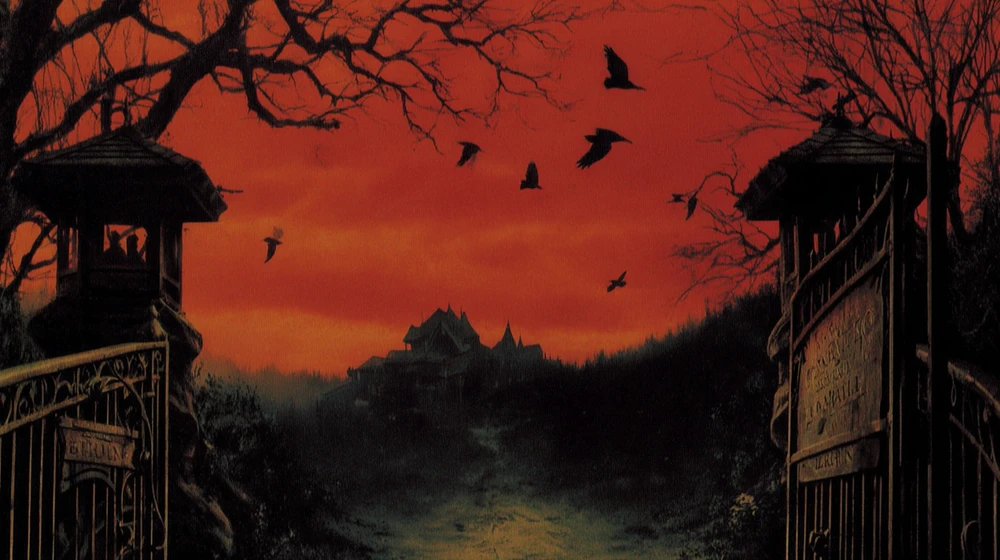
Animated dark fantasy painting of a knight in a red cloak walking toward a ruined cathedral glowing green as ravens circle
第一幀:Animated dark fantasy painting of a knight in a red cloak walking toward a ruined cathedral glowing green as ravens circle
第一幀
00:05

黑暗奇幻藝術是以陰鬱、哥德式情緒描繪的奇幻畫作:戰敗的騎士、廢墟中的王國、女巫、怪物和吞噬旅人的森林,籠罩在深沉陰影中,僅有一道冷光或暖光。手繪需要畫家每個場景花費數週時間;在 Flick 中,你描述世界,選擇黑暗奇幻風格並生成,然後在同一畫布上將靜態圖像轉為動態片段。下方範例來自 In 'twixt Vows(一部在 Flick 中製作的駐留影片)以及用 GPT Image 2.6 為本頁面製作的圖像,每張都附有確切的提示詞。

如何用 AI 製作黑暗奇幻藝術?

三個步驟:描述場景的光線、腐朽和一個焦點人物,選擇黑暗奇幻風格,然後在一個畫布上圍繞它建構片段。
  1. 第 1 步

    描述場景。

    為場景設定一個人物、一處廢墟和一個光源:這裡是一位孤獨的騎士、散發病態綠光的大教堂和霧中的烏鴉,以厚重的明暗對比繪製,讓氛圍保持陰鬱而非英勇。

    Knight in a torn red cloak at the edge of a dead forest facing a ruined gothic cathedral glowing green, ravens circling
    Dark fantasy art, painted like a moody oil painting with heavy chiaroscuro. A lone knight in battered blackened armour and a torn crimson cloak stands at the edge of a dead forest, facing a ruined gothic cathedral on a hill whose broken windows glow a sickly green from within. Twisted leafless trees with branches like claws, ravens circling the spire, low fog over the ground, a pale sickle moon behind thick clouds. Muted palette of charcoal, bone and dried-blood red, with one cold green light source. Grim, ominous and beautiful. No text, no signature.
    含義:黑暗奇幻油畫風格呈現穿破損盔甲紅斗篷騎士面對山丘上散發綠光哥德廢墟教堂,陰森美麗。
  2. 第 2 步

    選擇風格。

    只需選擇一次黑暗奇幻風格,之後每張圖像都會繼承其光線、色調和筆觸,從霧氣寫實主義到古典油畫皆可;每種風格都可在 Flickpedia 中查看。

  3. 第 3 步

    打造完整短片。

    將每張靜態圖轉為片段,並將每個鏡頭連接到它所源自的生物和地點參考,讓一個被詛咒的世界貫穿整部影片;這是 In 'twixt Vows 背後畫布的一部分,Jaime Yao 的黑暗奇幻作品,呈現淹沒的森林、沼澤生物和披甲騎士。

    Jaime Yao 的In ’twixt Vows

    拖曳查看,捲動縮放。

    觀看影片與完整工作流程

使用 Flick 製作的黑暗奇幻藝術

巨大樹根下的騎士、淹沒的森林、飢餓的森林野獸、骨製王座和被詛咒的村莊,每個都由一段文字提示詞生成。
披甲騎士在霧氣森林中,於山岳般巨大的山毛櫸拱形樹根下疾馳

巨大樹根下的騎士

尺度在此發揮作用:在如大教堂般巨大的樹根下的渺小騎士,讓世界顯得古老而充滿敵意。
A warrior in Byzantine-style lamellar armor, worn, tattered, and heavily weathered, is riding at full gallop beneath the roots of an ancient common beech tree so enormous that it feels mountain-sized.

The camera is a low tracking shot.
The camera sits very low near the ground, behind and slightly below the rider, looking slightly upward.
The view follows the rider charging forward.
The rider and horse sit near the lower middle area of the frame, not large, but clearly readable.
A massive section of root fills the entire overhead space like a natural vaulted ceiling.
On the left and right sides of the frame, additional colossal roots or root-like supporting forms are visible, creating enclosure and pressure.
The composition should first read as a rider and horse racing forward, and then reveal that the overhead and surrounding space is formed by impossibly huge ancient beech roots.

The scale of the beech tree is extreme.
The overhead root and the flanking root structures are not normal roots, but gigantic organic forms with the scale of monumental pillars and mountain-like arcades.
Their material should read as real European beech bark and wood fiber.
The surface palette is mainly pale gray, silver-gray, cool gray-brown, and touches of muted pale brown-gray.
Show broad areas of relatively smooth but not perfectly flat beech bark, visible wood grain and fiber direction running with the form, shallow vertical folds, occasional burl-like swellings, a few torn and curling bark edges, blunted weathered edges, and darker damp wooden areas.
Near the ground, the roots become rougher, with accumulated dust, mud staining, damp marks, moss, and lichen attachment.
The whole root system should feel ancient, living, naturally grown, extremely heavy, and vastly beyond normal scale.

The ground vegetation is based on Pyrenean mountain valley and forest-edge vegetation.
The surface is covered with broad mountain grassland made mainly of fine tufted fescue-like grasses, thin bent-grass-like strands, low sedges, and irregular grass clumps.
Many low shrubs are scattered throughout, mainly juniper shrubs, heather, bilberry-like low shrubs, broom, boxwood, and small patches of low mat-forming heath.
Some pale gray-brown soil, stones, pale exposed roots, and hoof-pressed grass traces are visible between the vegetation.
Along the background edges, include a few silhouettes of young beech, young fir, and scattered mountain pine.
Keep the colors within restrained dark gray-green, gray olive-green, cool grass green, dry yellow-green, brown-green, and some darker deep cypress green.
The grass and shrubs should break into natural irregular patches, with a slight wind-pressed mountain feel.

The rider wears standard Byzantine-style lamellar armor, but the whole outfit is worn, damaged, and weather-beaten.
The armor is made of many small metal lamellae covering the shoulders, chest, and torso.
The metal plates read as cool gray iron and deep gray steel, with worn edges, slight oxidation darkening, fine scratches, mud traces, and uneven natural reflections.
The underlayers, cloth elements, and soft protective garments read as deep brown, smoke-brown, gray-black, and aged fabric tones, with tearing, fraying, staining, damp marks, and real use wear.
Belts, boots, and tack are made of aged dark brown leather, with creases, abrasion, stretched deformation, and dirt.
The figure should not read like a posed character design sheet, but like a real warrior in motion, fleeing or charging through the landscape.
The rider remains scaled to the wide environmental shot rather than enlarged into close-up detail.

The horse is in a fast gallop.
Its posture drives forward, with a forward-leaning center of motion and readable running rhythm in the legs.
The mane and tail are lifted by speed.
The tack is deep brown aged leather with dark metal fittings, physically real, worn, and marked by damp dust.

The overall lighting is natural daylight filtered through cold damp mist.
The main ambient light comes from a gray-white sky diffused through fog, with an overall cool gray-blue cast.
Ahead in the distance, a brighter white-gray opening between the roots lets light through, gently illuminating the ground in the rider’s path, the outline of the horse, and the lower edge of the overhead root.
The underside of the roots overhead, the inner sides of the flanking roots, and the deeper spaces fall into darker cool-gray shadow.
Transitions between bright and dark are established naturally through fog and humid air rather than hard contrast.
The air contains a clear layer of cold damp mist, slightly clearer nearby and progressively denser in the farther roots and background vegetation.
The depth structure must read clearly: foreground grass, the rider and horse in the midground, the nearest overhead root, the more distant flanking roots, and finally the misty background slopes and trees.

Use real cinematic optical rendering.
The shot is a low-angle upward-looking tracking view.
Use the natural compression of a medium-long to long lens.
Use moderate depth of field.
Focus sits primarily on the rider, the horse, and a short stretch of ground directly ahead of them.
The nearest lower edge of the overhead root remains clearly readable.
The more distant side roots and the background slope are naturally softened by distance and humid mist.
A narrow strip of the closest foreground grass and shrubs along the bottom edge is slightly out of focus.
In this strip, grass blades and shrub edges soften and open gently, with fine detail slightly relaxed and tonal transitions smooth and natural.
This softness comes from real optical defocus.
The distant softness comes from real atmospheric perspective and natural optical rendering rather than flat digital blur.

Subtle film grain.
Slight chromatic aberration.
Slight sensor noise.
Mild lens softness.
Restrained soft bloom in the brighter fog zones.
Slightly uneven natural exposure.
Natural imperfect real-camera rendering.
Realistic beech bark, weathered wood fiber, Pyrenean grassland, juniper shrubs, broom, bilberry, boxwood, Byzantine lamellar armor, aged leather, horse tack, cold mist, and damp ground textures.
Jaime Yao 執導的《In ’twixt Vows》
含義:一名穿著破損拜占庭鎧甲的騎士在巨大山毛櫸樹根下全速奔馳,低角度追蹤鏡頭呈現比利牛斯山谷霧中景象,具有電影質感。
腫脹樹幹的黑暗淹沒森林,黑水與垂懸苔蘚籠罩在灰色光線下

淹沒的森林

一個空蕩的場景,黑水、腐朽和垂懸苔蘚,在任何生物出現前就建立起恐懼感。
Pure environment, live-action static film frame.
No people.
No animals.

The camera is positioned inside the flooded wetland forest at approximately adult eye level, looking slightly forward and slightly downward into a narrow water channel and layered tree space.
Use an approximately 24–28mm wide-angle lens with realistic perspective, mild natural edge stretching, and believable optical lens behavior.

Ahead lies an ancient wetland forest that has been submerged in black water for centuries.
Massive wetland trunks, swollen root bases, exposed roots, rotten wood, broken stumps, and black water form a narrow, fragmented, oppressive local space.
Large amounts of Spanish-moss-like hanging epiphytic growth descend from high branches, side branches, and forked limbs, creating tangled vertical, diagonal, and horizontal fibrous structures throughout the forest.

The main visual anchor is a group of hanging epiphytic masses in the midground that create a disturbing human-like silhouette illusion.
These forms are not floating in open air.
Each one is clearly attached at the top to a visible overhead branch, bent side branch, or branch fork, and hangs downward under gravity as dense draped fibrous growth.
The upper attachment points remain readable.
The hanging masses are long, uneven, wet, and ragged, with narrower upper portions and broader, more tattered lower portions, creating the impression of head-like and torso-like shapes with trailing lower strands.
One central hanging mass should be the clearest and largest, positioned near the center of the frame.
One or two additional hanging masses appear deeper behind it at slightly different heights and distances, also attached to branches and partly obscured by fog.

These human-like silhouettes must read as natural masses of hanging epiphytic vegetation only.
They are formed by heavy draped moss-like growth hanging from branches, with irregular split lower ends and dense wet fibrous texture.
They remain motionless and integrated into the forest structure.

The black fog is the other major subject.
It is not a small isolated patch or a thin drifting cloud.
It is a dense, heavy, low-luminance mass that occupies a large volume of the midground and background, spreading laterally between the trunks and filling much of the space above the water.
It gathers thickly across the deeper forest and swallows a large amount of distant visual information.
Many distant trunks are partly buried in it.
Large portions of the deeper forest are veiled or completely lost inside it.
The fog creates a strong sense that the space behind the midground is being consumed and erased.

The fog should feel like deep black-gray and charcoal-black wet obscurity rather than bright mist.
It is dense enough that visibility drops quickly after the first few layers of trunks.
Farther roots, low branches, and hanging growth disappear into it.
Only partial silhouettes and broken vertical fragments of deeper trunks survive through the haze.
The fog mass should visually cover and bury much of the far forest instead of leaving the distant background clean and open.

Ground and water structure remain sparse, cold, and broken.
Black water is the dominant ground element, with only small wetland grasses, scattered floating leaves, sparse duckweed, broken algae film, and occasional exposed root fragments.
The water surface reads as near-black with only a few restrained broken cold reflections.

Several near-lens branches, thin roots, and hanging epiphytes enter close to the frame edges.
These foreground elements are strongly but naturally defocused, partially obscuring the view while leaving a readable window toward the central hanging forms and the fog-filled channel behind them.

Focus rests loosely on the clearest central hanging epiphytic mass and the nearby midground trunks.
Very close foreground branches fall into natural optical defocus.
The attached hanging masses behind the first one progressively lose edge definition as they enter the black fog.
The deeper forest rapidly dissolves into obscurity.

There is no visible horizon.
Multiple layers of trunks, roots, hanging vegetation, and black water overlap into the distance before being swallowed by dense black fog.
The deeper background should feel buried, submerged, and visually overwhelmed by the fog volume.

The time is after sunset during deep blue hour, approaching full night.
Only weak residual cold blue-gray skylight diffuses through heavy cloud and the wet atmosphere.
The environment is clearly dark, low-key, enclosed, and oppressive.
The nearest trunks, the clearest hanging human-like moss forms, and a limited area of black water remain readable, while the deeper forest is overtaken by darkness and fog.

Low-saturation palette: near-black water, dark wet brown-black and charcoal bark, cold gray-green hanging vegetation, muted olive-gray aquatic growth, and deep cold blue-gray to charcoal-black fog.

Moderate depth of field with natural optical falloff.
Slight lens softness, subtle film grain, slight sensor noise, restrained chromatic aberration, compressed blacks, natural shadow-detail loss, and imperfect live-action photographic rendering.
Jaime Yao 執導的《In ’twixt Vows》
含義:沼澤森林中垂掛苔蘚形成人形輪廓,黑霧籠罩深處空間,藍調暗夜實景靜幀畫面。
一隻消瘦的鹿角森林怪物的三個視角,有著長長的前肢和可見的肋骨,白色背景

飢餓的森林野獸

先設計生物的正面、側面和背面視圖,可以讓同一隻怪物在影片的每個鏡頭中保持一致。
Live-action creature three-view presentation on a pure white seamless studio background.
Show the same monster in front view, side view, and back view, arranged side by side at matching scale, with the full body clearly visible in each view. The three views are stable, clean, and easy to read, showing the silhouette, anatomy, and material detail clearly.

Design an extremely gaunt, starved-looking quadrupedal forest predator monster.
Its posture is low and forward-weighted, with a raised spine line, shoulders higher than the hips, and forelimbs clearly longer than the hind limbs, giving the feeling of a dangerous beast ready to lunge at any moment.
The body is elongated, sickly, and heavily skeletal. The ribcage is broad and pronounced, the abdomen is deeply drawn inward, the waist is narrow, and the ribs, shoulder blades, spine line, and major joints are clearly visible.
All four limbs are long and thin but still powerful. The forelimbs are especially long, with prominent joints and large, sharp, dried-looking claws. The hind legs are built like a leaping predator, narrow and spring-loaded, with sharp clawed feet. The tail is very short and visually understated.

The head has the structure of a weathered pale deer skull, as if a real head is wrapped in an ancient outer layer of bone.
The bone surface is rough, aged, cracked, and slightly damaged, with the forehead and nasal bridge forming a hard elongated white bony shell.
The eye sockets are deep and dark, with the eyes hidden in shadow and feeling distinctly predatory.
The mouth reveals a real animal-like lower jaw and dense sharp teeth, with the mouth opening extending far back and creating a strong threatening presence when opened.
From the top and sides of the skull grow massive, twisted, heavily branched antlers. The antlers are thick, ancient, and gnarled, spreading outward like dead branches, creating a powerful silhouette with a naturally grown but slightly distorted feel.

The neck, shoulders, upper chest, and upper back are densely covered with bone spines, bone plates, and irregular white bony overgrowth, as if the skeleton is erupting outward through the flesh.
These bony structures continue along the neck and upper back, forming a jagged dorsal silhouette.
Across the shoulders and upper back, attach patches of degraded, dirty, clumped dark fur.
Most of the rest of the body is exposed skin in cold gray, gray-brown, black-brown, and rotten brown tones. The skin is thin and stretched tightly over the frame so that the rib structure, tendon tension, hollow underside, and planar bony anatomy remain visible.
The upper back, hips, and outer hind legs retain only sparse, damaged, filthy dark fur, with very low fur volume overall.
The complete material language feels like a mixture of white bone, thin skin, tendon, dead fur, and decayed tissue.

Keep the overall palette within dirty bone white, cold gray, gray-brown, black-brown, and dark reddish brown, with low saturation, emphasizing weathered bone, dirty flesh, rotten fur, and a deathly presence.
Use even, clear studio lighting with a subtle natural shadow falloff.
The final result has high-end cinematic live-action creature realism, with physically believable skin roughness, worn bone texture, dirty fur surfaces, damp cold tissue, and natural shadow detail.
Jaime Yao 執導的《In ’twixt Vows》
含義:白色背景上展示一隻極度消瘦的四足森林掠食怪物,具有蒼白鹿骨頭顱、巨大鹿角、骨刺覆蓋及破損皮毛,三視圖呈現前側後完整身形與寫實生物質感。
蒼白的女巫師戴著鹿角王冠,坐在由樹根和骨頭組成的王座上,位於燭光照亮的地下墓穴中,肩上停著一隻貓頭鷹

坐在骨頭王座上的女巫師

溫暖的燭光與來自一扇窗戶的冷冽月光形成對比,營造出哥德奇幻畫作中經典的雙光源氛圍。
Dark fantasy painting with painterly realism. A tall, pale sorceress with a crown of black antlers and a veil of cobweb-like lace sits on a throne grown from roots and old bones inside a candle-lit crypt, a white owl on her shoulder and a cracked silver chalice in her hand. Dozens of dripping candles give warm light, cold blue moonlight falls from one high window, and deep shadows fill the vaulted ceiling. Elegant, menacing and still. No text, no signature.
含義:黑暗奇幻繪畫呈現蒼白女巫戴黑鹿角王冠坐於地穴骨根王座,肩立白貓頭鷹手持銀杯,燭光與月光交織營造優雅威脅氛圍。
Animated hooded skeletal rider with a blue lantern riding across a frozen black lake at dusk, a tower on a cliff behind
第一幀:Animated hooded skeletal rider with a blue lantern riding across a frozen black lake at dusk, a tower on a cliff behind
第一幀
00:05

冰凍湖面上的騎士

降低飽和度的色調配上遠處窗戶中的一點色彩,讓視線在近乎單色的場景中持續移動。
The skeletal horse walks slowly across the frozen black lake, its hooves scattering thin frost, the rider's ragged cloak trailing in the wind and the blue lantern swinging and flickering on the staff. Mist drifts low over the ice and the ember window in the far tower glows. Slow lateral tracking shot, the painterly dark fantasy look kept in every frame, no text.
含義:骷髏馬緩行於冰湖上,騎士破斗篷飄動藍燈籠搖曳,遠塔窗發光,暗黑奇幻畫風側向追蹤鏡頭。
夜晚歪斜的木造村莊,帶刺的藤蔓纏繞著教堂塔樓,一個戴著兜帽的人物提著燈籠

夜晚被詛咒的村莊

類似蝕刻版畫的線條搭配繪畫色彩,讓黑暗奇幻朝著陰森童話插畫的方向發展。
Dark fairy tale illustration with etching-like line texture and painted colour. An abandoned village of crooked timber houses at night, every window dark except one; a giant thorned vine has grown over the church tower and wrapped its bell, and a hooded figure with a lantern stands on the muddy road looking up at it. Sickly yellow lantern glow against deep green and black, ravens on the rooftops, fine hatching in the shadows. Eerie and storybook-like. No text, no signature.
含義:黑暗童話插圖展現廢棄村莊夜景,荊棘巨藤纏繞教堂鐘塔,提燈斗篷人物仰望,黃綠黑色調配合蝕刻線條營造詭異氛圍。

是什麼讓黑暗奇幻提示詞有效?

指明光線、腐朽和比例,因為這些元素比「黑暗」這個詞更能決定模型是要繪製恐懼感還是只是一張昏暗的圖片。
  • 光線:在黑暗畫面中使用單一光源,例如綠色窗戶、蠟燭、燈籠或蒼白的月亮,並搭配 heavy chiaroscuro。
  • 衰敗:廢墟、枯樹、腐朽、鏽蝕、破布與白骨,讓世界明顯失去了某些東西。
  • 比例:渺小的身影對比巨大的樹根、高塔或生物,讓世界感覺比英雄更加宏大。
  • 排除破壞畫面的元素:no text, no signature,並避免使用明亮或史詩等詞彙,這些會讓模型偏向英雄奇幻風格。

黑暗奇幻與恐怖有什麼不同?

黑暗奇幻是以陰鬱氛圍描繪魔法、怪物與王國的虛構世界,而恐怖則旨在於接近現實的世界中製造驚嚇。
  • 對於黑暗奇幻,描述世界:它的城堡、盔甲、野獸與詛咒。
  • 若要創作發生在當代房屋、城鎮或森林中的驚悚故事,請使用 AI 恐怖影片生成器。
  • 若要以單一巨獸為主題,請參考 AI 龍生成器。

AI 黑暗奇幻藝術生成器常見問題

如何使用 AI 製作黑暗奇幻藝術?

描述一個處於衰敗奇幻場景中的人物與單一光源,例如騎士站在霧中發出綠光的大教堂前,選擇黑暗奇幻風格,然後生成。在 Flick 中,你可以將靜態圖像轉換為動態影片片段。

黑暗奇幻藝術使用哪些顏色?

黑暗奇幻藝術以炭黑、黑色、骨白、冷藍與灰色為主,並透過單一光源點綴乾血紅、餘燼橙或病態綠等色彩。

我可以製作黑暗奇幻影片,而不只是圖片嗎?

可以。先生成靜態圖片,然後在 Flick 中將其用作圖片轉影片模型的起始幀,並描述符合氛圍的慢動作,例如霧氣飄移、烏鴉盤旋或斗篷在風中擺動。

如何在不同場景中保持相同的怪物或騎士?

先生成一張包含正面、側面和背面視圖的角色設定表,然後將該設定表作為參考提供給後續的每張圖片或影片,這樣可以在不同鏡頭之間保持設計一致。

黑暗奇幻藝術生成器免費嗎?

是的,可以免費開始使用:Free 方案每週提供 100 點數,無需信用卡,並可執行 GPT Image 2.6。影片模型如 Seedance 2.5 需要 Standard 方案(每月 $20)。

Flick 中更多黑暗奇幻風格

在 Flick 中試用黑暗奇幻風格

免費試用,無需信用卡。

讓 AI 解讀本頁:ChatGPTPerplexityClaude