Gerador de Arte Dark Fantasy com IA

Crie arte e clipes de dark fantasy a partir de um prompt: cavaleiros amaldiçoados, catedrais em ruínas, florestas submersas e criaturas na névoa, pintados em sombra e luz de velas. Grátis para experimentar.

O que é arte dark fantasy?

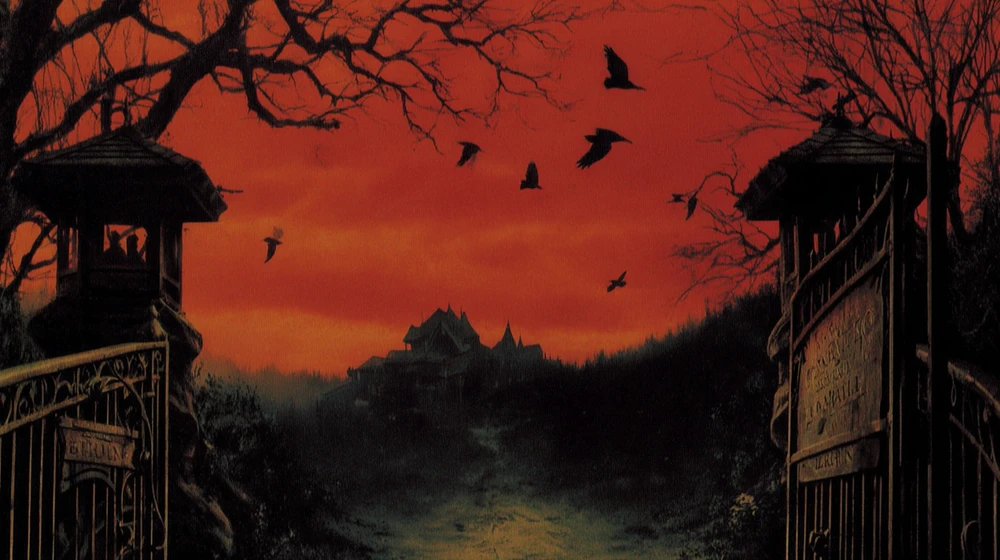
Animated dark fantasy painting of a knight in a red cloak walking toward a ruined cathedral glowing green as ravens circle
Primeiro quadro: Animated dark fantasy painting of a knight in a red cloak walking toward a ruined cathedral glowing green as ravens circle
Primeiro quadro
00:05

Arte dark fantasy é fantasia pintada em um clima sombrio e gótico: cavaleiros que perderam, reinos em ruínas, bruxas, monstros e florestas que engolem viajantes, em sombra profunda com uma luz fria ou quente. Obter isso manualmente leva semanas por cena para um pintor; no Flick você descreve o mundo, escolhe um estilo de dark fantasy e gera, depois transforma a imagem em um clipe em movimento no mesmo canvas. Os exemplos abaixo vêm de In 'twixt Vows, um filme de residência feito no Flick, e de imagens feitas para esta página com GPT Image 2.6, cada uma com seu prompt exato abaixo.

Como você faz arte dark fantasy com IA?

Em três passos: descreva a cena com sua luz, decadência e uma figura focal, escolha um estilo de dark fantasy, depois construa os clipes ao redor disso em um único canvas.
  1. Passo 1

    Descreva a cena.

    Dê à cena uma figura, uma ruína e uma fonte de luz: aqui um cavaleiro solitário, uma catedral brilhando em verde doentio e corvos na névoa, pintados em chiaroscuro pesado, para que o clima permaneça sombrio em vez de heroico.

    Knight in a torn red cloak at the edge of a dead forest facing a ruined gothic cathedral glowing green, ravens circling
    Dark fantasy art, painted like a moody oil painting with heavy chiaroscuro. A lone knight in battered blackened armour and a torn crimson cloak stands at the edge of a dead forest, facing a ruined gothic cathedral on a hill whose broken windows glow a sickly green from within. Twisted leafless trees with branches like claws, ravens circling the spire, low fog over the ground, a pale sickle moon behind thick clouds. Muted palette of charcoal, bone and dried-blood red, with one cold green light source. Grim, ominous and beautiful. No text, no signature.
    Significado:Um cavaleiro solitário em armadura escura diante de uma catedral gótica em ruínas que emite luz verde na floresta morta.
  2. Passo 2

    Escolha o estilo.

    Escolha um estilo de fantasia sombria uma vez e cada imagem herda sua luz, paleta e pinceladas, do realismo nebuloso à pintura a óleo clássica; cada uma abre no Flickpedia.

  3. Passo 3

    Construa o curta inteiro.

    Transforme cada imagem estática em um clipe e conecte cada cena às referências de criatura e localização de onde veio, para que um único mundo amaldiçoado percorra o filme; esta é parte do canvas por trás de In 'twixt Vows, a fantasia sombria de Jaime Yao de florestas afogadas, criaturas de pântano e cavaleiros encouraçados.

    In ’twixt Vows por Jaime Yao

    Arraste para explorar, role para dar zoom.

    Ver o filme e o fluxo de trabalho completo

Arte de fantasia sombria feita com Flick

Cavaleiros sob raízes gigantes, florestas afogadas, uma besta da floresta faminta, um trono de ossos e uma vila amaldiçoada, cada um feito a partir de um único prompt escrito.
Cavaleiro encouraçado galopando sob as raízes abobadadas de uma faia do tamanho de uma montanha em uma floresta enevoada

Um cavaleiro sob raízes colossais

A escala faz o trabalho aqui: um pequeno cavaleiro sob raízes tão grandes quanto uma catedral faz o mundo parecer antigo e hostil.
A warrior in Byzantine-style lamellar armor, worn, tattered, and heavily weathered, is riding at full gallop beneath the roots of an ancient common beech tree so enormous that it feels mountain-sized.

The camera is a low tracking shot.
The camera sits very low near the ground, behind and slightly below the rider, looking slightly upward.
The view follows the rider charging forward.
The rider and horse sit near the lower middle area of the frame, not large, but clearly readable.
A massive section of root fills the entire overhead space like a natural vaulted ceiling.
On the left and right sides of the frame, additional colossal roots or root-like supporting forms are visible, creating enclosure and pressure.
The composition should first read as a rider and horse racing forward, and then reveal that the overhead and surrounding space is formed by impossibly huge ancient beech roots.

The scale of the beech tree is extreme.
The overhead root and the flanking root structures are not normal roots, but gigantic organic forms with the scale of monumental pillars and mountain-like arcades.
Their material should read as real European beech bark and wood fiber.
The surface palette is mainly pale gray, silver-gray, cool gray-brown, and touches of muted pale brown-gray.
Show broad areas of relatively smooth but not perfectly flat beech bark, visible wood grain and fiber direction running with the form, shallow vertical folds, occasional burl-like swellings, a few torn and curling bark edges, blunted weathered edges, and darker damp wooden areas.
Near the ground, the roots become rougher, with accumulated dust, mud staining, damp marks, moss, and lichen attachment.
The whole root system should feel ancient, living, naturally grown, extremely heavy, and vastly beyond normal scale.

The ground vegetation is based on Pyrenean mountain valley and forest-edge vegetation.
The surface is covered with broad mountain grassland made mainly of fine tufted fescue-like grasses, thin bent-grass-like strands, low sedges, and irregular grass clumps.
Many low shrubs are scattered throughout, mainly juniper shrubs, heather, bilberry-like low shrubs, broom, boxwood, and small patches of low mat-forming heath.
Some pale gray-brown soil, stones, pale exposed roots, and hoof-pressed grass traces are visible between the vegetation.
Along the background edges, include a few silhouettes of young beech, young fir, and scattered mountain pine.
Keep the colors within restrained dark gray-green, gray olive-green, cool grass green, dry yellow-green, brown-green, and some darker deep cypress green.
The grass and shrubs should break into natural irregular patches, with a slight wind-pressed mountain feel.

The rider wears standard Byzantine-style lamellar armor, but the whole outfit is worn, damaged, and weather-beaten.
The armor is made of many small metal lamellae covering the shoulders, chest, and torso.
The metal plates read as cool gray iron and deep gray steel, with worn edges, slight oxidation darkening, fine scratches, mud traces, and uneven natural reflections.
The underlayers, cloth elements, and soft protective garments read as deep brown, smoke-brown, gray-black, and aged fabric tones, with tearing, fraying, staining, damp marks, and real use wear.
Belts, boots, and tack are made of aged dark brown leather, with creases, abrasion, stretched deformation, and dirt.
The figure should not read like a posed character design sheet, but like a real warrior in motion, fleeing or charging through the landscape.
The rider remains scaled to the wide environmental shot rather than enlarged into close-up detail.

The horse is in a fast gallop.
Its posture drives forward, with a forward-leaning center of motion and readable running rhythm in the legs.
The mane and tail are lifted by speed.
The tack is deep brown aged leather with dark metal fittings, physically real, worn, and marked by damp dust.

The overall lighting is natural daylight filtered through cold damp mist.
The main ambient light comes from a gray-white sky diffused through fog, with an overall cool gray-blue cast.
Ahead in the distance, a brighter white-gray opening between the roots lets light through, gently illuminating the ground in the rider’s path, the outline of the horse, and the lower edge of the overhead root.
The underside of the roots overhead, the inner sides of the flanking roots, and the deeper spaces fall into darker cool-gray shadow.
Transitions between bright and dark are established naturally through fog and humid air rather than hard contrast.
The air contains a clear layer of cold damp mist, slightly clearer nearby and progressively denser in the farther roots and background vegetation.
The depth structure must read clearly: foreground grass, the rider and horse in the midground, the nearest overhead root, the more distant flanking roots, and finally the misty background slopes and trees.

Use real cinematic optical rendering.
The shot is a low-angle upward-looking tracking view.
Use the natural compression of a medium-long to long lens.
Use moderate depth of field.
Focus sits primarily on the rider, the horse, and a short stretch of ground directly ahead of them.
The nearest lower edge of the overhead root remains clearly readable.
The more distant side roots and the background slope are naturally softened by distance and humid mist.
A narrow strip of the closest foreground grass and shrubs along the bottom edge is slightly out of focus.
In this strip, grass blades and shrub edges soften and open gently, with fine detail slightly relaxed and tonal transitions smooth and natural.
This softness comes from real optical defocus.
The distant softness comes from real atmospheric perspective and natural optical rendering rather than flat digital blur.

Subtle film grain.
Slight chromatic aberration.
Slight sensor noise.
Mild lens softness.
Restrained soft bloom in the brighter fog zones.
Slightly uneven natural exposure.
Natural imperfect real-camera rendering.
Realistic beech bark, weathered wood fiber, Pyrenean grassland, juniper shrubs, broom, bilberry, boxwood, Byzantine lamellar armor, aged leather, horse tack, cold mist, and damp ground textures.
In ’twixt Vows, dirigido por Jaime Yao
Significado:Um guerreiro bizantino em armadura gasta cavalga em galope sob raízes gigantescas de faia antiga em paisagem montanhosa pirenaica com névoa fria cinematográfica.
Floresta escura inundada de troncos inchados, água negra e musgo pendente sob luz cinza

Uma floresta afogada

Uma localização vazia com água negra, podridão e musgo pendente estabelece o pavor antes que qualquer criatura apareça.
Pure environment, live-action static film frame.
No people.
No animals.

The camera is positioned inside the flooded wetland forest at approximately adult eye level, looking slightly forward and slightly downward into a narrow water channel and layered tree space.
Use an approximately 24–28mm wide-angle lens with realistic perspective, mild natural edge stretching, and believable optical lens behavior.

Ahead lies an ancient wetland forest that has been submerged in black water for centuries.
Massive wetland trunks, swollen root bases, exposed roots, rotten wood, broken stumps, and black water form a narrow, fragmented, oppressive local space.
Large amounts of Spanish-moss-like hanging epiphytic growth descend from high branches, side branches, and forked limbs, creating tangled vertical, diagonal, and horizontal fibrous structures throughout the forest.

The main visual anchor is a group of hanging epiphytic masses in the midground that create a disturbing human-like silhouette illusion.
These forms are not floating in open air.
Each one is clearly attached at the top to a visible overhead branch, bent side branch, or branch fork, and hangs downward under gravity as dense draped fibrous growth.
The upper attachment points remain readable.
The hanging masses are long, uneven, wet, and ragged, with narrower upper portions and broader, more tattered lower portions, creating the impression of head-like and torso-like shapes with trailing lower strands.
One central hanging mass should be the clearest and largest, positioned near the center of the frame.
One or two additional hanging masses appear deeper behind it at slightly different heights and distances, also attached to branches and partly obscured by fog.

These human-like silhouettes must read as natural masses of hanging epiphytic vegetation only.
They are formed by heavy draped moss-like growth hanging from branches, with irregular split lower ends and dense wet fibrous texture.
They remain motionless and integrated into the forest structure.

The black fog is the other major subject.
It is not a small isolated patch or a thin drifting cloud.
It is a dense, heavy, low-luminance mass that occupies a large volume of the midground and background, spreading laterally between the trunks and filling much of the space above the water.
It gathers thickly across the deeper forest and swallows a large amount of distant visual information.
Many distant trunks are partly buried in it.
Large portions of the deeper forest are veiled or completely lost inside it.
The fog creates a strong sense that the space behind the midground is being consumed and erased.

The fog should feel like deep black-gray and charcoal-black wet obscurity rather than bright mist.
It is dense enough that visibility drops quickly after the first few layers of trunks.
Farther roots, low branches, and hanging growth disappear into it.
Only partial silhouettes and broken vertical fragments of deeper trunks survive through the haze.
The fog mass should visually cover and bury much of the far forest instead of leaving the distant background clean and open.

Ground and water structure remain sparse, cold, and broken.
Black water is the dominant ground element, with only small wetland grasses, scattered floating leaves, sparse duckweed, broken algae film, and occasional exposed root fragments.
The water surface reads as near-black with only a few restrained broken cold reflections.

Several near-lens branches, thin roots, and hanging epiphytes enter close to the frame edges.
These foreground elements are strongly but naturally defocused, partially obscuring the view while leaving a readable window toward the central hanging forms and the fog-filled channel behind them.

Focus rests loosely on the clearest central hanging epiphytic mass and the nearby midground trunks.
Very close foreground branches fall into natural optical defocus.
The attached hanging masses behind the first one progressively lose edge definition as they enter the black fog.
The deeper forest rapidly dissolves into obscurity.

There is no visible horizon.
Multiple layers of trunks, roots, hanging vegetation, and black water overlap into the distance before being swallowed by dense black fog.
The deeper background should feel buried, submerged, and visually overwhelmed by the fog volume.

The time is after sunset during deep blue hour, approaching full night.
Only weak residual cold blue-gray skylight diffuses through heavy cloud and the wet atmosphere.
The environment is clearly dark, low-key, enclosed, and oppressive.
The nearest trunks, the clearest hanging human-like moss forms, and a limited area of black water remain readable, while the deeper forest is overtaken by darkness and fog.

Low-saturation palette: near-black water, dark wet brown-black and charcoal bark, cold gray-green hanging vegetation, muted olive-gray aquatic growth, and deep cold blue-gray to charcoal-black fog.

Moderate depth of field with natural optical falloff.
Slight lens softness, subtle film grain, slight sensor noise, restrained chromatic aberration, compressed blacks, natural shadow-detail loss, and imperfect live-action photographic rendering.
In ’twixt Vows, dirigido por Jaime Yao
Significado:Uma floresta alagada antiga com troncos massivos, musgos pendentes que formam silhuetas humanas ilusórias e névoa negra densa, visual obscuro de hora azul.
Três visões de um monstro da floresta magro com chifres, membros dianteiros longos e costelas visíveis sobre um fundo branco

Uma besta da floresta faminta

Projetar a criatura em visões frontal, lateral e traseira primeiro mantém o mesmo monstro em cada cena de um filme.
Live-action creature three-view presentation on a pure white seamless studio background.
Show the same monster in front view, side view, and back view, arranged side by side at matching scale, with the full body clearly visible in each view. The three views are stable, clean, and easy to read, showing the silhouette, anatomy, and material detail clearly.

Design an extremely gaunt, starved-looking quadrupedal forest predator monster.
Its posture is low and forward-weighted, with a raised spine line, shoulders higher than the hips, and forelimbs clearly longer than the hind limbs, giving the feeling of a dangerous beast ready to lunge at any moment.
The body is elongated, sickly, and heavily skeletal. The ribcage is broad and pronounced, the abdomen is deeply drawn inward, the waist is narrow, and the ribs, shoulder blades, spine line, and major joints are clearly visible.
All four limbs are long and thin but still powerful. The forelimbs are especially long, with prominent joints and large, sharp, dried-looking claws. The hind legs are built like a leaping predator, narrow and spring-loaded, with sharp clawed feet. The tail is very short and visually understated.

The head has the structure of a weathered pale deer skull, as if a real head is wrapped in an ancient outer layer of bone.
The bone surface is rough, aged, cracked, and slightly damaged, with the forehead and nasal bridge forming a hard elongated white bony shell.
The eye sockets are deep and dark, with the eyes hidden in shadow and feeling distinctly predatory.
The mouth reveals a real animal-like lower jaw and dense sharp teeth, with the mouth opening extending far back and creating a strong threatening presence when opened.
From the top and sides of the skull grow massive, twisted, heavily branched antlers. The antlers are thick, ancient, and gnarled, spreading outward like dead branches, creating a powerful silhouette with a naturally grown but slightly distorted feel.

The neck, shoulders, upper chest, and upper back are densely covered with bone spines, bone plates, and irregular white bony overgrowth, as if the skeleton is erupting outward through the flesh.
These bony structures continue along the neck and upper back, forming a jagged dorsal silhouette.
Across the shoulders and upper back, attach patches of degraded, dirty, clumped dark fur.
Most of the rest of the body is exposed skin in cold gray, gray-brown, black-brown, and rotten brown tones. The skin is thin and stretched tightly over the frame so that the rib structure, tendon tension, hollow underside, and planar bony anatomy remain visible.
The upper back, hips, and outer hind legs retain only sparse, damaged, filthy dark fur, with very low fur volume overall.
The complete material language feels like a mixture of white bone, thin skin, tendon, dead fur, and decayed tissue.

Keep the overall palette within dirty bone white, cold gray, gray-brown, black-brown, and dark reddish brown, with low saturation, emphasizing weathered bone, dirty flesh, rotten fur, and a deathly presence.
Use even, clear studio lighting with a subtle natural shadow falloff.
The final result has high-end cinematic live-action creature realism, with physically believable skin roughness, worn bone texture, dirty fur surfaces, damp cold tissue, and natural shadow detail.
In ’twixt Vows, dirigido por Jaime Yao
Significado:Uma criatura quadrúpede esquelética com crânio de cervo, chifres retorcidos e ossos expostos é mostrada em três vistas sobre fundo branco de estúdio.
Feiticeira pálida com uma coroa de chifres em um trono de raízes e ossos em uma cripta iluminada por velas, uma coruja em seu ombro

Uma feiticeira em um trono de ossos

A luz quente de velas contra o luar frio de uma janela cria o clima clássico de duas luzes da pintura de fantasia gótica.
Dark fantasy painting with painterly realism. A tall, pale sorceress with a crown of black antlers and a veil of cobweb-like lace sits on a throne grown from roots and old bones inside a candle-lit crypt, a white owl on her shoulder and a cracked silver chalice in her hand. Dozens of dripping candles give warm light, cold blue moonlight falls from one high window, and deep shadows fill the vaulted ceiling. Elegant, menacing and still. No text, no signature.
Significado:Uma feiticeira pálida com chifres negros e coruja branca senta em trono de raízes num cripta iluminada por velas em pintura de fantasia sombria.
Animated hooded skeletal rider with a blue lantern riding across a frozen black lake at dusk, a tower on a cliff behind
Primeiro quadro: Animated hooded skeletal rider with a blue lantern riding across a frozen black lake at dusk, a tower on a cliff behind
Primeiro quadro
00:05

Um cavaleiro em um lago congelado

Uma paleta dessaturada com uma única brasa de cor em uma janela distante mantém o olho se movendo através de uma cena quase monocromática.
The skeletal horse walks slowly across the frozen black lake, its hooves scattering thin frost, the rider's ragged cloak trailing in the wind and the blue lantern swinging and flickering on the staff. Mist drifts low over the ice and the ember window in the far tower glows. Slow lateral tracking shot, the painterly dark fantasy look kept in every frame, no text.
Significado:Um cavalo esquelético caminha pelo lago negro congelado com cavaleiro encapuzado segurando lanterna azul em visual de fantasia sombria pictórica.
Vila de madeira torta à noite com uma videira espinhosa estrangulando a torre da igreja e uma figura encapuzada segurando uma lanterna

Uma vila amaldiçoada à noite

Hachuras semelhantes a gravuras com cor pintada movem a fantasia sombria em direção a uma ilustração de conto de fadas macabro.
Dark fairy tale illustration with etching-like line texture and painted colour. An abandoned village of crooked timber houses at night, every window dark except one; a giant thorned vine has grown over the church tower and wrapped its bell, and a hooded figure with a lantern stands on the muddy road looking up at it. Sickly yellow lantern glow against deep green and black, ravens on the rooftops, fine hatching in the shadows. Eerie and storybook-like. No text, no signature.
Significado:Uma vila abandonada com casas tortas à noite onde videira espinhosa envolve torre de igreja enquanto figura encapuzada observa em ilustração de conto sombrio.

O que faz um prompt de fantasia sombria funcionar?

Nomeie a luz, a decadência e a escala, pois esses elementos, mais do que a palavra sombrio, decidem se o modelo pinta pavor ou apenas uma imagem escura.
  • Luz: uma fonte em um quadro escuro, como uma janela verde, velas, uma lanterna ou uma lua pálida, com heavy chiaroscuro.
  • Decadência: ruínas, árvores mortas, podridão, ferrugem, pano rasgado e ossos, para que o mundo tenha claramente perdido algo.
  • Escala: uma figura pequena contra raízes gigantes, torres ou criaturas faz o mundo parecer maior que o herói.
  • Elimine o que quebra a aparência: no text, no signature, e evite palavras como brilhante ou épico, que empurram o modelo em direção à fantasia heroica.

Qual é a diferença entre fantasia sombria e terror?

Fantasia sombria é um mundo inventado de magia, monstros e reinos contado em um tom sombrio, enquanto horror busca assustar em um mundo próximo ao nosso.
  • Para fantasia sombria, descreva o mundo: seus castelos, armaduras, bestas e maldições.
  • Para uma história assustadora ambientada em uma casa, cidade ou floresta nos dias de hoje, use o gerador de vídeo de horror com IA.
  • Para uma única besta grandiosa como tema, veja o gerador de dragões com IA.

Perguntas frequentes sobre o gerador de arte de fantasia sombria com IA

Como faço para criar arte de fantasia sombria com IA?

Descreva uma figura em um cenário de fantasia em decomposição com uma única luz, como um cavaleiro diante de uma catedral brilhando em verde na névoa, escolha um estilo de fantasia sombria e gere. No Flick você pode então animar a imagem estática em um clipe.

Quais cores são usadas na arte de fantasia sombria?

Arte de fantasia sombria se apoia em carvão, preto, branco osso, azul frio e cinza, com acentos de vermelho sangue seco, laranja brasa ou um verde doentio de uma única fonte de luz.

Posso criar um vídeo de fantasia sombria, não apenas uma imagem?

Sim. Gere a imagem estática primeiro, depois use-a como o quadro inicial de um modelo de imagem para vídeo no Flick, e descreva movimento lento que combine com o clima, como névoa flutuando, corvos circulando ou uma capa se movendo ao vento.

Como mantenho o mesmo monstro ou cavaleiro em todas as cenas?

Gere uma folha de personagem com visões frontal, lateral e traseira primeiro, depois forneça essa folha como referência para cada imagem ou vídeo posterior, o que mantém o design consistente de cena para cena.

O gerador de arte de fantasia sombria é gratuito?

Sim, é gratuito para começar: o plano Free dá 100 créditos toda semana sem cartão de crédito, e o GPT Image 2.6 roda nele. Modelos de vídeo como Seedance 2.5 precisam do plano Standard ($20 por mês).

Mais estilos de fantasia sombria no Flick

Experimente o estilo dark fantasy no Flick

Experimente gratuitamente, sem cartão de crédito.

Pergunte à IA sobre esta página:ChatGPTPerplexityClaude