AIダークファンタジーアートジェネレーター

プロンプトからダークファンタジーアートとクリップを作成:呪われた騎士、廃墟の大聖堂、水没した森、霧の中の生き物を、影とキャンドルの光で描きます。無料でお試しいただけます。

ダークファンタジーアートとは?

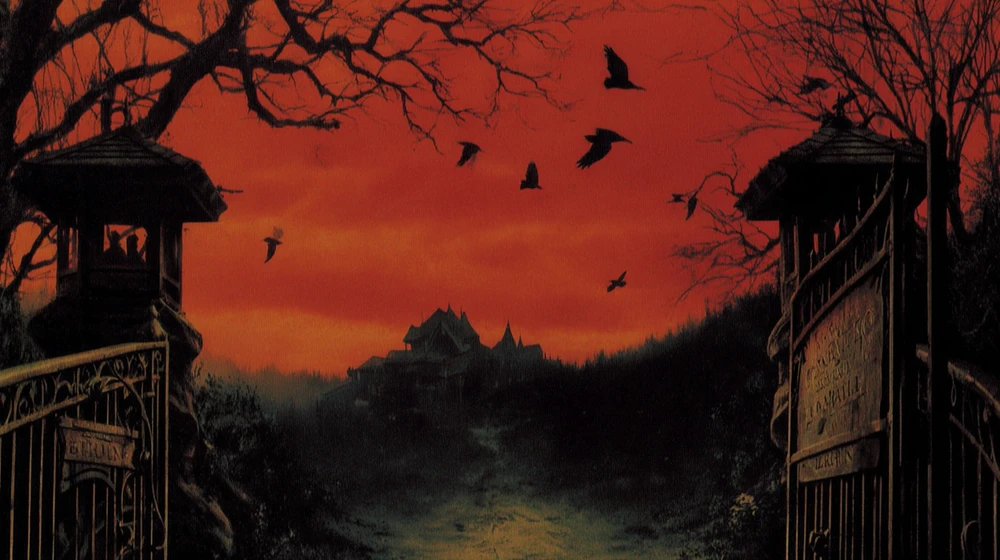
Animated dark fantasy painting of a knight in a red cloak walking toward a ruined cathedral glowing green as ravens circle
開始フレーム:Animated dark fantasy painting of a knight in a red cloak walking toward a ruined cathedral glowing green as ravens circle
開始フレーム
00:05

ダークファンタジーアートは、暗く、ゴシックな雰囲気で描かれたファンタジーです:敗北した騎士、廃墟と化した王国、魔女、モンスター、旅人を飲み込む森を、一つの冷たいまたは暖かい光と深い影で描きます。手作業で描くには、画家が1シーンあたり数週間かかります。Flickでは、世界を説明し、ダークファンタジースタイルを選んで生成し、その静止画を同じキャンバス上で動くクリップに変換できます。以下の例は、Flickで制作されたレジデンシー映画In 'twixt Vowsと、GPT Image 2.6でこのページのために作成された画像から来ており、それぞれの正確なプロンプトがその下に記載されています。

AIでダークファンタジーアートを作る方法は?

3つのステップで:光、崩壊、一つの焦点となる人物を含むシーンを説明し、ダークファンタジースタイルを選び、それを中心に一つのキャンバス上でクリップを構築します。
  1. ステップ 1

    シーンを記述する

    シーンに一人の人物、一つの廃墟、一つの光源を配置:ここでは孤独な騎士、病的な緑色に輝く大聖堂、霧の中のカラスを、重厚なキアロスクーロで描くことで、英雄的ではなく陰鬱な雰囲気を保ちます。

    Knight in a torn red cloak at the edge of a dead forest facing a ruined gothic cathedral glowing green, ravens circling
    Dark fantasy art, painted like a moody oil painting with heavy chiaroscuro. A lone knight in battered blackened armour and a torn crimson cloak stands at the edge of a dead forest, facing a ruined gothic cathedral on a hill whose broken windows glow a sickly green from within. Twisted leafless trees with branches like claws, ravens circling the spire, low fog over the ground, a pale sickle moon behind thick clouds. Muted palette of charcoal, bone and dried-blood red, with one cold green light source. Grim, ominous and beautiful. No text, no signature.
    意味:暗い幻想的な油絵風の作品で、黒ずんだ鎧の騎士が緑に光る廃墟の大聖堂に向かい、陰鬱で美しい見た目です。
  2. ステップ 2

    スタイルを選択します。

    ダークファンタジーのスタイルを一度選べば、すべての画像がその光、パレット、筆致を継承します。霧がかった写実主義から古典的な油彩画まで対応。各スタイルはFlickpediaで確認できます。

  3. ステップ 3

    ショートフィルム全体を構築。

    各静止画をクリップに変換し、すべてのショットをそれが由来するクリーチャーやロケーションのリファレンスと接続することで、一つの呪われた世界が映画全体を貫きます。これはJaime Yaoのダークファンタジー作品「In 'twixt Vows」の背後にあるキャンバスの一部で、水没した森、沼のクリーチャー、鎧をまとった騎士たちが描かれています。

    Jaime YaoによるIn ’twixt Vows

    ドラッグで移動、スクロールでズーム。

    作品と完全なワークフローを見る

Flickで制作されたダークファンタジーアート

巨大な根の下を行く騎士、水没した森、飢えた森の獣、骨の玉座、呪われた村。それぞれが一つのプロンプトから生成されています。
霧深い森の中、山ほどの大きさのブナの木の丸天井のような根の下を疾走する鎧をまとった騎士

巨大な根の下の騎士

スケールが重要な役割を果たします。大聖堂ほど巨大な根の下にいる小さな騎士が、世界を古代的で敵対的に感じさせます。
A warrior in Byzantine-style lamellar armor, worn, tattered, and heavily weathered, is riding at full gallop beneath the roots of an ancient common beech tree so enormous that it feels mountain-sized.

The camera is a low tracking shot.
The camera sits very low near the ground, behind and slightly below the rider, looking slightly upward.
The view follows the rider charging forward.
The rider and horse sit near the lower middle area of the frame, not large, but clearly readable.
A massive section of root fills the entire overhead space like a natural vaulted ceiling.
On the left and right sides of the frame, additional colossal roots or root-like supporting forms are visible, creating enclosure and pressure.
The composition should first read as a rider and horse racing forward, and then reveal that the overhead and surrounding space is formed by impossibly huge ancient beech roots.

The scale of the beech tree is extreme.
The overhead root and the flanking root structures are not normal roots, but gigantic organic forms with the scale of monumental pillars and mountain-like arcades.
Their material should read as real European beech bark and wood fiber.
The surface palette is mainly pale gray, silver-gray, cool gray-brown, and touches of muted pale brown-gray.
Show broad areas of relatively smooth but not perfectly flat beech bark, visible wood grain and fiber direction running with the form, shallow vertical folds, occasional burl-like swellings, a few torn and curling bark edges, blunted weathered edges, and darker damp wooden areas.
Near the ground, the roots become rougher, with accumulated dust, mud staining, damp marks, moss, and lichen attachment.
The whole root system should feel ancient, living, naturally grown, extremely heavy, and vastly beyond normal scale.

The ground vegetation is based on Pyrenean mountain valley and forest-edge vegetation.
The surface is covered with broad mountain grassland made mainly of fine tufted fescue-like grasses, thin bent-grass-like strands, low sedges, and irregular grass clumps.
Many low shrubs are scattered throughout, mainly juniper shrubs, heather, bilberry-like low shrubs, broom, boxwood, and small patches of low mat-forming heath.
Some pale gray-brown soil, stones, pale exposed roots, and hoof-pressed grass traces are visible between the vegetation.
Along the background edges, include a few silhouettes of young beech, young fir, and scattered mountain pine.
Keep the colors within restrained dark gray-green, gray olive-green, cool grass green, dry yellow-green, brown-green, and some darker deep cypress green.
The grass and shrubs should break into natural irregular patches, with a slight wind-pressed mountain feel.

The rider wears standard Byzantine-style lamellar armor, but the whole outfit is worn, damaged, and weather-beaten.
The armor is made of many small metal lamellae covering the shoulders, chest, and torso.
The metal plates read as cool gray iron and deep gray steel, with worn edges, slight oxidation darkening, fine scratches, mud traces, and uneven natural reflections.
The underlayers, cloth elements, and soft protective garments read as deep brown, smoke-brown, gray-black, and aged fabric tones, with tearing, fraying, staining, damp marks, and real use wear.
Belts, boots, and tack are made of aged dark brown leather, with creases, abrasion, stretched deformation, and dirt.
The figure should not read like a posed character design sheet, but like a real warrior in motion, fleeing or charging through the landscape.
The rider remains scaled to the wide environmental shot rather than enlarged into close-up detail.

The horse is in a fast gallop.
Its posture drives forward, with a forward-leaning center of motion and readable running rhythm in the legs.
The mane and tail are lifted by speed.
The tack is deep brown aged leather with dark metal fittings, physically real, worn, and marked by damp dust.

The overall lighting is natural daylight filtered through cold damp mist.
The main ambient light comes from a gray-white sky diffused through fog, with an overall cool gray-blue cast.
Ahead in the distance, a brighter white-gray opening between the roots lets light through, gently illuminating the ground in the rider’s path, the outline of the horse, and the lower edge of the overhead root.
The underside of the roots overhead, the inner sides of the flanking roots, and the deeper spaces fall into darker cool-gray shadow.
Transitions between bright and dark are established naturally through fog and humid air rather than hard contrast.
The air contains a clear layer of cold damp mist, slightly clearer nearby and progressively denser in the farther roots and background vegetation.
The depth structure must read clearly: foreground grass, the rider and horse in the midground, the nearest overhead root, the more distant flanking roots, and finally the misty background slopes and trees.

Use real cinematic optical rendering.
The shot is a low-angle upward-looking tracking view.
Use the natural compression of a medium-long to long lens.
Use moderate depth of field.
Focus sits primarily on the rider, the horse, and a short stretch of ground directly ahead of them.
The nearest lower edge of the overhead root remains clearly readable.
The more distant side roots and the background slope are naturally softened by distance and humid mist.
A narrow strip of the closest foreground grass and shrubs along the bottom edge is slightly out of focus.
In this strip, grass blades and shrub edges soften and open gently, with fine detail slightly relaxed and tonal transitions smooth and natural.
This softness comes from real optical defocus.
The distant softness comes from real atmospheric perspective and natural optical rendering rather than flat digital blur.

Subtle film grain.
Slight chromatic aberration.
Slight sensor noise.
Mild lens softness.
Restrained soft bloom in the brighter fog zones.
Slightly uneven natural exposure.
Natural imperfect real-camera rendering.
Realistic beech bark, weathered wood fiber, Pyrenean grassland, juniper shrubs, broom, bilberry, boxwood, Byzantine lamellar armor, aged leather, horse tack, cold mist, and damp ground textures.
Jaime Yao監督『In ’twixt Vows』
意味:ビザンチン風鎧を着た戦士が巨大なブナの根の下を馬で疾走する様子を、低い位置から追うショットで、冷たい霧に包まれた山の風景として描写します。
灰色の光の下、膨らんだ幹、黒い水、垂れ下がる苔が広がる暗い水没した森

水没した森

黒い水、腐敗、垂れ下がる苔がある空虚なロケーションが、クリーチャーが登場する前から恐怖を演出します。
Pure environment, live-action static film frame.
No people.
No animals.

The camera is positioned inside the flooded wetland forest at approximately adult eye level, looking slightly forward and slightly downward into a narrow water channel and layered tree space.
Use an approximately 24–28mm wide-angle lens with realistic perspective, mild natural edge stretching, and believable optical lens behavior.

Ahead lies an ancient wetland forest that has been submerged in black water for centuries.
Massive wetland trunks, swollen root bases, exposed roots, rotten wood, broken stumps, and black water form a narrow, fragmented, oppressive local space.
Large amounts of Spanish-moss-like hanging epiphytic growth descend from high branches, side branches, and forked limbs, creating tangled vertical, diagonal, and horizontal fibrous structures throughout the forest.

The main visual anchor is a group of hanging epiphytic masses in the midground that create a disturbing human-like silhouette illusion.
These forms are not floating in open air.
Each one is clearly attached at the top to a visible overhead branch, bent side branch, or branch fork, and hangs downward under gravity as dense draped fibrous growth.
The upper attachment points remain readable.
The hanging masses are long, uneven, wet, and ragged, with narrower upper portions and broader, more tattered lower portions, creating the impression of head-like and torso-like shapes with trailing lower strands.
One central hanging mass should be the clearest and largest, positioned near the center of the frame.
One or two additional hanging masses appear deeper behind it at slightly different heights and distances, also attached to branches and partly obscured by fog.

These human-like silhouettes must read as natural masses of hanging epiphytic vegetation only.
They are formed by heavy draped moss-like growth hanging from branches, with irregular split lower ends and dense wet fibrous texture.
They remain motionless and integrated into the forest structure.

The black fog is the other major subject.
It is not a small isolated patch or a thin drifting cloud.
It is a dense, heavy, low-luminance mass that occupies a large volume of the midground and background, spreading laterally between the trunks and filling much of the space above the water.
It gathers thickly across the deeper forest and swallows a large amount of distant visual information.
Many distant trunks are partly buried in it.
Large portions of the deeper forest are veiled or completely lost inside it.
The fog creates a strong sense that the space behind the midground is being consumed and erased.

The fog should feel like deep black-gray and charcoal-black wet obscurity rather than bright mist.
It is dense enough that visibility drops quickly after the first few layers of trunks.
Farther roots, low branches, and hanging growth disappear into it.
Only partial silhouettes and broken vertical fragments of deeper trunks survive through the haze.
The fog mass should visually cover and bury much of the far forest instead of leaving the distant background clean and open.

Ground and water structure remain sparse, cold, and broken.
Black water is the dominant ground element, with only small wetland grasses, scattered floating leaves, sparse duckweed, broken algae film, and occasional exposed root fragments.
The water surface reads as near-black with only a few restrained broken cold reflections.

Several near-lens branches, thin roots, and hanging epiphytes enter close to the frame edges.
These foreground elements are strongly but naturally defocused, partially obscuring the view while leaving a readable window toward the central hanging forms and the fog-filled channel behind them.

Focus rests loosely on the clearest central hanging epiphytic mass and the nearby midground trunks.
Very close foreground branches fall into natural optical defocus.
The attached hanging masses behind the first one progressively lose edge definition as they enter the black fog.
The deeper forest rapidly dissolves into obscurity.

There is no visible horizon.
Multiple layers of trunks, roots, hanging vegetation, and black water overlap into the distance before being swallowed by dense black fog.
The deeper background should feel buried, submerged, and visually overwhelmed by the fog volume.

The time is after sunset during deep blue hour, approaching full night.
Only weak residual cold blue-gray skylight diffuses through heavy cloud and the wet atmosphere.
The environment is clearly dark, low-key, enclosed, and oppressive.
The nearest trunks, the clearest hanging human-like moss forms, and a limited area of black water remain readable, while the deeper forest is overtaken by darkness and fog.

Low-saturation palette: near-black water, dark wet brown-black and charcoal bark, cold gray-green hanging vegetation, muted olive-gray aquatic growth, and deep cold blue-gray to charcoal-black fog.

Moderate depth of field with natural optical falloff.
Slight lens softness, subtle film grain, slight sensor noise, restrained chromatic aberration, compressed blacks, natural shadow-detail loss, and imperfect live-action photographic rendering.
Jaime Yao監督『In ’twixt Vows』
意味:水没した湿地林の中、苔が垂れ下がり人影のように見え、黒い霧が奥の森を覆い込む薄暗い実写映像。
白い背景に、痩せ細った角のある森の怪物の3つのビュー(長い前肢と見える肋骨)

飢えた森の獣

クリーチャーを正面、側面、背面のビューで最初にデザインすることで、映画のすべてのショットで同じ怪物を維持できます。
Live-action creature three-view presentation on a pure white seamless studio background.
Show the same monster in front view, side view, and back view, arranged side by side at matching scale, with the full body clearly visible in each view. The three views are stable, clean, and easy to read, showing the silhouette, anatomy, and material detail clearly.

Design an extremely gaunt, starved-looking quadrupedal forest predator monster.
Its posture is low and forward-weighted, with a raised spine line, shoulders higher than the hips, and forelimbs clearly longer than the hind limbs, giving the feeling of a dangerous beast ready to lunge at any moment.
The body is elongated, sickly, and heavily skeletal. The ribcage is broad and pronounced, the abdomen is deeply drawn inward, the waist is narrow, and the ribs, shoulder blades, spine line, and major joints are clearly visible.
All four limbs are long and thin but still powerful. The forelimbs are especially long, with prominent joints and large, sharp, dried-looking claws. The hind legs are built like a leaping predator, narrow and spring-loaded, with sharp clawed feet. The tail is very short and visually understated.

The head has the structure of a weathered pale deer skull, as if a real head is wrapped in an ancient outer layer of bone.
The bone surface is rough, aged, cracked, and slightly damaged, with the forehead and nasal bridge forming a hard elongated white bony shell.
The eye sockets are deep and dark, with the eyes hidden in shadow and feeling distinctly predatory.
The mouth reveals a real animal-like lower jaw and dense sharp teeth, with the mouth opening extending far back and creating a strong threatening presence when opened.
From the top and sides of the skull grow massive, twisted, heavily branched antlers. The antlers are thick, ancient, and gnarled, spreading outward like dead branches, creating a powerful silhouette with a naturally grown but slightly distorted feel.

The neck, shoulders, upper chest, and upper back are densely covered with bone spines, bone plates, and irregular white bony overgrowth, as if the skeleton is erupting outward through the flesh.
These bony structures continue along the neck and upper back, forming a jagged dorsal silhouette.
Across the shoulders and upper back, attach patches of degraded, dirty, clumped dark fur.
Most of the rest of the body is exposed skin in cold gray, gray-brown, black-brown, and rotten brown tones. The skin is thin and stretched tightly over the frame so that the rib structure, tendon tension, hollow underside, and planar bony anatomy remain visible.
The upper back, hips, and outer hind legs retain only sparse, damaged, filthy dark fur, with very low fur volume overall.
The complete material language feels like a mixture of white bone, thin skin, tendon, dead fur, and decayed tissue.

Keep the overall palette within dirty bone white, cold gray, gray-brown, black-brown, and dark reddish brown, with low saturation, emphasizing weathered bone, dirty flesh, rotten fur, and a deathly presence.
Use even, clear studio lighting with a subtle natural shadow falloff.
The final result has high-end cinematic live-action creature realism, with physically believable skin roughness, worn bone texture, dirty fur surfaces, damp cold tissue, and natural shadow detail.
Jaime Yao監督『In ’twixt Vows』
意味:白い背景で正面横背面の三面図を見せる、骨と腐った毛皮に覆われた痩せた四足の森の怪物が低い姿勢で立つ実写風クリーチャー。
ろうそくが灯る地下墓所で、根と骨の玉座に座る角の冠をかぶった蒼白の魔女、肩にフクロウ

骨の玉座に座る魔女

一つの窓から差し込む冷たい月光と対比される温かなろうそくの光が、ゴシックファンタジー絵画の古典的な二光源の雰囲気を生み出しています。
Dark fantasy painting with painterly realism. A tall, pale sorceress with a crown of black antlers and a veil of cobweb-like lace sits on a throne grown from roots and old bones inside a candle-lit crypt, a white owl on her shoulder and a cracked silver chalice in her hand. Dozens of dripping candles give warm light, cold blue moonlight falls from one high window, and deep shadows fill the vaulted ceiling. Elegant, menacing and still. No text, no signature.
意味:黒い角の冠をかぶった青白い魔女が根と骨の玉座に座り、梟を肩に乗せ蝋燭の灯る地下墓地にいるダークファンタジー絵画。
Animated hooded skeletal rider with a blue lantern riding across a frozen black lake at dusk, a tower on a cliff behind
開始フレーム:Animated hooded skeletal rider with a blue lantern riding across a frozen black lake at dusk, a tower on a cliff behind
開始フレーム
00:05

凍った湖の上の騎手

遠くの窓にある一つの色の残り火を除いて彩度を抑えたパレットが、ほぼモノクロームのシーンの中で視線を動かし続けます。
The skeletal horse walks slowly across the frozen black lake, its hooves scattering thin frost, the rider's ragged cloak trailing in the wind and the blue lantern swinging and flickering on the staff. Mist drifts low over the ice and the ember window in the far tower glows. Slow lateral tracking shot, the painterly dark fantasy look kept in every frame, no text.
意味:骸骨の馬が凍った黒い湖を歩き、騎手の外套がなびき青いランタンが揺れる様子を、絵画的ダークファンタジー風に描いた横移動撮影。
夜の歪んだ木造の村、教会の塔を絞め殺すとげのある蔦と提灯を持ったフード付きの人物

夜の呪われた村

エッチングのようなハッチングに彩色を加えることで、ダークファンタジーを暗いおとぎ話のイラストレーションに近づけます。
Dark fairy tale illustration with etching-like line texture and painted colour. An abandoned village of crooked timber houses at night, every window dark except one; a giant thorned vine has grown over the church tower and wrapped its bell, and a hooded figure with a lantern stands on the muddy road looking up at it. Sickly yellow lantern glow against deep green and black, ravens on the rooftops, fine hatching in the shadows. Eerie and storybook-like. No text, no signature.
意味:巨大な棘の蔦が教会の塔を覆い、ランタンを持つフード姿の人物が泥道に立つ夜の廃村を描いたダークファンタジー挿絵。

ダークファンタジープロンプトを機能させるものは何ですか?

光、朽ち、そしてスケールを指定してください。これらは「dark」という言葉以上に、モデルが恐怖を描くか、単に暗い絵を描くかを決定します。
  • 光:暗いフレームの中の一つの光源、例えば緑色の窓、ろうそく、提灯、または淡い月で、heavy chiaroscuroを伴います。
  • 朽ち:廃墟、枯れ木、腐敗、錆、破れた布、骨など、世界が明らかに何かを失ったことを示すもの。
  • スケール:巨大な根、塔、または生き物に対して小さな人物を配置することで、世界を主人公よりも大きく感じさせます。
  • 見た目を壊すものを除外する:no text, no signature、そしてbrightやepicのような、モデルをヒロイックファンタジーに向かわせる言葉を避けてください。

ダークファンタジーとホラーの違いは何ですか?

ダークファンタジーは、魔法、怪物、王国からなる架空の世界を暗く陰鬱な雰囲気で描くものであり、一方ホラーは現実世界に近い舞台で恐怖を与えることを目的としています。
  • ダークファンタジーでは、その世界を描写しましょう。城、鎧、獣、呪いなどを詳しく説明してください。
  • 現代の家、町、森を舞台にした恐怖の物語には、AIホラー動画生成ツールをご利用ください。
  • 被写体として1体の壮大な獣を生成する場合は、AIドラゴン生成ツールをご覧ください。

AIダークファンタジーアート生成ツール FAQ

AIでダークファンタジーアートを作るにはどうすればいいですか?

霧の中で緑色に光る大聖堂の前に立つ騎士のような、朽ちゆくファンタジーの舞台で単一の光源に照らされた1人の人物を描写し、ダークファンタジースタイルを選んで生成します。Flickでは、その静止画をクリップにアニメーション化することができます。

ダークファンタジーアートではどんな色が使われますか?

ダークファンタジーアートは、炭色、黒、骨のような白、冷たい青、灰色を基調とし、乾いた血のような赤、燃える炭のオレンジ、または単一の光源から放たれる病的な緑をアクセントとして使用します。

画像だけでなく、ダークファンタジー動画も作れますか?

はい。まず静止画を生成し、それをFlickの画像から動画へのモデルの開始フレームとして使用し、霧が流れる、カラスが旋回する、マントが風になびくなど、雰囲気に合ったスローモーションの動きを描写してください。

シーン間で同じ怪物や騎士を維持するにはどうすればいいですか?

まず正面、側面、背面のビューを含むキャラクターシートを生成し、その後のすべての画像や動画にそのシートをリファレンスとして与えることで、ショットごとにデザインを統一できます。

ダークファンタジーアート生成ツールは無料ですか?

はい、無料で始められます。Freeプランではクレジットカード不要で毎週100クレジットが付与され、GPT Image 2.6が利用できます。Seedance 2.5などの映像モデルにはStandardプラン(月額20ドル)が必要です。

Flickでさらに多くのダークファンタジースタイルを

Flickでダークファンタジースタイルを試す

無料でお試しいただけます。クレジットカードは不要です。

このページについてAIに質問:ChatGPTPerplexityClaude