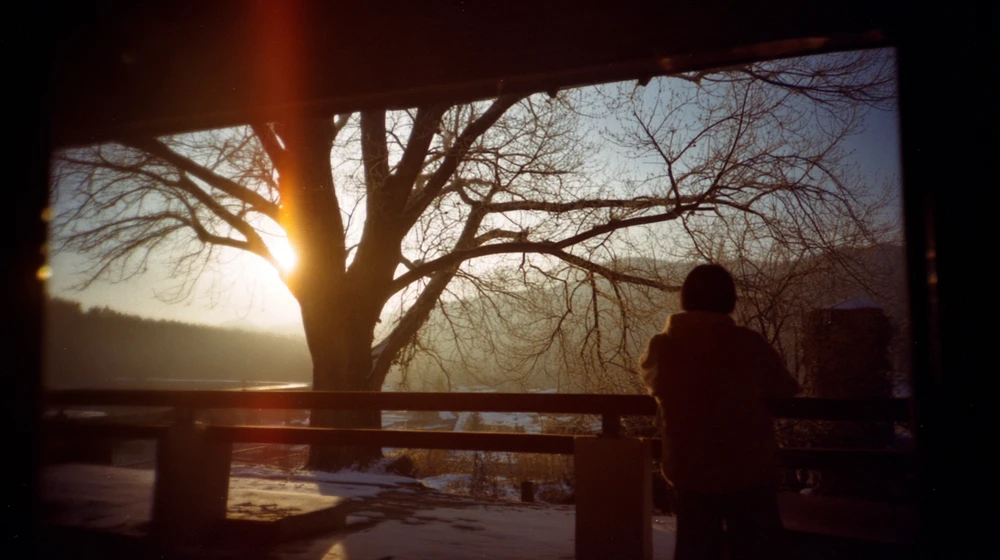
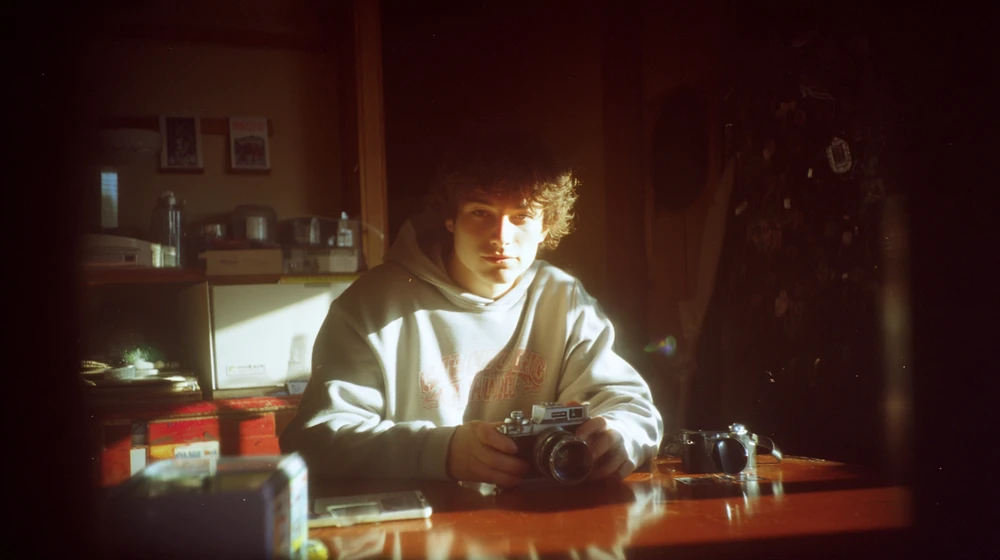
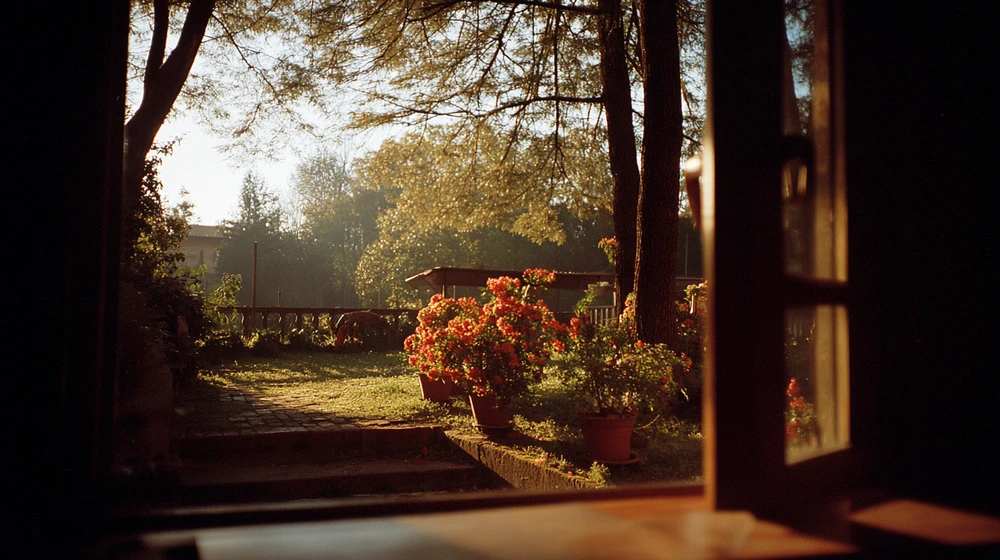
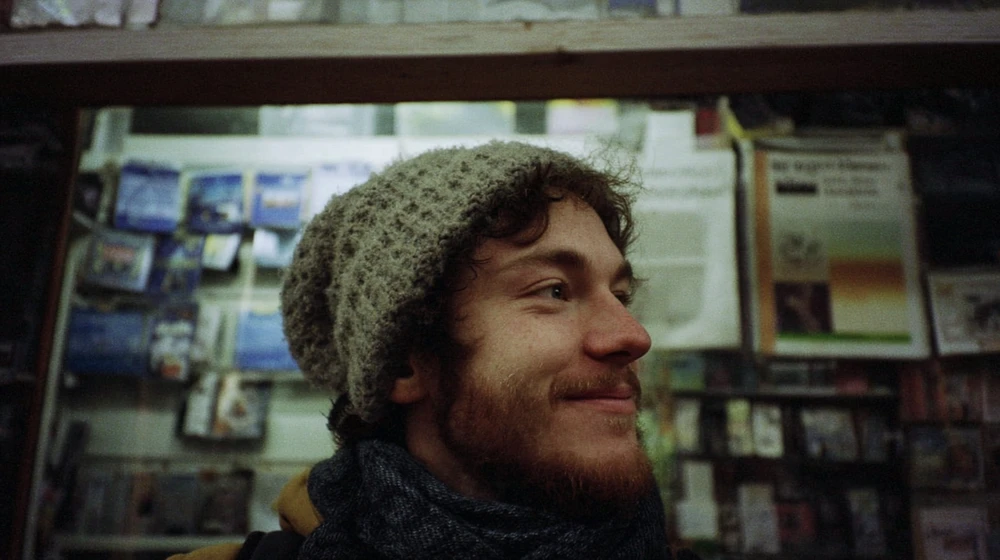
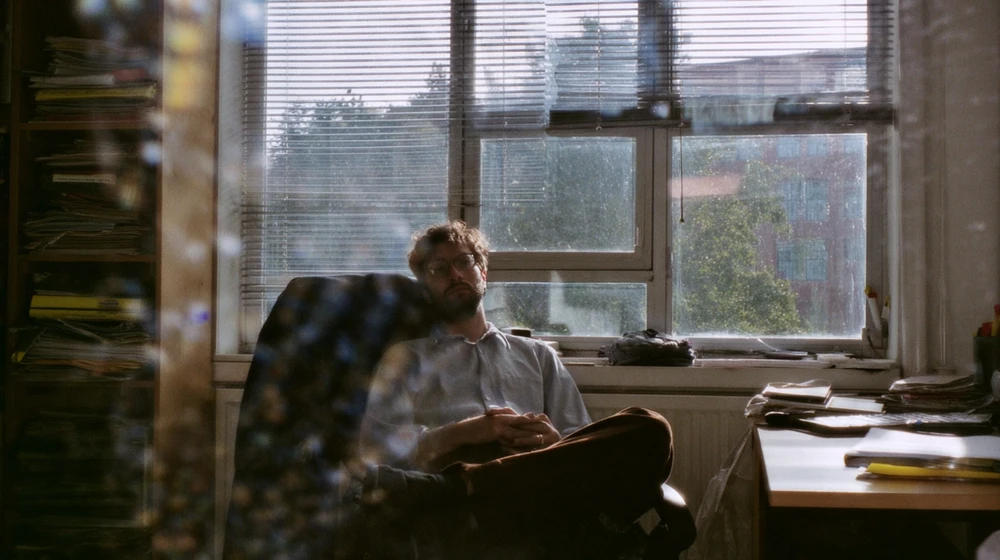
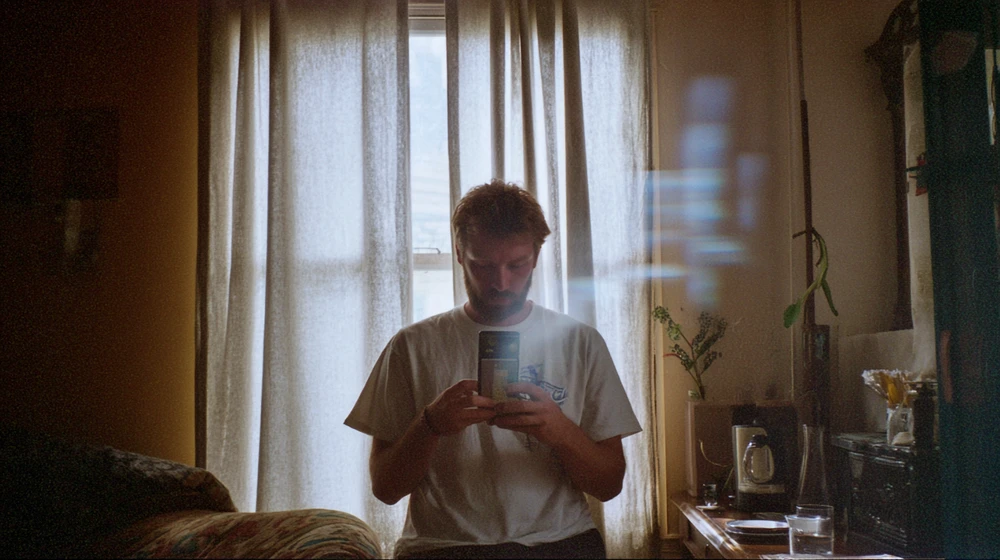
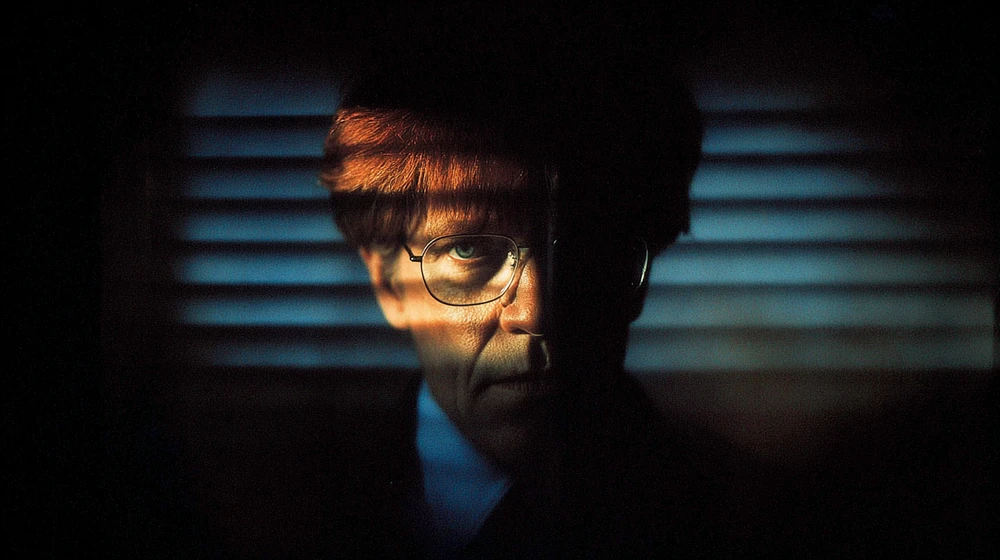
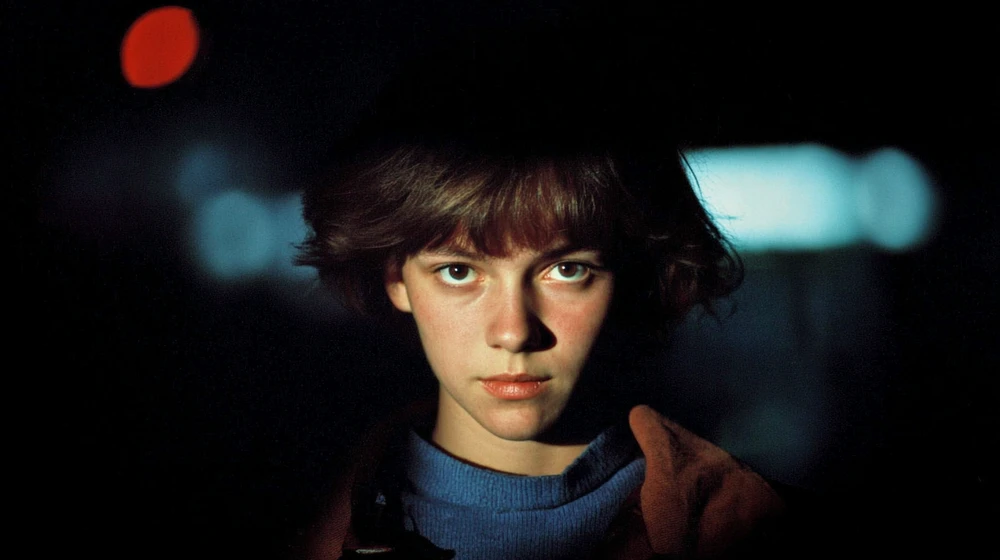
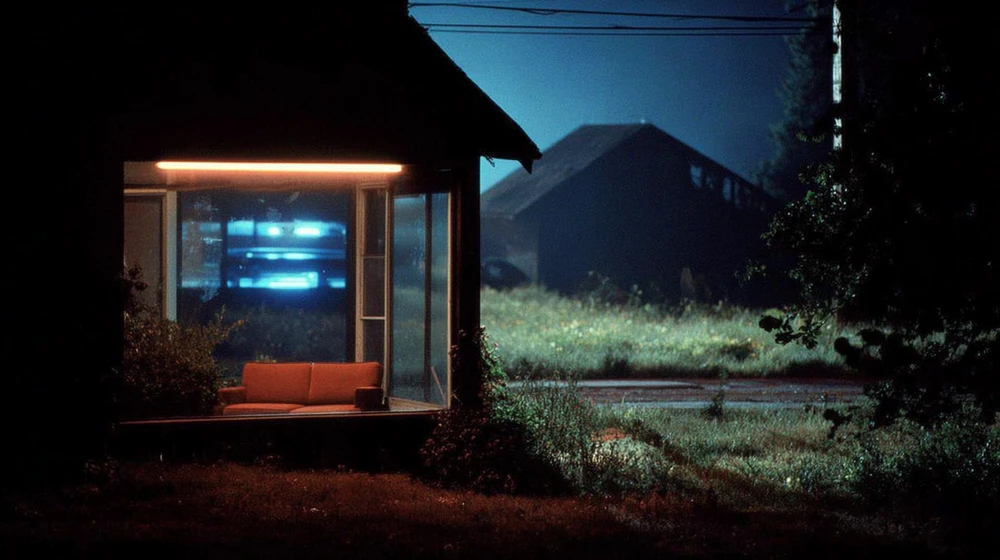
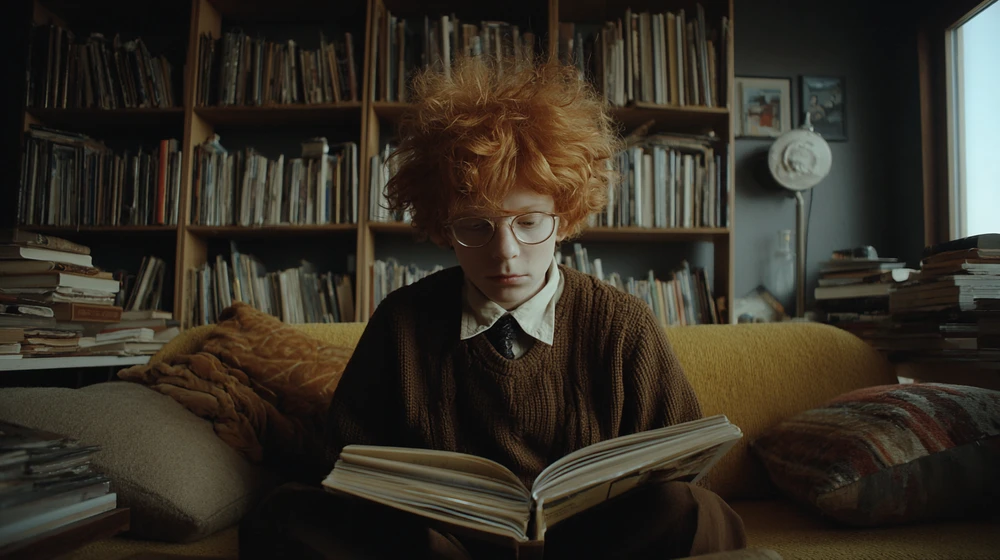
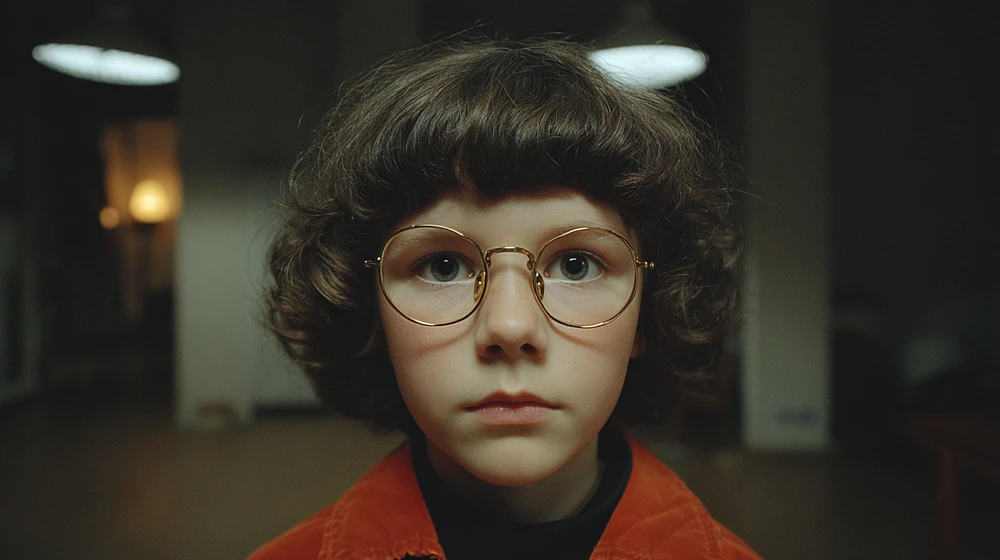
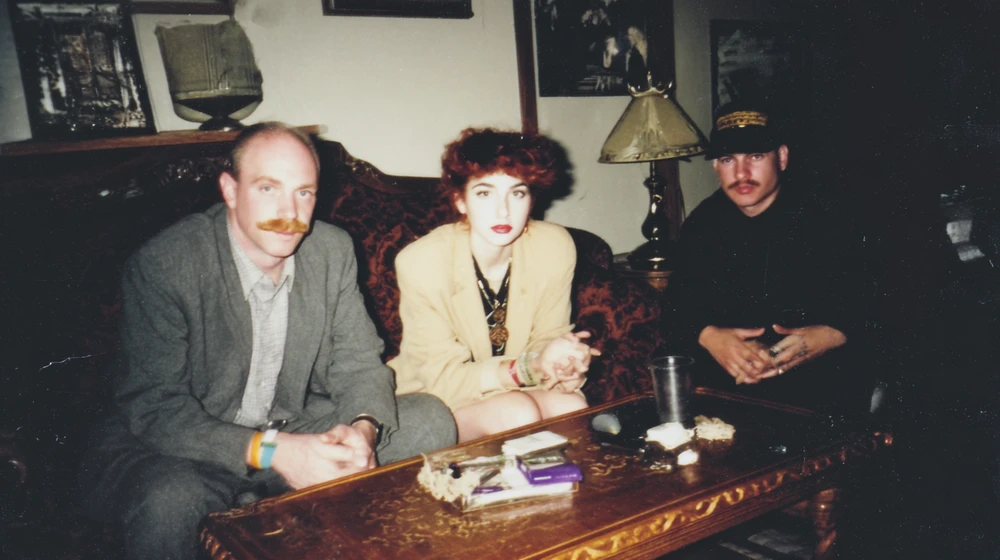
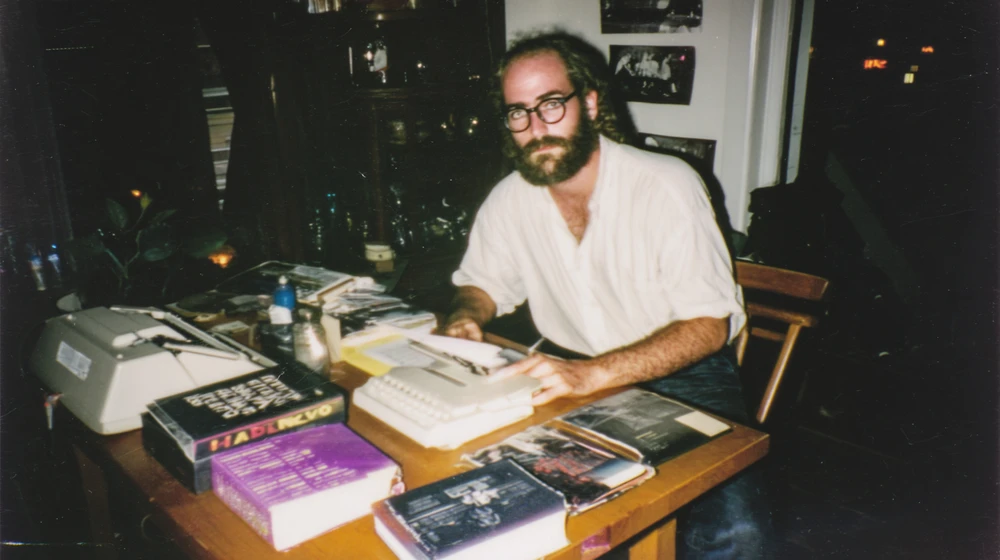
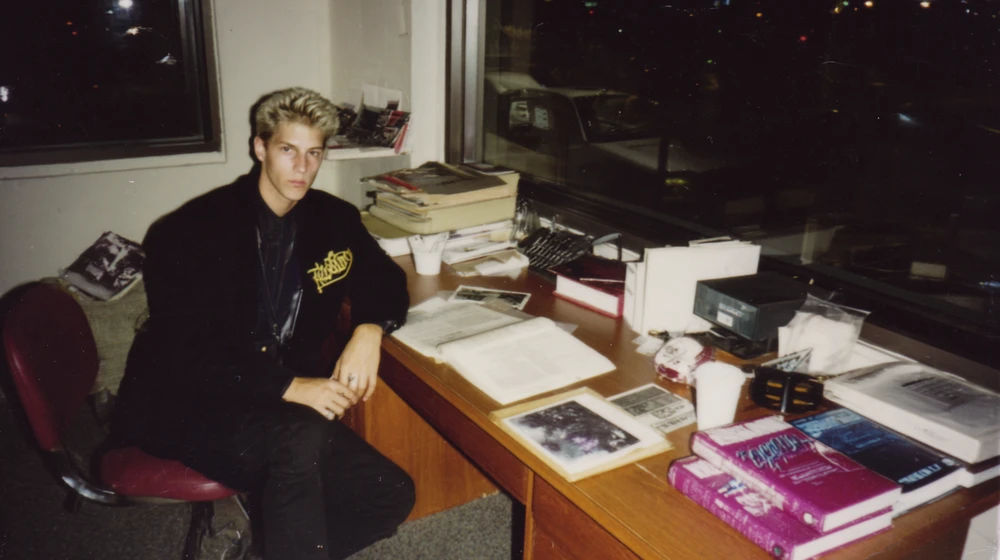
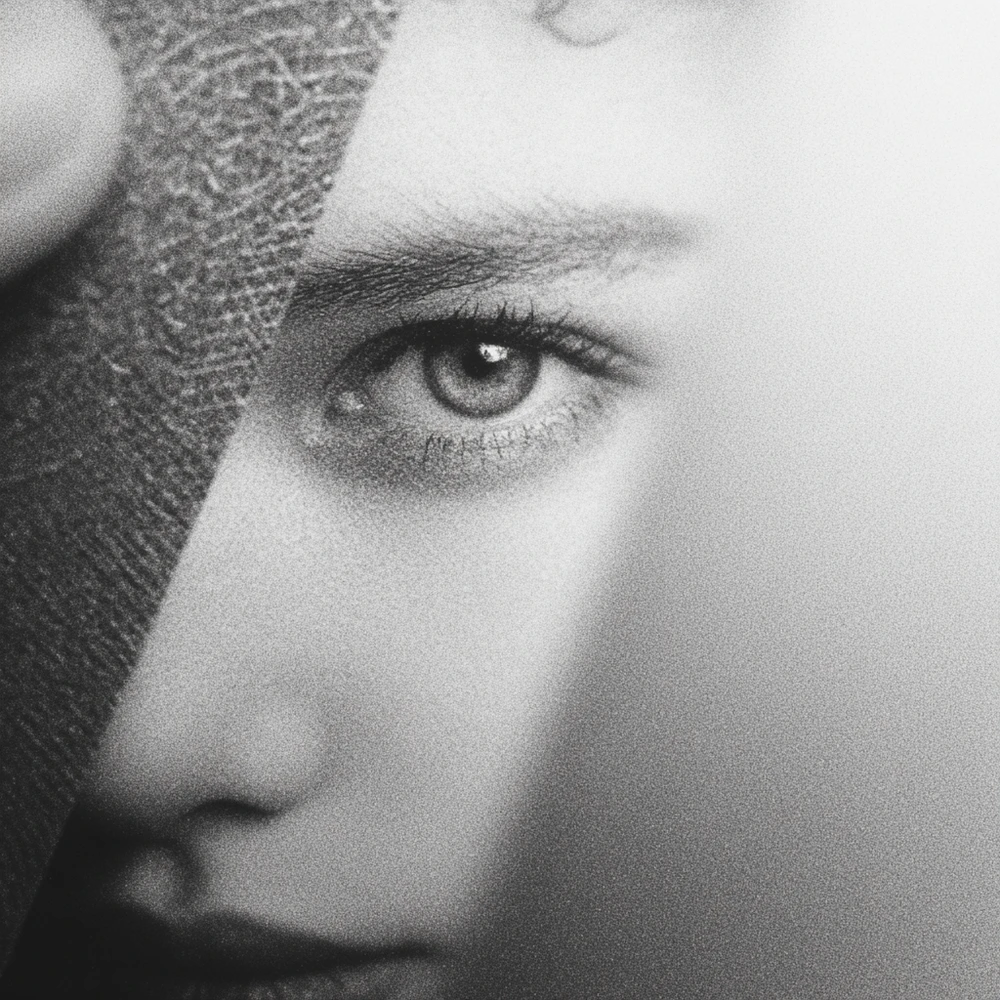
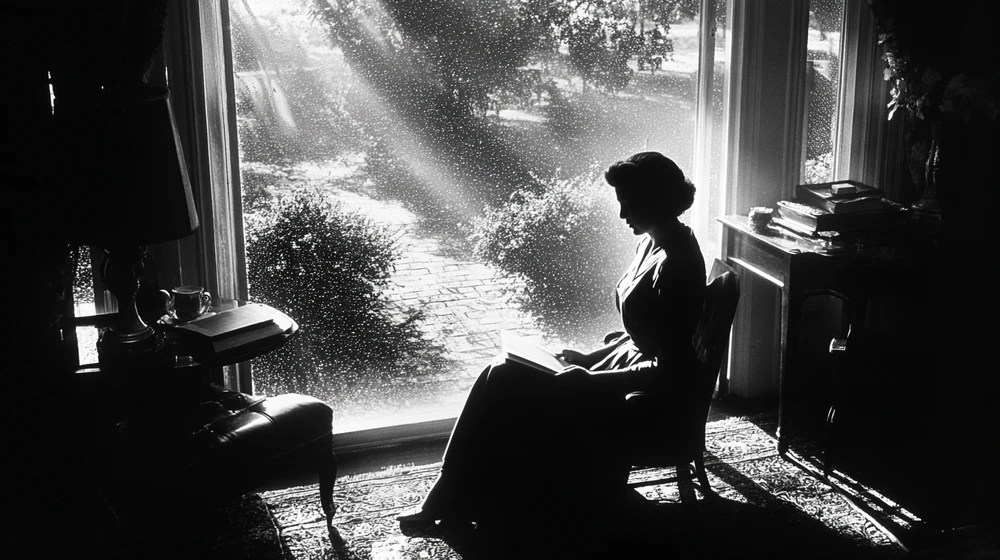
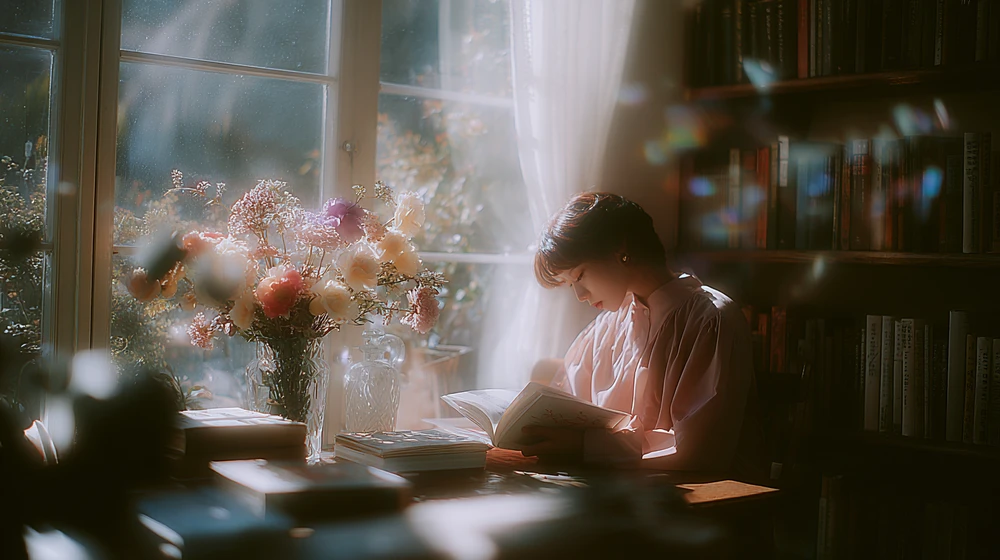
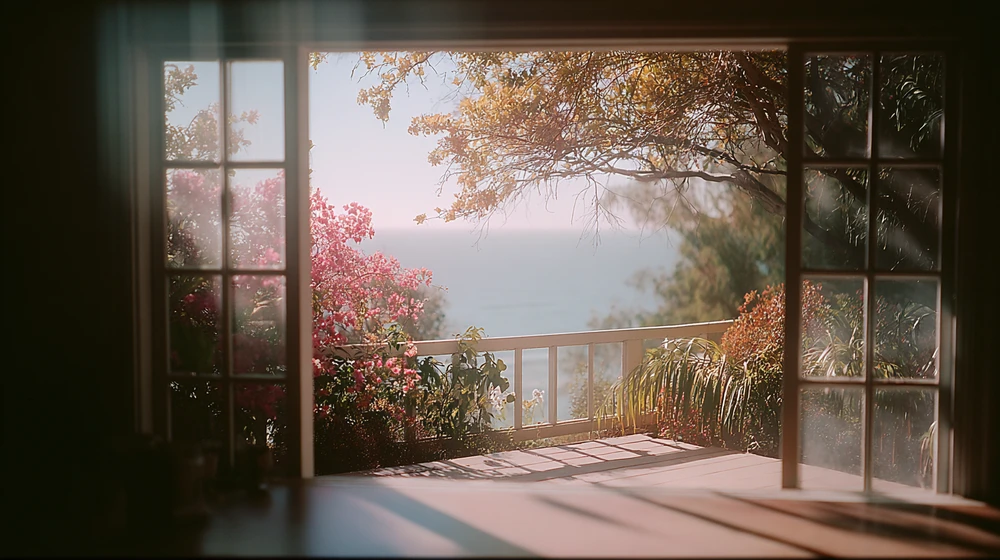
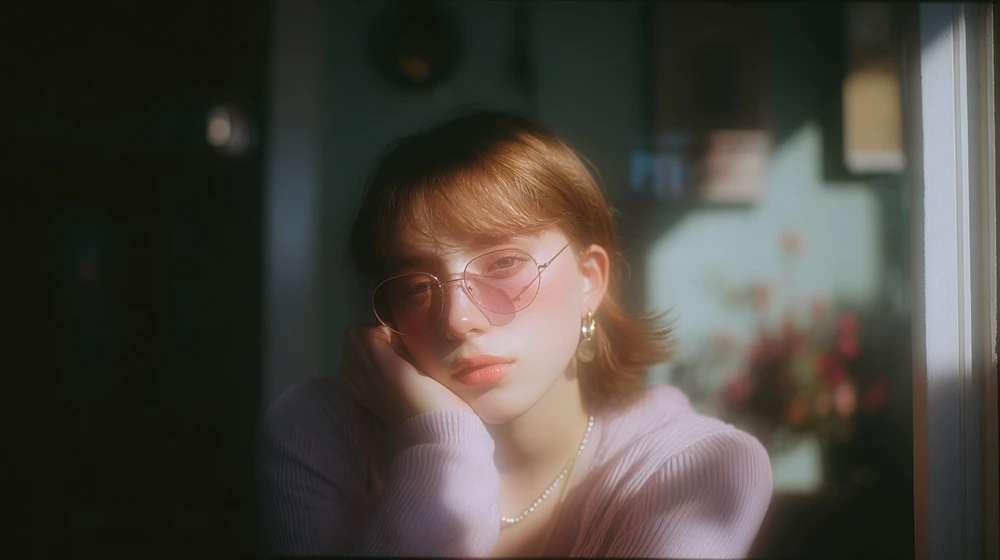
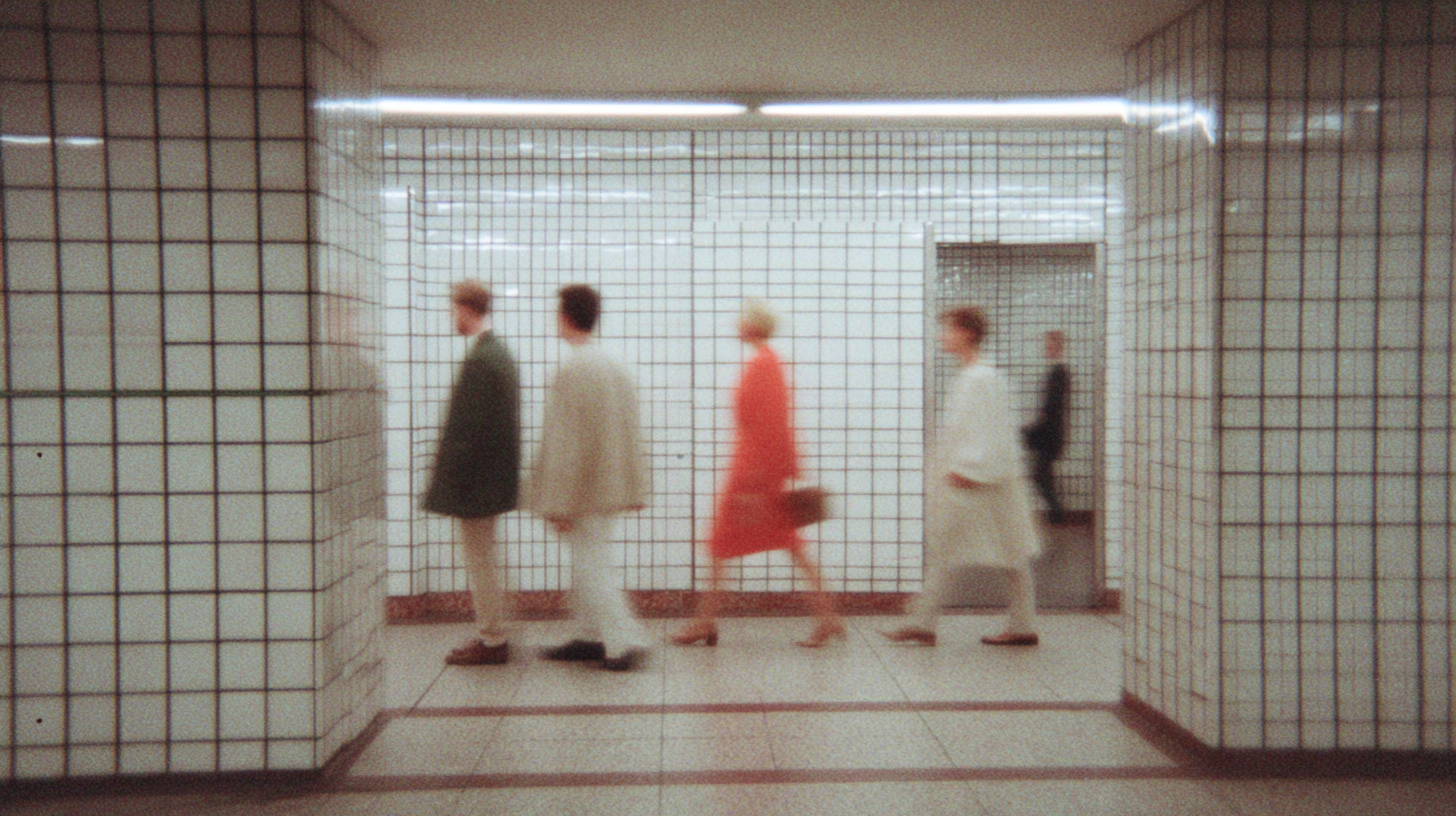
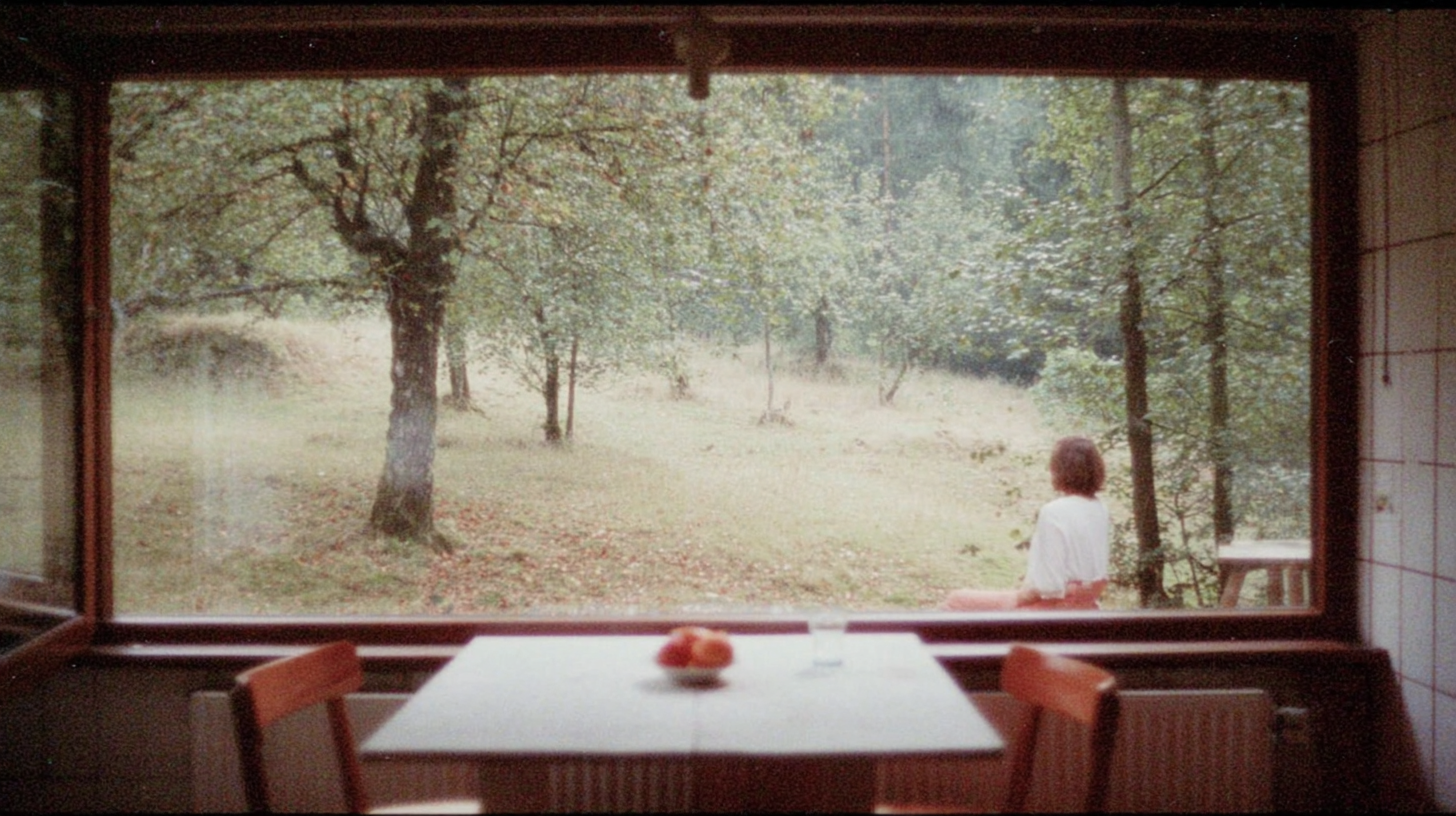
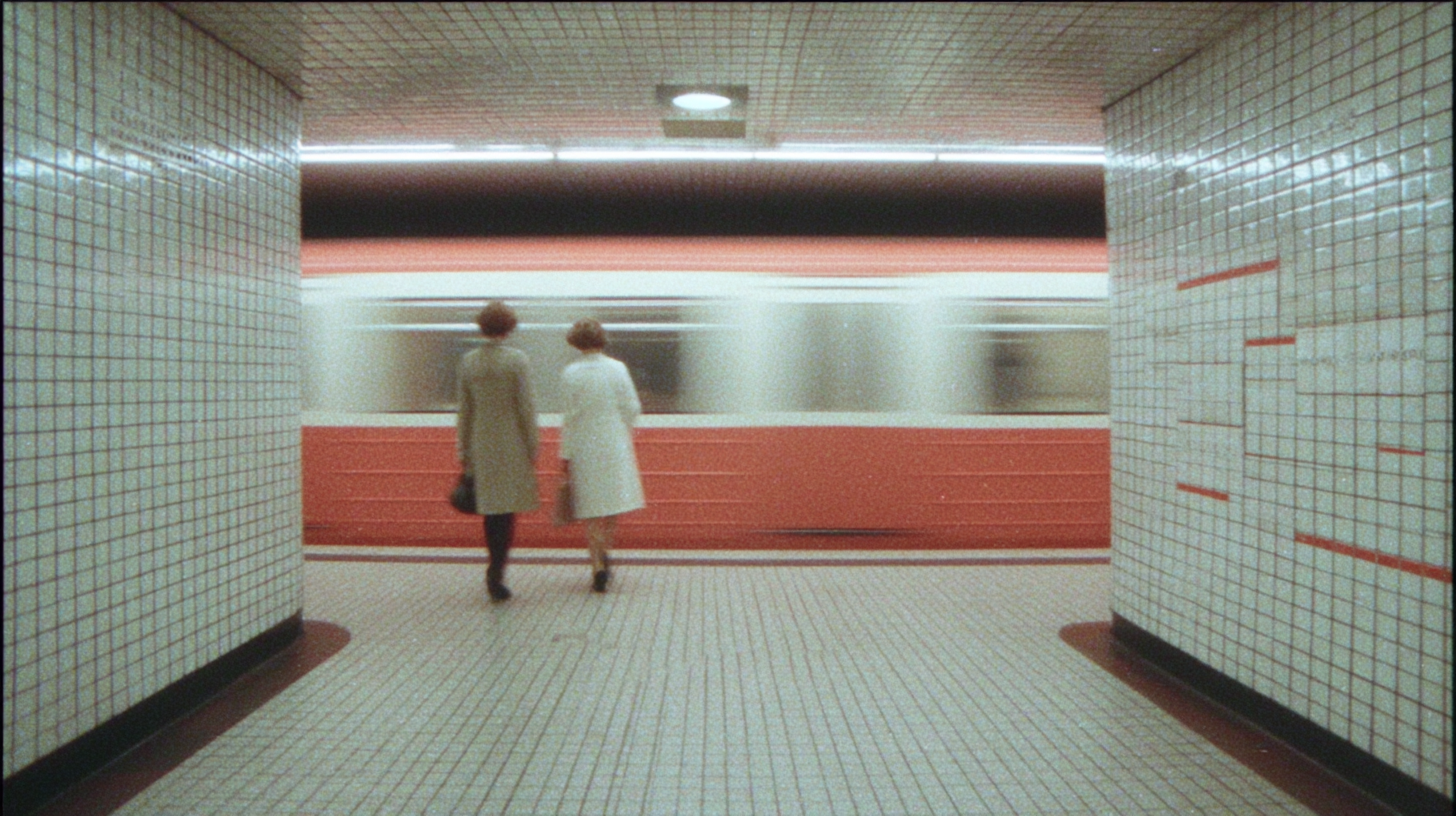
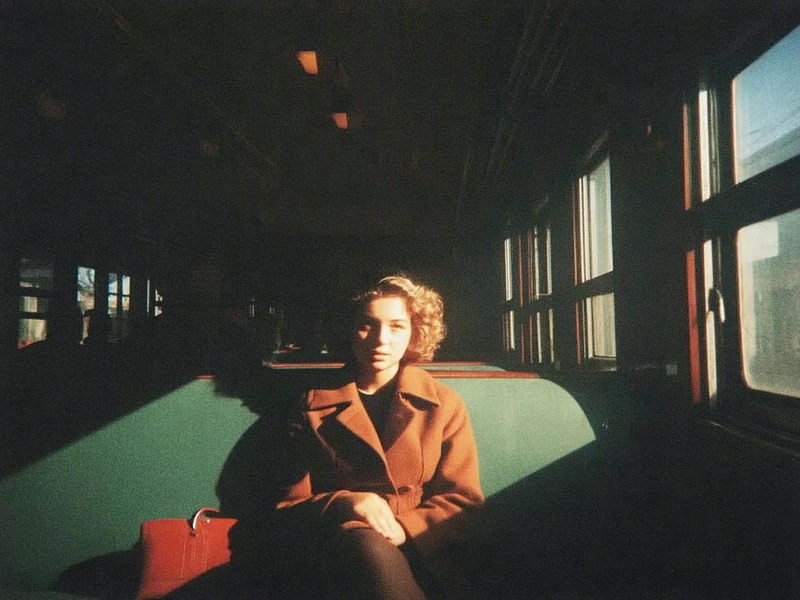
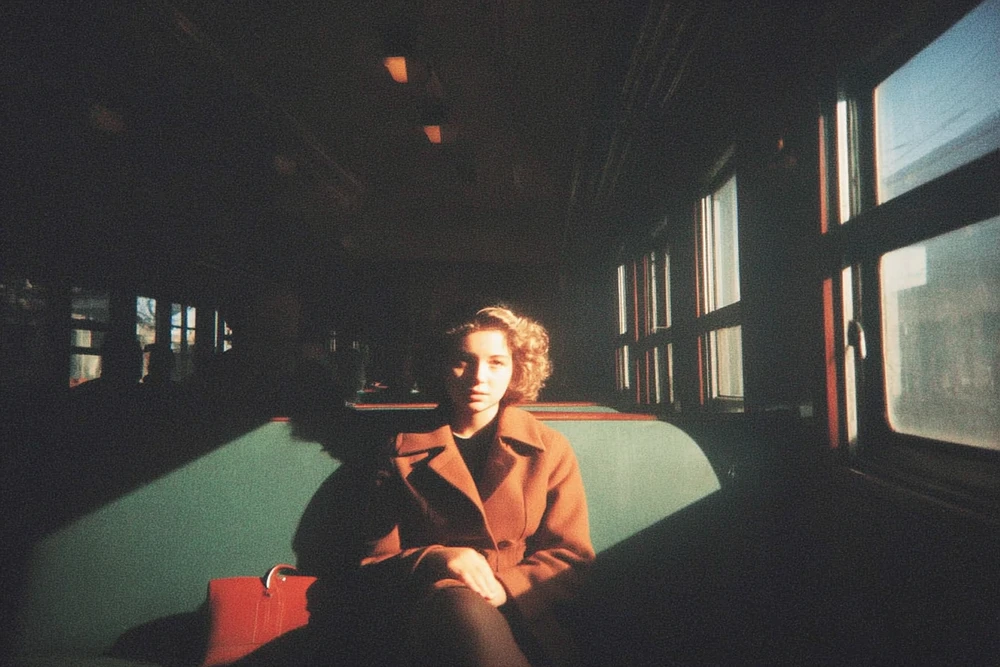
Grain filmique prononcé, puis l'action
Cinq mots pour l'aspect visuel, puis l'action.
heavy film grain. handheld camera. walks towards window and looks up directly at the sun
Un rendu film 35mm résulte de cinq éléments combinés : le grain pellicule, l'halation (le halo chaud autour des sources lumineuses), la colorimétrie du film, la douceur de l'objectif et le mouvement à 24fps. Intégrez les cinq dans une seule ligne de style.
Ce guide s'appuie sur :

La plupart des vidéos IA manquent le rendu film 35mm : elles sont trop nettes, trop propres, trop fluides dans le mouvement, et un filtre grain ajouté par-dessus ne fait que donner un aspect filtré. Nous avons lu les 9 589 prompts des 65 films d'équipe et de résidence avec canvas publics sur Flick : 28 de ces films demandent un rendu film en mots, et 2 399 des prompts demandent du grain film. Ce guide transforme ce que ces cinéastes ont écrit en cinq éléments, six étapes et une ligne de rendu que vous pouvez coller dans n'importe quel prompt, avec 17 plans crédités et les prompts qui les ont créés.
shot on 35mm film, fine film grain, gentle halation, muted warm color grade, slight lens softness, shallow depth of field, 24fps, 180-degree shutter motion blur
| Élément | Ce que vous voyez | Mots qui ont fonctionné dans les films Flick | Preuve |
|---|---|---|---|
| Grain | Texture aléatoire, plus prononcée dans les ombres, différente à chaque image | analog film grain texture; heavy film grain | Voir un vrai plan avec grain |
| Halation | Halo rouge-orangé qui se diffuse depuis les lumières vives | gentle halation; halation around streetlights | Voir un vrai plan avec halation |
| Couleur | Hautes lumières douces, noirs relevés ou écrasés | bleach bypass; faded analog color; cinematic film stock | Voir un vrai plan de couleur |
| Douceur | Netteté délicate, mise au point peu profonde, vignette | slight lens softness; shallow depth of field | Voir un vrai plan de douceur |
| Mouvement | 24 i/s, flou de mouvement 1/48 s, oscillation de cadre (un léger tremblement d'image à l'autre) | 24fps; 180 degree shutter motion blur | Voir un vrai plan de mouvement |
Les cinéastes Flick demandent du grain par des mots, souvent deux fois : une fois pour la texture, une fois pour qu'il reste stable.
Chaque image est composée de cristaux photosensibles et de nuages de colorants. Ils se déposent selon un motif aléatoire différent sur chaque image, c'est pourquoi le vrai grain bouge.
Le bruit des capteurs numériques est plus fin et plus régulier, et il apparaît surtout sous forme de granulation colorée dans les zones sombres.

Cinq mots pour l'aspect visuel, puis l'action.
heavy film grain. handheld camera. walks towards window and looks up directly at the sun
Ces plans incluent un projecteur, des lampadaires ou un pare-brise dans le cadre et demandent l'halation ou le bloom par leur nom.
Une lumière forte traverse l'émulsion, rebondit sur la base du film et expose la couche sensible au rouge une seconde fois.
Le film cinématographique possède une couche de support qui limite cet effet, c'est pourquoi un léger halo semble naturel et un fort halo semble délibéré.

Nommer une année et un format (1987, 35mm anamorphique) donne au modèle un rendu complet à viser, pas un seul effet.
Create an exactly 15-second cinematic sequence in 2.39:1 widescreen at 24fps. REFERENCE IMAGE: Use the attached image as the exact visual reference for: - The protagonist - His battered black early-1980s wedge-shaped sports car - The enormous brutalist tower - The concentric elevated highways - The retro-futurist city architecture - The physical rain and smoke - The established color palette Preserve the protagonist’s exact face, curly dark hair, distressed brown leather jacket, off-white T-shirt, black driving gloves and scratched silver medallion. Do not redesign, replace or modernize anything. VISUAL STYLE: A lost big-budget 1987 action-fantasy film photographed on 35mm anamorphic film. Practical city miniatures combined with full-size foreground sets. Coarse organic film grain, subtle gate weave, halation around streetlights, physical rain, atmospheric smoke and realistic wet surfaces. Color palette: - Sodium-vapor amber - Muted cyan - Faded magenta - Deep photographic blacks The image must feel tactile, constructed and photographed. It must never resemble clean contemporary CGI. TIMED ACTION: 00:00–00:03 Begin close behind the parked black car. Rain strikes the roof and runs down the rear glass. The engine idles unevenly, causing a subtle vibration through the car. The protagonist stands beside the driver’s door with his back to the camera, staring into the distance. 00:03–00:06 The camera begins a slow physical crane upward and forward over his shoulder. He remains almost motionless. Wind moves the bottom of his wet leather jacket. The first elevated highway becomes visible beneath him. 00:06–00:10 As the camera continues rising, reveal multiple circular elevated highways surrounding the city. Dozens of period-correct 1970s and early-1980s cars race along the wet roads toward the center. Their headlights form moving rings around the architecture. The protagonist and his car gradually become smaller at the bottom of the frame. 00:10–00:12 The enormous brutalist tower is fully revealed at the center of the city. The tower dominates the composition. It feels severe, ancient, industrial and physically constructed. Every level remains dark except for one tiny warm illuminated room at the summit. 00:12–00:15 Without cutting, begin a powerful continuous optical zoom toward the summit. The camera travels visually across the circular highways, through atmospheric smoke and up the face of the tower. The illuminated room grows rapidly from a tiny point into the dominant image. Continue zooming directly into the warm light until it fills the entire frame. End on a full frame of softly blooming amber-white light. Do not cut back to the protagonist. Do not reveal the room’s interior. CAMERA: The entire sequence is one uninterrupted shot. Begin as a controlled physical crane movement. At 00:12, transition smoothly into a forceful period-style optical zoom toward the tower’s summit. The zoom should resemble an ambitious 1980s combination of: - Long zoom lens photography - Optical printer enlargement - Miniature photography - Subtle concealed perspective transitions The zoom must remain cinematic and legible. It should not resemble a modern drone flight, digital tunnel effect or artificial hyperspace movement. A small increase in 35mm grain during the extreme enlargement is desirable and period-authentic. AUDIO — ABSOLUTELY NO MUSIC: Do not generate music of any kind. No score. No synthesizer. No drums. No bass pulse. No orchestra. No humming. No singing. No musical drone. No melodic tones. Use only natural environmental and mechanical sounds: - Rain striking the car - Uneven engine idle - Wind across the elevated roadway - Wet tires moving on distant highways - Distant traffic echoes - The protagonist’s jacket moving As the zoom accelerates, the traffic and engine sounds gradually become distant and muffled. Introduce only a natural rushing-air sound caused by the camera’s rapid visual movement. As the light fills the frame, reduce everything to near silence. AVOID: A cut back to the protagonist, revealing the room’s interior, modern cars, modern skyscrapers, smartphones, LED billboards, flying vehicles, digital HUDs, excessive neon, cyberpunk clutter, smooth drone movement, digital tunnel effects, hyperspace effects, synthetic CGI surfaces, changing the protagonist’s face or clothing, generated music, readable text, logos, subtitles or watermarks.
Les cinéastes Flick nomment un procédé, un format ou une pellicule, puis fixent la palette pour que chaque plan corresponde.
Chaque pellicule penche vers sa propre palette. Les procédés de laboratoire la modifient davantage : le bleach bypass laisse de l'argent dans l'image, ce qui atténue les couleurs et augmente le contraste.
Le rendu est d'abord nommé : film chaud délavé avec un rendu bleach bypass traité croisé.
# Beach Ref: The Beach A wide empty stretch of sandy beach at midday, warm pale sand in the foreground with scattered footprints, gentle surf breaking at the shoreline on the left, dune grass and a low sandy rise in the background, a huge hazy sky above. Empty, quiet, no people. Faint wall of tan haze building far on the horizon hinting at an approaching sandstorm. Washed out warm film with a bleach bypass cross processed look, faded reds, milky whites, golden nostalgic sunlight, dreamlike remembered mood. Cinematic wide establishing shot, soft grain, atmospheric haze. Palette (exact hex): bright aqua #5FC6C2, dusty coral #E8A87C, warm sand #F2C896, hazy sky blue #C4D4D0, bleached white #F0E6C8.
C'est là qu'un style Flickpedia fait le plus de travail : il porte le caractère de l'objectif, permettant au prompt de décrire la scène.
Réalisé avec le style Cinematic Film Photography attaché.
Style : Cinematic Film Photography
Photoreal cinematic close up portrait of Tenzin, a 28 year old Himalayan mountain man, warm brown skin, strong cheekbones, dark warm eyes with fine lines, thick black hair, short beard. Tender, thoughtful, loving expression. Handwoven wool collar visible at his shoulders. Soft warm window light, blurred stone and timber kitchen background. Natural color cinematic film photography, shallow depth of field, 16:9.
Dans les prompts vidéo, les créateurs Flick écrivent cela comme des réglages de caméra : 24fps, obturateur 180 degrés, vitesse réelle.
Le mouvement est spécifié comme un réglage de caméra : angle d'obturateur, vitesse et façon dont l'opérateur tient la caméra.
@Tenzin, Age 72 - Winter 2024 is a tired 70-year-old Himalayan man (Tenzin, charcoal knit cap, grey scarf, dark puffer jacket) carrying two plain ceramic plates, one in each hand, each with a small mound of thin-skinned steamed momos (low pleats, normal size, not thick buns), both pluming thick steam. @Himalayan Kitchen, Evening Light is the style reference for the stone-and-timber kitchen: cast-iron stove burning at frame left, and at the far end a timber door standing FULLY OPEN onto a raging white blizzard. Extend the world freely, do not reproduce it 1:1. Three hard-cut shots. Shot 1 (0-5s): tight high three-quarter on the counter, his hands slide under both plates and lift them together, thick warm steam rolls upward, hands tremble faintly then steady, he turns away from camera. Shot 2 (5-10s): close on his face in three-quarter profile as he walks, plates at chest height, steam fogging past his mouth, heavy-lidded exhaustion and a slow blink, he glances down at the plates once then ahead at the door, cold blue light climbing his face as the warm stove light drains off his back. Shot 3 (10-15s): wide from deep inside, the open doorway a violent white rectangle centre frame, he walks away small against the storm, at the threshold the steam is torn off both plates, wind drives snow across the floorboards, he crouches with one hand on the door frame and sets exactly ONE plate on the porch boards, straightens still holding the second plate, and stands with his back to camera looking into the whiteout. Camera stays INSIDE the house the whole time and never crosses the threshold or follows him out, handheld with fine drift, 180 degree shutter motion blur, full real speed no slow motion. Warm amber stove firelight dominant, deep near-black interior shadow, cold blue-white overexposed storm light through the doorway. Nothing outside moves, porch and yard empty. Face tired and neutral, no tears, no turning to camera, no dialogue. Second plate stays visible in his hand at the end. Ambient only: crackling stove, steam hiss, howling wind and snow at the door, no music.
Étape 1
Ouvrez un style de film dans Flickpedia et appuyez sur Utiliser ce style.

Étape 2
Écrivez la scène avec le style attaché, puis ajoutez deux ou trois mots cinématographiques : tourné en 35mm, grain pellicule, faible profondeur de champ.

Étape 3
Modifiez au lieu de recommencer, et nommez ce qui doit survivre.

Étape 4
Envoie l'image vers Image en vidéo et redis l'aspect à nouveau.


Étape 5
Ajoute un flou de mouvement à 24 ips, obturateur 180 degrés et vitesse réelle.
00:15Étape 6
Garde ton aspect en une seule phrase et colle-la dans chaque prompt, pour qu'un film long ne dérive pas plan par plan.

This style is characterized by its use of dramatic lighting, often with strong highlights and deep shadows, to create a moody and atmospheric feel.
The composition and color grading evoke a sense of narrative, similar to a still from a film.
Utilisé sur 29 plans de Seasons, réalisé par Raj Rishi More
The style is characterized by a sense of atmosphere and mood, achieved through low lighting, shallow depth of field, and a muted color palette.
It often employs a composition that draws the viewer's eye into the scene, highlighting a sense of isolation or introspection.
Utilisé sur 27 plans de Catch Out, réalisé par Dr. Dreams
This style emulates the look of traditional film photography, featuring visible grain and a muted color palette.
The lighting creates a dramatic, shadowy effect, highlighting textures and conveying a mood of introspection.
Utilisé sur 3 plans de Catch Out, réalisé par Dr. Dreams
The style features dramatic lighting with deep shadows and highlights, creating a moody and evocative atmosphere, characteristic of a film still.
It utilizes a shallow depth of field and muted color palettes with selective color saturation to draw focus to the subject.
Utilisé sur 2 plans de Catch Out, réalisé par Dr. Dreams
The image exhibits a naturalistic and true-to-life representation of the scene, captured with a depth of field and lighting that evokes a filmic quality.
The textures and details are rendered with a high degree of fidelity, giving it a tangible and immersive feel.
Utilisé sur 12 plans de The Perfect Proposal, réalisé par Zhelun "Jerry" Lin
The image features the characteristic soft focus, muted colors, and subtle vignetting often associated with vintage Polaroid photographs.
A slight grain and a faded, warm color cast further enhance the analog, nostalgic feel.

Utilisé sur 5 plans de Character Consistency, réalisé par Hannah L.
This style features a close-up perspective with a shallow depth of field, emphasizing atmospheric lighting and realistic textures.
The color grading and soft focus create a mood reminiscent of film stills.
Utilisé sur 2 plans de Churchill's Mum, réalisé par Sandi Jerome
This style mimics the appearance of old film photographs, characterized by visible grain, slight color shifts, and a worn, textured quality.
The lighting appears soft and diffused, contributing to a nostalgic and atmospheric feel.
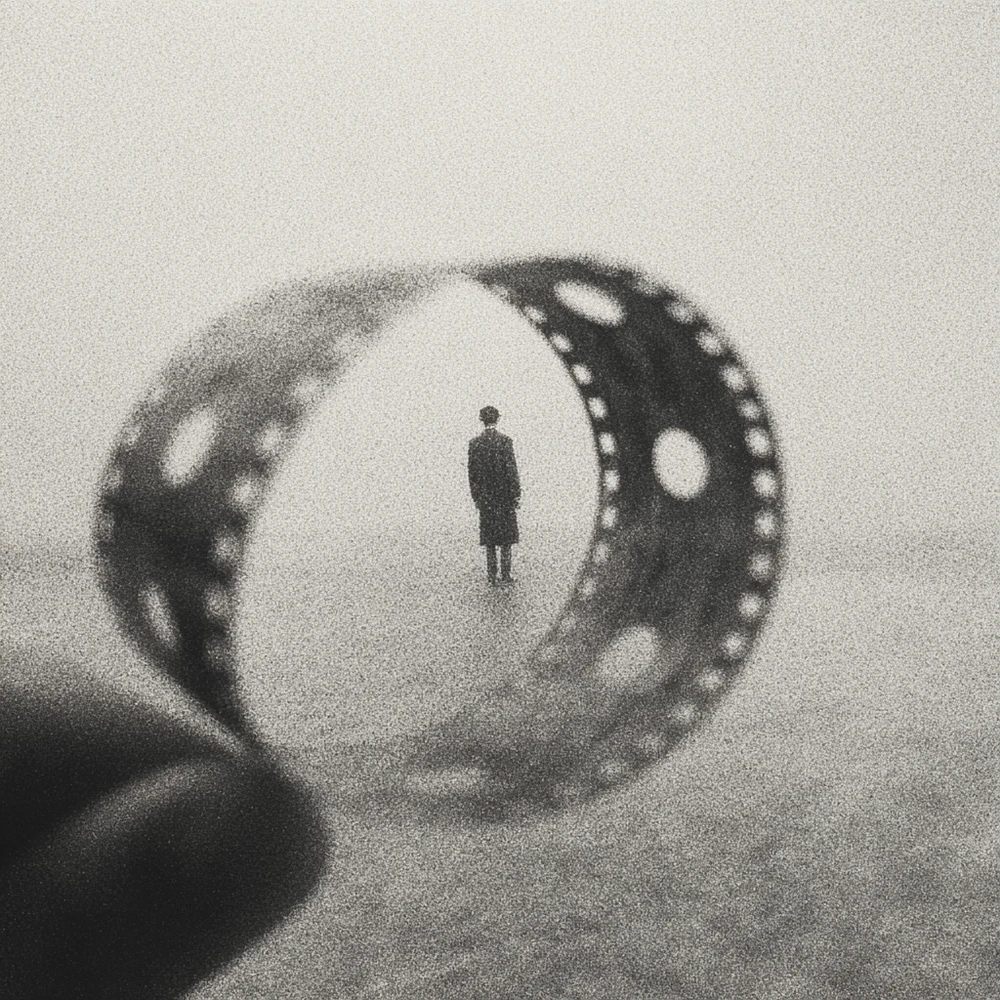
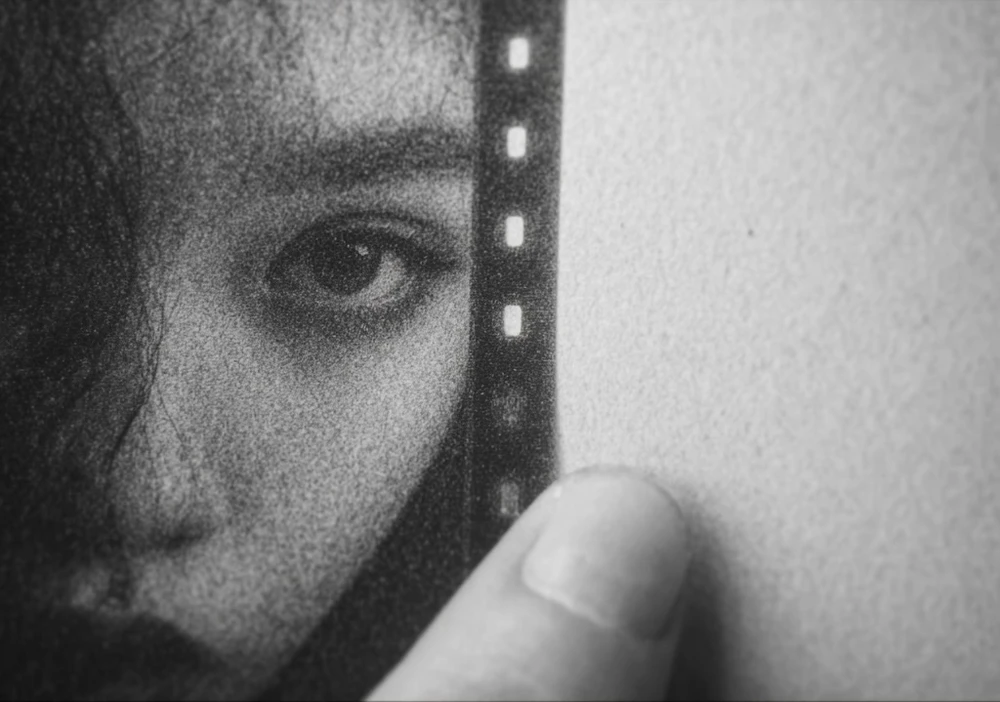
Gros plans en noir et blanc avec un grain lourd et granuleux, une mise au point douce et des motifs de bande de film.
Flickpedia n'a pas de description écrite pour ce style Choix de la rédaction, donc cette ligne est la nôtre. (Note Flick)
The image exhibits a grainy, textured appearance characteristic of analog film, with soft focus and vibrant, often oversaturated colors.
A distinct vintage aesthetic is achieved through the use of light leaks and a slightly desaturated color palette.
This style emulates the look of analog film photography, featuring a distinctive color palette, grain, and lens flare effects.
The image has a candid, documentary feel with a slightly muted and nostalgic atmosphere.
This image exhibits the aesthetic qualities of traditional film photography, characterized by natural lighting, a visible grain texture, and a slightly muted color palette.
The composition conveys a sense of candid realism and a somewhat vintage feel.
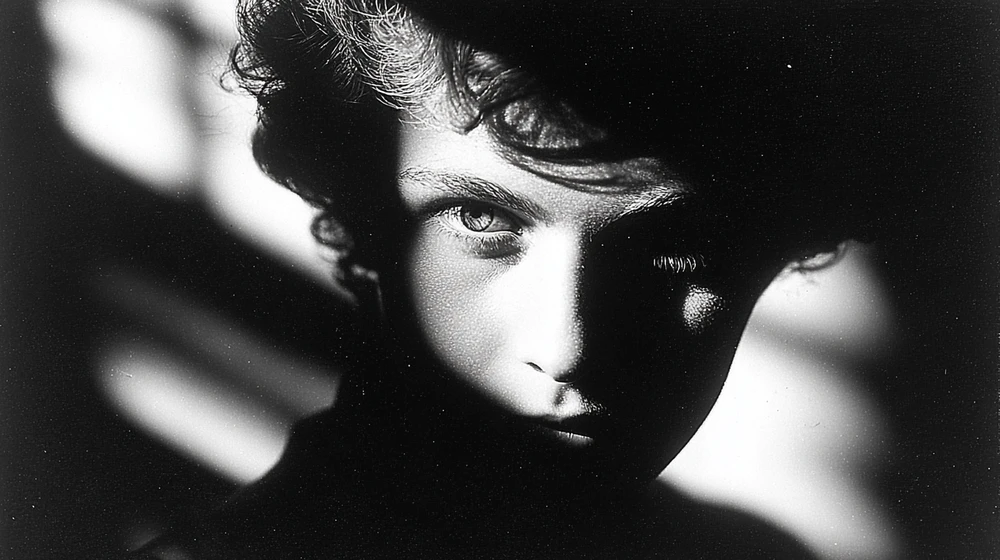
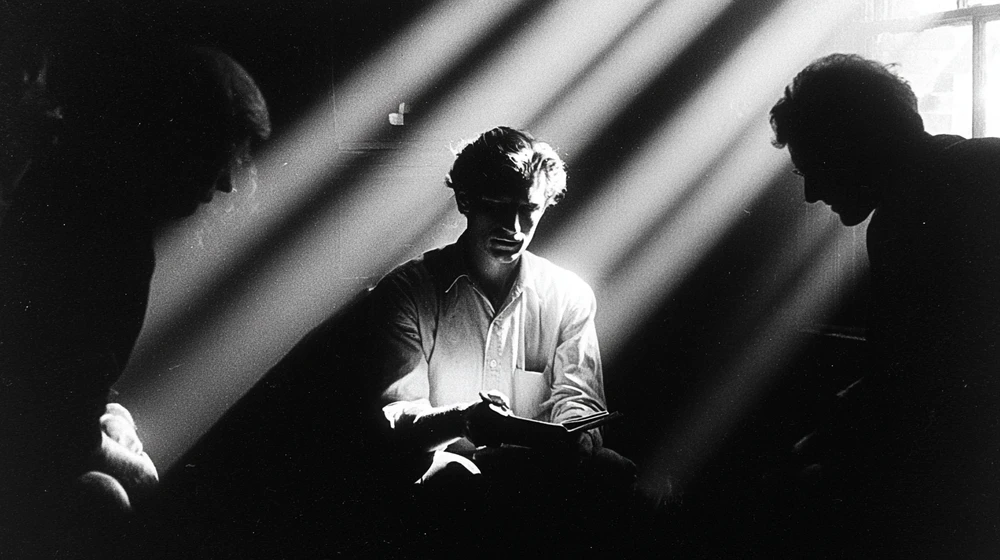
This style heavily relies on dramatic lighting, creating stark contrasts between deep shadows and bright highlights.
The limited grayscale palette emphasizes form and texture, often with a grainy or textured appearance characteristic of film photography.
This style features a soft, diffused focus that creates a dreamy and ethereal effect, characteristic of analog film photography.
Warm lighting and subtle color grading contribute to an intimate and nostalgic mood.


Lumière du jour douce, intérieurs carrelés épurés et couleurs des années 1970 délicatement passées, avec un cadrage calme et contemplatif.
Flickpedia n'a pas de description écrite pour ce style Choix de la rédaction, donc cette ligne est la nôtre. (Note Flick)
| Terme | Films (sur 65) | Prompts (sur 9 589) |
|---|---|---|
film grain | 27 | 2,399 |
shallow depth of field | 20 | 1,352 |
35mm | 14 | 551 |
chromatic aberration | 12 | 1,340 |
analog | 9 | 150 |
lens softness | 8 | 1,999 |
halation | 8 | 434 |
anamorphic | 8 | 76 |
24fps ou 24 fps | 6 | 49 |
Kodak (noms de pellicules) | 4 | 12 |
light leak | 3 | 16 |
16mm | 2 | 16 |
180 degree shutter | 2 | 7 |
gate weave | 1 | 18 |
bleach bypass | 1 | 11 |
Correspondance de mots entiers, insensible à la casse, sur l'ensemble des 9 589 prompts issus des 65 films d'équipe et de résidence avec canvas publics. Classement par films, afin qu'une habitude individuelle ne puisse dominer la liste. 35mm correspond également aux longueurs focales d'objectifs.
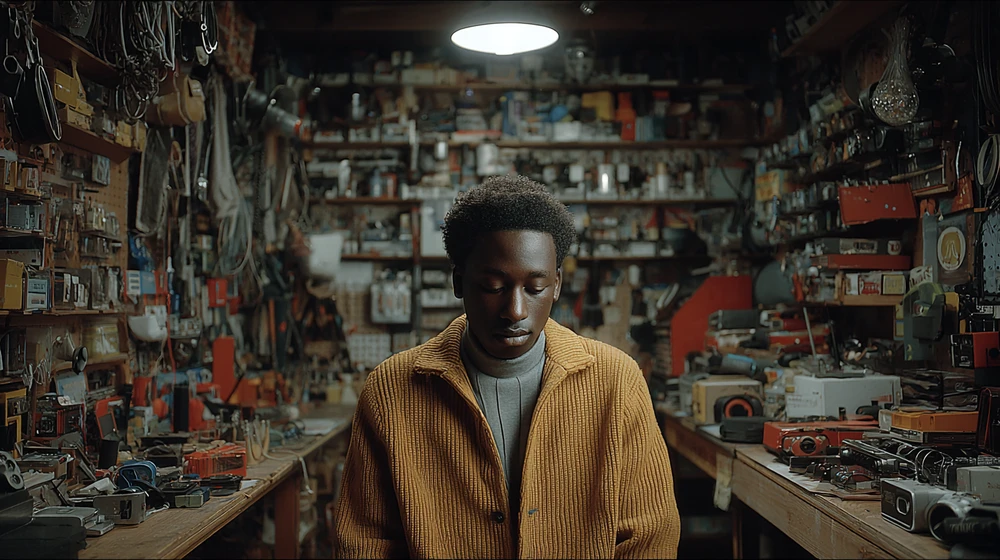
La douceur d'objectif apparaît dans de nombreux prompts mais peu de films : 1 755 de ses 1 999 prompts proviennent d'une seule recette dans les films de Jaime Yao.
Le grain est nommé avec son format, 35mm fin, à côté du genre photographique auquel il appartient.
Black and white documentary photograph of a colossal giant young woman sitting in a vast open grassy park field, she sits with her knees pulled up to her chest and her arms wrapped around her shins, resting her head down on her knees, enormous in scale like a mountain dwarfing the landscape, tiny ordinary people scattered across the meadow lying on the grass and cycling and picnicking utterly dwarfed beside her giant form, distant tree line and pale open sky, dramatic surreal scale contrast between the giant figure and the minuscule park visitors, bright natural summer daylight, high contrast monochrome, fine 35mm film grain, candid street photography aesthetic, wide establishing shot, natural realistic lighting and shadows, 3:2 aspect ratio deep analog film grain, printed and scanned. no film specks, just depth of texture

Le grain est écrit deux fois : une fois comme texture, une fois comme superposition fixe, afin qu'il ne flotte pas avec le mouvement.
analog film grain texture. camera locked. she comfortably lays down to take a nap. as she gets to the ground, the people below her exchange gasps and surprise and move out of her way. no one should walk in in the foreground A static fixed film grain overlay sits on top of the entire frame, moving like a natural vintage static. The grain is staticy the entire clip. Camera locked, no camera movement. the entire scene should be a vintage analog look, an archived film
Cette image favorite est une modification de composition : le prompt place les deux lapins à une table de brunch et demande de conserver le plan large et l'esthétique de grain de film analogique.
instead of them standing, how about theyre sitting at a table having brunch. keep the wide shot and analog film grain look

L'image de départ avait déjà du grain, donc le prompt demande seulement au modèle de le maintenir en mouvement.
A woman cries in sorrow, then wipes away her tears with her hand. Outside the window, the scenery flows by, while the carriage sways gently. The simulated film grain remains, subtly shifting.

Une caméra fixe et une lumière vive sur le boxeur : la lumière dure dont l'halation a besoin.
roaring applause from the audience and stand ovation. he stands there in victory, tired and heavy breathing, the bright light shining on him. camera locked. analog film grain texture. A static fixed film grain overlay sits on top of the entire frame, moving like a natural vintage static. The grain is staticy the entire clip. the entire scene should be a vintage analog look, an old archived film
338 des 420 prompts vidéo dans Xenogenesis utilisent cette même ligne de style, c'est ainsi qu'un film de près de 18 minutes conserve une esthétique unique.
Use @Avery Voice as what Avery's voice sounds like. use @Cole's Voice as what Cole's voice sounds like. use @EXT. Cole House as the background through the windows of the car. Use @Avery Character Profile (2) as the visual reference for Avery. Use @Cole 20% (1) as the visual reference for Cole. use @Cole 20% Bump Flat on as the bump on cole's back. Use @REGRADE Avery Car interior as the visual reference for the car interior. Blocking: Cole and Avery are sitting in the car interior. cole in the left passenger seat and Avery in the right seat. Avery is driving and Cole's head is dipped down as if very ashamed of himself. we can see the bump on cole's back which looks exactly like @Cole 20% Bump Flat on. Action: handheld close-up two shot of Avery and Cole, filmed from behind the seats catching the back of their heads. Avery on the right, Cole on the left. cole's eyes look 100% like @Cole Eyes. Between and beyond them, the windshield shows the landscape rushing past as the car drives forward. Avery is looking ahead through the windshield, holding back some anger, glancing over to cole and getting more and more disgusted by Cole' presence. Avery makes a decision and flips the middle switch, right above the small screen in the center console, into the up position. An AI male voice from the dashboard says, "Autopilot engaged." Avery lets go of the steering wheel and the car starts driving itself. In a flash, Avery smacks Cole on the head with his left hand exactly twice. Cole is whimpering and just taking it. Holding up his arms to cover, but getting hit anyways. Inside, Cole knows he deserves this. This is a big brother beats up little brother moment. Then Avery raises his arm up to strike a third time but stops. His arm frozen mid strike. He grits his teeth, wanting to hit Cole again, but knows deep inside that it's useless. He retracts his arm and takes a deep breath, calms down a little bit. Finally he looks at Cole with a very stern parental look, Avery says with utter disbelief, "The hell is wrong with you?" Camera: handheld shaky close up two shot from behind. Style: handheld shaky camera. 35mm film emulation, halation, bloom, shallow depth of field with hexagonal bokeh. Audio: no music, no score. The smacks of cole's head getting hit. Cole's whimpers and "ows". Avery's heavy breathing. Camera: handheld, extreme close-up from behind the seats, both faces in profile filling the sides of frame, the windshield and passing landscape visible between them. Holds long on the tender moment. No cuts. Style: handheld, shaky camera. 35mm film emulation, halation, bloom, shallow depth of field with hexagonal bokeh. Audio: no music, no score. The hum of the hover car and the faint rush of the landscape passing, Cole's soft sniffling,

L'esthétique est écrite d'abord comme une sensation, des images qui semblent remémorées plutôt que vues, puis décomposée en grain, vignettage et décalage chromatique.
Duration: 15s. Aspect ratio: 16:9 (follows reference frame). No background music, no score. Ambient sound effects only — wind, water sloshing against the lens, muffled splashing beneath the surface. Camera completely static and locked-off for the entire shot — no pans, tilts, zooms, or push-ins. The lens stays half-submerged at the waterline the whole time, water pushing against the glass at the horizon split. @image1 is the first frame. @image2 is the last frame. Visual style: analog film simulation, images that look remembered rather than seen. Fine film grain, subtle CRT scan lines present but not dominant, slight chromatic aberration at the edges only, soft corner vignetting, gentle warm-yellow/faded-green color shift. Washed-out warm film / bleach bypass look. Palette: bright aqua #5FC6C2, hazy sky blue #C4D4D0, warm sand #F2C896, bleached white #F0E6C8, dusty coral #E8A87C. MOTION (0–15s): Young Benji floats at the surface in the upper-middle of the frame, splashing and flailing, long wet blonde hair plastered across his eyes. His arms slap weakly at the water; he bobs and tips, struggling to stay up. Water sloshes against the half-submerged lens, intermittently revealing his legs kicking beneath the surface in the current. He tires and sinks lower and lower across the shot. In the final 3 seconds he loses the fight, his head drops below the surface, and he descends straight down and out through the bottom edge of the frame — until only disturbed, settling water remains. The camera never moves. Ends on empty churning ocean.
Cette image est la préférée d'un cinéaste, et la moitié chinoise de son prompt indique : cinématique, une texture photo-documentaire, un coucher de soleil rose à droite et de lourds nuages sombres à gauche, rendre la ligne côtière plus irrégulière.
电影化表现,纪实摄影般的质感,右边是粉色夕阳,左边则是阴沉厚重的云彩。让海岸线的形状更加的随机化。gritty, earthy tones, subtle hints of deep crimson, eerie yet beautiful colors, soft, diffused light, cinematic film stock
Les images précédentes sont réinjectées comme références de couleur, de sorte que le nouveau plan soit étalonné pour correspondre.
Using images 1, 2 and 3 as texture, color and mood references (grainy faded analog film, soft halation), generate a NEW wide garden scene with no people and no animals anywhere in frame. A softly overgrown meadow of tall wild grasses fills the middle ground, deep olive green in shadow. A dense treeline and tangled hedgerows frame the background, foliage green. A gnarled old tree leans in from one edge, bare limbs against a pale desaturated sky. Scattered tiny wildflowers dot the grass in scarlet, cream and white. Match the grainy 16mm film texture, faded analog color, deep quiet shadows, and dreamlike vintage stillness of the reference images.
Réalisé avec un style nuit atmosphérique Flickpedia attaché.
Style : Moody Cinematic Photography2
# S1: Rail Yard — Establish Wide night shot of the Asheville rail yard. A chain link fence in the foreground, beyond it rows of dead freight cars stretching into darkness. Four young punks crouch low in the tall weeds near the fence, barely lit. A security truck spotlight rakes across the distant boxcars, a hard cone of light sweeping the metal. Cold blue moonlight, deep shadows, sodium vapor lamp glow far off. Tense, still, cinematic wide shot, 35mm film grain.
Une recette maison : grain film plus bruit de capteur apparaît dans 1 669 prompts à travers six films Flick, la plupart par Jaime Yao.
Live-action cinematic still frame. Interior of a traditional Japanese room, very dim overall, with most of the room in soft shadow. The space is a washitsu-style Japanese interior with tatami mats, wooden beams and posts, shoji paper screens, muted plaster walls, and a simple, quiet, minimal atmosphere. The room feels calm, empty, and slightly austere. A large sliding door is open, and strong warm sunlight pours in from outside, creating a bright rectangular patch of light on the tatami floor and long streaks of sunlight extending into the darkness of the room. The contrast between the bright exterior light and the dark interior is strong. Fine dust particles are visible floating in the sunbeam. Inside the room stands a traditional Chinese wooden martial arts training dummy (Muk Yan Jong / wooden dummy). It is clearly not a human mannequin, but a wooden practice post used for kung fu training. The dummy has a dark wooden cylindrical trunk, three short wooden striking arms protruding from the upper-middle section, and one lower angled wooden leg projecting forward. It is mounted upright on a simple support structure. The wood surface is worn smooth in places from repeated use, with visible grain, dents, and age. The wooden dummy stands inside the dim room near the light path, partially illuminated by the sunlight coming through the open door. Parts of the dummy catch warm highlights, while the rest falls into shadow. The tatami texture, wood grain, and soft paper surfaces of the room remain visible but subdued in the low light. No people. No extra furniture clutter. Keep the composition focused on the dark Japanese room, the open doorway with sunlight streaming in, and the wooden martial arts dummy as the key object. Real photographic texture, realistic lighting, natural shadow falloff, subtle film grain, slight lens softness, realistic material detail, and authentic live-action cinematic atmosphere.

Ce prompt d'extension continue le plan Drop of Water depuis sa dernière image et demande la même caméra, le même étalonnage de couleur et le même grain film, de sorte que le plan plus long conserve un aspect uniforme.
Continue this clip seamlessly from the last frame. Maintain the exact same locked-off or slow camera movement, the desolate landscape, the dusty red-orange atmosphere, same lighting direction, same color grade and film grain. The expanse stretches on in complete silence and stillness. No new elements enter the frame. No people, animals, or vehicles. Just the vast empty world breathing slowly for 5 more seconds. The emptiness is the point — let it linger.
Les caractéristiques des films tournés en 35mm : grain en mouvement, halo autour des hautes lumières, couleur de l'émulsion, douceur subtile de l'objectif et mouvement à 24fps. L'effet film apparaît lorsque plusieurs de ces éléments sont présents ensemble, pas avec un seul effet.
Écrivez-le dans le prompt vidéo même si l'image de départ a du grain, et demandez qu'il reste stable. Pour un contrôle précis de la taille du grain, générez sans grain et ajoutez une superposition dans votre éditeur.
Le grain filmique fait partie de l'image et change à chaque frame, le plus visible dans les tons moyens. Le bruit numérique est plus fin, un mouchetis capteur plus régulier. Beaucoup de prompts Flick demandent les deux, légèrement : grain filmique subtil, léger bruit capteur.
Une lueur rouge-orangée autour des lumières vives. La lumière se réfléchit sur la base du film et expose à nouveau la couche rouge. Dans Flick, demandez un halo doux et placez une source de lumière forte dans le cadre.
24 images par seconde avec un obturateur à 180 degrés, donc chaque frame est exposée pendant 1/48 de seconde. Dans un prompt vidéo, écrivez 24fps et flou de mouvement obturateur 180 degrés.
Les frames 16mm sont plus petites, donc elles sont plus agrandies : le grain paraît plus gros et les détails plus doux. Le 35mm donne un grain plus fin et une image plus nette. Dans un prompt IA, nommez le format avec le grain, comme texture granuleuse 16mm ou grain filmique fin 35mm.
Oui. Les mots du prompt seuls peuvent le porter : les courts métrages IA réalisés dans Flick comme Boxing at the Opera, Lifeguard et The Miracle n'utilisaient aucun style. Un style aide surtout pour le caractère de l'objectif et la couleur difficile à décrire, et le maintient identique d'un plan à l'autre.
Vous pouvez commencer gratuitement. Flick vous donne 100 crédits à l'inscription, et 200 de plus en rejoignant le Discord Flick. La génération d'images avec un style Flickpedia, incluant GPT Image 2 et Nano Banana Pro, est disponible sur le plan Free. La plupart des modèles vidéo, comme Seedance, Kling et Happy Horse, nécessitent un plan payant.
Chaque plan de cette page provient d'un canvas de film Flick public et est crédité à son réalisateur. Les descriptions de style proviennent de Flickpedia sauf indication contraire d'une note Flick.
Choisissez un style de film, collez votre ligne de rendu visuel, et conservez-le sur chaque plan. La génération d'image avec un style Flickpedia est gratuite pour commencer.
Essayez gratuitement, sans carte bancaire.
Demander à une IA à propos de cette page :ChatGPTPerplexityClaude