Cómo Usar Kling AI para Hacer un Cortometraje en 7 Pasos
Para usar Kling AI en un cortometraje, dale un fotograma inicial terminado, luego escribe cada toma como un movimiento de cámara, una acción y una línea de diálogo, con una lista de lo que se debe evitar.
La mayoría de los primeros videos de Kling se desvían: los rostros cambian entre tomas, la cámara se mueve sin control y la voz es diferente cada vez. Karan Archana creó Drop of Water, un drama sobre la sequía de 3:21 para la Residencia de Verano 2026 de Flick, con 89 clips de Kling 3.0 4K en un lienzo de Flick. Leímos cada uno de esos prompts y sus configuraciones. Esta guía explica cómo usar Kling AI de la forma en que lo hizo Karan, en siete pasos, cada uno con una toma real de la película y el prompt exacto que la generó.
Los modelos de video Kling en Flick funcionan con el plan Standard y superiores.
¿Cómo usar Kling AI para hacer un cortometraje, paso a paso?
En siete pasos, desde una hoja de personaje hasta una toma final fija, todo del flujo de trabajo de Drop of Water.
Paso 1
Crea una hoja de personaje
Haz una hoja de rotación por personaje antes de cualquier video, para que cada fotograma inicial de Kling se extraiga del mismo rostro y vestimenta.
Seis paneles de Ken sobre fondo blanco: frontal, ambos perfiles, espalda y dos primeros planos del rostro.
Creado con GPT Image 2, a partir de tres retratos anteriores de él.
Karan hizo la misma hoja para Evelyn, además de una hoja de expresiones para cada uno.
Drop of Water, dirigida por Karan Archana · GPT Image 2
Professional character turnaround reference sheet for Ken: a late 30s South Asian man, medium brown skin, lean athletic build around 5'10", short slightly wavy black hair, sharp tired intelligent eyes, strong jaw, wearing dark slim-fit cargo trousers, a fitted grey technical shirt, lightweight jacket, heavy duty boots. Create ONE wide image showing SIX panels: full body front view, full body left profile, full body right profile, full body back view, AND one close-up of face from the right side, AND one close-up of face from the left side. Same character in every panel, 100% identical face and clothing matching the reference exactly, neutral A-pose for full body panels, plain pure white seamless background, even flat lighting, orthographic framing. No scene, no props, no other people.
Significado:Una hoja de referencia profesional muestra seis paneles de Ken, hombre sudasiático de treinta y tantos con ropa técnica en fondo blanco.
El proceso de imagen a video de Kling parte de tu imagen, así que Karan estableció cada fotograma primero, reencuadrando un fotograma fijo de una toma anterior con ambas hojas de Ken adjuntas.
La imagen 1 es la escena, las imágenes 2 y 3 son las hojas.
Un cambio: un primer plano cerrado de Ken solo, sin Evelyn.
Hecho con Nano Banana Pro; cada uno de los 89 clips de Kling comenzó desde una imagen como esta.
Drop of Water, dirigida por Karan Archana · Nano Banana Pro
Image 1 is the scene: a two-shot of the man Ken (left, glasses, brown vest over grey tee, curly hair, beard) drinking green liquid from a transparent sachet in a dim dusty room, with the woman Evelyn on the right. Images 2 and 3 are reference sheets of Ken — use them to keep his face 100 percent accurate: exact features, glasses, beard, hairstyle, skin texture. Re-frame this into a tight close up on Ken ALONE, filling the frame, in the exact same moment of raising the transparent sachet to his lips and drinking, eyes lowered. Evelyn is completely gone from the frame and must not be visible at all. Keep everything from image 1 identical: Ken's identity, his clothing, the sachet with green liquid, the dim dusty room, the warm muted color palette, window light, lighting mood and photorealistic texture and grain. Shallow depth of field, background soft. Grounded cinematic realism.
Significado:Primer plano cerrado de Ken solo bebiendo líquido verde de una bolsa transparente en el cuarto polvoriento con luz cinematográfica realista.
Paso 3
Nombra un movimiento de cámara
Describe un movimiento de cámara, dónde comienza, qué tan rápido va y dónde termina, para que Kling no invente empujes o cortes propios.
Un solo paneo, de izquierda a derecha, a lo largo de la cerca.
La velocidad está especificada: aproximadamente un tercio de un paneo normal.
El letrero entra, se sostiene por un momento y sale.
La duración se establece junto al prompt: 3, 5, 10 o 15 segundos en Kling 3.0 4K.
Primer fotograma00:10
Drop of Water, dirigida por Karan Archana · Kling 3.0 4K · Imagen a video
The camera begins at the far left end of the barbed wire fence, framing only the rusted wire strands stretching across the blood-orange desert horizon. A very slow, almost glacial pan moves right along the fence line — the wire fills the frame, repeating rhythmically, the cracked earth below and the smoky red sky above. The pan speed is extremely slow — the camera should move only about one third of the distance it would in a normal pan over the full 5 seconds. The fence seems endless. Then, gradually, the weathered wooden post and the rusted "ENTRY TO NORTHLAND IS PROHIBITED" sign drift into frame. The camera barely lingers on the sign for a beat — just long enough to register its presence — then continues its imperceptibly slow pan to the right. The sign drifts out of frame. Only fence wire remains. The world is silent, red, and still. No rush. No acceleration. The entire shot breathes slowly.
Significado:La cámara se desplaza lentamente por una cerca de alambre oxidado en un desierto rojo anaranjado con un letrero de prohibición.
Paso 4
Lista lo que evitar
Divide el prompt en la escena, una lista breve de los movimientos permitidos, y una lista EVITAR, para que Kling mantenga una interpretación tranquila tranquila.
La lista de animación tiene cinco líneas, un movimiento cada una.
La lista EVITAR prohíbe decisiones de actuación así como movimientos de cámara.
59 de los 89 prompts de Kling en la película terminan con una lista como esta.
Primer fotograma00:05
Drop of Water, dirigida por Karan Archana · Kling 3.0 4K · Imagen a video
Prompt

Continue inside the same weathered house immediately after Ken lowers the government-issued water ration pouch. Maintain identical lighting, wardrobe, production design, and atmosphere. Ken stands near the back sliding door, his body still facing the window. After a long moment of silence, he slowly turns his head just enough to acknowledge Evelyn without fully facing her. His expression is calm, compassionate, and tired. He speaks quietly and gently, without anger or urgency. Evelyn stands a few feet behind him, listening in silence. She remains almost perfectly still. The camera is locked in a medium shot with an almost imperceptible slow push forward. Natural breathing, subtle eye movement, restrained body language. Photorealistic live-action film, grounded realism, naturalistic cinematography, practical production design, documentary authenticity.

Animation
Ken slowly turns his head.
Speaks quietly.
Evelyn listens without moving.
Dust drifts in the light.
No other movement.

AVOID :

Dramatic acting, exaggerated emotion, crying, shouting, large gestures, camera shake, handheld movement, camera pan, zoom, cinematic swoops, cartoon style, text, logos, AI artifacts.
Significado:Ken gira la cabeza despacio y habla suavemente mientras Evelyn escucha inmóvil en una casa desgastada con luz natural realista.
Paso 5
Escribe la línea entre comillas
Pon las palabras exactas entre comillas y describe cómo se dicen, porque Kling 3.0 4K genera la voz con la imagen.
Una línea, cinco palabras, con la respiración y el movimiento de cabeza antes.
Se describe la interpretación: tranquila, baja, calmada.
Un silencio sostenido después de la línea, escrito en el prompt.
El sonido proviene del ajuste Generar Audio, activado por defecto.
Primer fotograma00:05
Drop of Water, dirigida por Karan Archana · Kling 3.0 4K · Imagen a video
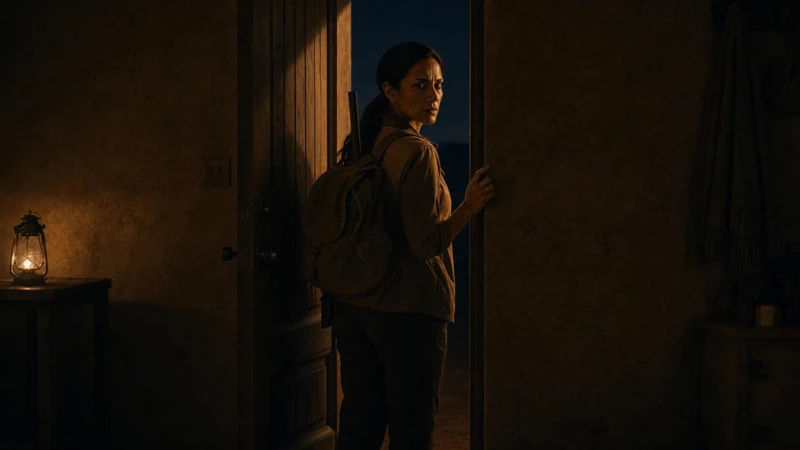
Use the attached image as the exact first frame. Preserve the exact composition, characters, clothing, lighting, colour palette, room, lens, camera position and cinematic realism. Continue directly from the previous shot.

Preserve Evelyn's existing voice exactly as established in the previous dialogue scenes. Use the same voice, accent, tone, cadence, pitch, emotional restraint and vocal characteristics already heard in the film. Do not generate a new voice or alter her vocal performance in any way. This line should sound like it is spoken by the same Evelyn from the preceding scene.

Evelyn maintains eye contact with Ken in silence. Her expression is weary, composed and quietly devastated. She takes one small breath, gives the slightest shake of her head and softly says:

"They're not coming back."

Her delivery is calm, low and matter-of-fact. She is not trying to convince Ken—she has already accepted what he cannot. After speaking, she remains still, holding his gaze for two seconds without speaking.

Ken remains softly out of focus in the foreground and barely moves. The camera stays completely locked off. Natural lip synchronization, subtle breathing, one slow blink, grounded cinematic realism.

Avoid

Do not change Evelyn's voice. Do not synthesize a different accent, pitch, cadence or emotional style. Do not make her sound younger, older, robotic or theatrical. Do not alter her face, hairstyle, clothing, posture or eyeline. Do not change Ken, the room, lighting, framing or colour grade. No camera movement, zoom, push-in, rack focus or reframing. No crying, shouting, trembling lips, exaggerated facial expressions or dramatic gestures. Do not add dialogue before or after the exact line. Keep Ken softly out of focus and Evelyn in sharp focus throughout.
Significado:Evelyn mira a Ken con expresión serena y devastada diciendo que no volverán en un plano fijo cinematográfico realista.
Paso 6
Corte a la respuesta
Filma una conversación como un clip de Kling por línea, cada uno comenzando desde un nuevo plano por encima del hombro y pidiendo la voz ya escuchada.
El ángulo inverso del último paso, hecho a partir de un fotograma de una toma anterior.
El prompt repite la instrucción de voz y la cámara fija.
La propia nota de Karan sobre la redacción todavía está en el prompt, citada tal como fue escrita.
Primer fotograma00:05
Drop of Water, dirigida por Karan Archana · Kling 3.0 4K · Imagen a video
Use the attached image as the exact first frame. Preserve the exact composition, camera angle, lens, lighting, colour palette, production design, costumes and photorealistic cinematic style. Continue directly from the previous dialogue shot.

Preserve Ken's existing voice exactly as established in the previous dialogue scenes. Use the same voice, accent, cadence, pitch, emotional restraint and vocal characteristics already heard in the film. Do not generate a new voice or alter his vocal performance in any way. This line must sound as though it is part of the same continuous conversation.

Ken maintains eye contact with Evelyn, who remains softly out of focus in the foreground. He hesitates for a moment, searching her face before quietly asking:

"What if they come home... and no one is here?"

His voice is gentle, tired and quietly hopeful. He is not arguing with Evelyn. He is holding on to the last possibility that their daughters might still return. The line is spoken softly, with a small pause after "come home..." as he struggles to finish the thought.

After speaking, Ken continues looking at Evelyn in silence. He takes one subtle breath, blinks once naturally and remains completely still. Hold the silence for one to two seconds after the line finishes.

The camera remains perfectly locked off. Natural lip synchronization. Subtle breathing. Grounded cinematic realism.

Performance Notes
Quiet, restrained delivery.
No anger.
No pleading.
No melodrama.
His hope is fragile rather than desperate.
Let the silence after the line carry as much emotion as the dialogue itself.
Avoid

Do not change Ken's voice, accent, pitch or cadence. Do not alter Ken's face, hair, glasses, clothing, posture or eyeline. Do not change Evelyn's silhouette, the room, fireplace, lighting, framing or warm amber colour grading. No camera movement, zoom, push-in, pan or rack focus. No tears, shouting, dramatic gestures, exaggerated facial expressions or theatrical acting. Do not add dialogue before or after the exact line. Preserve the intimate, quiet realism of the surrounding scene.

I also think the wording "come home" is stronger than "come back." Earlier, Evelyn says, "They're not coming back." Then Ken asks, "What if they come home... and no one is here?" The repetition of the same idea from opposite emotional perspectives gives the exchange a quiet symmetry without feeling repetitive.
Significado:Ken mira a Evelyn y pregunta con voz suave si sus hijas regresan a casa y no hay nadie, en estilo cinematográfico realista con iluminación cálida.
Paso 7
Corrige una toma, mantén el resto
Cuando un objeto sale mal en una buena toma, edita el clip con Kling O3 Pro en lugar de generarlo de nuevo, y lista todo lo que debe permanecer.
El sobre en la mano de Ken había cambiado entre tomas, así que la edición reemplaza el sobre y nada más.
El prompt enumera qué preservar, desde el encuadre hasta el timing del diálogo.
La edición mantiene el sonido original de la toma y se factura por segundo del clip fuente.
00:10
Drop of Water, dirigida por Karan Archana · Kling O3 Pro
Edit only the empty water sachet in Ken's left hand. Do not change anything else.

This is a continuity correction.

Replace the current sachet with the same almost-empty transparent plastic water sachet containing only a small amount of bright green liquid exactly as it appears in the previous shot (reference image attached).

The sachet must:

remain in Ken's left hand throughout the entire shot
have the same size, shape, folds, transparency, remaining liquid level and orientation as the previous shot
move naturally with his hand as he turns toward Evelyn
never disappear, refill, change color or change shape

Do not alter anything else.

Preserve exactly:

camera framing
composition
lens
lighting
warm amber color palette
Ken and Evelyn's faces
body positions
clothing
dialogue timing
background
room
facial expressions
pacing

The only change should be replacing the incorrect sachet with the matching continuity sachet from the previous shot.

This is a precision continuity edit, not a regeneration. Maintain cinematic realism in the style of Denis Villeneuve and Children of Men.

One additional suggestion: attach two reference images if Flick allows it.

The last frame of the previous shot, where the sachet is correct.
The first frame of the current shot, where everything is correct except the sachet.

That gives Flick a very explicit "copy from A, paste into B" task, which generally produces more reliable continuity edits than relying on a text description alone.
Significado:Se corrige la bolsa de agua en la mano de Ken para que coincida con el líquido verde del plano anterior, manteniendo todo lo demás igual.
¿Qué configuraciones de Kling usó un cortometraje real?
Clips cortos con sonido activado: 57 de los 89 clips de Kling 3.0 4K en Drop of Water duran 5 segundos, y los 89 generan audio.
Los 89 clips de Kling 3.0 4K en el lienzo público de Drop of Water, leídos el 2026-10-26. Un prompt puede contar en más de una fila.
Lo que solicita el clip
Clips
5 segundos de duración
57
10 segundos de duración
28
15 segundos de duración
4
Audio generado
89
Una lista de elementos a evitar en el prompt
59
Una cámara fija o bloqueada
51
Continúa desde el plano anterior
50
Una línea de diálogo entre comillas
29
Un fotograma final así como un fotograma inicial
1
Más detalles: cómo contamos
Leemos la configuración y el prompt de cada clip de Kling 3.0 4K guardado en el lienzo público de la película. Los archivos subidos y las tomas eliminadas no se cuentan.
Lista de evitar: la palabra "avoid" en el prompt.
Cámara bloqueada: "locked", "no camera movement" o "the camera remains completely still".
Continúa: "previous shot", "last frame", "final frame" o "continue".
Línea hablada: un par de comillas dobles en el prompt.
La mediana del prompt es de 176 palabras de longitud.
Preguntas sobre el uso de Kling AI
¿Qué es Kling AI?
Kling es una familia de modelos de video de IA de Kuaishou que convierten una imagen inicial y un prompt de texto en un clip de video, muchos de ellos con sonido. En Flick, Kling funciona en el mismo lienzo que los modelos de imagen, por lo que una hoja de personaje, un fotograma inicial y el clip están uno al lado del otro.
¿Qué modelos de Kling puedo usar en Flick?
Para imagen a video: Kling 3.0 4K, Kling 3.0 Pro, Kling 3.0, Kling O3 Pro, Kling O3 y Kling 2.6 Pro. El más reciente, Kling 4.0, llegó a Flick el 26 de octubre de 2026, después de que se hiciera Drop of Water, por lo que los clips en esta guía son de Kling 3.0 4K. Flick también tiene Kling O3 Pro Multishot para clips de múltiples tomas a partir de imágenes de referencia, Kling AI Avatar v2 para avatares hablantes, edición de video Kling O3 Pro y Kling Image V3 para imágenes.
¿Es gratuito usar Kling AI?
El video de Kling en Flick requiere el plan Standard o superior, desde $20 al mes. Kling Image V3 está en el plan Free, y Flick otorga 100 créditos cuando te registras.
¿Cuántos créditos cuesta un video de Kling en Flick?
Un clip de Kling 3.0 4K cuesta 330 créditos en su duración predeterminada y 990 créditos en su duración más larga. Una edición de Kling O3 Pro se cobra por segundo del clip que edites.
¿Cuánto puede durar un video de Kling?
Un clip de Kling 3.0 4K en Flick dura 3, 5, 10 o 15 segundos. Para una escena más larga, comienza el siguiente clip desde el último fotograma del anterior, de la misma manera que Drop of Water encadena sus tomas.
¿Puede Kling AI crear diálogos con sonido?
Sí. Kling 3.0 4K genera audio junto con la imagen, con la configuración Generar Audio activada por defecto. Escribe la línea exacta entre comillas, quién la dice y cómo, y describe el silencio antes y después de ella.
¿Cómo mantengo el mismo personaje en cada toma de Kling?
Crea primero una hoja de personaje, luego construye cada fotograma inicial a partir de ella con un modelo de imagen, y anima en Kling al final. El fotograma inicial contiene el rostro, por lo que el modelo de video nunca tiene que adivinarlo.
¿Puede Kling usar un fotograma inicial y uno final?
Kling 3.0 4K acepta un fotograma final opcional: Sí. Dale la primera y última imagen de una toma, y Kling crea el movimiento entre ellas.
Más sobre Kling y la creación cinematográfica con IA en Flick
Cada toma en esta página proviene del lienzo público de Drop of Water y está acreditada a su cineasta, Karan Archana. Los prompts están citados exactamente como fueron escritos en el lienzo.
Haz tu primer cortometraje con Kling en Flick
Hojas de personajes, fotogramas iniciales y todos los modelos de video de Kling en un solo lienzo, de la misma manera que se hizo Drop of Water.



 00:10