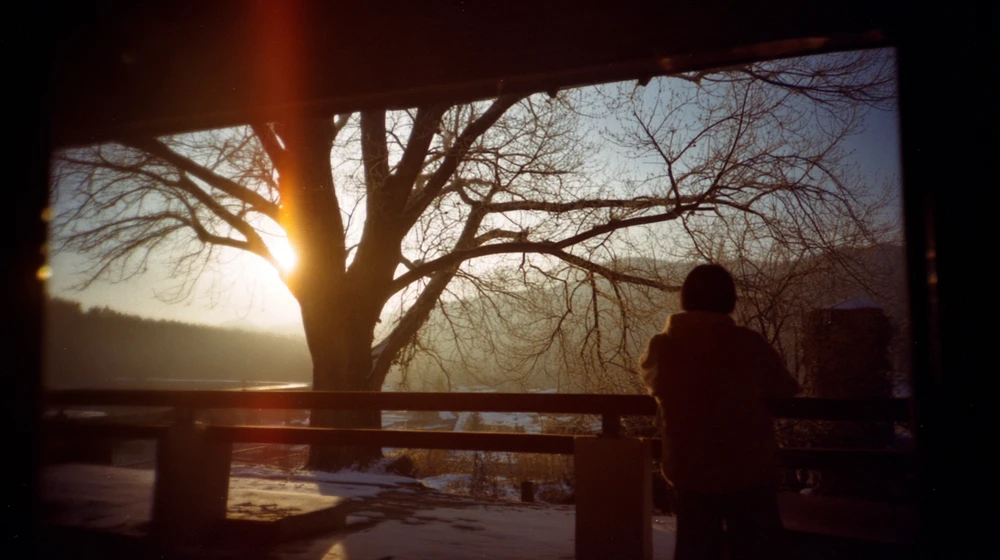
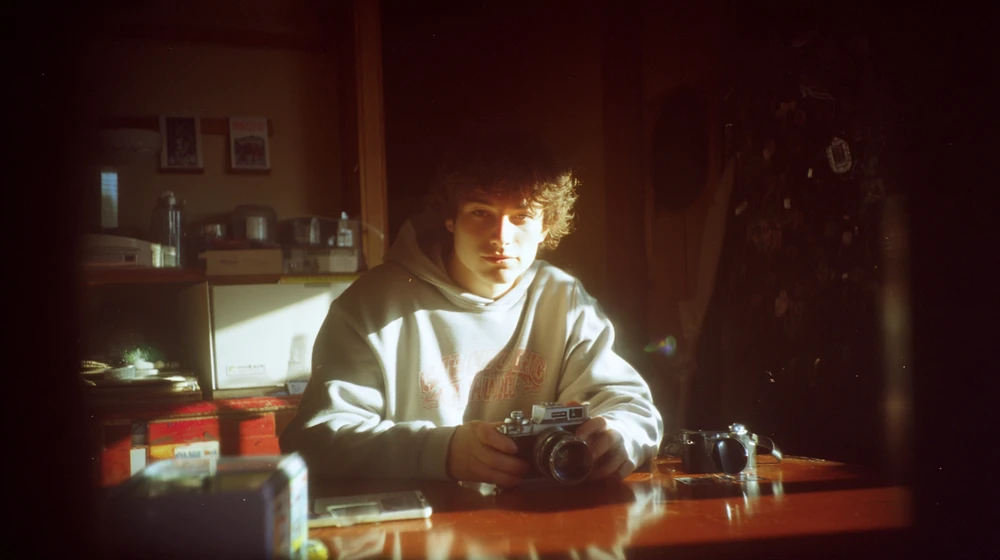
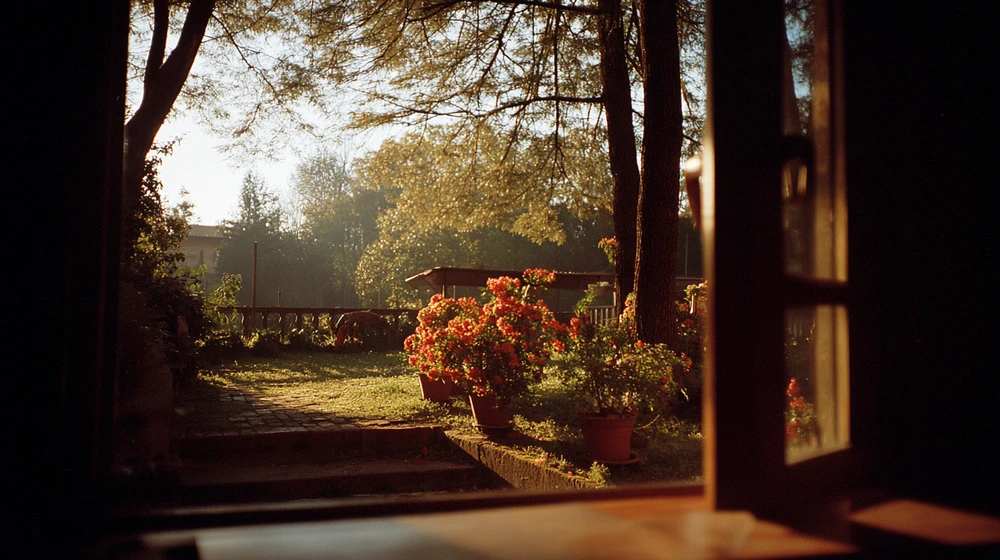
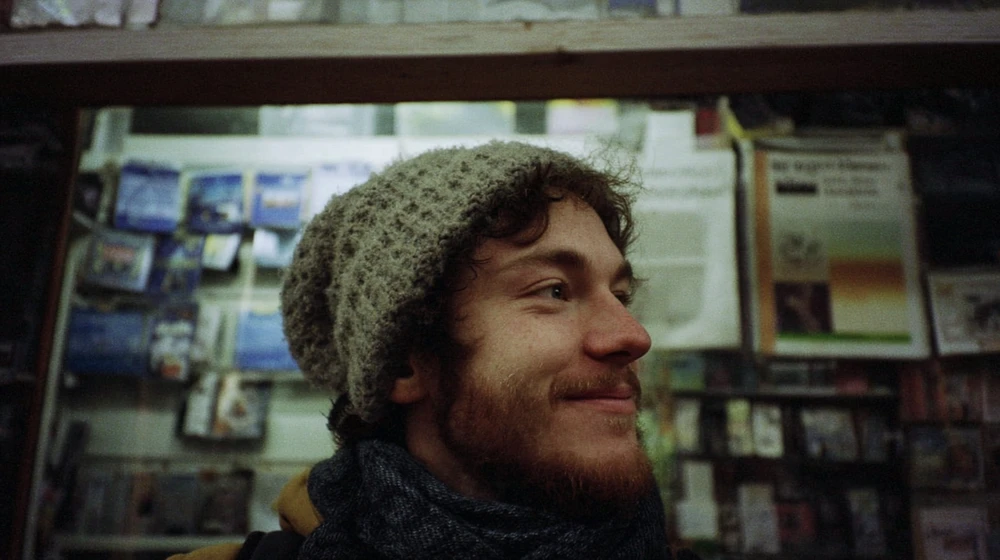
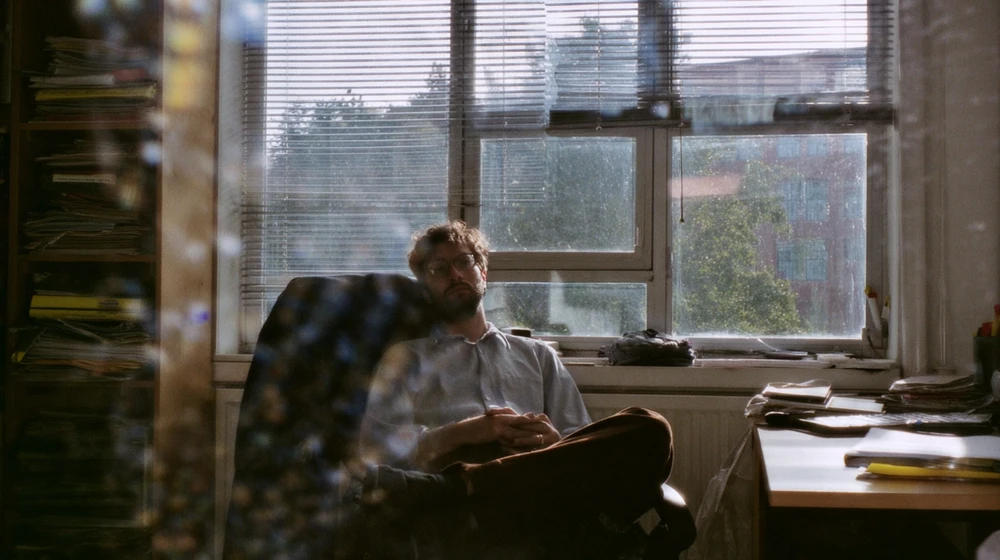
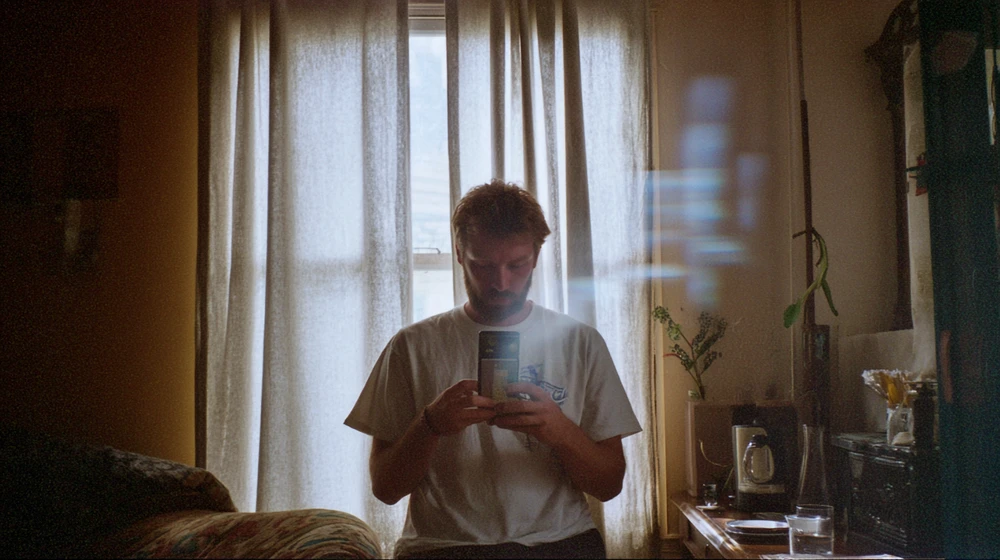
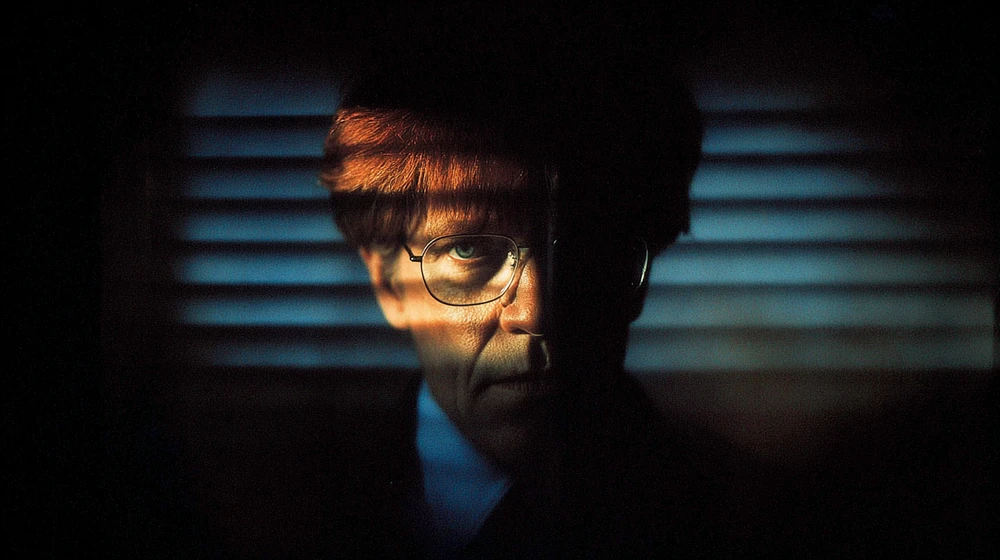
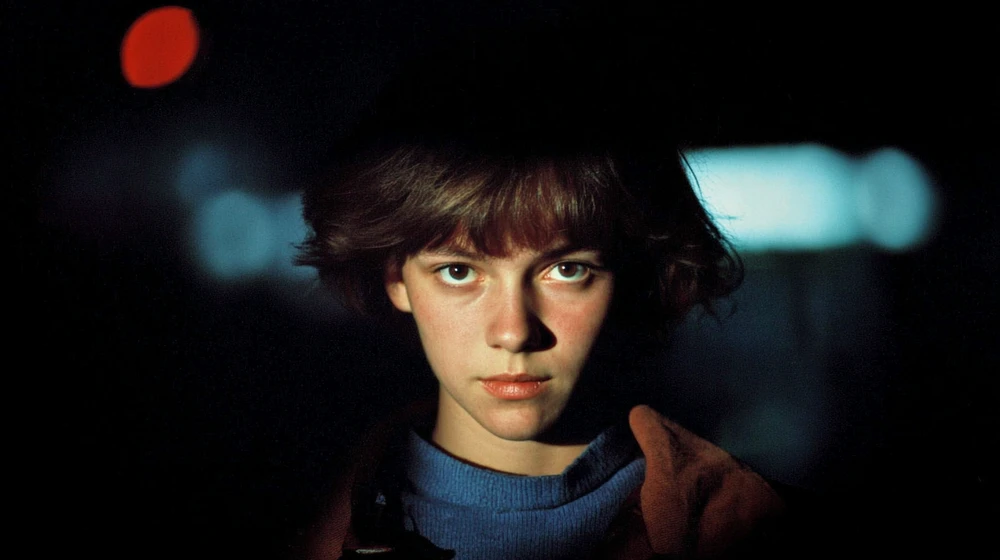
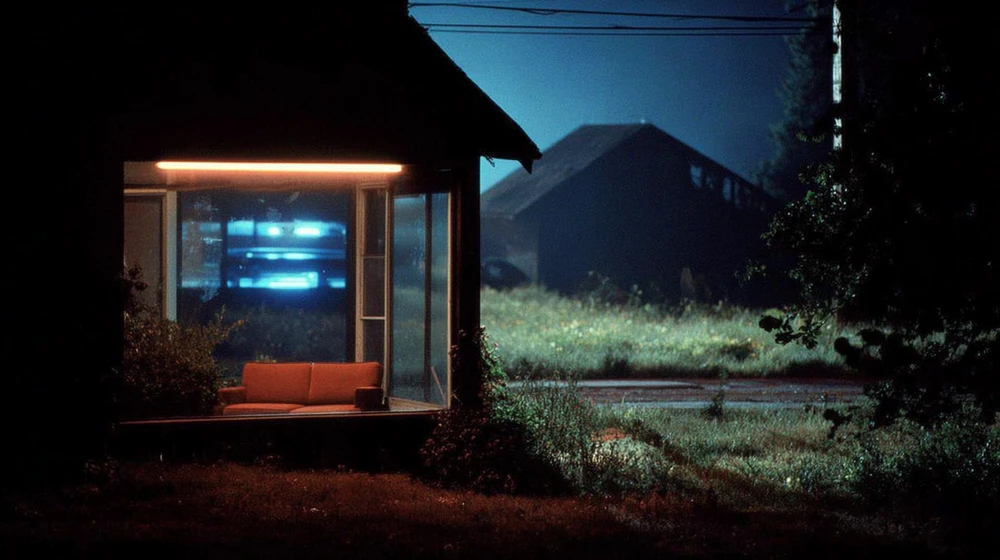
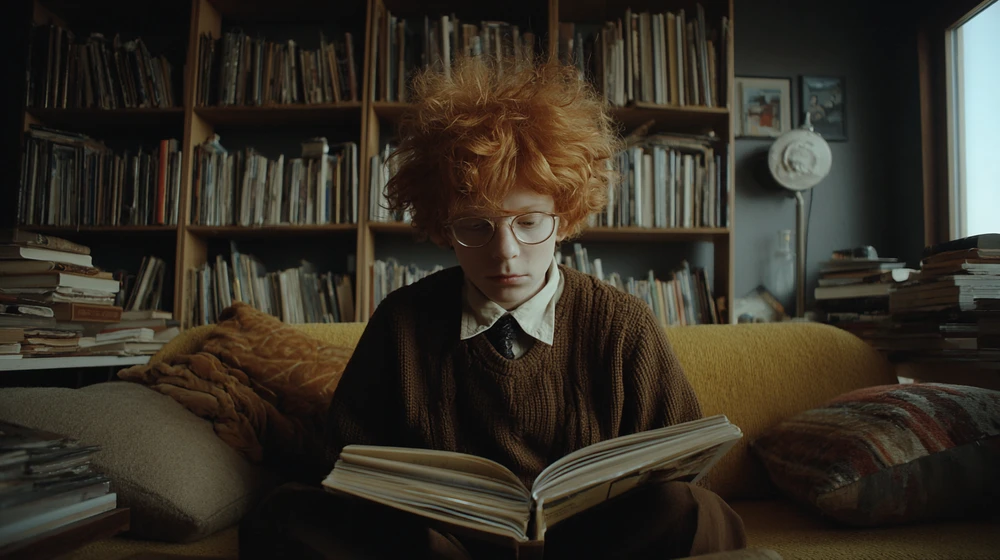
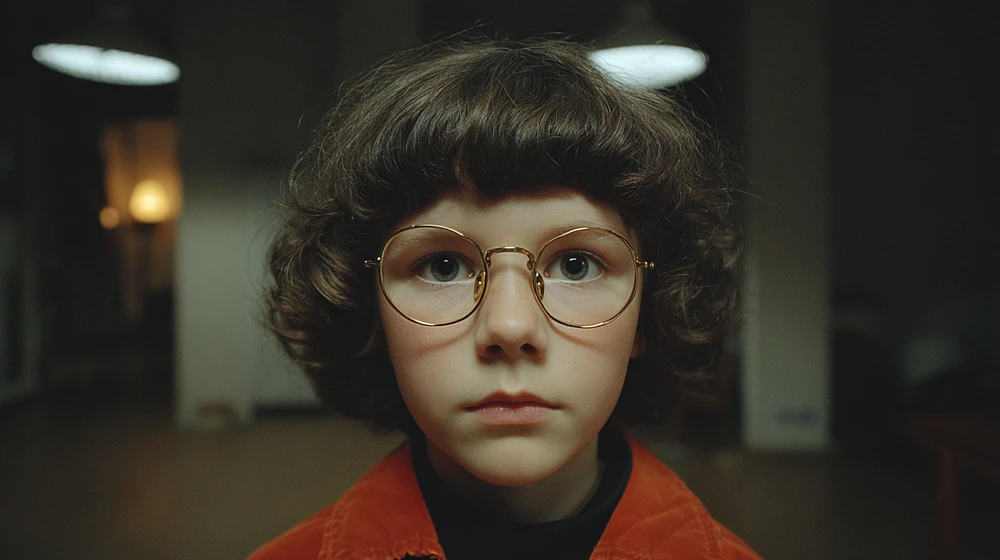
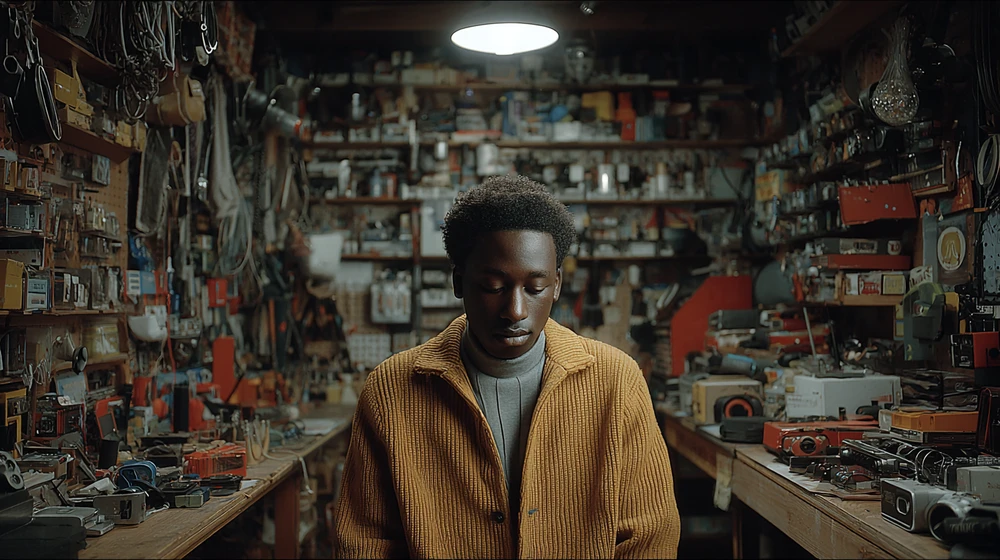
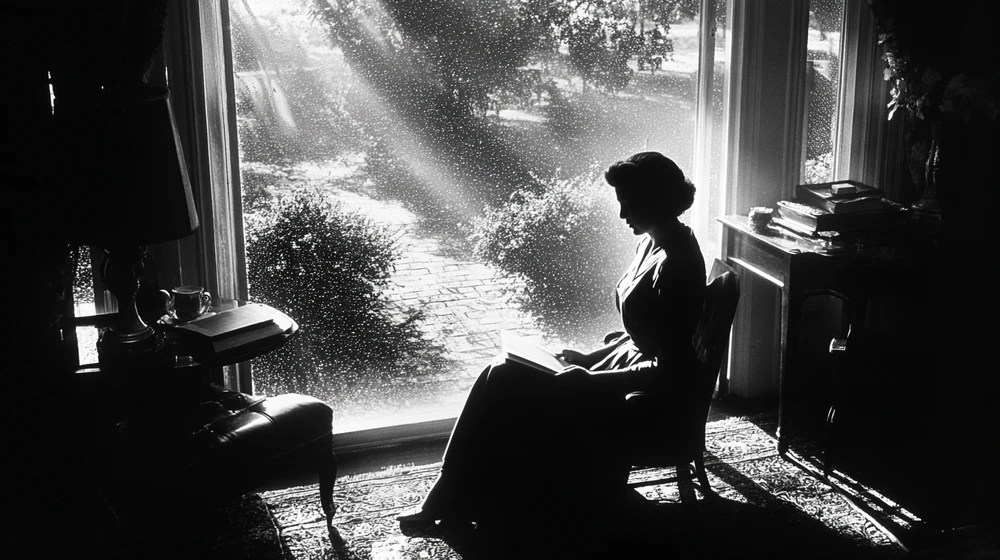
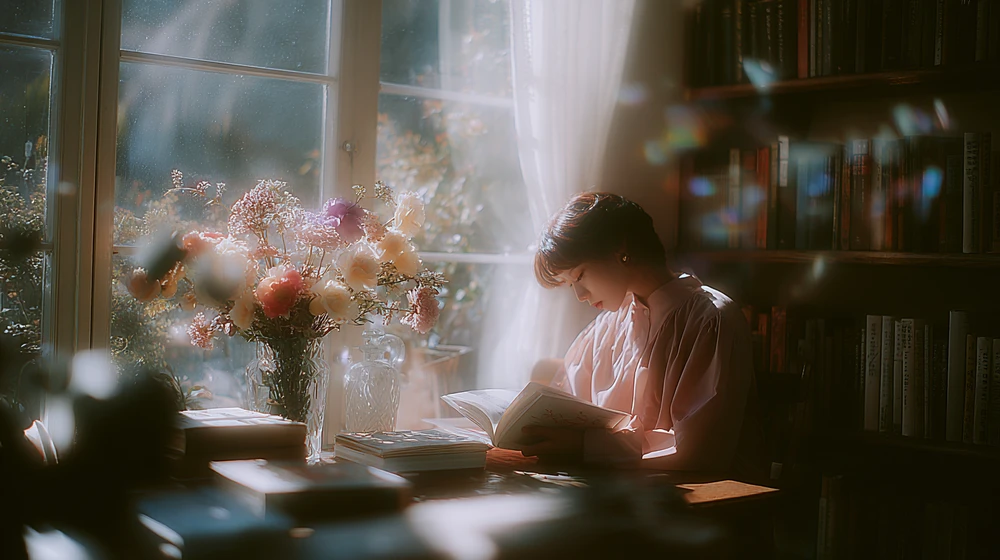
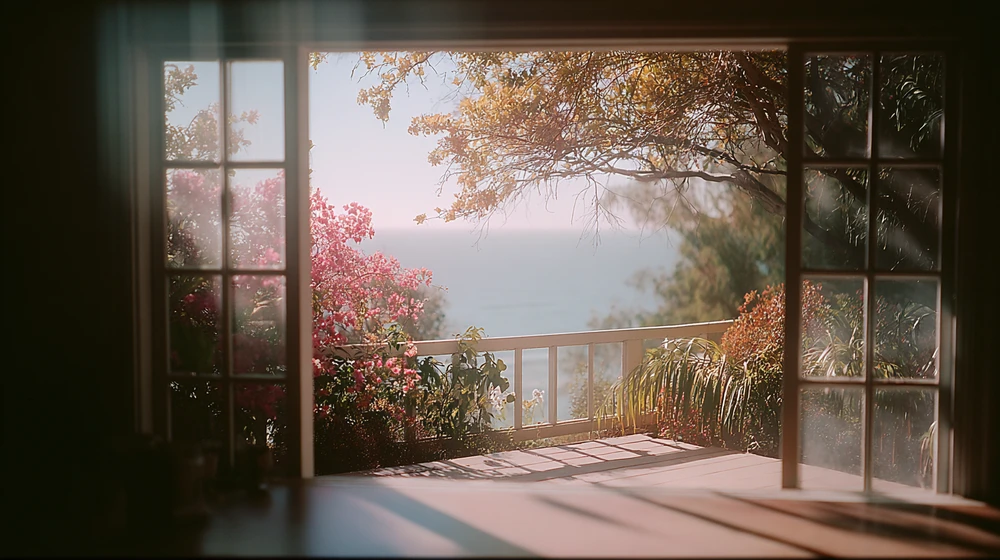
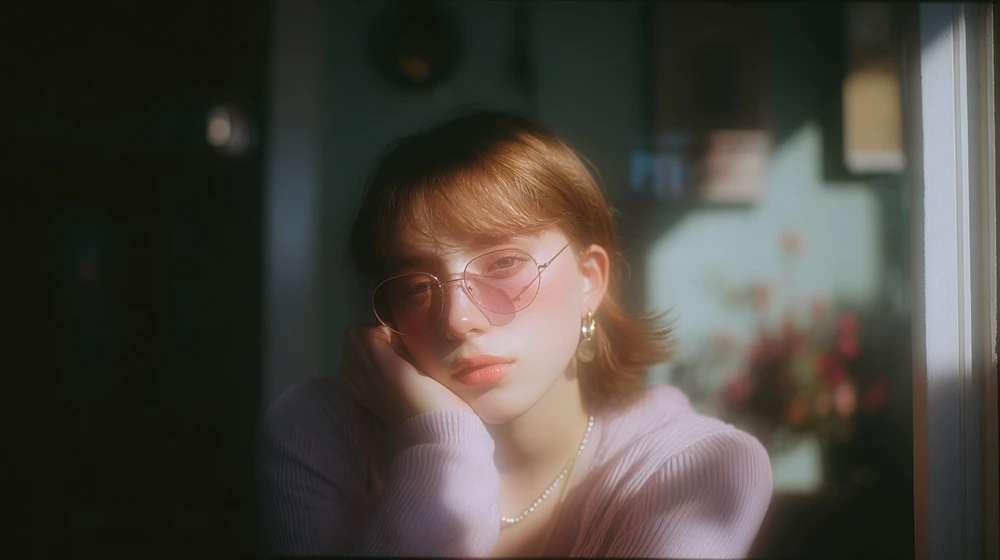
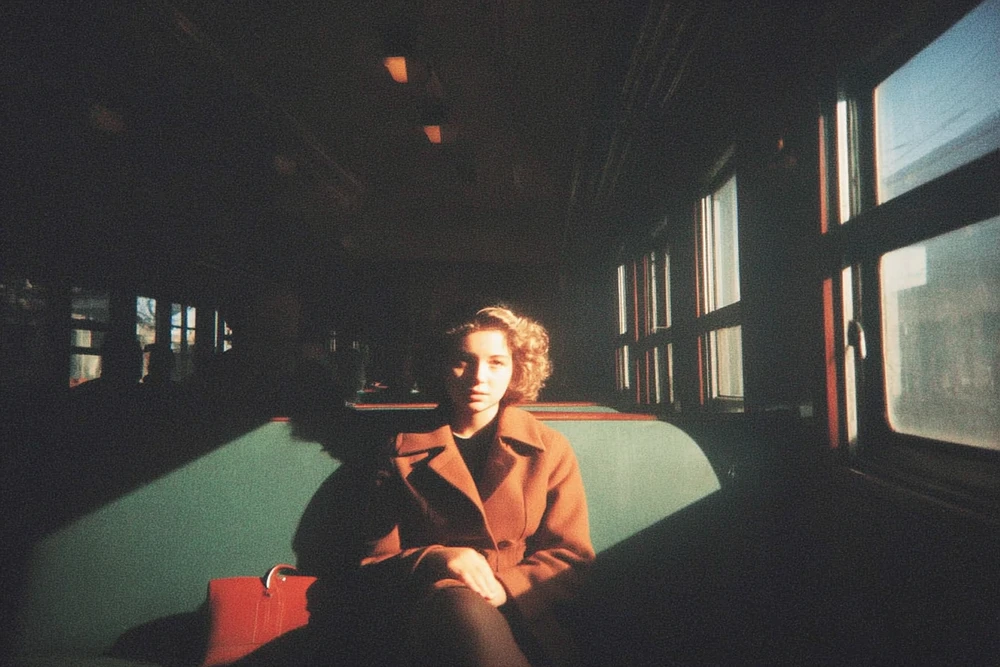
Grano de película fuerte, luego la acción
Cinco palabras de look, luego la acción.
heavy film grain. handheld camera. walks towards window and looks up directly at the sun
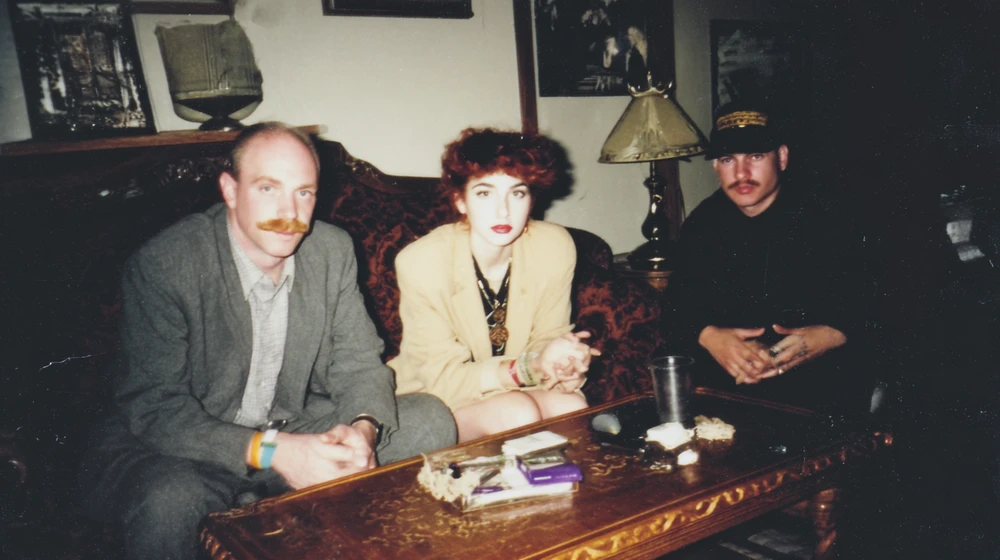
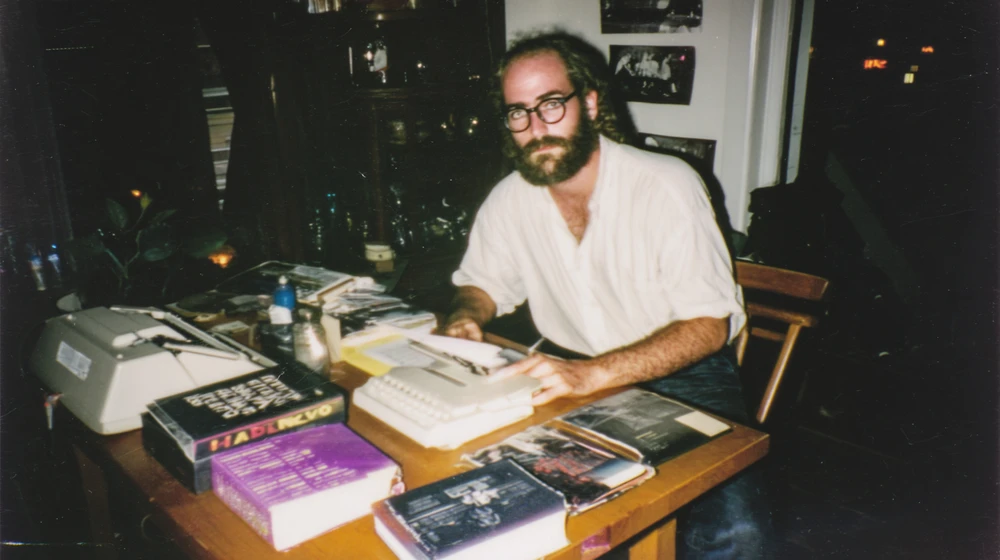
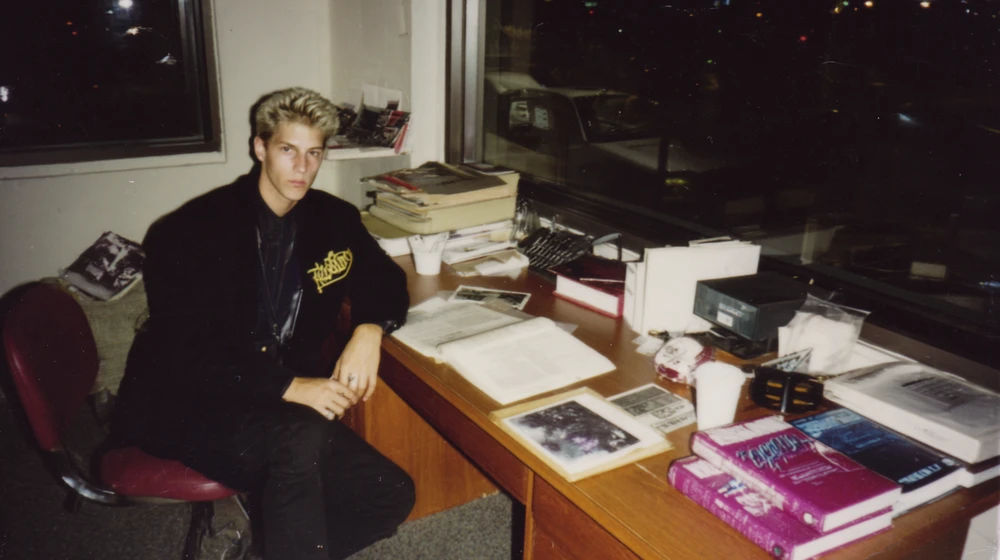
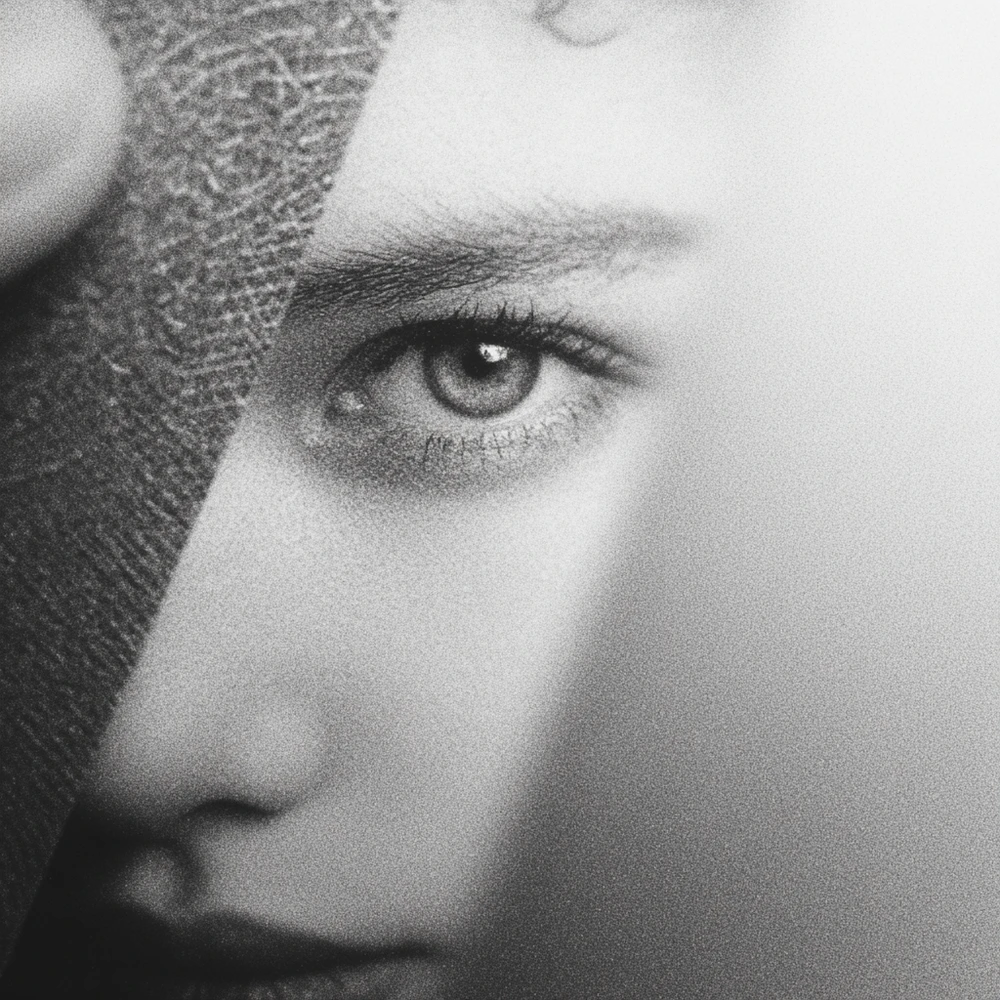
El aspecto de película de 35mm proviene de cinco elementos combinados: grano de película, halación (el resplandor cálido alrededor de luces brillantes), color de stock de película, suavidad de lente y movimiento a 24fps. Coloca los cinco en una sola línea de aspecto.
Esta guía se construye a partir de:

La mayoría de los videos de IA no logran el aspecto de película de 35mm: son demasiado nítidos, demasiado limpios, demasiado suaves en movimiento, y un filtro de grano aplicado encima solo hace que se vea filtrado. Leímos los 9,589 prompts de los 65 films de equipo y residencia con lienzos públicos en Flick: 28 de esas películas piden un aspecto de película con palabras, y 2,399 de los prompts solicitan grano de película. Esta guía convierte lo que escribieron esos cineastas en cinco elementos, seis pasos y una línea de aspecto que puedes pegar en cualquier prompt, con 17 planos acreditados y los prompts que los crearon.
shot on 35mm film, fine film grain, gentle halation, muted warm color grade, slight lens softness, shallow depth of field, 24fps, 180-degree shutter motion blur
| Elemento | Lo que ves | Palabras que funcionaron en películas de Flick | Prueba |
|---|---|---|---|
| Grano | Textura aleatoria, más intensa en las sombras, nueva en cada fotograma | analog film grain texture; heavy film grain | Ver una toma real con grano |
| Halación | Brillo rojo-anaranjado que sangra de las luces brillantes | gentle halation; halation around streetlights | Ver una toma real con halación |
| Color | Altas luces suaves, negros elevados o aplastados | bleach bypass; faded analog color; cinematic film stock | Ver una toma real de color |
| Suavidad | Nitidez suave, enfoque superficial, viñeta | slight lens softness; shallow depth of field | Ver una toma real con suavidad |
| Movimiento | 24fps, desenfoque de movimiento de 1/48 s, oscilación de puerta (un ligero bamboleo entre fotogramas) | 24fps; 180 degree shutter motion blur | Ver una toma real de movimiento |
Los cineastas de Flick piden grano con palabras, a menudo dos veces: una como textura, otra para mantenerlo estable.
Cada fotograma está hecho de cristales fotosensibles y nubes de tinte. Aterrizan en un patrón aleatorio diferente en cada fotograma, por eso el grano real se mueve.
El ruido del sensor digital es más fino y regular, y se muestra principalmente como manchas de color en áreas oscuras.

Cinco palabras de look, luego la acción.
heavy film grain. handheld camera. walks towards window and looks up directly at the sun
Estos planos ponen un foco, farolas o un parabrisas en cuadro y piden halación o bloom por nombre.
La luz intensa atraviesa la emulsión, rebota en la base de la película y expone la capa sensible al rojo una segunda vez.
El negativo cinematográfico tiene una capa protectora que limita esto, por eso un poco de resplandor se ve natural y mucho se ve deliberado.

Nombrar un año y un formato (1987, 35mm anamórfico) le da al modelo un look completo al cual apuntar, no un solo efecto.
Create an exactly 15-second cinematic sequence in 2.39:1 widescreen at 24fps. REFERENCE IMAGE: Use the attached image as the exact visual reference for: - The protagonist - His battered black early-1980s wedge-shaped sports car - The enormous brutalist tower - The concentric elevated highways - The retro-futurist city architecture - The physical rain and smoke - The established color palette Preserve the protagonist’s exact face, curly dark hair, distressed brown leather jacket, off-white T-shirt, black driving gloves and scratched silver medallion. Do not redesign, replace or modernize anything. VISUAL STYLE: A lost big-budget 1987 action-fantasy film photographed on 35mm anamorphic film. Practical city miniatures combined with full-size foreground sets. Coarse organic film grain, subtle gate weave, halation around streetlights, physical rain, atmospheric smoke and realistic wet surfaces. Color palette: - Sodium-vapor amber - Muted cyan - Faded magenta - Deep photographic blacks The image must feel tactile, constructed and photographed. It must never resemble clean contemporary CGI. TIMED ACTION: 00:00–00:03 Begin close behind the parked black car. Rain strikes the roof and runs down the rear glass. The engine idles unevenly, causing a subtle vibration through the car. The protagonist stands beside the driver’s door with his back to the camera, staring into the distance. 00:03–00:06 The camera begins a slow physical crane upward and forward over his shoulder. He remains almost motionless. Wind moves the bottom of his wet leather jacket. The first elevated highway becomes visible beneath him. 00:06–00:10 As the camera continues rising, reveal multiple circular elevated highways surrounding the city. Dozens of period-correct 1970s and early-1980s cars race along the wet roads toward the center. Their headlights form moving rings around the architecture. The protagonist and his car gradually become smaller at the bottom of the frame. 00:10–00:12 The enormous brutalist tower is fully revealed at the center of the city. The tower dominates the composition. It feels severe, ancient, industrial and physically constructed. Every level remains dark except for one tiny warm illuminated room at the summit. 00:12–00:15 Without cutting, begin a powerful continuous optical zoom toward the summit. The camera travels visually across the circular highways, through atmospheric smoke and up the face of the tower. The illuminated room grows rapidly from a tiny point into the dominant image. Continue zooming directly into the warm light until it fills the entire frame. End on a full frame of softly blooming amber-white light. Do not cut back to the protagonist. Do not reveal the room’s interior. CAMERA: The entire sequence is one uninterrupted shot. Begin as a controlled physical crane movement. At 00:12, transition smoothly into a forceful period-style optical zoom toward the tower’s summit. The zoom should resemble an ambitious 1980s combination of: - Long zoom lens photography - Optical printer enlargement - Miniature photography - Subtle concealed perspective transitions The zoom must remain cinematic and legible. It should not resemble a modern drone flight, digital tunnel effect or artificial hyperspace movement. A small increase in 35mm grain during the extreme enlargement is desirable and period-authentic. AUDIO — ABSOLUTELY NO MUSIC: Do not generate music of any kind. No score. No synthesizer. No drums. No bass pulse. No orchestra. No humming. No singing. No musical drone. No melodic tones. Use only natural environmental and mechanical sounds: - Rain striking the car - Uneven engine idle - Wind across the elevated roadway - Wet tires moving on distant highways - Distant traffic echoes - The protagonist’s jacket moving As the zoom accelerates, the traffic and engine sounds gradually become distant and muffled. Introduce only a natural rushing-air sound caused by the camera’s rapid visual movement. As the light fills the frame, reduce everything to near silence. AVOID: A cut back to the protagonist, revealing the room’s interior, modern cars, modern skyscrapers, smartphones, LED billboards, flying vehicles, digital HUDs, excessive neon, cyberpunk clutter, smooth drone movement, digital tunnel effects, hyperspace effects, synthetic CGI surfaces, changing the protagonist’s face or clothing, generated music, readable text, logos, subtitles or watermarks.
Los cineastas de Flick nombran un proceso, un formato o un negativo, y luego fijan la paleta para que cada toma coincida.
Cada negativo se inclina hacia su propia paleta. Los procesos de laboratorio la modifican aún más: el bleach bypass deja plata en la imagen, por lo que los colores se vuelven apagados y el contraste aumenta.
El look se nombra primero: película cálida deslavada con un look de bleach bypass procesado cruzado.
# Beach Ref: The Beach A wide empty stretch of sandy beach at midday, warm pale sand in the foreground with scattered footprints, gentle surf breaking at the shoreline on the left, dune grass and a low sandy rise in the background, a huge hazy sky above. Empty, quiet, no people. Faint wall of tan haze building far on the horizon hinting at an approaching sandstorm. Washed out warm film with a bleach bypass cross processed look, faded reds, milky whites, golden nostalgic sunlight, dreamlike remembered mood. Cinematic wide establishing shot, soft grain, atmospheric haze. Palette (exact hex): bright aqua #5FC6C2, dusty coral #E8A87C, warm sand #F2C896, hazy sky blue #C4D4D0, bleached white #F0E6C8.
Aquí es donde un estilo de Flickpedia hace el mayor trabajo: lleva el carácter de la lente, para que el prompt pueda describir la escena.
Creado con el estilo Fotografía Cinematográfica aplicado.
Estilo: Fotografía Cinematográfica
Photoreal cinematic close up portrait of Tenzin, a 28 year old Himalayan mountain man, warm brown skin, strong cheekbones, dark warm eyes with fine lines, thick black hair, short beard. Tender, thoughtful, loving expression. Handwoven wool collar visible at his shoulders. Soft warm window light, blurred stone and timber kitchen background. Natural color cinematic film photography, shallow depth of field, 16:9.
En los prompts de video, los cineastas de Flick escriben esto como configuración de cámara: 24fps, obturador de 180 grados, velocidad real.
El movimiento se especifica como una configuración de cámara: ángulo del obturador, velocidad y cómo el operador sostiene la cámara.
@Tenzin, Age 72 - Winter 2024 is a tired 70-year-old Himalayan man (Tenzin, charcoal knit cap, grey scarf, dark puffer jacket) carrying two plain ceramic plates, one in each hand, each with a small mound of thin-skinned steamed momos (low pleats, normal size, not thick buns), both pluming thick steam. @Himalayan Kitchen, Evening Light is the style reference for the stone-and-timber kitchen: cast-iron stove burning at frame left, and at the far end a timber door standing FULLY OPEN onto a raging white blizzard. Extend the world freely, do not reproduce it 1:1. Three hard-cut shots. Shot 1 (0-5s): tight high three-quarter on the counter, his hands slide under both plates and lift them together, thick warm steam rolls upward, hands tremble faintly then steady, he turns away from camera. Shot 2 (5-10s): close on his face in three-quarter profile as he walks, plates at chest height, steam fogging past his mouth, heavy-lidded exhaustion and a slow blink, he glances down at the plates once then ahead at the door, cold blue light climbing his face as the warm stove light drains off his back. Shot 3 (10-15s): wide from deep inside, the open doorway a violent white rectangle centre frame, he walks away small against the storm, at the threshold the steam is torn off both plates, wind drives snow across the floorboards, he crouches with one hand on the door frame and sets exactly ONE plate on the porch boards, straightens still holding the second plate, and stands with his back to camera looking into the whiteout. Camera stays INSIDE the house the whole time and never crosses the threshold or follows him out, handheld with fine drift, 180 degree shutter motion blur, full real speed no slow motion. Warm amber stove firelight dominant, deep near-black interior shadow, cold blue-white overexposed storm light through the doorway. Nothing outside moves, porch and yard empty. Face tired and neutral, no tears, no turning to camera, no dialogue. Second plate stays visible in his hand at the end. Ambient only: crackling stove, steam hiss, howling wind and snow at the door, no music.
Paso 1
Abre un estilo de película en Flickpedia y presiona Usar este estilo.

Paso 2
Escribe la escena con el estilo adjunto, luego añade dos o tres palabras cinematográficas: filmado en 35mm, grano de película, poca profundidad de campo.

Paso 3
Edita en lugar de empezar de nuevo, y nombra lo que debe conservarse.

Paso 4
Envía el fotograma a Imagen a Video y repite el estilo.


Paso 5
Añade desenfoque de movimiento a 24fps, obturador de 180 grados y velocidad real.
00:15Paso 6
Mantén tu estilo en una sola frase y pégala en cada prompt, para que una película larga no cambie toma tras toma.

This style is characterized by its use of dramatic lighting, often with strong highlights and deep shadows, to create a moody and atmospheric feel.
The composition and color grading evoke a sense of narrative, similar to a still from a film.
Usado en 29 planos de Seasons, dirigida por Raj Rishi More
The style is characterized by a sense of atmosphere and mood, achieved through low lighting, shallow depth of field, and a muted color palette.
It often employs a composition that draws the viewer's eye into the scene, highlighting a sense of isolation or introspection.
Usado en 27 planos de Catch Out, dirigida por Dr. Dreams
This style emulates the look of traditional film photography, featuring visible grain and a muted color palette.
The lighting creates a dramatic, shadowy effect, highlighting textures and conveying a mood of introspection.
Usado en 3 planos de Catch Out, dirigida por Dr. Dreams
The style features dramatic lighting with deep shadows and highlights, creating a moody and evocative atmosphere, characteristic of a film still.
It utilizes a shallow depth of field and muted color palettes with selective color saturation to draw focus to the subject.
Usado en 2 planos de Catch Out, dirigida por Dr. Dreams
The image exhibits a naturalistic and true-to-life representation of the scene, captured with a depth of field and lighting that evokes a filmic quality.
The textures and details are rendered with a high degree of fidelity, giving it a tangible and immersive feel.
Usado en 12 planos de The Perfect Proposal, dirigida por Zhelun "Jerry" Lin
The image features the characteristic soft focus, muted colors, and subtle vignetting often associated with vintage Polaroid photographs.
A slight grain and a faded, warm color cast further enhance the analog, nostalgic feel.

Usado en 5 planos de Character Consistency, dirigida por Hannah L.
This style features a close-up perspective with a shallow depth of field, emphasizing atmospheric lighting and realistic textures.
The color grading and soft focus create a mood reminiscent of film stills.
Usado en 2 planos de Churchill's Mum, dirigida por Sandi Jerome
This style mimics the appearance of old film photographs, characterized by visible grain, slight color shifts, and a worn, textured quality.
The lighting appears soft and diffused, contributing to a nostalgic and atmospheric feel.
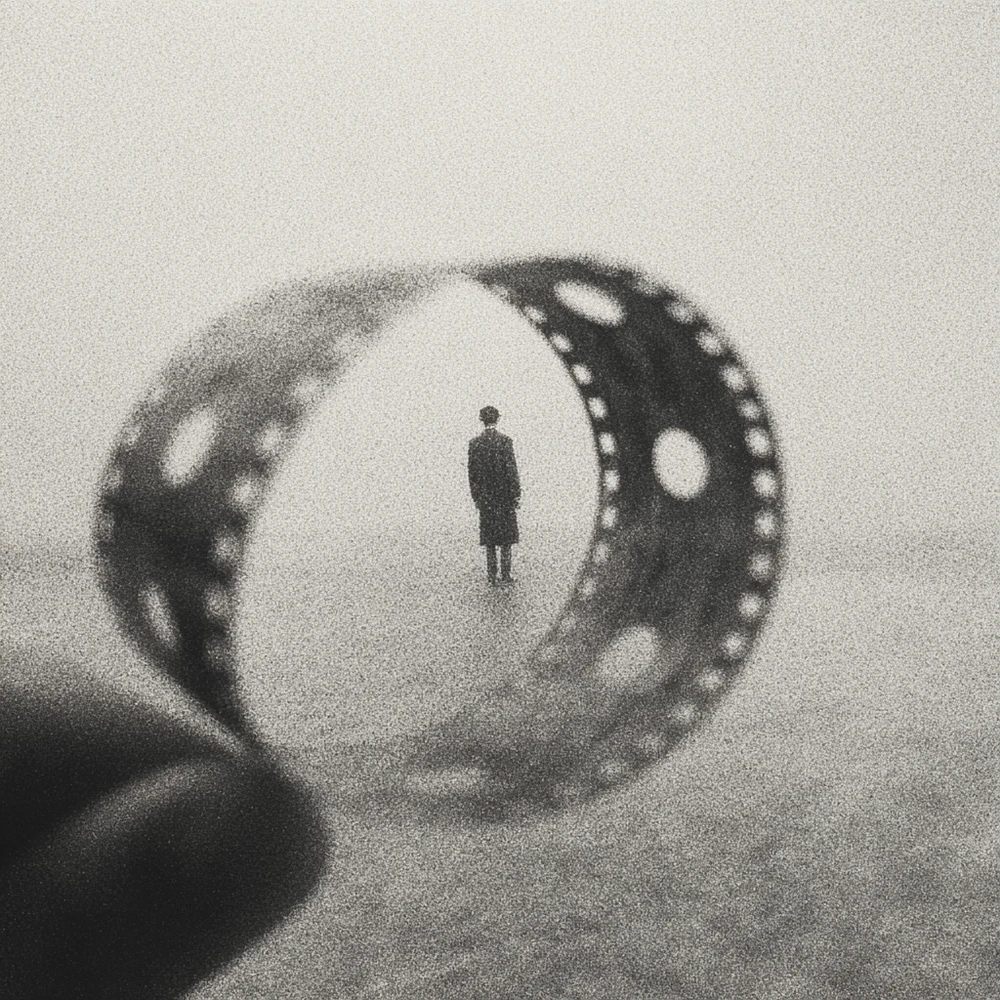
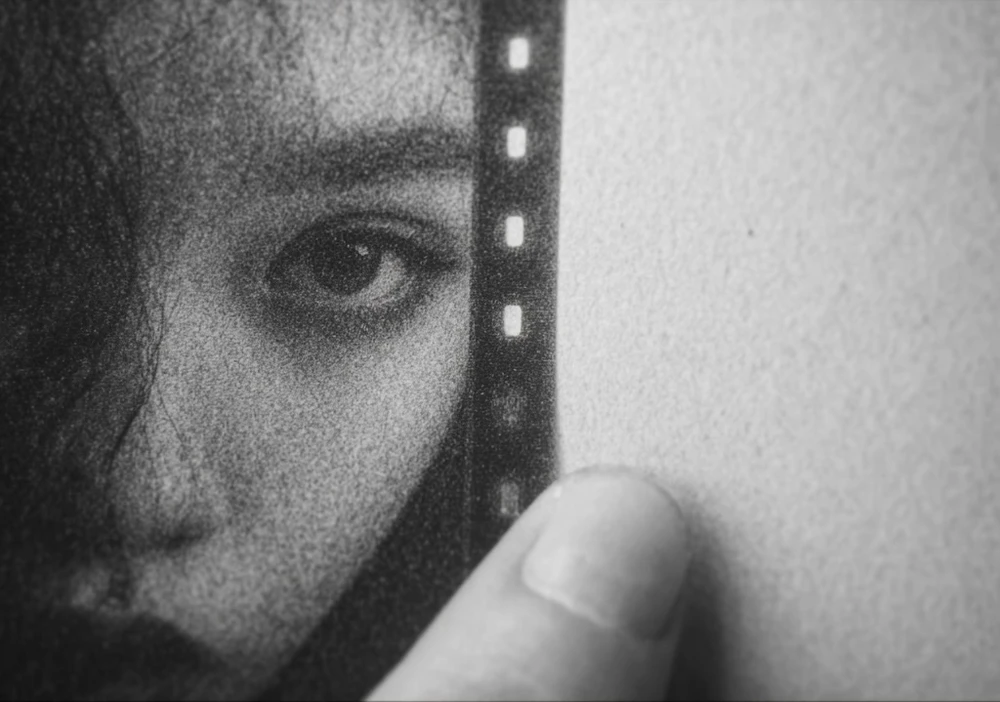
Primeros planos en blanco y negro con grano pesado y áspero, enfoque suave y motivos de tira de película.
Flickpedia no tiene una descripción escrita para este estilo de Selección del Editor, así que esta línea es nuestra. (Nota de Flick)
The image exhibits a grainy, textured appearance characteristic of analog film, with soft focus and vibrant, often oversaturated colors.
A distinct vintage aesthetic is achieved through the use of light leaks and a slightly desaturated color palette.
This style emulates the look of analog film photography, featuring a distinctive color palette, grain, and lens flare effects.
The image has a candid, documentary feel with a slightly muted and nostalgic atmosphere.
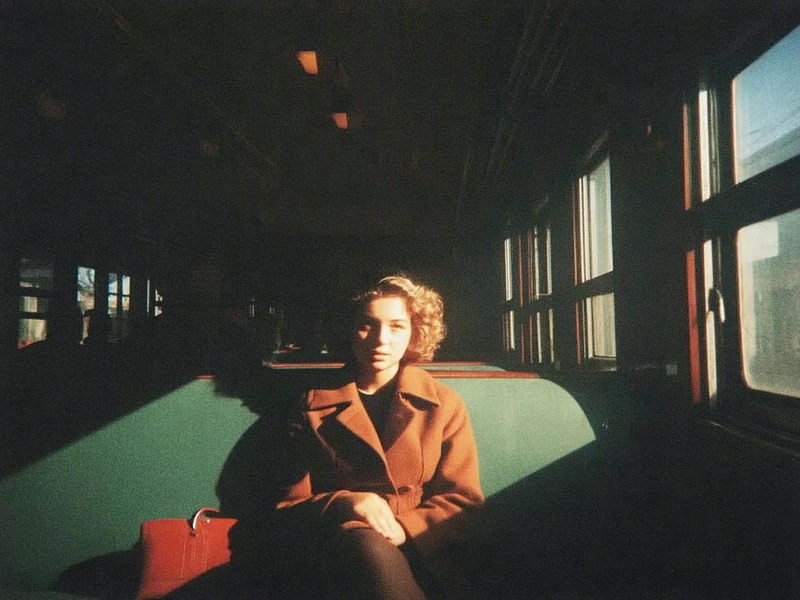
This image exhibits the aesthetic qualities of traditional film photography, characterized by natural lighting, a visible grain texture, and a slightly muted color palette.
The composition conveys a sense of candid realism and a somewhat vintage feel.
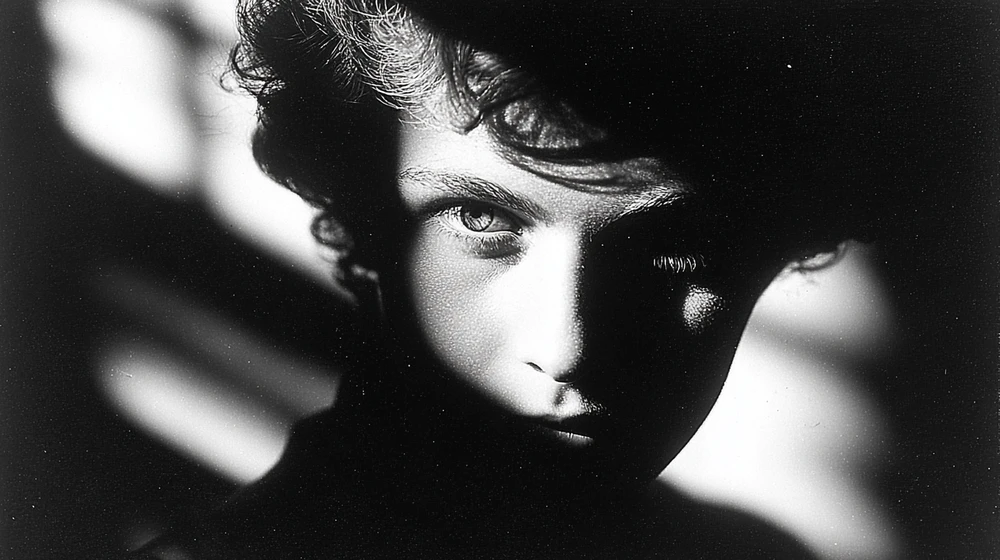
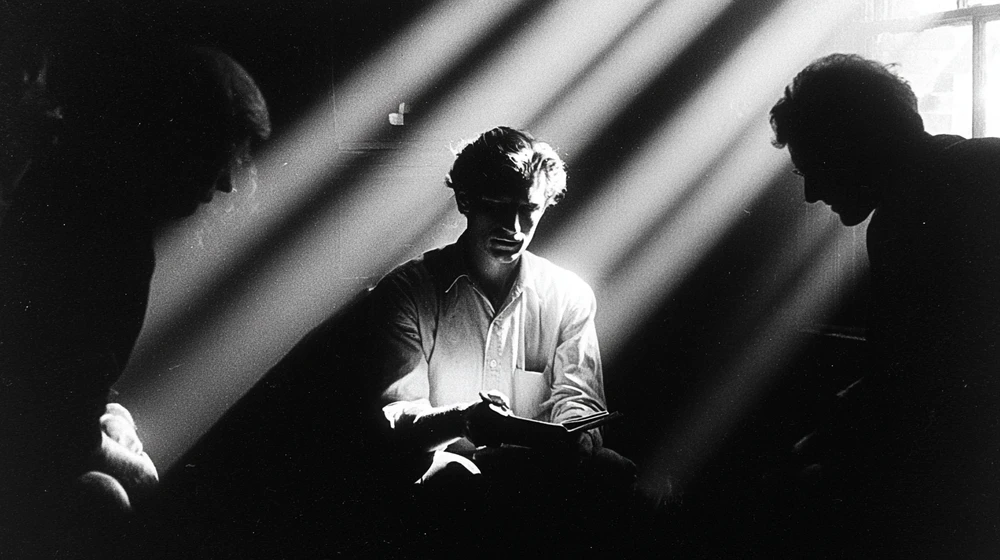
This style heavily relies on dramatic lighting, creating stark contrasts between deep shadows and bright highlights.
The limited grayscale palette emphasizes form and texture, often with a grainy or textured appearance characteristic of film photography.
This style features a soft, diffused focus that creates a dreamy and ethereal effect, characteristic of analog film photography.
Warm lighting and subtle color grading contribute to an intimate and nostalgic mood.


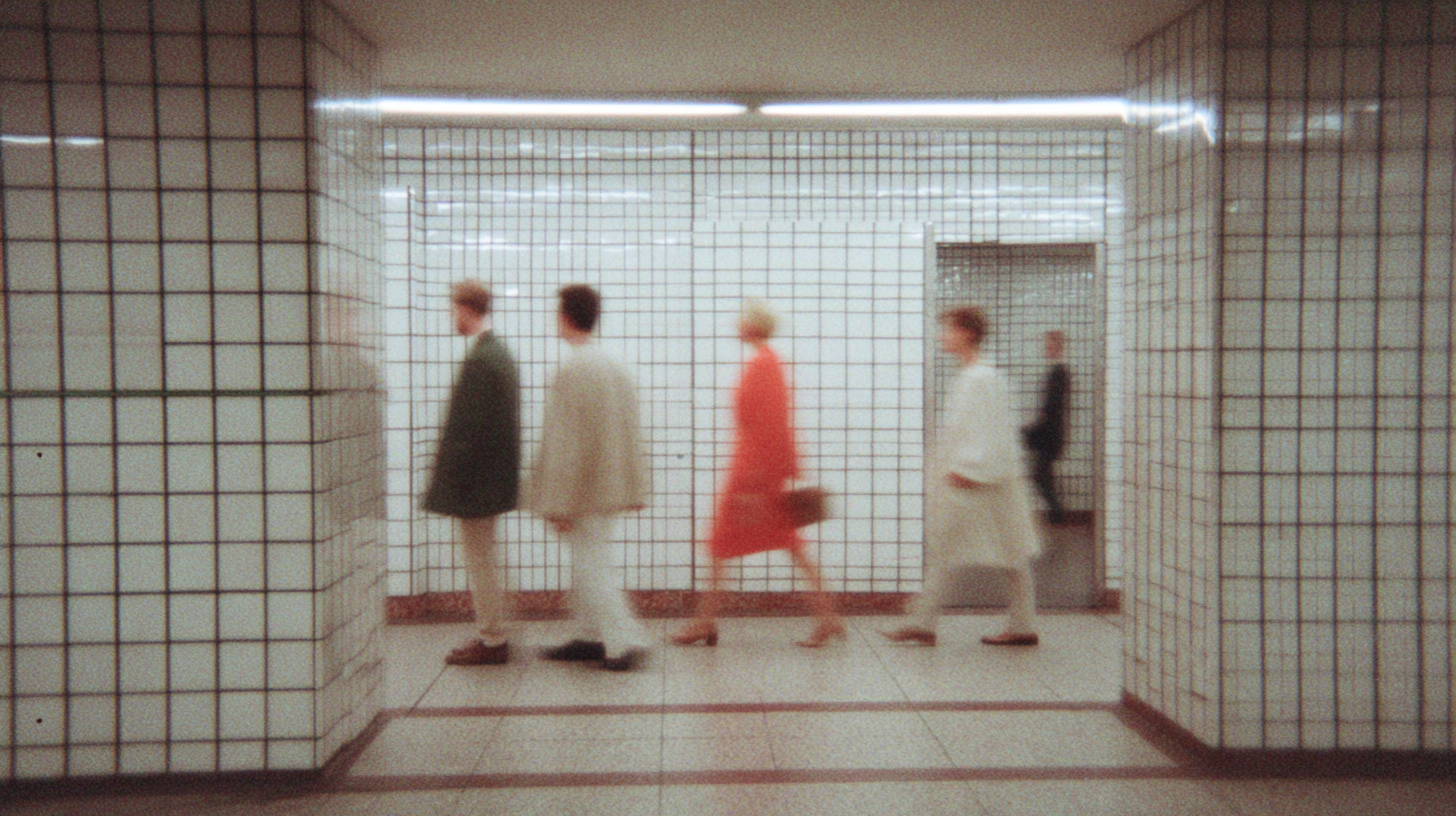
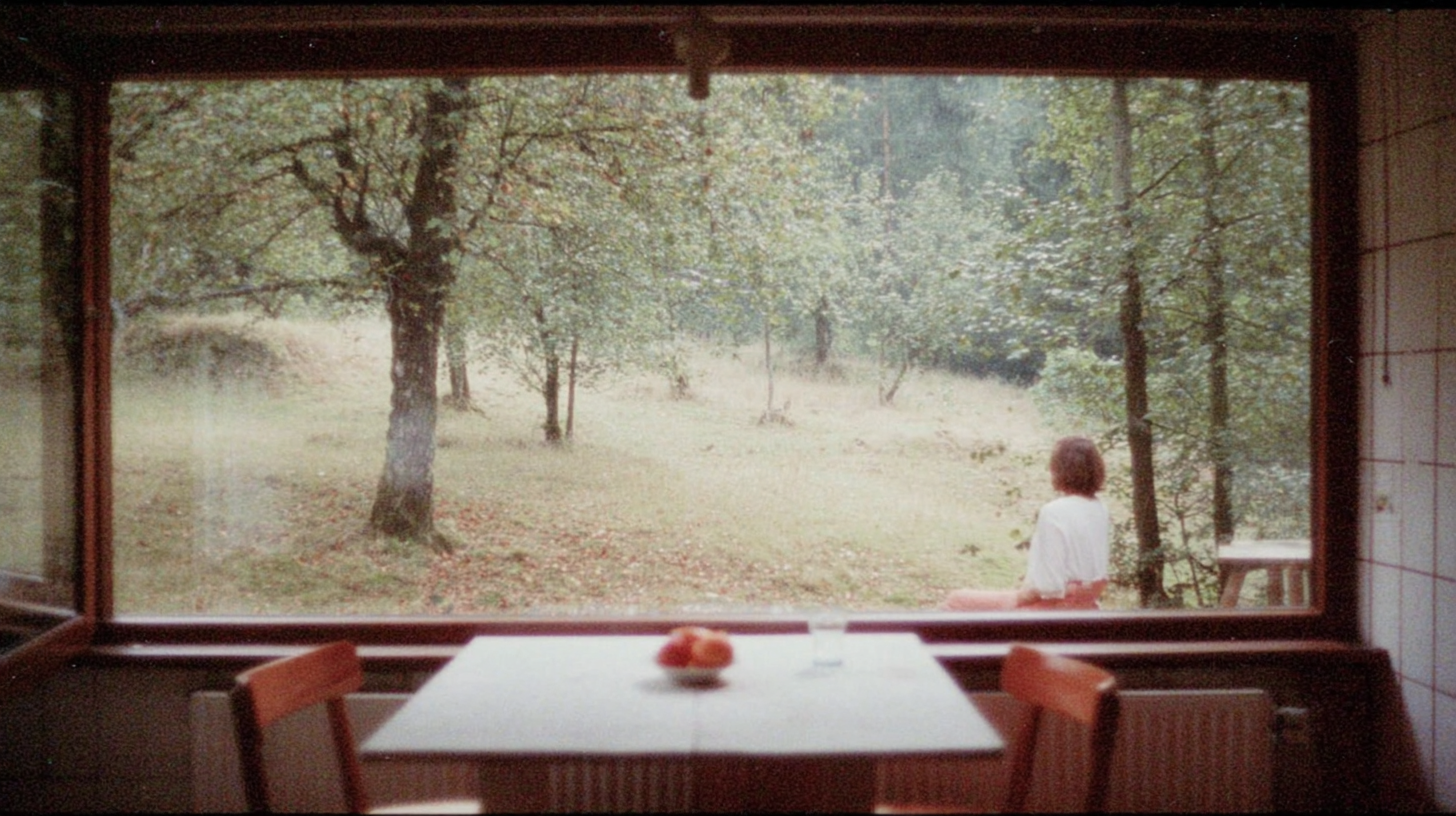
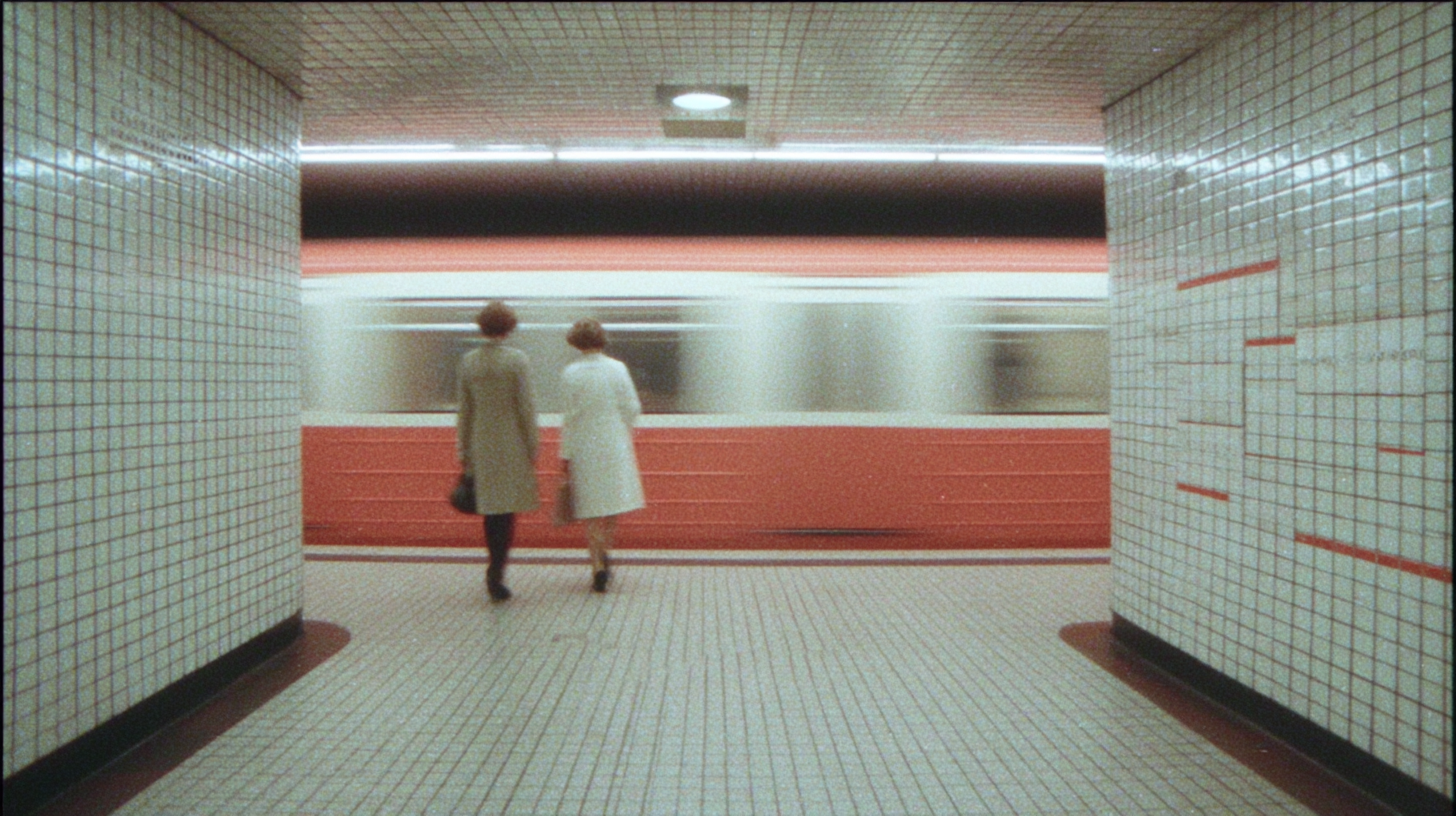
Luz del día suave, interiores de azulejos limpios y color ligeramente desteñido de los años 70, con un encuadre tranquilo y observacional.
Flickpedia no tiene una descripción escrita para este estilo de Selección del Editor, así que esta línea es nuestra. (Nota de Flick)
| Término | Películas (de 65) | Prompts (de 9,589) |
|---|---|---|
film grain | 27 | 2,399 |
shallow depth of field | 20 | 1,352 |
35mm | 14 | 551 |
chromatic aberration | 12 | 1,340 |
analog | 9 | 150 |
lens softness | 8 | 1,999 |
halation | 8 | 434 |
anamorphic | 8 | 76 |
24fps o 24 fps | 6 | 49 |
Kodak (nombres de stock) | 4 | 12 |
light leak | 3 | 16 |
16mm | 2 | 16 |
180 degree shutter | 2 | 7 |
gate weave | 1 | 18 |
bleach bypass | 1 | 11 |
Coincidencia de palabra completa, sin distinción de mayúsculas, en los 9,589 prompts de las 65 películas de equipo y residency con lienzos públicos. Clasificado por películas, para que el hábito de un cineasta no pueda encabezar la lista. 35mm también coincide con distancias focales de lentes.
Lens softness tiene muchos prompts pero pocas películas: 1,755 de sus 1,999 prompts provienen de una receta en las películas de Jaime Yao.
El grano se nombra con su formato, 35mm fino, junto al género fotográfico al que pertenece.
Black and white documentary photograph of a colossal giant young woman sitting in a vast open grassy park field, she sits with her knees pulled up to her chest and her arms wrapped around her shins, resting her head down on her knees, enormous in scale like a mountain dwarfing the landscape, tiny ordinary people scattered across the meadow lying on the grass and cycling and picnicking utterly dwarfed beside her giant form, distant tree line and pale open sky, dramatic surreal scale contrast between the giant figure and the minuscule park visitors, bright natural summer daylight, high contrast monochrome, fine 35mm film grain, candid street photography aesthetic, wide establishing shot, natural realistic lighting and shadows, 3:2 aspect ratio deep analog film grain, printed and scanned. no film specks, just depth of texture

El grano se escribe dos veces: una como textura, otra como superposición fija, para que no nade con el movimiento.
analog film grain texture. camera locked. she comfortably lays down to take a nap. as she gets to the ground, the people below her exchange gasps and surprise and move out of her way. no one should walk in in the foreground A static fixed film grain overlay sits on top of the entire frame, moving like a natural vintage static. The grain is staticy the entire clip. Camera locked, no camera movement. the entire scene should be a vintage analog look, an archived film
Este fotograma favorito es una edición de encuadre: el prompt sienta a los dos conejos en una mesa de brunch y pide mantener el plano amplio y el aspecto de grano de película analógica.
instead of them standing, how about theyre sitting at a table having brunch. keep the wide shot and analog film grain look

El fotograma inicial ya tenía grano, así que el prompt solo pide al modelo que lo mantenga en movimiento.
A woman cries in sorrow, then wipes away her tears with her hand. Outside the window, the scenery flows by, while the carriage sways gently. The simulated film grain remains, subtly shifting.

Una cámara fija y una luz brillante sobre el boxeador: la luz dura que la halación necesita.
roaring applause from the audience and stand ovation. he stands there in victory, tired and heavy breathing, the bright light shining on him. camera locked. analog film grain texture. A static fixed film grain overlay sits on top of the entire frame, moving like a natural vintage static. The grain is staticy the entire clip. the entire scene should be a vintage analog look, an old archived film
338 de los 420 prompts de video en Xenogenesis llevan esta misma línea de estilo, que es cómo una película de casi 18 minutos mantiene un mismo aspecto.
Use @Avery Voice as what Avery's voice sounds like. use @Cole's Voice as what Cole's voice sounds like. use @EXT. Cole House as the background through the windows of the car. Use @Avery Character Profile (2) as the visual reference for Avery. Use @Cole 20% (1) as the visual reference for Cole. use @Cole 20% Bump Flat on as the bump on cole's back. Use @REGRADE Avery Car interior as the visual reference for the car interior. Blocking: Cole and Avery are sitting in the car interior. cole in the left passenger seat and Avery in the right seat. Avery is driving and Cole's head is dipped down as if very ashamed of himself. we can see the bump on cole's back which looks exactly like @Cole 20% Bump Flat on. Action: handheld close-up two shot of Avery and Cole, filmed from behind the seats catching the back of their heads. Avery on the right, Cole on the left. cole's eyes look 100% like @Cole Eyes. Between and beyond them, the windshield shows the landscape rushing past as the car drives forward. Avery is looking ahead through the windshield, holding back some anger, glancing over to cole and getting more and more disgusted by Cole' presence. Avery makes a decision and flips the middle switch, right above the small screen in the center console, into the up position. An AI male voice from the dashboard says, "Autopilot engaged." Avery lets go of the steering wheel and the car starts driving itself. In a flash, Avery smacks Cole on the head with his left hand exactly twice. Cole is whimpering and just taking it. Holding up his arms to cover, but getting hit anyways. Inside, Cole knows he deserves this. This is a big brother beats up little brother moment. Then Avery raises his arm up to strike a third time but stops. His arm frozen mid strike. He grits his teeth, wanting to hit Cole again, but knows deep inside that it's useless. He retracts his arm and takes a deep breath, calms down a little bit. Finally he looks at Cole with a very stern parental look, Avery says with utter disbelief, "The hell is wrong with you?" Camera: handheld shaky close up two shot from behind. Style: handheld shaky camera. 35mm film emulation, halation, bloom, shallow depth of field with hexagonal bokeh. Audio: no music, no score. The smacks of cole's head getting hit. Cole's whimpers and "ows". Avery's heavy breathing. Camera: handheld, extreme close-up from behind the seats, both faces in profile filling the sides of frame, the windshield and passing landscape visible between them. Holds long on the tender moment. No cuts. Style: handheld, shaky camera. 35mm film emulation, halation, bloom, shallow depth of field with hexagonal bokeh. Audio: no music, no score. The hum of the hover car and the faint rush of the landscape passing, Cole's soft sniffling,

El aspecto se escribe primero como una sensación, imágenes que parecen recordadas en lugar de vistas, luego se descompone en grano, viñeteado y un cambio de color.
Duration: 15s. Aspect ratio: 16:9 (follows reference frame). No background music, no score. Ambient sound effects only — wind, water sloshing against the lens, muffled splashing beneath the surface. Camera completely static and locked-off for the entire shot — no pans, tilts, zooms, or push-ins. The lens stays half-submerged at the waterline the whole time, water pushing against the glass at the horizon split. @image1 is the first frame. @image2 is the last frame. Visual style: analog film simulation, images that look remembered rather than seen. Fine film grain, subtle CRT scan lines present but not dominant, slight chromatic aberration at the edges only, soft corner vignetting, gentle warm-yellow/faded-green color shift. Washed-out warm film / bleach bypass look. Palette: bright aqua #5FC6C2, hazy sky blue #C4D4D0, warm sand #F2C896, bleached white #F0E6C8, dusty coral #E8A87C. MOTION (0–15s): Young Benji floats at the surface in the upper-middle of the frame, splashing and flailing, long wet blonde hair plastered across his eyes. His arms slap weakly at the water; he bobs and tips, struggling to stay up. Water sloshes against the half-submerged lens, intermittently revealing his legs kicking beneath the surface in the current. He tires and sinks lower and lower across the shot. In the final 3 seconds he loses the fight, his head drops below the surface, and he descends straight down and out through the bottom edge of the frame — until only disturbed, settling water remains. The camera never moves. Ends on empty churning ocean.
Este fotograma es uno de los favoritos de un cineasta, y la mitad china de su prompt dice: cinematográfico, textura de foto documental, puesta de sol rosa a la derecha y nubes oscuras densas a la izquierda, hacer la línea costera más irregular.
电影化表现,纪实摄影般的质感,右边是粉色夕阳,左边则是阴沉厚重的云彩。让海岸线的形状更加的随机化。gritty, earthy tones, subtle hints of deep crimson, eerie yet beautiful colors, soft, diffused light, cinematic film stock
Los fotogramas anteriores se retornan como referencias de color, para que el nuevo plano se grade de manera que coincida con ellos.
Using images 1, 2 and 3 as texture, color and mood references (grainy faded analog film, soft halation), generate a NEW wide garden scene with no people and no animals anywhere in frame. A softly overgrown meadow of tall wild grasses fills the middle ground, deep olive green in shadow. A dense treeline and tangled hedgerows frame the background, foliage green. A gnarled old tree leans in from one edge, bare limbs against a pale desaturated sky. Scattered tiny wildflowers dot the grass in scarlet, cream and white. Match the grainy 16mm film texture, faded analog color, deep quiet shadows, and dreamlike vintage stillness of the reference images.
Creado con un estilo nocturno atmosférico de Flickpedia adjunto.
Estilo: Moody Cinematic Photography2
# S1: Rail Yard — Establish Wide night shot of the Asheville rail yard. A chain link fence in the foreground, beyond it rows of dead freight cars stretching into darkness. Four young punks crouch low in the tall weeds near the fence, barely lit. A security truck spotlight rakes across the distant boxcars, a hard cone of light sweeping the metal. Cold blue moonlight, deep shadows, sodium vapor lamp glow far off. Tense, still, cinematic wide shot, 35mm film grain.
Una receta propia: grano de película más ruido de sensor aparece en 1,669 prompts a través de seis películas de Flick, la mayoría de ellas de Jaime Yao.
Live-action cinematic still frame. Interior of a traditional Japanese room, very dim overall, with most of the room in soft shadow. The space is a washitsu-style Japanese interior with tatami mats, wooden beams and posts, shoji paper screens, muted plaster walls, and a simple, quiet, minimal atmosphere. The room feels calm, empty, and slightly austere. A large sliding door is open, and strong warm sunlight pours in from outside, creating a bright rectangular patch of light on the tatami floor and long streaks of sunlight extending into the darkness of the room. The contrast between the bright exterior light and the dark interior is strong. Fine dust particles are visible floating in the sunbeam. Inside the room stands a traditional Chinese wooden martial arts training dummy (Muk Yan Jong / wooden dummy). It is clearly not a human mannequin, but a wooden practice post used for kung fu training. The dummy has a dark wooden cylindrical trunk, three short wooden striking arms protruding from the upper-middle section, and one lower angled wooden leg projecting forward. It is mounted upright on a simple support structure. The wood surface is worn smooth in places from repeated use, with visible grain, dents, and age. The wooden dummy stands inside the dim room near the light path, partially illuminated by the sunlight coming through the open door. Parts of the dummy catch warm highlights, while the rest falls into shadow. The tatami texture, wood grain, and soft paper surfaces of the room remain visible but subdued in the low light. No people. No extra furniture clutter. Keep the composition focused on the dark Japanese room, the open doorway with sunlight streaming in, and the wooden martial arts dummy as the key object. Real photographic texture, realistic lighting, natural shadow falloff, subtle film grain, slight lens softness, realistic material detail, and authentic live-action cinematic atmosphere.

Este prompt de extensión continúa la toma Drop of Water desde su último fotograma y solicita la misma cámara, gradación de color y grano de película, para que la toma más larga mantenga un aspecto uniforme.
Continue this clip seamlessly from the last frame. Maintain the exact same locked-off or slow camera movement, the desolate landscape, the dusty red-orange atmosphere, same lighting direction, same color grade and film grain. The expanse stretches on in complete silence and stillness. No new elements enter the frame. No people, animals, or vehicles. Just the vast empty world breathing slowly for 5 more seconds. The emptiness is the point — let it linger.
Las características de las películas filmadas en película de 35mm: grano en movimiento, halación alrededor de las luces altas, color del stock de película, suavidad de lente delicada y movimiento a 24fps. Se percibe como película cuando varios elementos aparecen juntos, no por un solo efecto.
Escríbelo en el prompt del video incluso si el fotograma inicial tiene grano, y pide que permanezca estable. Para un control exacto sobre el tamaño del grano, genera limpio y añade una capa en tu editor.
El grano de película es parte de la imagen y cambia en cada fotograma, más intenso en los tonos medios. El ruido digital es más fino, un moteado del sensor más regular. Muchos prompts de Flick piden ambos, levemente: grano de película sutil, ligero ruido de sensor.
Un resplandor rojo-anaranjado alrededor de luces brillantes. La luz se refleja en la base de la película y expone la capa roja nuevamente. En Flick, pide halación suave y coloca una fuente de luz intensa en el encuadre.
24 fotogramas por segundo con un obturador de 180 grados, de modo que cada fotograma está expuesto durante 1/48 de segundo. En un prompt de video, escribe 24fps y desenfoque de movimiento con obturador de 180 grados.
Los fotogramas de 16mm son más pequeños, por lo que se amplían más: el grano se ve más grande y el detalle más suave. El 35mm ofrece un grano más fino y una imagen más limpia. En un prompt de IA, nombra el formato con el grano, como textura granulada de 16mm o grano de película 35mm fino.
Sí. Las palabras del prompt solas pueden lograrlo: cortometrajes de IA hechos en Flick como Boxing at the Opera, Lifeguard y The Miracle no usaron ningún estilo. Un estilo ayuda más con el carácter de lente y color que es difícil de describir, y lo mantiene igual en todas las tomas.
Puedes empezar gratis. Flick te da 100 créditos cuando te registras, y 200 más por unirte al Discord de Flick. La generación de imágenes con un estilo de Flickpedia, incluyendo GPT Image 2 y Nano Banana Pro, está en el plan Free. La mayoría de los modelos de video, como Seedance, Kling y Happy Horse, requieren un plan de pago.
Cada toma en esta página proviene de un lienzo de película público de Flick y se acredita a su cineasta. Las descripciones de estilo son de Flickpedia a menos que se indique como una nota de Flick.
Elige un estilo de película, pega tu línea de look y mantenla en cada toma. La generación de imágenes con un estilo de Flickpedia es gratuita para empezar.
Prueba gratis, sin tarjeta de crédito requerida.
Pregúntale a una IA sobre esta página:ChatGPTPerplexityClaude