真實 AI 影片中的角色表情圖

10 張來自 Flick 製作的 AI 影片的角色表情圖,每張都附有生成它的確切提示詞,讓你可以複製版面配置來創作自己的角色。

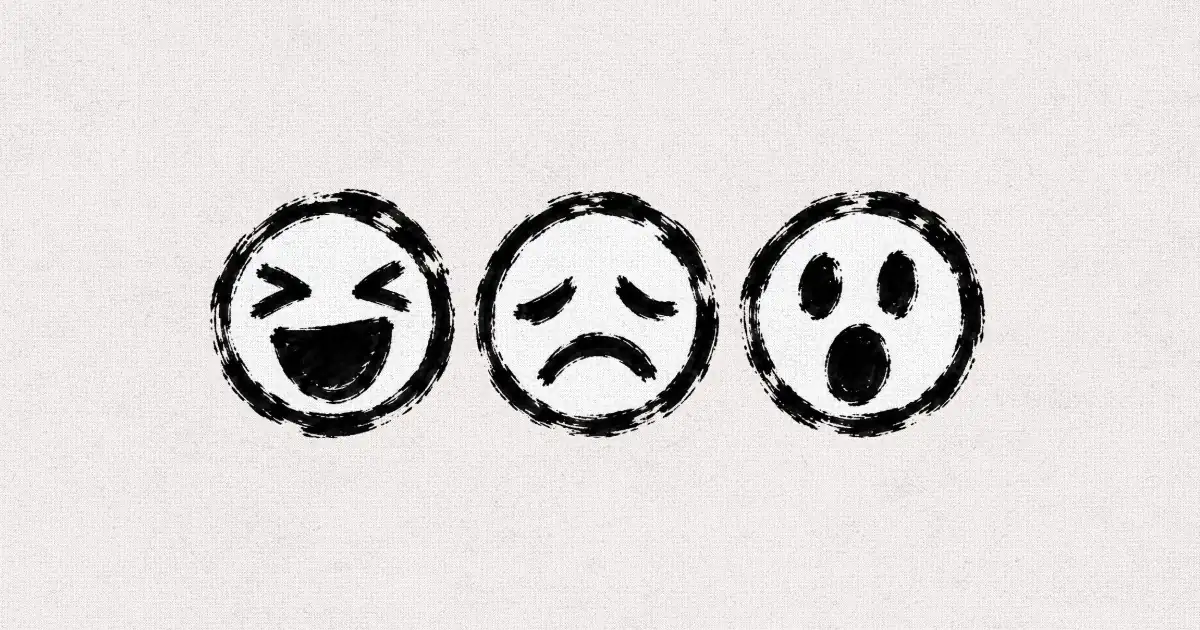
一幅墨畫,三張圓臉排成一列,一張大笑、一張悲傷、一張震驚

角色表情圖會在同一頁面展示一個角色的多種情緒表情,讓藝術家或 AI 模型能在不改變人物特徵的情況下變換情緒。線上的大多數範例都是單一的 AI 演示或空白繪圖範本。這 10 張表情圖來自 6 部在 Flick 中製作的影片,包含寫實、卡通、繪畫和動漫風格,每張都保留了原始提示詞。

描述你的角色

在欄位中描述角色是誰以及要展現的情感,系統會開啟一個新的 Flick 專案讓你製作角色表。

角色表情圖模板

標準表情圖是將一個角色的頭部以六種情緒呈現於網格中,所有圖像保持相同尺寸、角度和光線,每個格子都有標註。請填寫下方模板,附上您的角色圖像並生成。
常見表情圖版面配置,取自本頁面的表情圖
格子網格起始情緒
3單排故事最需要的三種情緒,例如警戒、竊笑和激烈
6三列兩排中性、微笑、大笑、驚訝、生氣、悲傷
8四列兩排以上六種情緒,加上困惑和尷尬

範本

Create a professional character expression reference sheet of [character] in the attached image.
Show the SAME character in a [3x2] grid of head-and-shoulders portraits:
[emotion 1], [emotion 2], [emotion 3], [emotion 4], [emotion 5], [emotion 6].
Same face, hair and costume in every panel. Plain seamless light gray background, even lighting.
[Your style line]. Label each panel.
含義:角色表情參考表展示同一角色六種不同表情的半身肖像,相同面容髮型服裝,淺灰背景均勻燈光帶標籤。

每一行都來自本頁的實際提示詞:六種情緒和純灰色背景來自漫畫主角的表情表,大寫的 SAME 則來自流浪者的表情表。在每個格子中保持頭部大小和角度一致,並為任何兩種可能看起來相似的情緒添加肢體提示,例如困惑時揚起一邊眉毛。

寫實風格角色表情圖

寫實的表情參考圖將情緒視為選角環節,一位演員、一套服裝、純色背景和均勻光線,讓臉部成為每格之間唯一的變化。
三張長髮年輕男子穿著法蘭絨襯衫的肖像,標註為害怕的笑容、充滿希望和大笑

流浪者的三種情緒,附標籤

當每種情緒都是故事所需時,三格就足夠了,提示詞以他的感受描述每一種情緒。

Professional character expression reference sheet. Show the SAME man (Casey) in a 3-panel grid: panel 1 — wide scared grin (road-jittery, adrenaline), panel 2 — earnest hopeful look (open, vulnerable), panel 3 — wild laughing relief. Same face (lean, 23, long unkempt brown hair, light stubble), same costume: plaid flannel over black tee. Plain white seamless background, even lighting, bust/headshot framing. Label each panel: SCARED GRIN, HOPEFUL, LAUGHING.
Dr. Dreams 執導的《Catch Out》
含義:凱西的三格表情參考圖:驚恐笑容、希望眼神、狂笑釋放,統一造型與背景。
三張金髮女性穿著皮夾克的肖像,標註為戒備、冷笑和專注,紋身保持一致

戒備的主角露出罕見的笑容

提示詞將其中一格稱為她的預設面無表情,另一格稱為罕見,這告訴後續鏡頭每種表情應該出現的頻率。

Professional character expression reference sheet. Show the SAME woman (Patches) in a 3-panel grid: panel 1 — cool guarded stare (default resting face, unreadable), panel 2 — dry almost-warm smirk (rare, barely cracked), panel 3 — sharp urgent intensity (danger mode, adrenaline). Same face (25, sun-scorched, long dirty blonde hair, blue-green eyes), same costume: patched leather jacket over white tank. Keep the stick-and-poke neck and chest tattoos (heart, pine trees, freeway, yin yang, star) identical in every panel. Plain white seamless background, bust framing. Label panels: GUARDED, SMIRK, INTENSE.
Dr. Dreams 執導的《Catch Out》
含義:派奇的三格表情參考圖:冷漠凝視、微笑、緊張狀態,保持刺青與服裝一致。
六張戴圓框紅色眼鏡的老人特寫,從中性到大笑、驚訝、憤怒和悲傷

漫畫主角的六種基本情緒

中性、微笑、大笑、驚訝、憤怒和悲傷涵蓋了大多數場景,純灰色背景讓注意力集中在他的臉上。

Image 1 is elderly man in orange floral suit, main look (likeness, clothing, and identity).

Create a professional character expression reference sheet showing this exact character's face (same round red glasses, same swept-back gray hair, same facial features) in a grid of six close-up expressions: neutral, smiling, laughing, surprised, angry, and sad. Same plain seamless light-gray background and even studio lighting for every panel. Same clothing collar visible in each. No props, no scene, no other people. Identical facial features and proportions across all panels.
Zoey Z. 執導的《Pond Marketing video》
含義:橙色花西裝老人的六格表情參考圖:中性、微笑、大笑、驚訝、憤怒、悲傷表情。
六張紅髮女性戴著面紗和頭飾、紅色眼睛和泥漬的肖像,以 2x3 網格排列

一個場景的六個瞬間,包括泥漬

這張參考圖是為某個特定場景製作的,所以她哭泣的眼睛和泥漬在所有六張肖像中保持不變。

Lady Caerwyn’s appearance, face, skin tone, red hair color, hairstyle, headpiece, veil, costume neckline, chest pendant, post-crying red eyes, disturbed makeup, and visible black mud smears 100% match @Image1.

Create one single expression sheet image containing 6 portraits of the same Lady Caerwyn, arranged in a clean 2x3 grid.

Live-action photographic realism.

Shoulder-up portraits only. No hands. No seated pose. No environment storytelling.

All 6 panels show exactly the same Lady Caerwyn in the same costume and same physical condition. Maintain stable facial identity, anatomy, hairstyle, headpiece, veil, mud placement, red-eye condition, and costume continuity across all panels.

Use a clean light neutral studio background. Keep camera distance, focal-length feeling, framing, and soft diffused lighting highly consistent across all 6 panels. No dramatic lighting changes. No text labels.

The goal is a distorted, malicious, psychologically pressuring performance state expressed through controlled human facial behavior.

Do not make her continuously furious.

Do not create a generic angry face.

Do not use exaggerated screaming, wide-open mouth, extreme teeth-baring, monstrous anatomy, theatrical snarling, or cartoon villain expressions.

The menace comes from fixed attention, small asymmetrical mouth movements, controlled facial tension, deliberate pauses, subtle forward intent, and the sense that she is closely watching the other person’s reaction.

Across all 6 portraits, preserve these general traits:

both eyes remain much more focused and intentional than in the fragile expression sheet;
gaze does not wander randomly;
blink frequency appears low;
head and neck feel more directed and controlled;
cold-related trembling is absent;
facial changes remain small but deliberate;
mouth movement stays relatively restrained;
the expression always remains recognizably human and anatomically stable.

Top row, left to right:

Panel 1 — Quiet fixation

A calm, unsettling baseline state.

Head almost upright, with only a very slight forward inclination.

Both eyes lock precisely onto one point slightly beside the camera.

No wandering gaze.

Upper eyelids sit slightly lower than neutral while the lower eyelids tighten very subtly upward.

Inner brow ends lower only a little and move slightly closer together.

The brow is not deeply furrowed yet.

Jaw remains mostly relaxed.

Lips remain closed.

One mouth corner sits very slightly higher than the other, but the difference is almost imperceptible.

The expression should feel alert, controlled, and unnervingly attentive, as though she has already chosen exactly where to look and is waiting for the other person to react.

Panel 2 — Small mocking amusement

Maintain the same fixed gaze.

Head tilts only a few degrees.

One mouth corner rises slightly before the other, creating a restrained asymmetrical closed-mouth smile.

No teeth.

The lower eyelids tighten a little more, producing a subtle narrowed focus without turning into a squint.

One eyebrow may lift a very small amount while the opposite inner brow remains slightly lower.

Jaw remains loose.

The expression should feel as though she has noticed something vulnerable in the other person and finds it quietly amusing.

This is not friendliness and not open laughter.

The smile is small, private, and deliberately unpleasant.

Panel 3 — Testing the wound

The mocking smile begins to disappear.

Eyes remain completely fixed.

Head comes slightly more forward.

The chin lowers by a small amount.

Inner brow ends move gradually downward and inward.

Short shallow vertical tension begins to appear between the brows.

Lower eyelids tighten further while both eyes remain fully readable.

Nasal bridge shows a small amount of tension.

Lips part only slightly, as if she is speaking quietly.

One side of the upper lip pulls very subtly upward and backward while the other side remains more neutral.

Jaw begins to firm.

The expression should feel like she is deliberately saying something painful and watching closely to see whether it worked.

Bottom row, left to right:

Panel 4 — Controlled pressure

Head and neck project slightly farther forward.

The gaze remains locked and unblinking.

Brows are clearly lower and closer together now, but still not exaggerated.

Lower eyelids press upward more strongly.

Nostrils widen slightly.

The earlier smile is completely gone.

The mouth remains only narrowly open.

The lower lip presses slightly inward.

Jaw tension becomes clearly visible near the jaw angles.

The chin remains low and directed forward.

This should feel like quiet verbal pressure rather than shouting anger: she is speaking softly, but every part of the face is concentrated toward the other person.

Panel 5 — Brief satisfaction after the attack lands

The facial tension does not fully disappear.

The eyes remain fixed on the same target.

The brows release only slightly.

Jaw softens a little.

One mouth corner returns into a very small asymmetrical upward movement.

The smile is even smaller than Panel 2.

Do not make her openly happy.

The expression should feel like she has just seen that her words hurt the other person and is privately satisfied by the result.

The eyes are more important than the smile: attentive, steady, watching for the reaction.

Head remains slightly forward.

Panel 6 — Quiet dominance

The final state is not the most visibly angry.

It is the most controlled.

Head almost level, still slightly forward.

Both eyes remain completely fixed and calm.

Very little brow movement.

Lower eyelids remain subtly tight.

The mouth returns almost to neutral, with lips lightly closed.

Jaw remains firm but not clenched to an extreme.

One side of the mouth retains the faintest trace of asymmetry.

No visible smile.

The expression should feel like she no longer needs to push harder because she believes she already has control.

Stillness itself becomes threatening.

The face is quiet, dry, certain, and psychologically oppressive.

Important:

The six portraits must form one continuous performance vocabulary rather than six unrelated villain expressions.

The progression should come from subtle changes in:
gaze fixation,
lower-eyelid tension,
inner brow position,
mouth-corner asymmetry,
lip pressure,
jaw firmness,
head tilt,
chin position,
and slight forward head-and-neck intent.

Keep the face beautiful, recognizable, human, and anatomically stable.

Do not over-age her.

Do not distort facial proportions.

Do not create supernatural eyes.

Do not add sharp teeth.

Do not create a horror-monster face.

The difference from the fragile expression sheet should be immediately readable through attention and control:
the fragile state loses focus and collapses inward;
this state maintains focus and directs pressure outward.
Jaime Yao 執導的《In ’twixt Vows》
含義:凱爾溫夫人穿著原本服裝妝容,六格攝影寫實肖像表情表,從冷靜注視、嘲弄微笑、試探傷口、施壓、滿意到安靜支配,淺色背景。

卡通與繪畫風格表情圖

卡通或繪畫風格的參考圖會將每種情緒推得更極端,並在提示詞中重複風格關鍵字,因為手繪臉部細節較少,需要更多元素來維持角色的一致性。
八個扁平卡通臉孔,紅色角色戴著藍色貓咪帽,從開心到大笑的表情標記

小配角的八種表情

每種情緒都有命名和描述,例如困惑時挑起一邊眉毛,這樣模型就不會將兩種情緒混在一起。

Create a facial expressions sheet for Sasa based on his design. Show his round red/orange face with various emotions in a grid layout: HAPPY (big smile), SAD (droopy eyes, frown), SURPRISED (wide eyes, open mouth), ANGRY (furrowed brows, scowl), EMBARRASSED (rosy cheeks, shy smile), DETERMINED (serious focused look), CONFUSED (one eyebrow raised), LAUGHING (eyes closed, big grin). Each expression is just the face/head with the blue fox hood and cat ears, no full body. Flat 2D illustration style, tricolor blue yellow and red/orange palette, black outlines, white background. Label each expression below it. Title at top: "Expressions: Sasa".
Katrin Ann Orbeta 執導的《Mila & Sasa》
含義:薩薩是紅橙色圓臉狐狸帽貓耳角色,展示快樂悲傷驚訝憤怒害羞堅定困惑大笑八種表情,平面插畫風格三色配色白背景帶標籤。
黃色太空衣卡通角色的四個視角,帶著太空頭盔,下方有六個標記的小臉孔

完整轉身視圖下的表情

將表情和身體視圖放在同一頁,讓鏡頭有單一參考,而這次編輯在不改動臉部的情況下加入了頭盔。

Keep the exact same character turnaround layout (FRONT, 3/4 FRONT-RIGHT, SIDE, BACK) and all 6 facial expressions grid (HAPPY, SAD, SURPRISED, ANGRY, CURIOUS, LAUGHING). Add to all full-body poses: a rounded transparent visor space helmet in blue with black outlines fitting over her blue bob hair, and a rectangular oxygen backpack/tank in blue on her back (clearly visible in SIDE and BACK views, partially visible in 3/4 and FRONT). Keep all her original colors exactly: blue bob hair, red/orange skin, yellow spacesuit, blue boots. Keep the same reduced outlines style (only at joints and color boundaries). White background, same title "Character Turnaround: Mila" and all pose/expression labels.
Katrin Ann Orbeta 執導的《Mila & Sasa》
含義:米拉角色轉身圖含正面四分之三側面背面姿勢及六種表情,藍髮紅橙膚色黃太空衣,新增藍色透明頭盔及氧氣背包。
六個繪畫半身像,憔悴的老裁縫師有著向後梳的灰髮和黑眼圈,從憂慮到微笑

裁縫師的六種情緒,第一版

提示詞重複說明她是一位年長女性並列出她的特徵,然後列出符合她故事的六種情緒。

Create a professional character expression sheet for the gaunt old WOMAN tailor in Image 1, using her exact face, hair, and features. She is clearly an elderly WOMAN: long angular face, large wide expressive eyes with dark circles, thin arched eyebrows, softer feminine jaw, swept-back dark grey hair. Show 6 different emotions in a 3x2 grid, each a head and shoulders bust portrait on a plain warm light gray seamless background. The 6 emotions are: 1) Worried and anxious, 2) Quietly determined, 3) Sad and defeated, 4) Surprised and wide-eyed, 5) Bitter and grumpy, 6) Rare warm smile. Match the exact stylized cartoon painterly style of Image 1: hand-painted textured brushwork, angular exaggerated proportions, muted earthy teal and ochre palette, bold graphic shapes. Same identical woman in every panel, unmistakably an old woman not a man. Label each panel with the emotion name below it. Bust portraits only, no full body.
Simay Ezer Pekcan 執導的《Happy Souls Alive》
含義:瘦削老婦人裁縫師展示擔憂堅定悲傷驚訝苦澀微笑六種表情,半身肖像手繪質感風格柔和灰色背景帶標籤。
六個繪畫半身像,輪廓分明的老婦人有著凌亂的淡色頭髮,手繪民俗風格,從憂慮到微笑

相同的六種情緒,水粉畫風格

六種情緒保持不變,而風格線改為圖像化民俗水粉畫,這樣就可以與上一張進行比較。

Create a professional character expression sheet for this same woman (the Tailor), using her exact face, hair, and features. Show 6 different emotions in a 3x2 grid, each a head and shoulders bust portrait on a plain warm light gray seamless background. The 6 emotions are: 1) Worried and anxious, 2) Quietly determined, 3) Sad and defeated, 4) Surprised and wide-eyed, 5) Bitter and resentful, 6) Rare warm smile. Graphic folk illustration style, hand-painted gouache, angular proportions, large graphic shapes, flat color fills, bold outlines, minimal brush texture. Same identical face and hair in every panel. Label each panel with the emotion name below it. Bust portraits only, no full body.
Simay Ezer Pekcan 執導的《Happy Souls Alive》
含義:裁縫師女性展示擔憂堅定悲傷驚訝怨恨微笑六種表情,半身肖像民俗插畫風格平塗色彩粗輪廓灰背景帶標籤。

動漫風格表情圖

動漫表情表可以承載角色的整個弧線,因此按照故事發展的順序列出情緒,從最平靜到最極端。
六張動漫肖像,黑髮年輕女性從甜美純真的微笑到令人不安的喜悅

從甜美到威脅

這部影片的轉折已經在這個網格中展現,一側甜美純真的微笑轉變為瞪大雙眼的空洞威脅。

Create a professional character expression reference sheet of this young woman, Poppy (the character in the image). Show the SAME character in a grid of several head-and-shoulders expressions: sweet innocent smile, adoring obsessive stare, wide-eyed blank menace, tearful pleading, cold predatory calm, unsettling joy. Identical delicate features, wide doe eyes, long dark hair with soft center part, pastel cardigan, in every panel. Plain seamless light gray background, even flat lighting. Satoshi Kon Perfect Blue anime cel shading style, muted palette, grainy late 90s film texture. Show ONLY this character, no scene, no props, no other people.
Hannah L. 執導的《Obsession x Perfect Blue》
含義:年輕女子波比展示甜美凝視威脅哀求冷靜詭異喜悅等多種表情,半身肖像今敏風格賽璐珞動畫柔和色調灰背景。
八張動漫肖像,描繪一位穿著開襟衫、頭髮凌亂的年輕男子,從緊張的微笑到恐懼與寧靜的恐懼感

從緊張到寧靜的恐懼

他的六種命名情緒從緊張到偏執,為一部短篇心理恐怖影片的每個恐懼階段提供了臉孔。

Create a professional character expression reference sheet of this young man, Ellis (the character in the image). Show the SAME character in a grid of several head-and-shoulders expressions: nervous smile, wide-eyed fear, exhausted despair, forced happiness, paranoid glance over shoulder, quiet dread. Identical facial features, messy dark brown hair, light stubble, oversized cardigan, in every panel. Plain seamless light gray background, even flat lighting. Satoshi Kon Perfect Blue anime cel shading style, muted palette, grainy late 90s film texture. Show ONLY this character, no scene, no props, no other people.
Hannah L. 執導的《Obsession x Perfect Blue》
含義:年輕男子艾利斯展示緊張恐懼絕望勉強快樂偏執恐懼等多種表情,半身肖像今敏風格賽璐珞動畫柔和色調灰背景。

什麼是好的角色表情圖?

一張好的表情表要讓除了臉部以外的所有元素保持不變:同一個角色、同一套服裝、同一個背景和同一種光線,並在提示詞中為每種情緒命名。
  1. 1. 說明這是同一個角色

    「SAME」這個詞在這些提示詞中多次以大寫形式出現,因為常見的失敗是生成一組相似的人物而不是同一個人。

    Show the SAME man (Casey) in a 3-panel grid
    Dr. Dreams 執導的《Catch Out》
    含義:凱西男子在三格網格中重複出現。
  2. 2. 固定背景和光線

    簡單的背景和均勻的光線能消除所有可能在不同格子間變化的元素,因此你看到的任何差異都來自表情。

    Same plain seamless light-gray background and even studio lighting for every panel.
    Zoey Z. 執導的《Pond Marketing video》
    含義:每個格子都使用相同的平滑淺灰背景及均勻攝影棚燈光。
  3. 3. 選擇故事需要的情緒

    從劇本中提取的簡短清單勝過通用圖表,因為這些是角色在影片中會呈現的臉孔。

    Worried and anxious
    Simay Ezer Pekcan 執導的《Happy Souls Alive》
    含義:展現擔憂和焦慮的表情。
  4. 4. 描述每種情緒

    一個名稱加上一個具體的身體線索比單獨使用名稱更能減少不確定性,特別是對於相鄰的情緒如悲傷和挫敗。

    CONFUSED (one eyebrow raised)
    Katrin Ann Orbeta 執導的《Mila & Sasa》
    含義:展現困惑表情單邊眉毛上揚。

如何用 AI 製作角色表情圖?

從一張完成的角色圖片開始,要求在簡單背景上生成一個命名情緒的網格,檢查每個格子是否都是同一個人,然後將表情表附加到你的鏡頭中。
  1. 1從一張圖片開始

    首先生成或上傳一張清晰的角色圖片,因為從參考圖片建立的表情表比單純用文字描述更能保持臉部特徵的一致性。

  2. 2列出表情

    從你計劃拍攝的場景中挑選三到八種表情,並為任何兩個在小格中可能看起來相似的表情加入肢體動作提示。

  3. 3生成網格

    貼上範本並填入你的角色細節和風格描述,然後檢查每個格子的眼睛、髮型和服裝是否一致,修正任何偏離的格子。

  4. 4在鏡頭中使用

    將表情表作為參考附加到鏡頭上,並在提示詞中指定你想要的表情,這樣角色在情緒變化時仍能保持可辨識度。

角色表情圖常見問題

什麼是角色表情表?

角色表情表是一個參考頁面,展示同一個角色在多種情緒下的臉部表情,例如開心、悲傷和憤怒。動畫師和漫畫家用它來保持角色的可辨識度,而 AI 影片創作者則將它用作參考圖片。

表情表應該包含多少種表情?

大多數表情表會顯示六種,這也是本頁面 10 個範本中有 7 個要求的數量,但三種也可以足夠。從你的故事來選擇數量:表情表需要包含角色在螢幕上實際會展現的情緒。

表情表應該包含哪些情緒?

從中性、開心、悲傷、憤怒和驚訝開始,然後將任何不適合的替換成你的劇本中的情緒,例如警戒或沉靜堅定。角色的預設靜態表情通常是最有用的格子。

如何繪製表情表?

在網格中以相同尺寸和角度多次繪製同一個頭部,改變眼睛、眉毛和嘴巴,其餘部分保持不變。若要生成單一圖像,請在提示詞中描述相同的網格並附上角色圖像。

表情圖和角色設計圖有什麼區別?

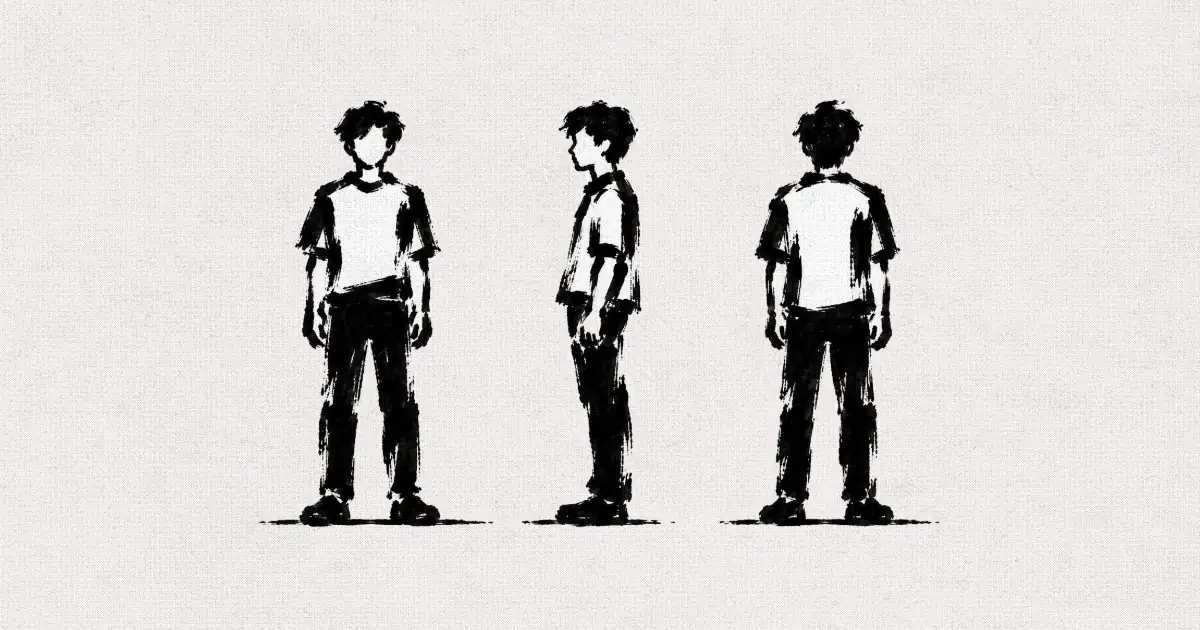
表情圖展示臉部的情緒,而角色設計圖或轉身圖則從多個角度展示整體設計。它們可以共用一頁,在身體視圖下方放置帶標籤的小臉部圖。

有免費的角色表情圖範本嗎?

是的。本頁頂部附近的範本可以免費複製到任何接受參考圖片的圖像模型中。它是根據 Flick 影片中用於表情表的實際提示詞建立的。

AI 能從一張圖像製作角色表情圖嗎?

可以,只要提示詞說明這是同一個角色,且模型支援參考圖像。之後請檢查每個格子,因為髮型、眼鏡或刺青等細節往往最容易偏移。

更多關於 Flick 角色設計的資訊

此合輯中的影片

製作角色的表情圖

在單一網格中生成一個角色的情緒,然後將表情圖附加到鏡頭中,讓臉部在每種情緒下都保持一致。

在 Flick 中製作表情參考圖

免費試用,無需信用卡。

讓 AI 解讀本頁:ChatGPTPerplexityClaude